Mango sago pudding recipe… sounds simple, right? Just mango, milk, and those tiny chewy pearls. That’s what I thought too the first time I tried it. But honestly, it took me a couple of attempts to really get it right.
Let me guess, you’re here because you saw that glossy, creamy mango dessert somewhere online or at a café and thought, “I need to try this at home.” Or maybe you already tried and ended up with sticky sago or a pudding that just didn’t hit the same. Yeah… been there.
Here’s the thing. This mango sago pudding recipe is one of those deceptively easy desserts. It looks effortless, but small details completely change the result. The texture, the balance of sweetness, even how cold it is when you serve it. It all matters more than you’d expect.
I still remember the first time I made it during a really hot afternoon. I rushed it, didn’t rinse the tapioca properly, and the whole thing turned into a thick, slightly gluey mess. Not terrible, but definitely not that silky smooth, refreshing mango sago dessert I had in mind. The second time though… I slowed down. And that’s when it clicked.
So if you’re wondering whether this is worth making, especially compared to other no bake desserts or summer dessert ideas, the answer is yes. But only if you do it right.
In this guide, I’m going to walk you through not just how to make mango sago pudding, but how to make it actually taste like that chilled, creamy, tropical dessert you’re craving. The kind that feels light, slightly indulgent, and honestly… a bit addictive.
We’ll cover everything. From what mango sago pudding really is, to how to cook sago pearls without that annoying stickiness, to the small tweaks that turn a good mango tapioca pudding into something you’ll want to make again and again.
And maybe more importantly, I’ll point out the mistakes most people don’t realize they’re making. Because let’s be honest, that’s usually where things go wrong.
So… ready to get this right?
What will you learn from this mango sago pudding recipe?
- How to make a creamy mango sago pudding with the right texture
- The secret to perfectly cooked tapioca pearls that don’t stick
- How to balance sweetness using mango, coconut milk, and condensed milk
- Tips to create a refreshing mango sago dessert that actually feels light
- Simple ways to adapt this into a vegan or healthier tropical dessert
Is mango sago pudding difficult to make?
Not really. This mango sago pudding recipe is actually beginner friendly. The process is simple, but the details matter. If you follow the right steps, especially when cooking the tapioca pearls and chilling the mixture, you’ll get that smooth, creamy fruit dessert texture every time.
Now, before we jump into ingredients and steps, let’s take a step back. Because understanding what mango sago pudding actually is might change how you approach the whole recipe.
Table of Contents
Table of Contents
Mango Sago Pudding Recipe: The Dessert You Didn’t Know You Needed
Mango sago pudding recipe… sounds simple, right? Just mango, milk, and those tiny chewy pearls. That’s honestly what I thought the first time I tried it.
But let me ask you something. Have you ever followed a dessert recipe exactly… and still felt like something was off? Not bad, just not that good. Not the kind you’d crave again the next day.
That was me with my first mango sago pudding.
I remember it clearly. Hot afternoon, zero patience, craving something refreshing. I rushed through it, didn’t rinse the tapioca properly, and ended up with something thick… almost gluey. Edible, sure. But nowhere near that silky smooth, chilled mango sago dessert you see in photos.
Second try was different. Slower. More intentional. And weirdly, that’s when I realized something.
This mango sago pudding recipe isn’t complicated. But it’s sensitive. Small details change everything. The texture of the pearls, the ripeness of the mango, even how cold the dessert is when you eat it.
And maybe that’s why it’s so addictive when done right.
Because when it works, it hits a very specific feeling. Creamy but light. Sweet but not heavy. Cold enough to feel refreshing, especially in summer, but still comforting in a quiet way.
If you’re here, you’re probably looking for one of three things:
- A quick and easy mango dessert
- A no bake tropical treat
- Or a mango tapioca pudding that actually tastes like the ones from Asian dessert shops
Good news. This guide is going to give you all of that. But more importantly, it’ll help you avoid the subtle mistakes that ruin the experience.
Because let’s be honest. Nobody talks about those enough.
What makes this mango sago pudding recipe different?
- Focus on texture balance between creamy base and soft pearls
- Real fixes for sticky or clumpy sago
- A slightly lighter approach that doesn’t feel overly sweet
- Small details that turn a basic recipe into a refreshing mango sago dessert
What you’ll learn step by step
- How to make mango sago pudding from scratch
- How to cook tapioca pearls without mess
- How to adjust sweetness using real mango flavor
- How to get that chilled, creamy, tropical dessert feel
Now before we jump into ingredients or steps…
Let’s pause for a second.
Because understanding what this dessert actually is might completely change how you make it.
What Is Mango Sago Pudding Recipe? (Hong Kong Dessert Explained)
So before you even start making it, let’s clear something up. What exactly is a mango sago pudding recipe?
Because depending on where you first saw it, you might be picturing completely different things.
Some people think it’s like a thick pudding. Others expect something closer to a drink. And honestly… it kind of sits in between. That’s part of its charm, but also where confusion starts.
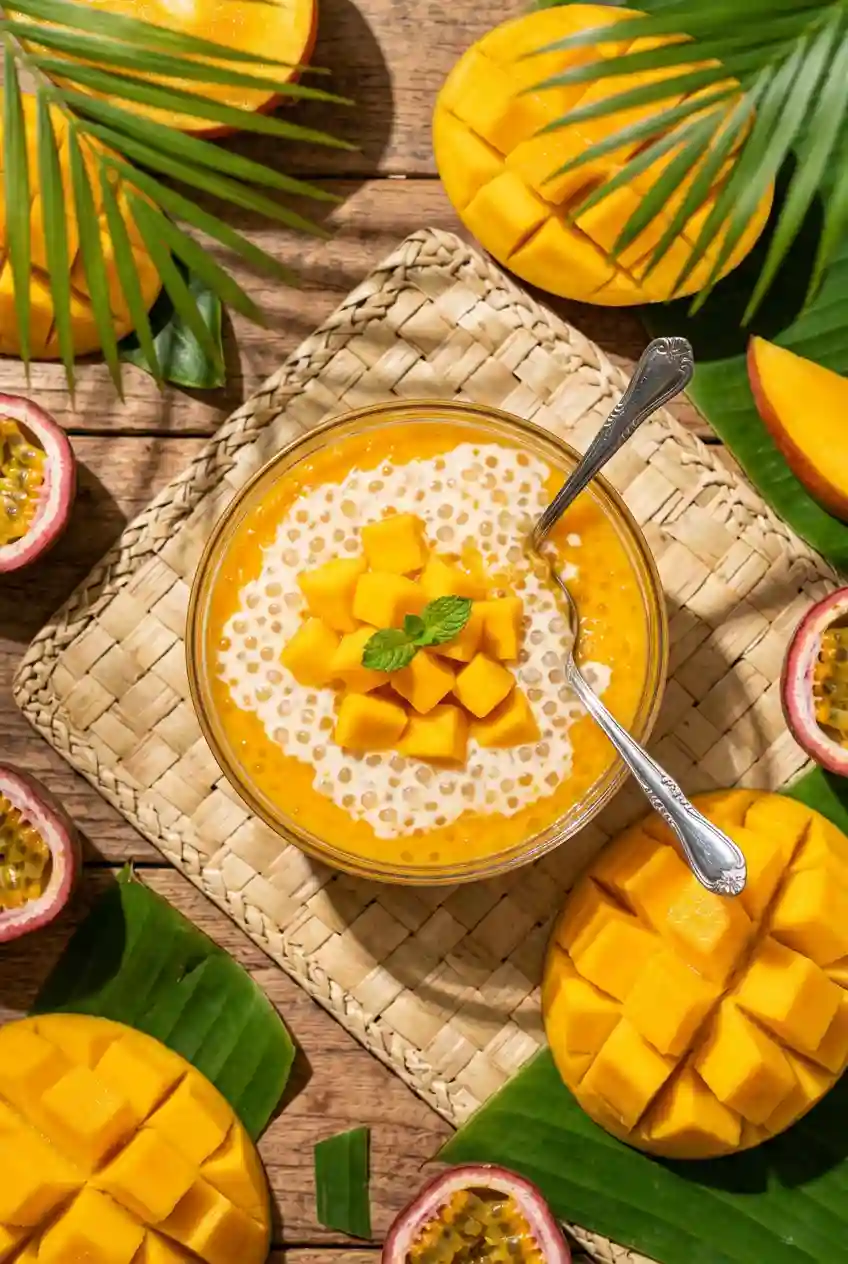
At its core, mango sago pudding is a chilled Asian dessert made from three simple elements. Sweet mango puree, creamy milk usually coconut based, and soft tapioca pearls that give that slightly chewy texture.
But here’s the interesting part. The magic isn’t in the ingredients themselves. It’s in how they come together.
The origin of mango sago pudding (and why it matters)
This mango sago pudding recipe actually comes from Hong Kong, where it first appeared in Cantonese dessert restaurants. It wasn’t designed to be heavy or overly rich.
It was meant to be refreshing. Something you’d eat after a meal, especially in humid weather, when you want dessert but not something dense.
And that explains a lot.
If you approach it like a classic pudding, you’ll probably make it too thick. Too sweet. Too heavy. That’s one of the most common mistakes.
Instead, think of it more like a creamy fruit dessert bowl. Light, slightly fluid, with texture from the tapioca pearls.
That shift in mindset changes everything.
What makes mango sago pudding different from other mango desserts?
Let’s be honest. There are tons of mango desserts out there. Mango mousse, mango falooda, mango sticky rice…
So what makes this mango sago pudding recipe stand out?
- It’s no bake, which already makes it easier than most
- It has that unique silky + chewy texture combination
- It’s served chilled, making it perfect for summer
- It feels indulgent, but still relatively light
And maybe this is just me, but it also feels more… casual. Like something you’d eat in a glass with a spoon, not a formal plated dessert.
There’s something very comforting about that.
So… is it a pudding, a drink, or something else?
Honestly? It’s a bit of all three.
If you add more milk, it leans toward a dessert drink.
If you thicken it, it becomes closer to a pudding.
If you load it with fruit and toppings, it turns into a full tropical dessert recipe experience.
And this flexibility is exactly why people love it.
Why understanding this changes your result
Here’s where most recipes don’t go deep enough.
If you don’t understand what mango sago pudding is supposed to feel like, you’ll end up chasing the wrong texture.
Too thick? It loses freshness.
Too thin? It feels incomplete.
Too sweet? It becomes heavy instead of refreshing.
The goal is balance. Always balance.
And once you get that… you stop just following a mango sago recipe and start actually controlling it.
Why This Mango Sago Pudding Recipe Is the Perfect Summer Dessert
Let me ask you something honestly. When it’s really hot outside, what kind of dessert do you actually crave?
Because for me, it’s never cake. Never anything heavy. Even ice cream sometimes feels… too much. Too sweet, too dense, too “I regret this in 10 minutes.”
That’s exactly where this mango sago pudding recipe hits differently.
The first time I got it right, I remember thinking, “Wait… this is what a summer dessert is supposed to feel like.” Light, cold, slightly creamy, but still refreshing. Not something that sits in your stomach. Something that disappears before you even notice.
The real reason this dessert works so well in summer
It’s not just because it’s chilled. A lot of desserts are cold.
It’s the combination of textures and ingredients that makes this a true refreshing mango sago dessert.
- The mango brings natural sweetness and a fruity freshness
- The coconut milk adds creaminess without heaviness
- The tapioca pearls give that soft, slightly chewy bite
- Everything is served cold, almost like a fruity dessert bowl
And somehow, all of that together feels… balanced.
Not too rich. Not too light. Just enough.
Why it feels lighter than other creamy desserts
Here’s something I didn’t expect when I first tried making it.
Even though this mango sago pudding recipe uses ingredients like coconut milk and condensed milk, it doesn’t feel heavy like most creamy desserts.
Why?
Because the mango does a lot of the work.
When you use ripe mango, especially those naturally sweet varieties, you don’t need to overload the recipe with sugar. That changes the whole experience.
Instead of a sugary dessert, you get something closer to a creamy fruit dessert with a naturally sweet profile.
And let’s be honest… that makes it dangerously easy to eat more than one serving.
The “chilled factor” that changes everything
There’s also something people underestimate. Temperature.
This mango sago pudding recipe is meant to be eaten cold. Not slightly cool. Properly chilled.
And that changes:
- The texture
- The sweetness perception
- The overall experience
Warm or room temperature mango sago? It’s okay.
But chilled mango sago pudding? That’s when it becomes a tropical dessert recipe you actually crave.
It’s sharper, fresher, more refreshing. Almost like your brain registers it differently.
When is the best time to serve mango sago pudding?
From experience, there are a few moments where this dessert just makes sense.
- After a heavy meal when you still want something sweet
- During hot afternoons when nothing else sounds appealing
- As a light evening dessert that doesn’t feel overwhelming
- When you need a quick no bake dessert that still feels impressive
And honestly… sometimes just because you have ripe mango sitting at home and don’t want to waste it.
Why people keep coming back to this mango sago pudding recipe
This might sound a bit contradictory, but here’s the truth.
It’s simple… but it doesn’t feel basic.
There’s enough texture, enough flavor, enough contrast to make it interesting every time you eat it. And that’s rare for something this easy.
You’re not just eating a dessert. You’re experiencing:
- Creaminess
- Freshness
- Soft chewiness
- Cold, refreshing contrast
And somehow, it all works without trying too hard.
Ingredients for Mango Sago Pudding Recipe (Simple & Tropical)
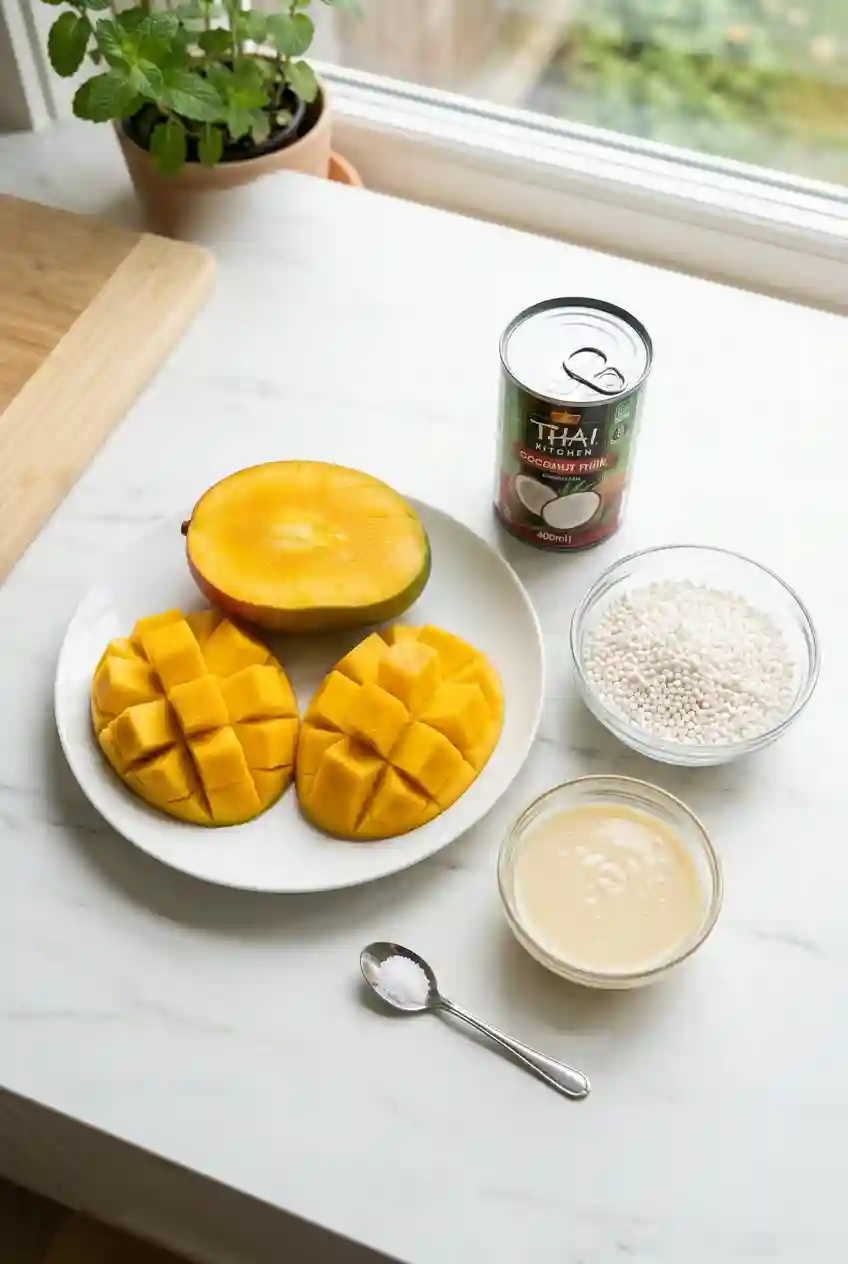
Alright, this is where things look simple… and kind of are. But also, this is exactly where small decisions start affecting your final result more than you’d expect.
Because technically, this mango sago pudding recipe only needs a handful of ingredients. But the type and quality of those ingredients? That’s what separates a decent dessert from a “wait… this is actually really good” moment.
I’ve made this with average mangoes before. It works. But when you use really ripe, sweet mangoes… it’s a completely different experience.
Core ingredients for mango sago pudding recipe
Here’s what you actually need:
- Ripe mangoes (fresh is best, naturally sweet)
- Tapioca pearls (small size, not boba)
- Coconut milk (for that creamy tropical base)
- Sweetened condensed milk (for depth and sweetness)
- Optional milk (to adjust consistency)
- Pinch of salt (this matters more than you think)
That’s it.
Simple list. But let’s break it down a bit, because this is where people quietly mess things up.
Choosing the right mango (this changes everything)
If there’s one ingredient you shouldn’t compromise on in this mango sago pudding recipe, it’s the mango.
You want:
- Soft when pressed
- Fragrant at the stem
- Naturally sweet
If your mango is slightly sour or firm, you’ll end up compensating with more condensed milk. And that usually makes the dessert heavier than it should be.
Honestly, I used to think “any mango works.”
…Yeah, not really.
A good mango gives you that sweet mango puree flavor without needing to force it.
Tapioca pearls vs sago (what you actually need)
This part confuses a lot of people.
You’ll see “sago” everywhere, but what you’re most likely using is tapioca pearls sago, made from cassava.
Important details:
- Use small pearls, not large boba
- Avoid instant tapioca (wrong texture)
- They should become soft and slightly translucent when cooked
And just to say it upfront, if your pearls turn sticky later… it’s not the ingredient. It’s the cooking method. We’ll fix that in the next sections.
Coconut milk, condensed milk… and balance
Now here’s where this mango sago pudding recipe becomes a coconut milk dessert instead of just a fruit bowl.
- Coconut milk gives creaminess without heaviness
- Condensed milk adds sweetness and depth
But here’s the mistake I made early on. I used too much condensed milk thinking “more flavor = better.”
Wrong.
Too much and you lose that refreshing summer dessert feeling. It becomes heavy, almost tiring to eat.
A better approach:
- Start light
- Taste
- Adjust
It sounds obvious, but most people skip that step.
Optional ingredients that quietly improve everything
These aren’t mandatory, but they make a difference:
- A splash of milk to loosen texture
- A pinch of salt to enhance sweetness
- Fresh mango chunks for topping
- Coconut jelly if you want extra texture
That last one… not essential, but it adds a fun contrast. Slightly bouncy, slightly different. Makes the dessert feel more complete.
Ingredient balance is more important than quantity
Here’s the part people don’t always realize.
This mango sago pudding recipe isn’t about exact measurements as much as it is about balance.
Too thick? Add milk.
Too sweet? Add mango or coconut milk.
Too bland? A pinch of salt fixes more than you think.
Once you understand that, you stop following the recipe blindly and start adjusting it to your taste.
And that’s usually the moment it starts turning out really good.
How to Make Mango Sago Pudding Recipe (Step-by-Step Guide)
Alright… this is the part everyone waits for. The actual making.
And I’ll be honest with you. This mango sago pudding recipe is not hard. But it’s one of those recipes where if you rush even slightly, the result just feels… off.
So instead of just throwing steps at you, I’ll walk you through it the way I actually do it now. After messing it up a couple of times.
Step 1: Cook the tapioca pearls properly
Start with boiling water. Not warm. Not “almost boiling.” Proper rolling boil.
Add your tapioca pearls and stir immediately.
For the first few minutes, don’t walk away. This is where they tend to stick together or settle at the bottom. And once that happens, it’s hard to fix.
Let them cook until they turn mostly translucent with a tiny white center.
Then turn off the heat, cover, and let them sit.
This resting step? A lot of people skip it. I used to skip it too. Big mistake.
It finishes the cooking gently and gives you that soft, silky texture with soft pearls instead of a chalky center.
Step 2: Rinse and cool the sago
Once cooked, drain the pearls and rinse them under cold water.
And don’t rush this part.
You’re not just cooling them. You’re removing excess starch. That’s what prevents the dreaded stickiness.
If your mango sago pudding recipe ever turned into a clumpy mess before… yeah, this step is probably why.
After rinsing, set them aside. They should feel separate, slightly bouncy, not glued together.
Step 3: Prepare the mango base
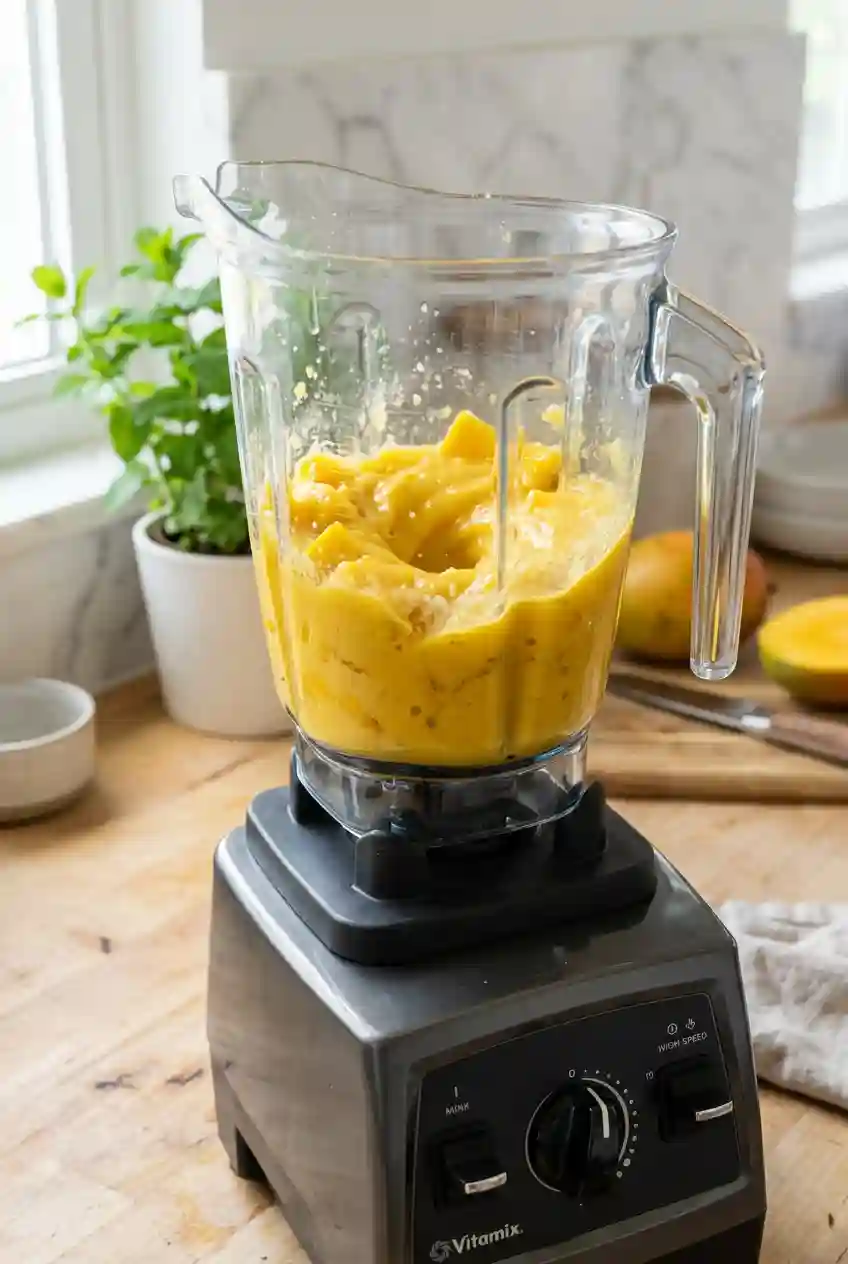
Now comes the fun part.
Take your ripe mango and blend it into a smooth puree.
Pause for a second here. Taste it.
Is it sweet enough? Slightly tangy? This matters, because it will affect how much condensed milk you add later.
Once blended, mix in:
- Coconut milk
- Condensed milk
- Optional milk if needed
Stir and taste again.
This is one of those moments where you should trust your instinct a bit.
Too thick? Add milk.
Too sweet? Add more mango or coconut milk.
This is where the creamy mango sago dessert recipe starts to come together.
Step 4: Combine everything
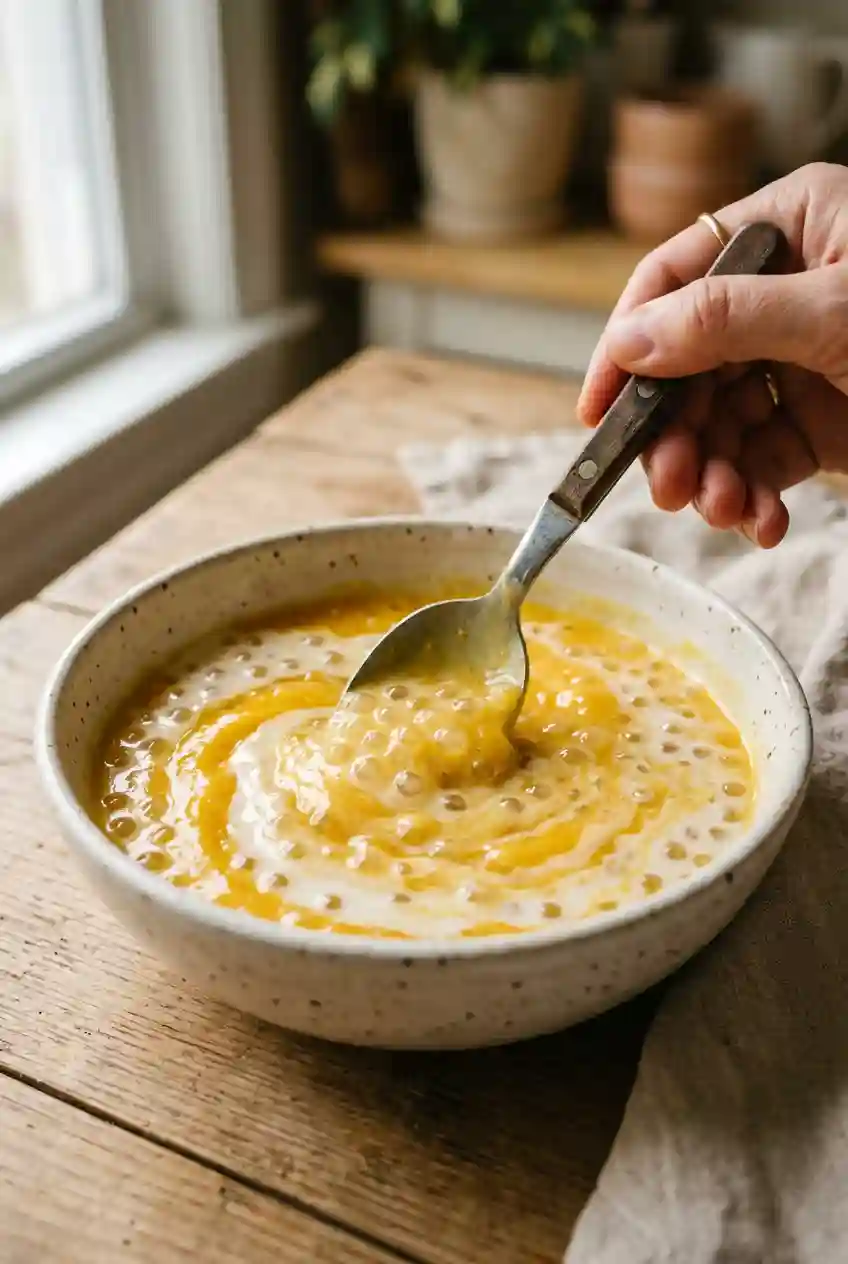
Now gently mix the cooked tapioca pearls into the mango base.
Don’t dump everything aggressively. Fold it in slowly.
You want the pearls evenly distributed, not clumped in one area.
At this stage, it might look slightly thinner than expected. That’s normal.
Step 5: Chill before serving
This is the step people underestimate the most.
Refrigerate the mixture for at least 1 to 2 hours.
And I know… it’s tempting to eat it right away. I’ve done it. It’s fine.
But chilled mango sago pudding? Completely different experience.
The texture thickens slightly, the flavors settle, and it becomes that refreshing mango sago dessert you were actually aiming for.
Step 6: Add toppings and serve
Before serving, add:
- Fresh mango chunks
- Optional coconut jelly
- Maybe a few ice cubes if you like it extra cold
And that’s it.
Simple process. But when done right, it feels like something you’d get from a dessert café.
Small reality check before you move on
If your first attempt isn’t perfect… that’s normal.
Maybe it’s slightly too thick. Maybe a bit too sweet. Maybe the pearls aren’t exactly how you imagined.
That’s part of it.
This mango sago pudding recipe is one of those desserts you learn after making it once or twice. And honestly, that’s what makes it satisfying.
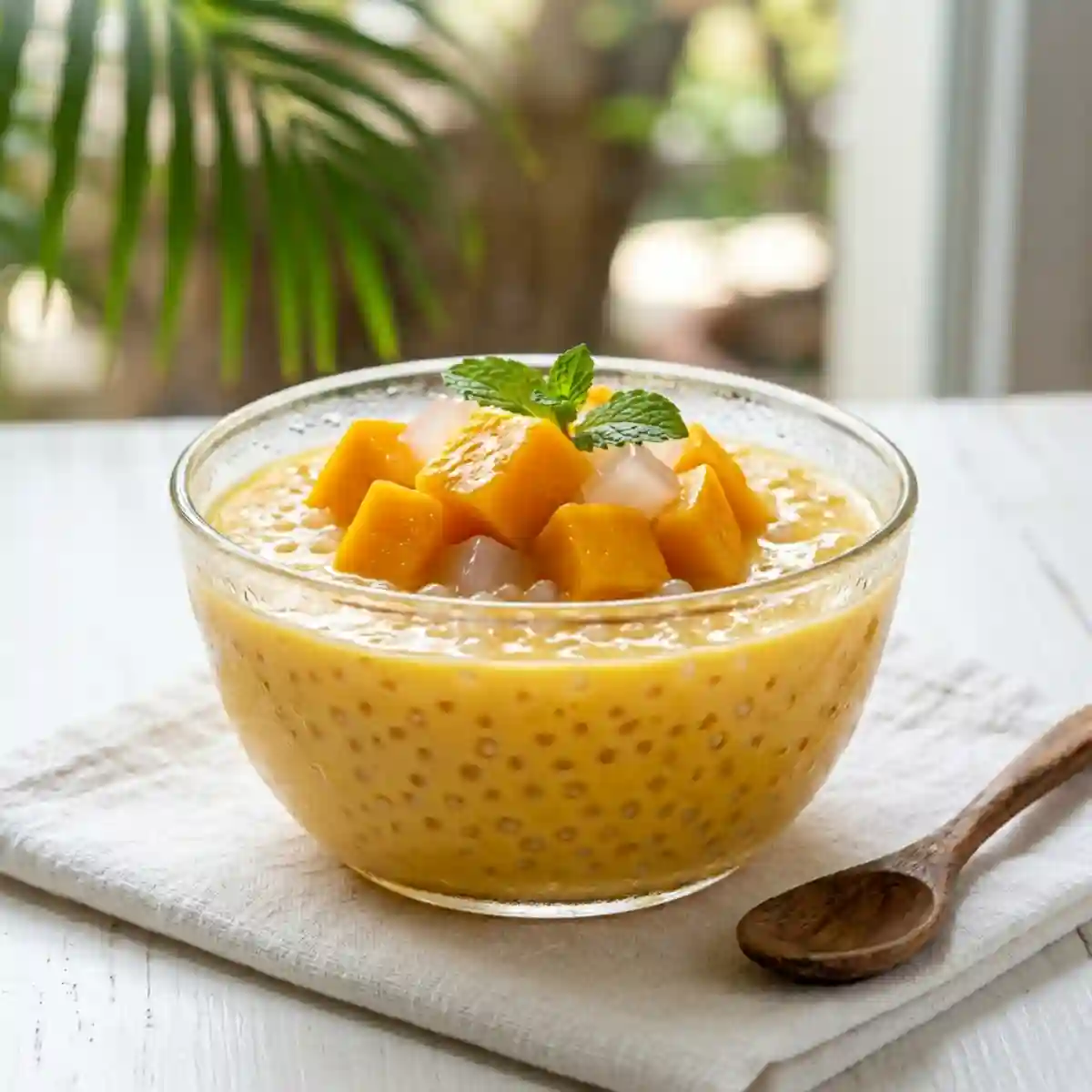

Mango Sago Pudding Recipe
Ingredients
Method
- Bring a large pot of water to a boil and add tapioca pearls. Stir continuously for the first few minutes.
- Cook until pearls are mostly translucent, then turn off heat, cover, and let rest for 10–15 minutes.
- Drain and rinse the pearls under cold water until they are separated and no longer sticky.
- Blend mango flesh into a smooth puree.
- Mix mango puree with coconut milk, condensed milk, optional milk, and a pinch of salt.
- Add cooked tapioca pearls and mix gently.
- Refrigerate for 1–2 hours until chilled.
- Serve cold with fresh mango chunks on top.
Notes
| Nutrient | Amount (Approx.) |
| Calories | 230 – 260 kcal |
| Carbohydrates | 45 – 55 g |
| Sugars | 25 – 30 g |
| Protein | 3 – 5 g |
| Fat | 4 – 7 g |
| Saturated Fat | 2 – 4 g |
| Fiber | 1 – 3 g |
| Sodium | 50 – 100 mg |
| Vitamin C | 30 – 40 mg |
| Potassium | 400 – 500 mg |
- Use very ripe mango for best natural sweetness
- Do not skip rinsing tapioca pearls to avoid stickiness
- Adjust sweetness before chilling, flavors change when cold
- Add a splash of milk before serving if the pudding thickens
How to Cook Sago Pearls for Mango Sago Pudding Recipe (No Stickiness)
This is the part that quietly ruins most mango sago pudding recipe attempts.
Not the mango. Not the milk. The sago.
If you’ve ever ended up with sticky, clumpy, or oddly hard pearls, you already know how frustrating this is. And the worst part? It’s usually not obvious what went wrong.
I used to think I just needed better tapioca pearls. Turns out… no. The method is everything.
The correct way to cook tapioca pearls sago
Let’s simplify it. Cooking sago pearls isn’t complicated, but it’s very precise.
Here’s the method that actually works:
- Bring a large pot of water to a full boil
- Add the tapioca pearls slowly while stirring
- Keep stirring for the first few minutes
- Let them cook until mostly translucent
- Turn off heat, cover, and let them rest
- Rinse thoroughly under cold water
That’s it on paper. But in reality, each step matters more than it looks.
Especially the stirring and rinsing.
Why your sago turns sticky
Let’s be honest. If your mango sago pudding recipe didn’t turn out right before, it’s probably because of one of these:
- You added pearls to water that wasn’t fully boiling
- You didn’t use enough water
- You didn’t stir early enough
- You skipped the cold rinse
And I get it. These steps feel small. Easy to ignore.
But tapioca releases a lot of starch. Without enough water and movement, it turns into something closer to glue than soft pearls.
And once that happens, it’s almost impossible to fix.
How to know when sago pearls are perfectly cooked
This part confused me at first.
You don’t want the pearls completely clear during boiling. They should look mostly translucent with a tiny white center.
Then during the resting phase, that center disappears.
If you cook them until fully clear on heat, they often become too soft or start breaking.
So the trick is stopping slightly before they look “done.”
Feels counterintuitive… but it works.
The cold rinse step that changes everything
I’ll say it directly. This is the most important step.
After cooking, rinse the pearls under cold water until they feel cool and separate.
You’re doing two things here:
- stopping the cooking process
- removing excess starch
If you skip this, your mango tapioca pudding will feel heavy and sticky instead of light and smooth.
And honestly, this is where most recipes don’t insist enough.
Small habits that make a big difference
Once you get used to it, a few simple habits improve your result every time:
- Always use more water than you think you need
- Never stop stirring in the beginning
- Don’t rush the resting phase
- Taste one pearl before draining
That last one sounds obvious, but it helps. You’ll know immediately if the texture is right.
One last thing most people don’t realize
Even perfectly cooked sago can go bad if left sitting too long without liquid.
If you leave it dry, it starts sticking again.
So once it’s rinsed, either:
- mix it into the mango base quickly
- or keep it in a bit of water until ready to use
Small detail, but it keeps your mango sago pudding recipe smooth from start to finish.
Common Mistakes in Mango Sago Pudding Recipe (And Fixes)
Let’s be real for a second.
Most mango sago pudding recipe failures don’t come from complicated steps. They come from small things that seem harmless at the time… but completely change the final result.
And the annoying part? You usually only realize it after chilling the dessert and taking that first spoon.
Something feels off. Too thick. Too sweet. Texture not quite right.
I’ve been through all of these. So instead of pretending this recipe is foolproof, let’s go through what actually goes wrong and how to fix it.
Mistake 1: Using unripe or average mango
This one is huge.
If your mango isn’t properly ripe, your whole mango sago dessert loses its personality. It ends up tasting flat, slightly sour, or just… forgettable.
Then what happens? You compensate with more condensed milk.
And now the dessert becomes heavy instead of a light and refreshing summer dessert.
Fix:
- Use soft, fragrant mango
- Taste before blending
- If it’s not sweet enough, don’t rely only on sugar, balance with coconut milk
Mistake 2: Overcooking or undercooking the sago
This is where texture gets ruined fast.
Undercooked pearls feel hard in the center. Overcooked ones become mushy and break apart.
And somehow, both can happen in the same batch if you’re not careful.
Fix:
- Stop cooking when pearls are mostly translucent
- Let them finish during resting time
- Always test one before draining
This alone can completely change your mango tapioca pudding experience.
Mistake 3: Skipping the rinse or rushing it
I know this sounds repetitive, but it deserves to be here.
If you don’t rinse properly, the starch stays. And that leads to clumping later.
The result?
A thick, slightly sticky texture instead of that smooth, creamy fruit dessert feel.
Fix:
- Rinse under cold water until pearls are fully separated
- Take your time here, don’t just splash and move on
Mistake 4: Making the pudding too thick
This happens more often than people admit.
You combine everything, and it looks rich and creamy. Great, right?
Then after chilling… it turns dense. Almost heavy.
And suddenly your mango sago pudding recipe doesn’t feel refreshing anymore.
Fix:
- Keep the mixture slightly looser before chilling
- Add a bit of milk or coconut milk if needed
- Remember, it thickens in the fridge
Mistake 5: Over-sweetening the dessert
This one is sneaky.
Because when you taste the mixture before chilling, it feels just right. Maybe even slightly less sweet.
Then after chilling, it feels… too much.
Fix:
- Aim for slightly less sweetness before chilling
- Let the mango flavor lead, not the sugar
- Adjust gradually, not all at once
Mistake 6: Not chilling long enough
This might sound minor, but it changes everything.
If you eat it too early, the texture hasn’t settled. The flavors haven’t blended.
It feels incomplete.
Fix:
- Chill for at least 1 to 2 hours
- Longer if possible
- Serve cold, not just cool
The pattern behind all these mistakes
Here’s what I eventually realized.
This mango sago pudding recipe isn’t about complexity. It’s about attention.
Every mistake above comes from rushing or assuming something doesn’t matter.
But in a simple dessert like this, every small detail shows.
And once you fix these, something interesting happens.
You stop worrying about whether it will turn out right.
Because it just… does.
Variations of Mango Sago Dessert (Vegan, Light & Creamy Options)

At some point, you’ll probably wonder… do I really have to follow this mango sago pudding recipe exactly every time?
Short answer, no.
And actually, once you’ve made it once or twice, you’ll start noticing something. This dessert is surprisingly flexible. You can tweak it based on what you have, your taste, or even how “light” or “rich” you want it to feel that day.
I didn’t realize this at first. I thought there was one correct version. But after experimenting a bit, I kind of stopped measuring so strictly.
And honestly, that’s when it got more interesting.
Making a vegan mango sago pudding recipe
If you want a fully dairy free version, it’s very easy to adjust.
Instead of regular condensed milk, you can use:
- coconut condensed milk
- coconut cream with a bit of sweetener
- or even maple syrup if you prefer a lighter sweetness
The base still stays creamy because of the coconut milk, so you’re not losing that signature texture.
In fact, sometimes it feels even more like a true tropical dessert recipe this way. Slightly cleaner, more coconut-forward.
A lighter version that doesn’t feel heavy
There are days when you want dessert… but not something rich.
This mango sago pudding recipe can easily be adjusted to feel lighter without losing flavor.
Here’s what helps:
- Reduce the condensed milk
- Add more mango puree
- Use a mix of coconut milk and regular milk or oat milk
The result is closer to a creamy fruit dessert than a heavy pudding.
And weirdly, this version can feel more refreshing, especially if you’re eating it in hot weather.
A creamier, richer version for indulgence
Now let’s say you want the opposite.
You want something more indulgent, closer to what you’d get in a dessert café.
Then you can:
- increase coconut milk slightly
- keep the condensed milk a bit higher
- reduce added liquid so the texture stays thick
This gives you that dense, silky mango coconut pudding feel.
But fair warning… it’s easier to overdo it here. What starts as creamy can quickly become too heavy.
Playing with texture and add-ins
This is where things get fun.
Once the base mango sago dessert is ready, you can start adding different textures.
Some ideas:
- coconut jelly cubes for a bouncy contrast
- extra fresh mango chunks for more fruit
- chia seeds for a slightly thicker texture
- even crushed ice for a colder, lighter feel
I used to skip this part. Just basic version, done.
But adding even one extra element changes the whole experience. It feels more complete, more layered.
Adjusting based on your mood
This might sound strange, but this mango sago pudding recipe changes depending on how you feel.
Some days you want:
- light and refreshing
- less sweet
- more fruit
Other days:
- creamier
- richer
- more indulgent
And instead of treating those as different recipes, it’s easier to think of them as variations of the same base.
Once you get comfortable with that idea, you stop following the recipe strictly… and start making it your own.
Storage Tips for Mango Sago Pudding Recipe (Make Ahead & Shelf Life)
This is one of those parts people don’t think about… until the next day.
You make a full batch of this mango sago pudding recipe, enjoy one bowl, maybe two, and then you’re left wondering, “Can I keep this? Will it still taste good tomorrow?”
Short answer, yes. But only if you store it the right way.
Because this dessert changes over time. Not in a bad way necessarily, but enough to affect texture and overall experience.
How long does mango sago pudding last?
In the fridge, this mango sago pudding recipe usually lasts about 2 to 3 days.
After that, it’s still edible, but the texture starts to decline.
The tapioca pearls become softer, sometimes slightly mushy. The base thickens more than expected. And the fresh, refreshing feeling becomes a bit… muted.
So ideally, you want to enjoy it within the first 48 hours.
Why the texture changes over time
This confused me at first.
You follow the recipe, everything looks perfect, you chill it… and the next day it feels thicker and heavier.
That’s because:
- tapioca pearls continue absorbing liquid
- the mango mixture settles and thickens
- cold temperature changes how sweetness is perceived
So even though nothing “went wrong,” the texture shifts.
And if you don’t adjust for it, the dessert can feel less like a refreshing mango sago dessert and more like a dense pudding.
How to store mango sago pudding properly
To keep the best texture, here’s what actually works:
- Store it in an airtight container
- Keep it refrigerated at all times
- Stir before serving to redistribute everything
And here’s a small trick that makes a big difference.
Before serving leftovers, add a splash of milk or coconut milk and mix gently.
It brings back that creamy, smooth consistency and makes it feel fresh again.
Can you make mango sago pudding ahead of time?
Yes, and honestly, this mango sago pudding recipe is great for that.
But there’s a better way to do it.
Instead of mixing everything at once, you can store components separately:
- keep the mango base in one container
- keep the cooked sago in another, with a bit of water
Then combine them a few hours before serving.
This keeps the pearls from absorbing too much liquid and helps maintain that soft, bouncy texture.
Can you freeze mango sago pudding?
Technically, yes. But realistically… you shouldn’t.
Freezing changes the texture of tapioca completely.
Once thawed, the pearls become:
- grainy
- tough
- uneven
And the creamy base can separate slightly.
So while it’s not unsafe, it’s definitely not the same dessert anymore.
The small habit that keeps it tasting fresh
If there’s one thing I’d recommend, it’s this.
Don’t treat this like a dessert you store and forget.
Think of it as something you refresh before serving.
A quick stir. A small splash of milk. Maybe a few fresh mango chunks on top.
Those small touches bring it back to life and make your mango sago pudding recipe feel just as good as when you first made it.
Serving Mango Sago Pudding Recipe
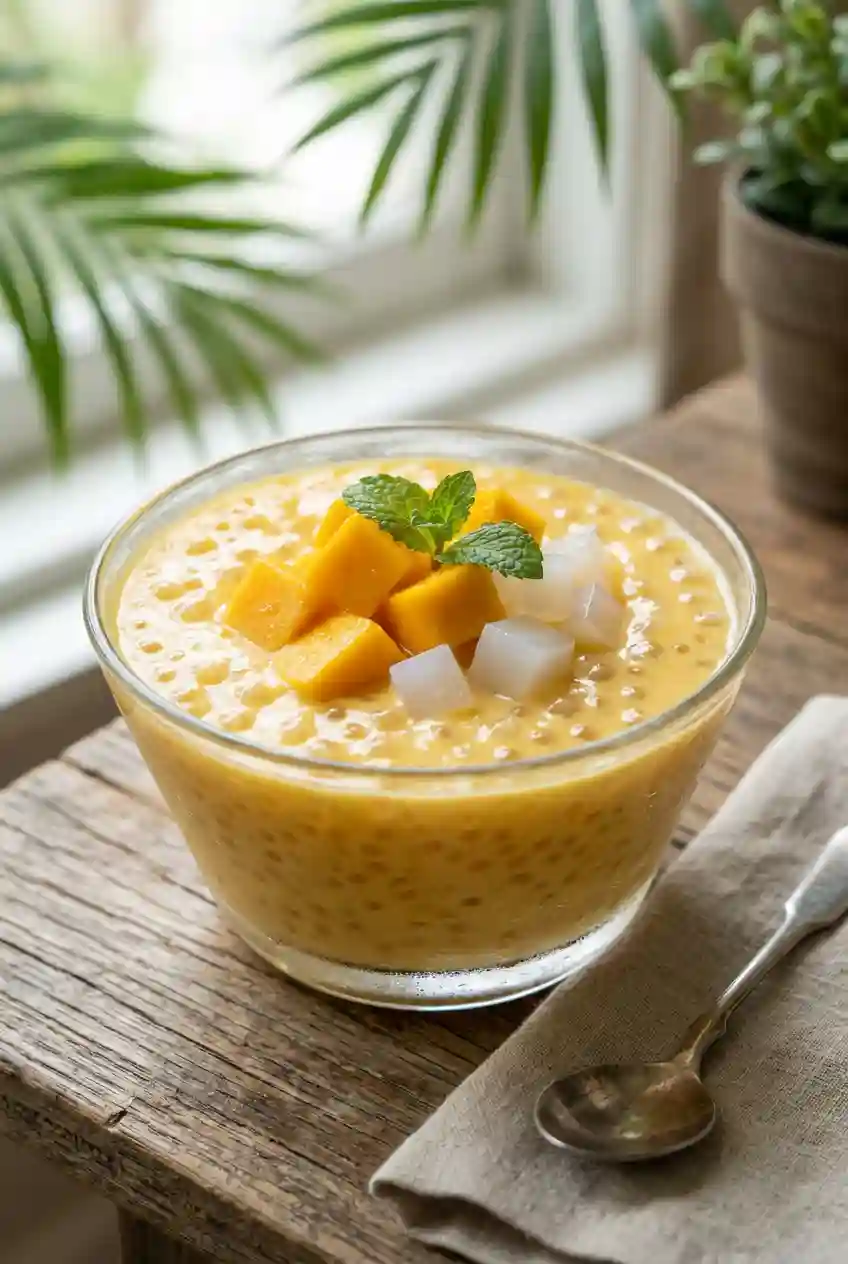
Mango sago pudding recipe is best served well chilled to enjoy its creamy texture and refreshing tropical flavor. After chilling, give it a gentle stir before serving so the tapioca pearls are evenly distributed throughout the mango base.
For presentation, you can serve it in a bowl or a clear glass. A glass works especially well because it highlights the creamy mango color and the soft pearls, making the dessert more visually appealing without extra effort.
To enhance the flavor, top the pudding with fresh mango cubes for natural sweetness and a bit of texture. You can also add a few pieces of coconut jelly or a light drizzle of coconut milk for a slightly richer finish. These simple additions make the dessert feel more complete while keeping it light and refreshing.
This mango sago pudding recipe is perfect for warm days, casual gatherings, or as a light dessert after a meal. Served cold, it delivers the ideal balance of creamy, fruity, and refreshing in every spoonful.
Nutrition Information for Mango Sago Pudding Recipe
Let’s be honest for a second. When people think of desserts like this, they usually assume it’s automatically “too sweet” or “not healthy.”
And yeah… it can be, depending on how much condensed milk you add.
But this mango sago pudding recipe sits somewhere in between. It’s not a health food, but it’s also not as heavy as most creamy desserts. Especially if you keep the balance right.
Here’s a realistic breakdown per average serving (about 1 cup):
| Nutrient | Amount (Approx.) |
| Calories | 230 – 260 kcal |
| Carbohydrates | 45 – 55 g |
| Sugars | 25 – 30 g |
| Protein | 3 – 5 g |
| Fat | 4 – 7 g |
| Saturated Fat | 2 – 4 g |
| Fiber | 1 – 3 g |
| Sodium | 50 – 100 mg |
| Vitamin C | 30 – 40 mg |
| Potassium | 400 – 500 mg |
For general nutrition guidance, you can refer to the USDA, which provides detailed data on fruits, carbohydrates, and balanced dessert portions
What actually makes up these numbers
If you look closely, most of the calories in this mango sago pudding recipe come from:
- natural sugars in mango
- tapioca pearls (carbs)
- condensed milk
The coconut milk adds fat, but it’s usually not excessive unless you increase the quantity a lot.
Is this a healthy dessert or not?
This is where it gets a bit nuanced.
It’s not “low sugar,” but it’s also not empty calories.
You’re getting:
- real fruit (mango)
- some fiber
- vitamins like vitamin C
- a relatively light fat profile compared to heavy cream desserts
So compared to cakes or pastries, it actually feels lighter and more balanced.
How to make this mango sago pudding recipe lighter
If you want to adjust the nutrition without ruining the dessert:
- reduce condensed milk
- rely more on ripe mango sweetness
- use light coconut milk or mix with oat milk
- add chia seeds for extra fiber
These small changes can shift it from a regular dessert to something closer to a “healthy dessert idea” without losing the experience.
One thing people often overlook
Portion size.
Because this dessert feels light and refreshing, it’s easy to eat more than intended. That’s where calories quietly add up.
So yeah… it’s a light dessert in feel, but still something to enjoy mindfully.
Final Thoughts on This Mango Sago Pudding Recipe
So here we are.
You started with a simple idea. Just a mango sago pudding recipe. Something quick, maybe something refreshing, maybe just another easy dessert to try.
But if you’ve followed everything up to this point, you’ve probably realized it’s a bit more than that.
Not in a complicated way. Just… in the details.
Because this dessert doesn’t rely on technique like baking does. It doesn’t depend on precision the same way other recipes do. It depends on how you handle simple things.
The mango you choose.
How you cook the pearls.
Whether you rush the chilling or not.
Small things, but they quietly decide whether your dessert feels average… or something you’d genuinely want to make again.
What makes this mango sago pudding recipe worth repeating
If I had to sum it up, it’s this.
It’s one of the few desserts that manages to feel:
- creamy but not heavy
- sweet but not overwhelming
- simple but still satisfying
And that balance is rare.
You don’t need an oven. You don’t need complicated steps. You don’t even need many ingredients. But you still end up with something that feels complete.
That’s probably why it becomes a go to once you get it right.
The part nobody tells you
Here’s something I didn’t expect when I first made it.
The second time you make this mango sago pudding recipe will be better than the first.
Not because you changed the recipe, but because you start noticing things.
You’ll adjust sweetness without thinking.
You’ll recognize when the pearls are ready.
You’ll instinctively know if it needs more milk or more mango.
And at that point, it stops being just a recipe.
It becomes something you understand.
A small thought before you try it
You don’t need to get everything perfect on your first try.
In fact, it’s better if you don’t.
Because the small imperfections are what help you figure out your version of this dessert. Slightly lighter, slightly creamier, maybe more fruity or less sweet.
That’s the part that makes it yours.
And honestly, that’s what makes this mango sago pudding recipe more than just another tropical dessert.
It becomes something you come back to.
Not because it’s trendy. Not because it’s viral.
Just because it works.
More Sweet & Refreshing Desserts You’ll Love
- Fresh Raspberry Tiramisu – Light, fruity, and perfect for warm days.
- Strawberry Cream Puffs – Airy, creamy, and bursting with flavor.
- Viral Japanese Yogurt Cheesecake – Soft, fluffy, and delicately sweet.
- Lemon Mousse – Bright, smooth, and refreshing with a citrus twist.
FAQs About Mango Sago Pudding Recipe
1. What is mango sago pudding recipe made of?
Mango sago pudding recipe is made with fresh mango puree, coconut milk, tapioca pearls, and a small amount of sweetened condensed milk. It creates a creamy, chilled dessert with a soft and slightly chewy texture.
2. How to make mango sago pudding recipe step by step?
To make mango sago pudding recipe, cook tapioca pearls until soft, rinse them to remove starch, blend ripe mango with coconut milk and condensed milk, then combine everything and chill before serving. The key is getting the texture right and balancing sweetness.
3. Why is my sago sticky in mango sago pudding recipe?
Sago becomes sticky when it is not rinsed properly after cooking or when there is not enough water during boiling. Tapioca releases starch, and without rinsing, the pearls stick together and lose their smooth texture.
4. Can you make mango sago pudding recipe ahead of time?
Yes, mango sago pudding recipe can be made ahead and stored in the fridge for 2 to 3 days. For best results, store the mango base and tapioca separately and combine before serving.
5. How long does mango sago pudding last in the fridge?
Mango sago pudding usually lasts 2 to 3 days in the refrigerator. After that, the tapioca pearls start to soften too much and affect the texture.
6. Can you freeze mango sago pudding?
Freezing is not recommended because tapioca pearls become grainy and lose their soft texture after thawing.
7. Can I use evaporated milk instead of coconut milk?
Yes, evaporated milk can be used instead of coconut milk. It gives a less tropical flavor but still keeps the dessert creamy.
9. What type of tapioca pearls should I use?
Use small tapioca pearls for mango sago pudding recipe. Large boba pearls are not suitable because they require a different cooking method and create a different texture.