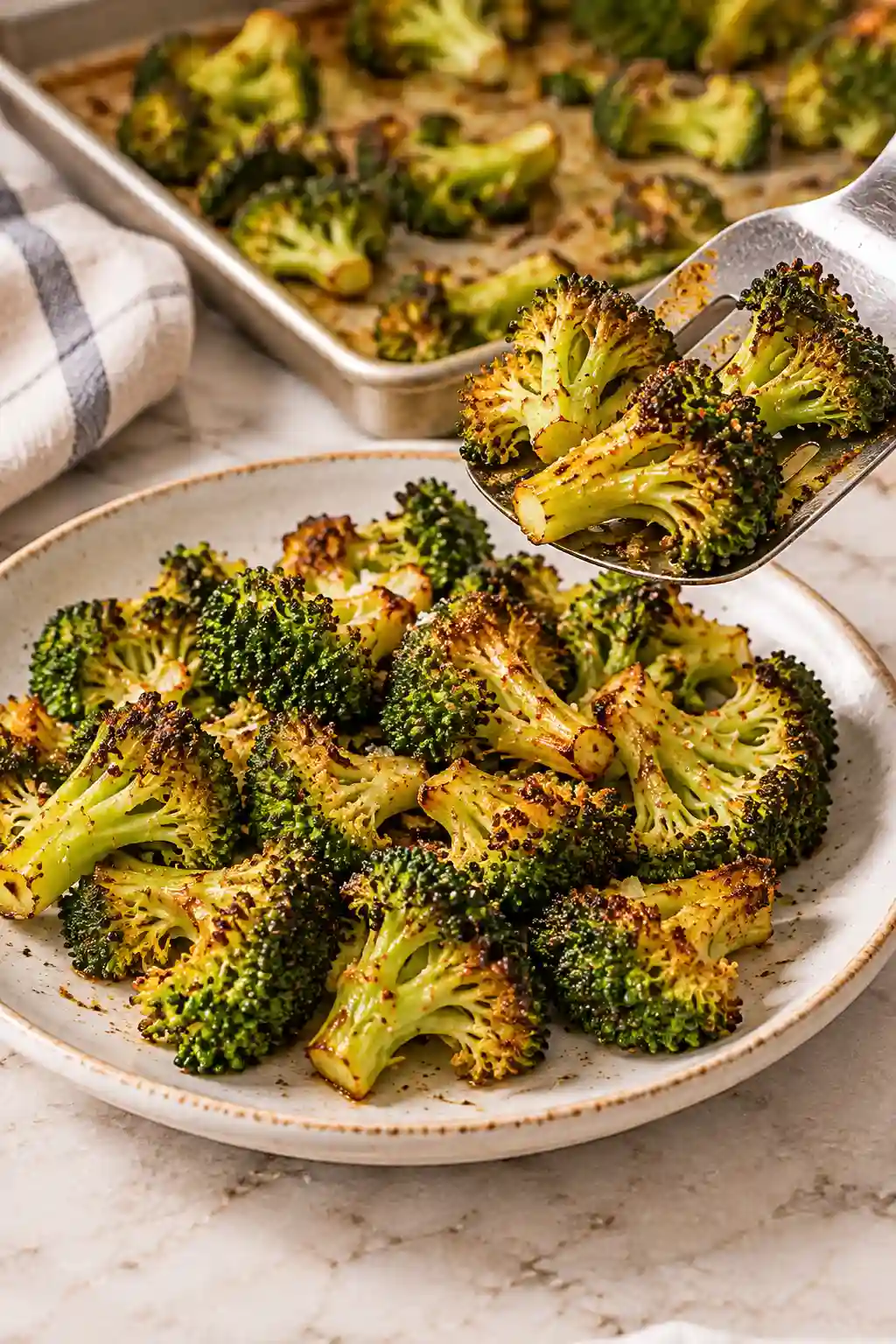
Roasted Broccoli Recipe might sound like one of those sides that barely needs a recipe. Toss broccoli with olive oil, put it in the oven, and wait, right? That’s what I used to think too. Then I’d pull out a tray with a few beautifully browned florets sitting next to others that were soft, pale, and honestly a little disappointing.
You might be thinking, “It’s broccoli. How complicated can it really be?” Fair question. I had exactly the same reaction. But after making oven roasted broccoli again and again, I realized that getting those crisp, almost caramelized edges while keeping the centers tender comes down to a handful of small details. How large you cut the florets matters. So does the amount of oil, the space between each piece, and especially the oven temperature. Once those things clicked for me, roasted broccoli stopped feeling like the vegetable I added to dinner because I should eat something green. It became the broccoli side dish I actually wanted on my plate.
And that’s really what I want this recipe to help you achieve. Nothing complicated, nothing that requires a crowded spice cabinet. The original recipe uses simple ingredients including broccoli, olive oil, garlic powder, paprika, salt, and black pepper, then roasts everything at high heat until the florets are tender and nicely browned. It’s an easy roasted broccoli method that works especially well when dinner is already demanding most of your attention.
There is one thing worth knowing before you start, though. Crispy roasted broccoli is less forgiving of moisture and crowding than it looks. Give the florets enough room and coat them evenly, and you’ll get those browned edges that make you reach for another piece straight from the baking sheet. Crowd them together, and the result can lean more steamed than roasted. I’ve learned not to underestimate that difference.
In this guide, I’ll walk you through how to roast broccoli, how to get crispy results, and how roasting times change at different temperatures. We’ll also get into Parmesan and garlic variations, roasted broccoli and cauliflower, storage, reheating, and a few practical fixes for those moments when your broccoli simply refuses to crisp.
The goal is simple: an easy, crispy roasted broccoli recipe you can confidently make whenever you need a quick vegetable side dish, without having to wonder whether the next tray will actually turn out the way you pictured it.
Table of Contents
Table of Contents
Roasted Broccoli Recipe Ingredients
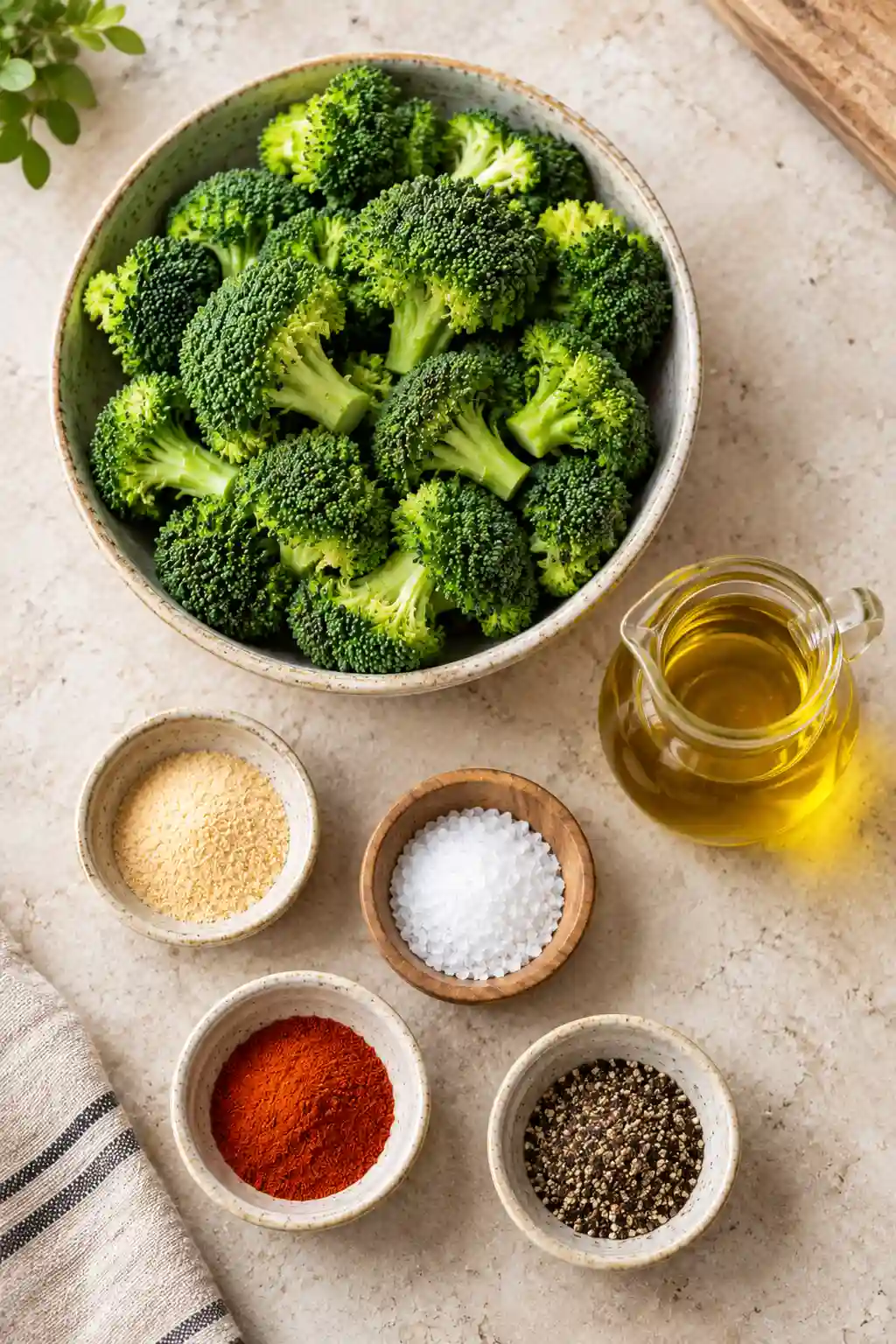
One reason I keep coming back to this Roasted Broccoli Recipe is the ingredient list. There is no complicated sauce to prepare and no long list of seasonings hiding in the pantry. The original recipe uses fresh broccoli florets, olive oil, garlic powder, fine sea salt, paprika, and freshly ground black pepper. That combination is simple, but each ingredient has a job to do.
For 6 servings, you will need:
- 8 cups fresh broccoli florets, about 1.5 pounds
- 1/4 cup olive oil
- 1 teaspoon garlic powder
- 1/2 teaspoon fine sea salt
- 1/4 teaspoon paprika
- 1/4 teaspoon freshly ground black pepper
Try to cut the broccoli into relatively similar bite-sized florets. They do not need to look identical, and frankly, mine rarely do. But if one piece is tiny while another is three times its size, they will not finish roasting together. Smaller florets brown faster, while larger ones need more time to become tender. The original recipe specifically notes that floret size can affect the final roasting time.
Choosing the Best Ingredients for Crispy Roasted Broccoli
You might look at 1/4 cup of olive oil and wonder, “Do I really need that much?” For this Roasted Broccoli Recipe, the oil helps coat the florets so the seasonings stick evenly while the broccoli roasts. You want the pieces coated rather than swimming in oil. Give everything a good stir before adding the seasoning mixture, especially if some florets have larger crowns that tend to catch more oil than others.
Garlic powder is particularly useful here because it distributes easily across the broccoli. The source recipe recommends it for that reason and notes that minced garlic can also be used as an alternative. Paprika adds another layer of seasoning, with smoked paprika suggested as a particularly flavorful option.
Olive oil is not your only choice either. If avocado oil is what you normally keep in the kitchen, the original recipe lists it as a suitable substitute. Frozen broccoli florets can also replace fresh broccoli, although they require a slightly different preparation before roasting. We will get to that method later because simply treating frozen florets exactly like fresh ones can change the final texture.
Simple Seasoning Without Overcomplicating It
What I like about this Roasted Broccoli Recipe is that the seasoning does not overpower the vegetable. Garlic powder, paprika, salt, and black pepper give the florets enough flavor while still allowing those roasted broccoli notes to come through.
There is also plenty of room to build on this basic combination later. Parmesan and garlic can push it in a richer, savory direction, while other variations can turn the same basic method into a different broccoli side dish. For the classic version, though, I would start simple. Get the texture right first, then play with the flavors once you know exactly how you like your broccoli roasted.
How to Roast Broccoli in the Oven
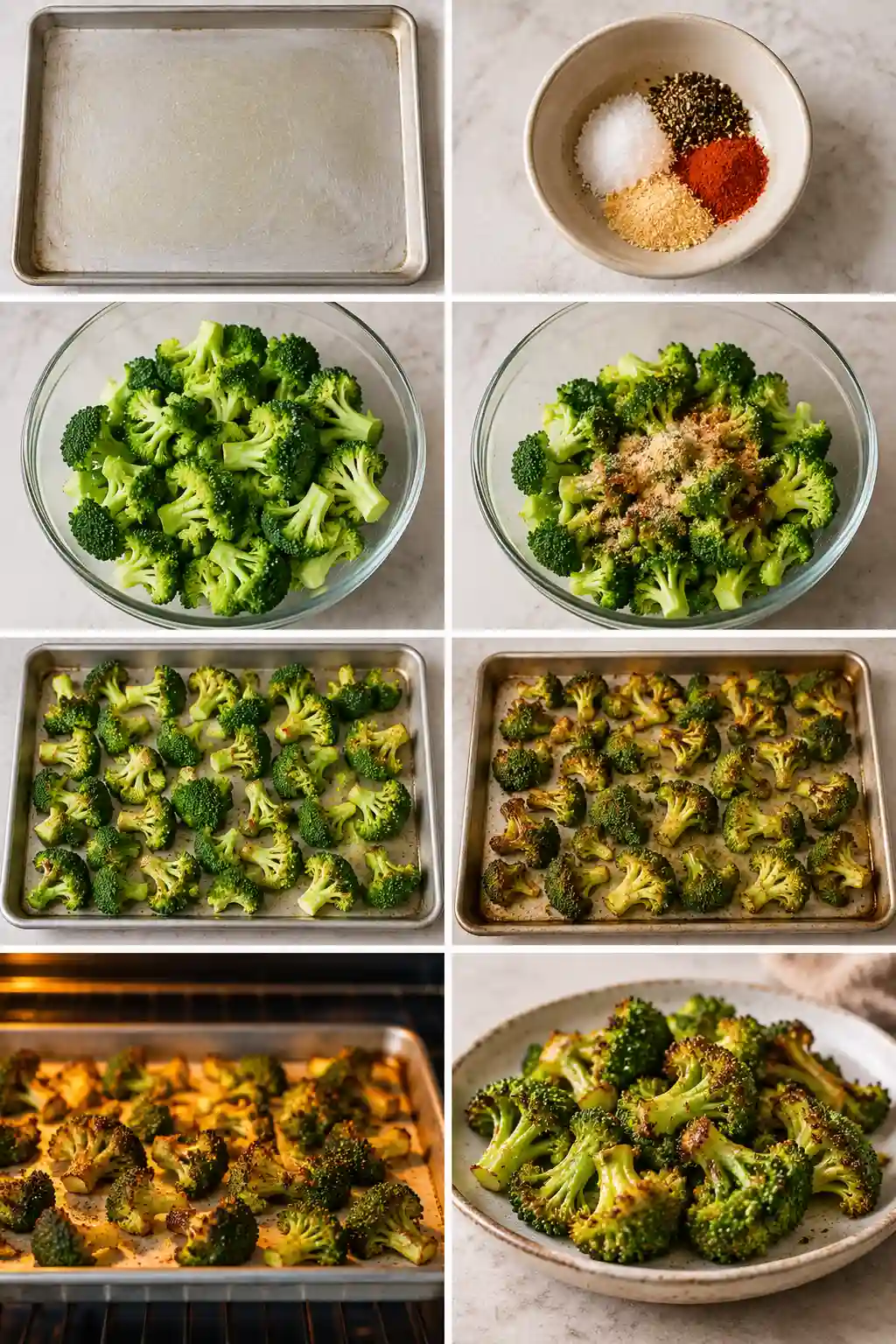
Getting this Roasted Broccoli Recipe into the oven is straightforward, but this is also where a few small decisions can completely change the texture. The original method uses a hot 450°F oven and a total roasting time of about 14 to 15 minutes. That high heat helps the outside of the florets brown while the inside becomes tender.
Start by preheating the oven to 450°F, or 232°C, and grease a large baking sheet. In a small bowl, combine the garlic powder, sea salt, paprika, and black pepper. Mixing the seasonings separately might seem like an unnecessary extra step, but it helps distribute them more evenly later.
Place the broccoli florets in a large bowl and drizzle them with olive oil. Stir until every piece has a light, even coating. Then add half of the seasoning mixture, toss everything together, and repeat with the remaining seasoning. This two-stage approach makes it easier to avoid ending up with heavily seasoned florets in one corner of the bowl and nearly plain ones in another.
How to Get Evenly Roasted Broccoli
Spread the seasoned florets across the prepared baking sheet in a single layer. This part is worth paying attention to. You want the broccoli distributed across the pan rather than piled together. Then place the tray in the oven and roast for 14 to 15 minutes, stirring once halfway through.
Now, you might ask, “What if my broccoli looks ready before 15 minutes?” Take it out. Seriously. Floret size affects cooking time, and ovens do not always behave exactly alike. Smaller pieces can finish sooner, while larger florets may need a little longer. The source recipe recommends checking the broccoli at around the halfway point rather than relying blindly on the timer.
For this Roasted Broccoli Recipe, look for tender stems and visibly roasted edges. If the broccoli is cooked through but still looks a little pale, the original method suggests switching the oven to broil for the final 1 to 2 minutes. Keep an eye on it during this stage because the transition from nicely browned to overdone can happen surprisingly quickly.
What About Roasting Broccoli at 400°F or 425°F?
The source recipe specifically tests the broccoli at 450°F, so that remains the recommended temperature for this version. If you’re wondering how long to roast broccoli at 400°F or 425°F, those temperatures generally require adjusting the cooking time rather than simply following the 450°F timing.
That distinction matters because temperature and time work together. A lower oven temperature usually means the broccoli needs longer to become tender and develop browned edges. Instead of pretending there is one universal roasting time, use the appearance and texture of the florets as your final guide.
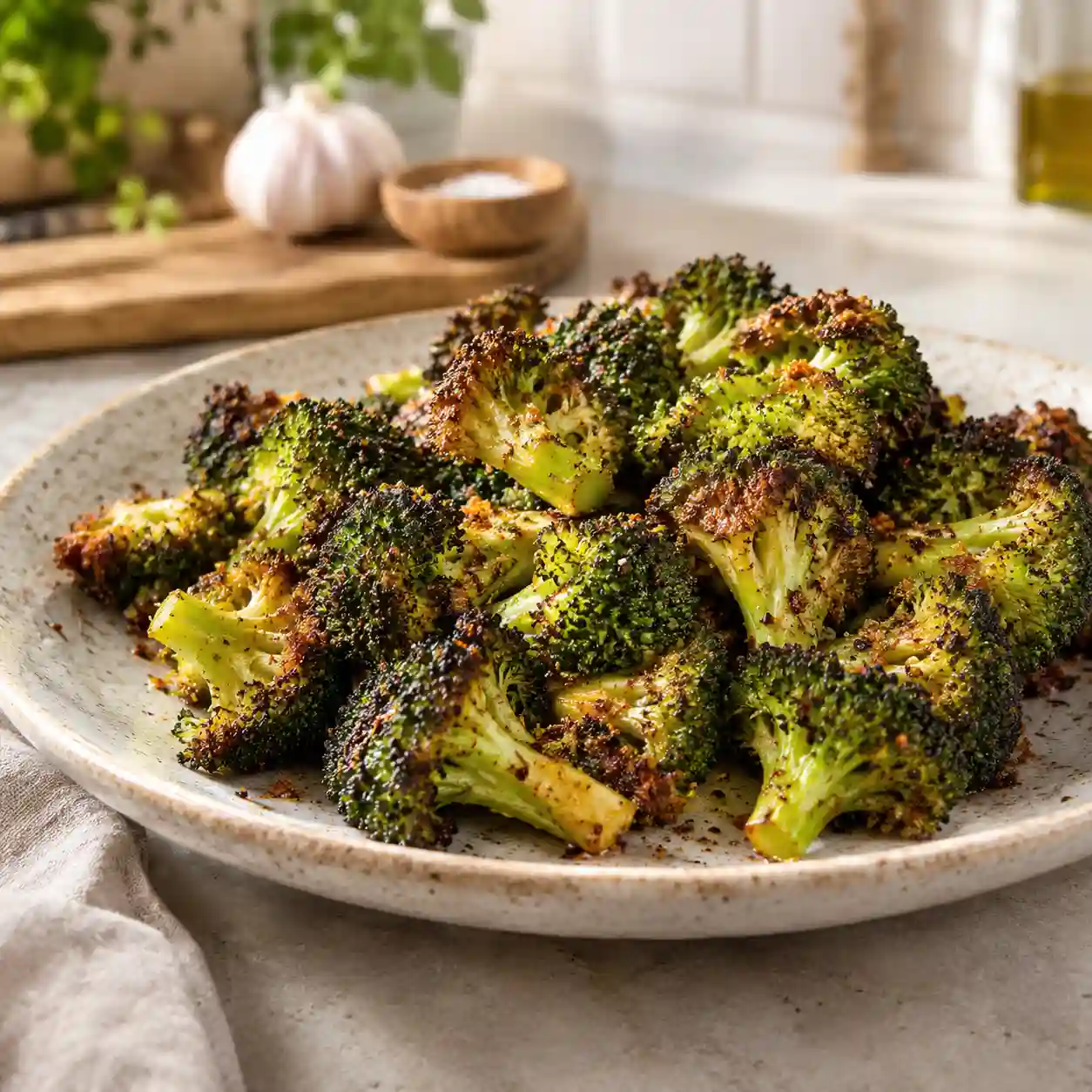
Once you’ve made this Roasted Broccoli Recipe a couple of times, you’ll probably stop watching the clock quite so closely. The color tells you a lot: browned edges, slightly crisp crowns, and tender stems are better signals than an exact minute on the timer. Serve the broccoli immediately while those roasted edges are still at their best.

Roasted Broccoli Recipe
Ingredients
Method
- Preheat the oven to 450°F or 232°C. Grease a large baking sheet and set it aside.
- Combine the garlic powder, sea salt, paprika, and black pepper in a small bowl.
- Place the broccoli florets in a large bowl. Drizzle with olive oil and toss until every piece is evenly coated.
- Sprinkle half of the seasoning mixture over the broccoli and toss. Add the remaining seasoning and toss again until evenly distributed.
- Arrange the seasoned broccoli in an even layer on the prepared baking sheet.
- Roast for 14 to 15 minutes, stirring once halfway through. Keep in mind that smaller florets may cook more quickly, while larger pieces can take slightly longer.
- If you want crispier edges, broil the broccoli for 1 to 2 minutes at the end of cooking. Watch it closely to prevent burning.
- Remove from the oven and serve immediately while the broccoli is hot, tender, and crisp around the edges.
Notes
| Nutrient | Amount |
| Calories | 123 kcal |
| Total Fat | 9 g |
| Saturated Fat | 1 g |
| Carbohydrates | 9 g |
| Protein | 4 g |
| Fiber | 3 g |
| Sugar | 2 g |
| Sodium | 234 mg |
| Potassium | 389 mg |
| Vitamin A | 797 IU |
| Vitamin C | 108 mg |
| Calcium | 57 mg |
| Iron | 1 mg |
How to Make Crispy Roasted Broccoli
The difference between broccoli that is simply cooked and broccoli you keep picking off the baking sheet usually comes down to texture. For this Roasted Broccoli Recipe, the goal is tender broccoli with visibly browned edges and a lightly crisp exterior. It sounds simple, but moisture, spacing, floret size, and oil can all change what comes out of the oven.
I learned pretty quickly that adding more cooking time is not always the answer. You might see pale broccoli after several minutes and think, “I’ll just leave it in longer.” Sometimes that works. Other times, the stems become too soft before the edges ever develop the color you wanted. A better place to start is with the broccoli itself. After washing fresh broccoli, let excess water drain away before adding the olive oil and seasonings.
The size of your florets matters too. The source recipe notes that smaller florets need less roasting time, while larger pieces take longer. Keeping them reasonably similar in size gives you a much better chance of getting everything tender and browned at roughly the same moment.
The Secret to Crispy Oven Roasted Broccoli
Give the broccoli room on the baking sheet. Once the florets are coated with olive oil and seasoning, spread them evenly rather than leaving them clustered together. The original Roasted Broccoli Recipe specifically calls for spreading the seasoned pieces evenly across a large baking sheet before roasting them at 450°F.
Oil coverage is another detail that’s easy to rush. The recipe calls for stirring the broccoli with olive oil until the pieces are evenly coated before adding the spice mixture. That sequence helps the garlic powder, paprika, salt, and pepper cling to the florets instead of collecting at the bottom of the bowl.
Halfway through roasting, stir the broccoli and check its progress. You’re looking for color as much as tenderness. Some dark brown spots around the crowns are a good thing here. They bring the deeper roasted flavor that separates crispy oven roasted broccoli from broccoli that merely tastes baked.
Why Is My Roasted Broccoli Not Crispy?
If your broccoli comes out tender but not quite crisp enough, don’t assume the whole batch is lost. The original recipe suggests broiling it for 1 to 2 minutes at the end when additional crisping is needed, particularly when using frozen broccoli.
Stay close to the oven if you do this. Broiling works fast.
Frozen broccoli also needs slightly different handling. The source method places frozen florets on the baking sheet and warms them in the preheated oven for 1 to 2 minutes before adding olive oil and spices. They are then returned to the oven for roasting.
Once you understand these little adjustments, this Roasted Broccoli Recipe becomes much easier to repeat consistently. Don’t chase crispiness by endlessly extending the cooking time. Start with evenly sized florets, coat them properly, spread them across the pan, and watch the color. That’s usually where the real difference happens.
Tips for the Best Roasted Broccoli Recipe
A Roasted Broccoli Recipe can look almost too simple to get wrong. Broccoli, oil, seasoning, heat, done. But if you’ve ever pulled out a tray where some florets were beautifully browned and others were still pale, you already know there are a few details hiding behind that simplicity. The good news is that none of them require extra ingredients or complicated techniques.
The first thing I pay attention to is floret size. The original recipe recommends cutting the broccoli into bite-sized pieces and points out that smaller florets cook faster while larger ones require more time. I wouldn’t obsess over making every piece identical, though. Just avoid extreme differences in size. Otherwise, you can end up choosing between perfectly cooked large pieces and smaller ones that have gone a little too far.
Another useful habit is checking the broccoli during cooking rather than trusting the timer completely. The original recipe even recommends checking around the halfway point because ovens can bake differently. That quick look can tell you more than another five minutes on a timer.
Don’t Rush the Olive Oil and Seasoning
For this Roasted Broccoli Recipe, the broccoli is coated with olive oil before the spice mixture is added. The seasonings are then added in two batches, stirring between each addition so they are distributed more evenly.
It sounds like a tiny detail, and technically it is. But have you ever taken a bite of roasted vegetables that was overwhelmingly salty, followed by another bite that tasted like nothing? That’s exactly what you’re trying to avoid.
Once seasoned, spread the florets evenly over a large baking sheet. Don’t leave a mound of broccoli in the middle of the pan. Give the pieces enough space to roast properly, and stir them once halfway through cooking as directed in the original method.
Use the Broiler Only When You Need It
There is a temptation to chase darker, crispier broccoli by leaving it in the oven indefinitely. I wouldn’t. If the broccoli has become tender but still needs a little extra color, the original recipe offers a much quicker solution: broil it for 1 to 2 minutes at the end of roasting.
This step is optional, not something every batch automatically needs. In fact, the recipe author notes that broiling is mainly necessary occasionally when using frozen broccoli.
And once you switch that broiler on, stay nearby. One minute can deepen the color beautifully. A little too long can take those browned edges somewhere you didn’t intend.
That’s really the pattern behind a dependable Roasted Broccoli Recipe. Keep the florets reasonably uniform, coat them evenly, distribute the seasoning well, watch the broccoli rather than relying entirely on the clock, and use that final blast of heat only when necessary. Small adjustments, yes, but they’re often what separate an ordinary broccoli side dish from the tray everyone keeps reaching into before dinner is even served.
Roasted Broccoli Recipe Variations
Once you’ve made the basic Roasted Broccoli Recipe a few times, changing the flavor is probably the easiest way to keep it interesting. The original version is intentionally simple, using olive oil, garlic powder, paprika, salt, and black pepper. It also suggests smoked paprika for a deeper flavor and notes that minced garlic can replace garlic powder. That simple base gives you plenty of room to experiment without changing the basic roasting method.
This is usually where I start asking, “What am I serving it with tonight?” If dinner is already rich, I tend to keep the broccoli simple. If the rest of the plate feels a little plain, that’s when Parmesan, garlic, or another stronger seasoning starts sounding good. You don’t need to reinvent the recipe every time. Sometimes one extra ingredient is enough to make the same broccoli side dish feel completely different.
Roasted Broccoli with Parmesan and Garlic
Roasted broccoli with Parmesan and garlic is an easy variation when you want something more savory. Prepare the broccoli using the same basic roasting technique, keeping the florets reasonably similar in size and coating them evenly with oil and seasonings.
For the garlic, you can stay with garlic powder or use minced garlic, which the source recipe specifically lists as an alternative. Parmesan can then be incorporated as a finishing ingredient, giving the roasted florets a salty, cheesy layer that works especially well with their browned edges.
I prefer not to let Parmesan completely take over the dish. Broccoli should still taste like broccoli. That might sound obvious, but it’s surprisingly easy to bury roasted vegetables under so many additions that their flavor disappears.
This Parmesan variation also works when you want to turn a very simple Roasted Broccoli Recipe into a side that feels a little more substantial without preparing a sauce or adding several extra steps.
Roasted Broccoli and Cauliflower
Broccoli and cauliflower are a natural combination for a roasted vegetable side dish. If you decide to cook them together, cut both vegetables into similarly sized florets and spread them evenly across the baking sheet. The goal is to give each piece enough exposure to the oven heat rather than creating a crowded layer of vegetables.
There is one important distinction here. The supplied source recipe specifically provides instructions and cooking times for broccoli, not for a combined broccoli and cauliflower recipe. So if you’re adding cauliflower, use the broccoli method as your starting point but judge doneness by the actual vegetables in front of you rather than assuming both will finish at precisely the same moment.
You can also experiment with the seasoning profile. Smoked paprika can bring a warmer flavor, while garlic and Parmesan push things in a more savory direction. Even switching olive oil for avocado oil is possible, since the original recipe identifies avocado oil as a suitable substitute.
That’s what makes a basic Roasted Broccoli Recipe so useful. Learn the core technique first, then adjust the flavors according to what you’re serving. Parmesan and garlic can make it richer, broccoli and cauliflower can add variety to the tray, and a small seasoning change can give you a different result without turning a quick vegetable side into a complicated project.
What to Serve with Roasted Broccoli
A Roasted Broccoli Recipe becomes even more useful when you stop thinking of it as a side for one particular meal. The mild savory flavor works with everything from comforting casseroles to meat dishes and egg-based meals. The original recipe pairs roasted broccoli with pot roast, meatloaf, sloppy joes, homemade mac and cheese, chicken teriyaki, and several egg dishes. That’s a pretty wide range, and it’s one reason roasted broccoli can easily become one of those default vegetables you make without having to rethink dinner.
Personally, I like it most when the main dish is rich. You know those dinners where everything on the plate is creamy, cheesy, or heavy and you suddenly think, “I probably need something green here”? Roasted broccoli fits that moment particularly well. It adds texture and a vegetable component without requiring another complicated recipe.
The source article specifically mentions serving it alongside homemade mac and cheese for a more balanced meal. That pairing makes sense because the crisp, seasoned broccoli provides a contrast to a softer, richer main dish.
Easy Broccoli Side Dish Ideas
If you’re making this Roasted Broccoli Recipe for a weeknight dinner, you don’t need to overthink the pairing. The original recipe suggests serving it with balsamic pot roast, meatloaf, sloppy joes, mac and cheese, or slow cooker chicken teriyaki.
It also works alongside egg dishes, including:
- Quiche
- Egg casserole
- Frittatas
- Omelettes
That last group is worth remembering because broccoli doesn’t have to be reserved for dinner. A tray of roasted vegetables beside a frittata can work just as comfortably for brunch or lunch.
And if you’re already preparing several roasted vegetable recipes, broccoli can become part of a larger vegetable spread rather than acting as the only side. This is also where the broccoli and cauliflower variation from the previous section can be useful.
Keep the Rest of the Meal Simple
There’s a funny thing that happens with side dishes. Sometimes we spend so much time trying to make them interesting that dinner becomes more complicated than it needs to be. With roasted broccoli, I think the opposite approach works better.
If the main dish already has plenty of flavor, keep the broccoli close to the original seasoning of garlic powder, paprika, salt, and pepper. If the main dish is simpler, that’s when the Parmesan and garlic variation can add something extra to the plate.
This flexibility is what makes a Roasted Broccoli Recipe useful beyond a single dinner. It can sit next to comfort food, chicken, beef, or eggs without feeling out of place. And once you know the basic roasting technique, choosing what to serve with it becomes less about following strict rules and more about looking at the rest of your plate and deciding what it needs.
How to Store and Reheat Roasted Broccoli
A Roasted Broccoli Recipe is definitely at its best when it comes straight from the oven, while the edges are still crisp and the centers are warm and tender. Still, leftovers happen. Or at least they’re supposed to. The original recipe recommends storing leftover roasted broccoli in an airtight container in the refrigerator for up to four days.
If you’re planning meals ahead, that gives you some flexibility. You can roast a batch for dinner and keep what’s left for another meal during the next few days. I wouldn’t expect refrigerated broccoli to have exactly the same texture as a freshly roasted batch, though. Once it has cooled and spent time in a sealed container, some of that crispness naturally disappears.
You might be thinking, “Fine, but can I actually make it crispy again?” To some extent, yes. The reheating method matters.
Best Way to Reheat Roasted Broccoli
The quickest option for reheating this Roasted Broccoli Recipe is the microwave. The original recipe specifically mentions this method as the easiest and fastest choice, but it also points out the tradeoff: microwaving warms the broccoli without restoring its crisp texture.
That’s perfectly fine when you’re in a hurry. Not every leftover lunch needs to become a cooking project.
If texture matters more, use the oven. The source recipe recommends preheating the oven to 375°F, placing the broccoli on a small baking sheet or in a small baking pan, and heating it until warmed through and crispy. According to the original instructions, this generally takes around 4 to 5 minutes.
That extra few minutes can make a noticeable difference, particularly if what you liked about the broccoli in the first place was its roasted exterior.
Storing Roasted Broccoli for Easy Meals
Keep leftover broccoli in an airtight container rather than leaving it uncovered in the refrigerator. The source gives a storage window of up to four days.
I also wouldn’t add extra oil automatically before reheating. Try warming the broccoli first and see what the texture needs. Sometimes it’s tempting to “fix” leftovers by adding more ingredients when a few minutes of dry oven heat is really all they needed.
Leftovers can also be used differently rather than simply recreating the original side dish. You could serve the reheated broccoli alongside another main course or incorporate it into a meal where absolute crispness isn’t as important.
That’s another practical advantage of a Roasted Broccoli Recipe. You can enjoy it freshly roasted on the first night, refrigerate what’s left, and still have a useful vegetable side waiting for another meal. If you’re short on time, use the microwave. If those crisp edges are what you’re craving, give the broccoli a few minutes in the oven instead.
Roasted Broccoli Nutrition Information
A Roasted Broccoli Recipe can be an easy way to bring more vegetables to the table without settling for something bland. Broccoli provides fiber along with several vitamins and minerals, while olive oil contributes most of the added fat in this recipe. The original recipe highlights broccoli as a source of fiber, vitamin K, vitamin C, folic acid, and potassium.
If you’re looking at the nutrition numbers and wondering what they actually represent, there is one detail to keep in mind. The original recipe makes six servings, and its nutritional information is automatically calculated. The recipe author therefore recommends treating these figures as approximations rather than exact nutritional measurements.
Nutrition Facts Per Serving
Here is the nutritional information provided for the original Roasted Broccoli Recipe:
| Nutrient | Amount per serving |
| Calories | 123 kcal |
| Carbohydrates | 9 g |
| Protein | 4 g |
| Total Fat | 9 g |
| Saturated Fat | 1 g |
| Fiber | 3 g |
| Sugar | 2 g |
| Sodium | 234 mg |
| Potassium | 389 mg |
| Vitamin A | 797 IU |
| Vitamin C | 108 mg |
| Calcium | 57 mg |
| Iron | 1 mg |
According to Harvard Health Publishing, broccoli is a good source of dietary fiber and potassium and is rich in vitamins A, C, K, and folate.
These values correspond to the source recipe made with 8 cups of fresh broccoli florets, 1/4 cup of olive oil, garlic powder, sea salt, paprika, and black pepper, divided into six servings.
What Can Change the Nutrition Values?
Think of the table as a useful reference rather than a number that stays fixed no matter how you prepare the dish. Ingredient substitutions, toppings, and portion sizes can all change the final nutritional profile.
For example, adding Parmesan creates a richer variation, but the nutrition values would no longer match those shown in the table. The same applies if you use more or less olive oil or divide the finished broccoli into a different number of portions.
And this is something that’s easy to overlook. If you’re thinking, “My serving is definitely bigger than that,” you’re probably right. Home-cooked portions rarely divide themselves into six perfectly identical servings.
The source article also points to the nutritional value of broccoli and describes olive oil as a source of monounsaturated fats and antioxidants. Beyond those numbers, roasting gives broccoli browned edges and a deeper flavor while keeping the ingredient list remarkably simple.
That’s one reason this Roasted Broccoli Recipe works so well as an everyday vegetable side dish. You get broccoli, straightforward seasonings, and a cooking method that makes the vegetable genuinely enjoyable to eat, without needing a heavy sauce or a long list of additions.
Why This Easy Roasted Broccoli Recipe Works
A Roasted Broccoli Recipe doesn’t need a complicated ingredient list to become a side dish you genuinely look forward to eating. What makes this version work is the combination of a short preparation process, simple seasonings, and high oven heat. The original recipe uses just six ingredients and roasts the broccoli at 450°F for about 14 to 15 minutes, with one stir halfway through cooking.
And maybe you’ve had the same experience I have. You buy broccoli with good intentions, put it in the refrigerator, and a few days later you’re staring at it thinking, “What am I actually going to do with this?” That’s where a recipe like this earns its place. There’s no sauce to make and no unusual ingredient to track down. Olive oil, garlic powder, paprika, salt, and black pepper do most of the work.
The high roasting temperature helps transform those simple ingredients into something much more satisfying. Instead of soft broccoli with very little texture, you’re aiming for tender stems and browned, roasted edges. The recipe even gives you the option of broiling the broccoli for another 1 to 2 minutes when it needs a little extra crispness.
A Simple Broccoli Side Dish You Can Adapt
Another reason this Roasted Broccoli Recipe works so well is flexibility. Fresh broccoli is the obvious starting point, but the source recipe also includes a method for using frozen florets. Olive oil can be replaced with avocado oil, garlic powder can be swapped for minced garlic, and smoked paprika can be used when you want a slightly different flavor.
Then there are the variations. Parmesan and garlic can make the broccoli richer and more savory. Broccoli and cauliflower can turn the basic idea into a mixed roasted vegetable side. Or you can keep everything simple and serve the original version alongside chicken, beef, mac and cheese, egg dishes, or another favorite main course.
I actually think that’s the sweet spot for a vegetable recipe. It should give you enough direction that the result feels reliable, but not so many rules that you have to pull up the instructions every single time you cook it.
Once you’ve made this Roasted Broccoli Recipe a few times, you’ll probably start judging it more by sight than by the timer. Look for tender florets, browned edges, and the level of crispness you personally enjoy. Serve it while it’s hot, and don’t be surprised if a few pieces disappear from the baking sheet before they ever reach the table.
Easy Roasted Broccoli for Any Meal
A Roasted Broccoli Recipe like this one proves that a vegetable side dish doesn’t need much fuss to taste genuinely good. Fresh broccoli, olive oil, garlic powder, paprika, salt, and black pepper come together with high oven heat to create tender florets with those browned edges that make roasted vegetables so much more appealing. The original method keeps things particularly manageable, with about 5 minutes of preparation and 14 to 15 minutes of roasting at 450°F.
By now, you’ve also seen how much control you actually have over the final result. Want more crispness? Pay attention to floret size, give the broccoli room on the baking sheet, and use that brief broiling step when necessary. Want something richer? Try the Parmesan and garlic variation. Have cauliflower waiting in the refrigerator too? Add it to the roasting plan and turn dinner into a mixed roasted vegetable side.
That’s probably what I appreciate most about this Roasted Broccoli Recipe. It gives you a dependable starting point without locking you into exactly the same plate every time. You can keep the seasoning simple on a busy weeknight or build on it when the rest of dinner calls for something a little more flavorful.
And if your first tray isn’t quite as crispy as you imagined? Don’t write off roasted broccoli. Check the moisture, spacing, floret size, and browning before changing everything at once. Sometimes the difference between “pretty good” and “I’m making this again” is surprisingly small.
Serve your Roasted Broccoli Recipe hot from the oven alongside your favorite main dish, and keep the method somewhere handy. After a couple of batches, you may not even need to look at it anymore. You’ll know the signs: tender stems, browned crowns, crisp edges, and probably a few florets mysteriously disappearing before the baking sheet reaches the table.
More Roasted Vegetable Recipes You’ll Love
- Whole Roasted Cauliflower Recipe – A flavorful oven-roasted vegetable dish that pairs naturally with crispy roasted broccoli.
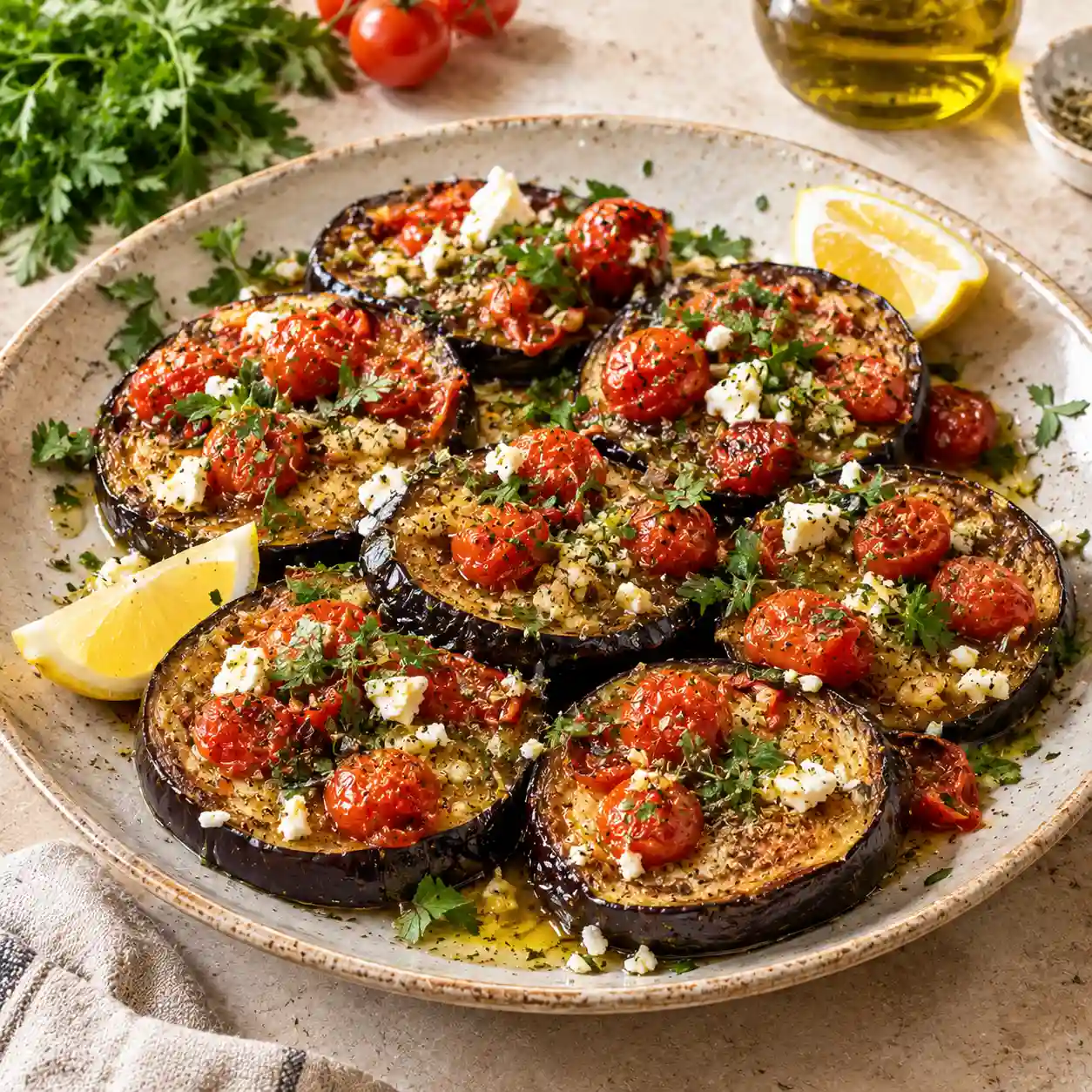
- Baked Eggplant with Tomatoes and Herbs – A simple baked vegetable recipe packed with fresh herbs and savory flavors.
- Herbed Roasted Potato Salad Recipe – Roasted potatoes tossed with herbs for a satisfying and flavorful side dish.
- Garlic Butter Chicken with Brussels Sprouts – An easy dinner featuring roasted Brussels sprouts and savory garlic butter flavors.
- Eggplant Recipes – More vegetable-focused ideas for easy sides and meatless meals.
Roasted Broccoli Recipe FAQs
These are some of the most common questions that come up when making a Roasted Broccoli Recipe, especially when you’re trying to get the timing and texture just right.
1. How long does broccoli take to roast?
For this recipe, roast the broccoli at 450°F for about 14 to 15 minutes, stirring once halfway through. The exact cooking time can vary depending on the size of your florets. Smaller pieces generally cook faster, while larger florets may need a little more time.
2. What is the best temperature for roasting broccoli?
This Roasted Broccoli Recipe uses 450°F, or 232°C. The high temperature allows the broccoli to become tender while developing nicely roasted edges. If the broccoli needs additional browning at the end, you can broil it for 1 to 2 minutes while watching it closely.
3. How long to roast broccoli at 400°F?
The supplied recipe does not provide a tested roasting time at 400°F. Its specified method uses 450°F for approximately 14 to 15 minutes. If you choose a lower temperature, the cooking time will need to be adjusted, so use tenderness and browning as your main indicators of doneness.
4. How long to roast broccoli at 425°F?
The source recipe does not specify an exact cooking time at 425°F. It recommends roasting at 450°F for 14 to 15 minutes and checking the broccoli during cooking because floret size and individual ovens can affect how quickly it finishes.
5. Can you make roasted broccoli with frozen broccoli?
Yes. Spread the frozen florets in an even layer on the baking sheet and warm them in the preheated oven for 1 to 2 minutes. Remove the tray, add olive oil and seasonings, then return the broccoli to the oven and continue roasting according to the recipe.
6. How do you make roasted broccoli crispy?
Start with evenly sized florets, coat them thoroughly with olive oil and seasonings, and spread them evenly across the baking sheet. If your broccoli is tender but isn’t as crisp as you’d like, the original recipe recommends broiling it for 1 to 2 minutes at the end.
7. Can I add Parmesan and garlic to roasted broccoli?
Yes. Garlic already plays a role in the original recipe through garlic powder, and minced garlic is listed as an alternative. Parmesan can be added as a variation when you want a richer, more savory roasted broccoli side dish.
8. How long does roasted broccoli last in the refrigerator?
Store leftover roasted broccoli in an airtight container in the refrigerator for up to four days. For a crispier reheated texture, the original recipe recommends warming it in a 375°F oven for approximately 4 to 5 minutes.
9. Is roasted broccoli healthy?
Broccoli provides fiber and nutrients including vitamin K, vitamin C, folic acid, and potassium, according to the source recipe. The nutritional profile of your finished dish will depend on serving size and any additional ingredients you use.
A Roasted Broccoli Recipe is also easy to modify, so ingredients such as Parmesan, different seasonings, or additional roasted vegetables can be adjusted according to the meal you’re preparing.