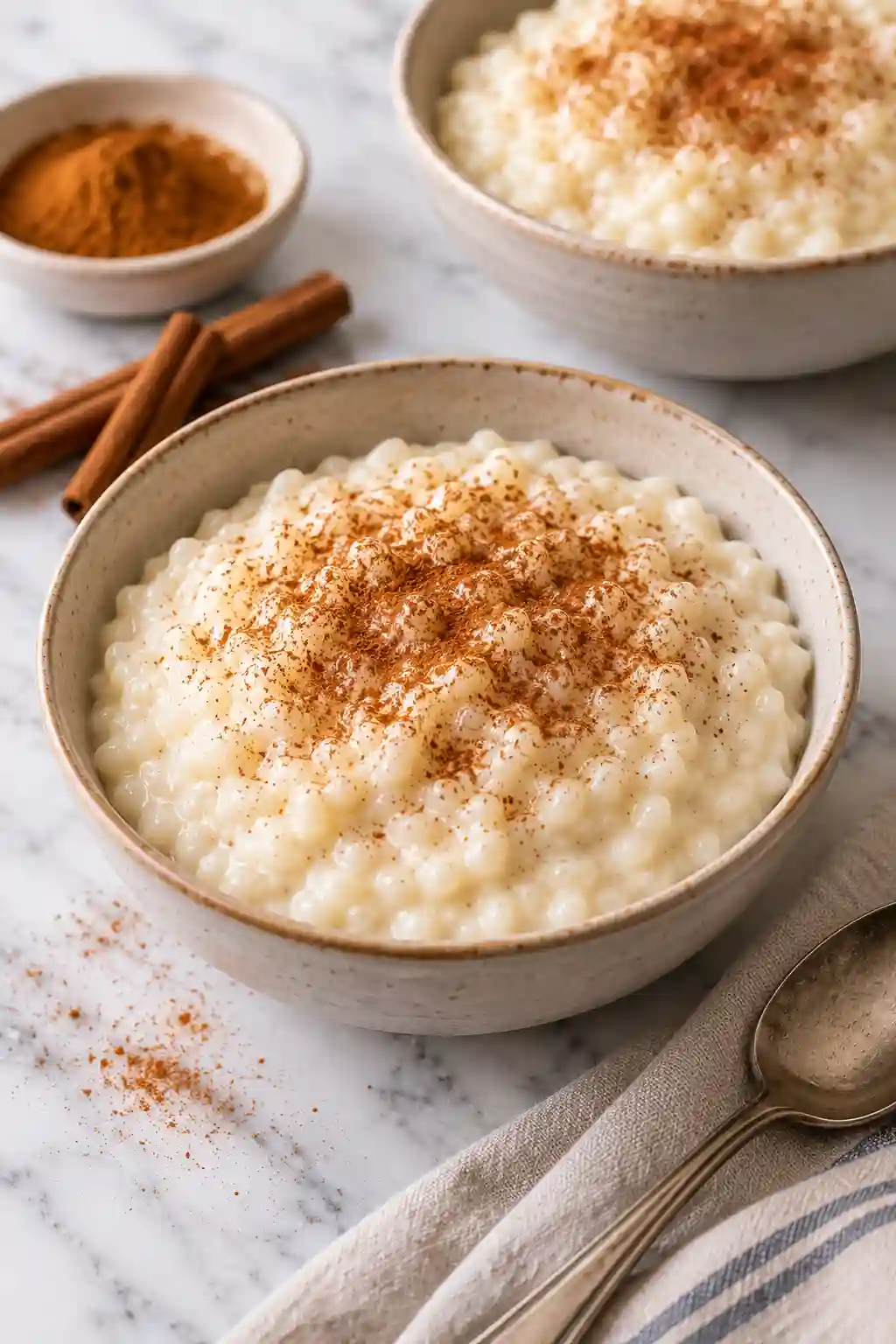
There’s something especially comforting about a warm bowl of homemade rice pudding. This Rice Pudding Recipe turns a handful of everyday ingredients into a thick, creamy dessert with tender rice, plenty of milky richness, and just enough cinnamon to give every spoonful that familiar, old-fashioned warmth.
What I like most about this recipe is how uncomplicated it is. You don’t need eggs, cornstarch, or any special equipment to get that creamy texture. The rice cooks slowly on the stovetop while the milk reduces around it, so the starch from the grains does most of the thickening for you. A little patience matters here probably more than any fancy ingredient but the actual hands-on work is minimal.
If you grew up eating a traditional rice pudding recipe, you’ll probably recognize the appeal immediately: soft rice, warm cinnamon, and a pudding that tastes just as good straight from the pot as it does chilled the next day. And if you’ve never made it before? Don’t worry. This is a genuinely simple rice pudding recipe, and I’ll show you exactly when to stir, when to lower the heat, and when to stop cooking so it stays creamy rather than turning into a stiff bowl of rice.
I’ll also cover how to make rice pudding with leftover cooked rice, how to make an egg-free version, and what to change if you prefer baked rice pudding. Because, really, there isn’t only one “right” way to make it. The goal is much simpler: a creamy rice pudding you actually want to go back for another spoonful of.
Table of Contents
Table of Contents
Rice Pudding Recipe Ingredients
A good Rice Pudding Recipe doesn’t need a long shopping list. In fact, that simplicity is part of what makes this dessert so satisfying. Rice, milk, sugar, cinnamon, and a few supporting ingredients are enough to create a pudding that tastes rich without feeling unnecessarily complicated. The important part is choosing ingredients that work together during slow stovetop cooking, especially the rice and milk.
For this Rice Pudding Recipe, whole milk is the best starting point because it gives the pudding a naturally fuller texture as it reduces. Short- or medium-grain rice works particularly well when you want a creamy consistency, although basmati can also be used for a lighter, more aromatic result. Cinnamon brings that familiar warmth associated with traditional rice pudding, while a small amount of vanilla rounds everything out without overpowering the milky flavor.
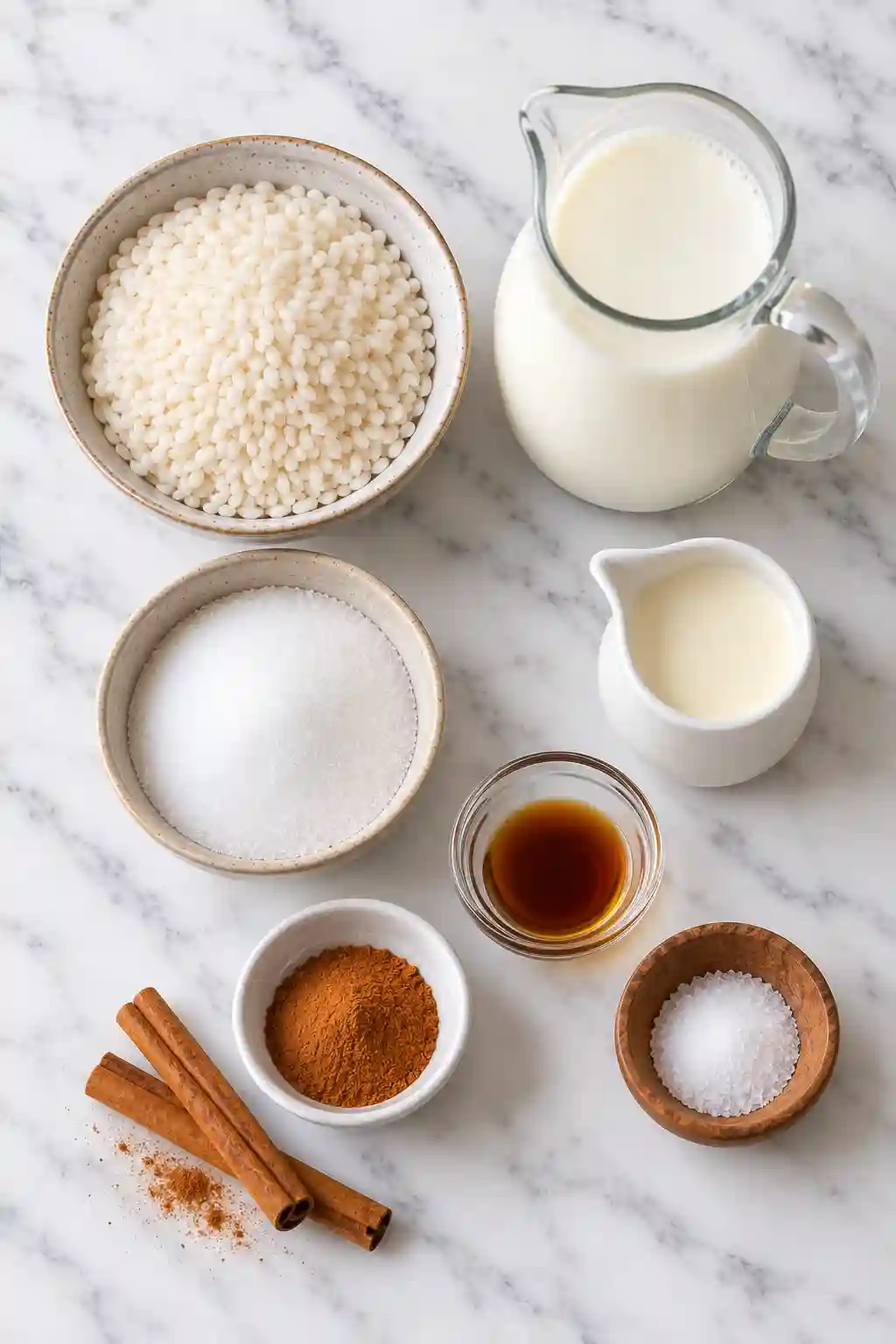
Ingredients You’ll Need
- 1/2 cup short- or medium-grain white rice
- 4 cups whole milk
- 1/3 cup granulated sugar, or to taste
- 1 teaspoon vanilla extract
- 1/2 teaspoon ground cinnamon
- 1 small pinch of salt
- 1/4 cup heavy cream, optional for a richer finish
- Ground cinnamon for serving
The heavy cream is optional. Whole milk alone can produce a creamy pudding when it is cooked slowly enough, so there’s no reason to add cream unless you want something noticeably richer. Sugar is flexible too. I prefer starting modestly because the sweetness becomes more noticeable as the milk reduces you can always add a little more near the end.
What Is the Best Rice for Creamy Rice Pudding Recipe?
Short- and medium-grain varieties are especially useful because they release starch while cooking, helping the milk become thick and silky. Arborio is another excellent choice if you prefer an especially creamy rice pudding. Long-grain rice works, but the grains tend to remain more separate, which gives the finished dessert a slightly different texture.
There’s a small balancing act here. You want the rice soft enough to release starch, but you don’t want to cook everything until the individual grains disappear completely. For this Rice Pudding Recipe, slow cooking over gentle heat gives you more control. The pudding should eventually feel creamy around the rice rather than simply looking like cooked rice floating in milk.
Milk or Cream for Rice Pudding Recipe?
Whole milk gives you the best balance between richness and a traditional pudding texture. Adding heavy cream makes the result more indulgent, but using too much can actually make the dessert feel heavy rather than pleasantly creamy.
If you’re making rice pudding with cream, I’d use it as a finishing ingredient rather than replacing all the milk. That way, the rice still has enough liquid to cook properly, while the final spoonful gets that extra bit of richness. It’s a small adjustment, but one you’ll notice.
How to Make Rice Pudding on the Stovetop
Making a Rice Pudding Recipe on the stovetop is mostly about controlling the heat and giving the rice enough time to soften. There’s no complicated technique hiding here. What matters is keeping the milk at a gentle simmer rather than a hard boil and stirring often enough that nothing settles and scorches on the bottom. It may seem quite loose during the first part of cooking, and that’s normal. The transformation happens gradually as the rice releases starch and some of the milk evaporates.
Use a heavy-bottomed saucepan if you have one. Milk is less forgiving in a thin pan, particularly once the mixture begins to thicken. Keep the heat low, scrape along the bottom whenever you stir, and resist the temptation to turn up the burner just because the pudding looks thin. Faster isn’t necessarily better here.
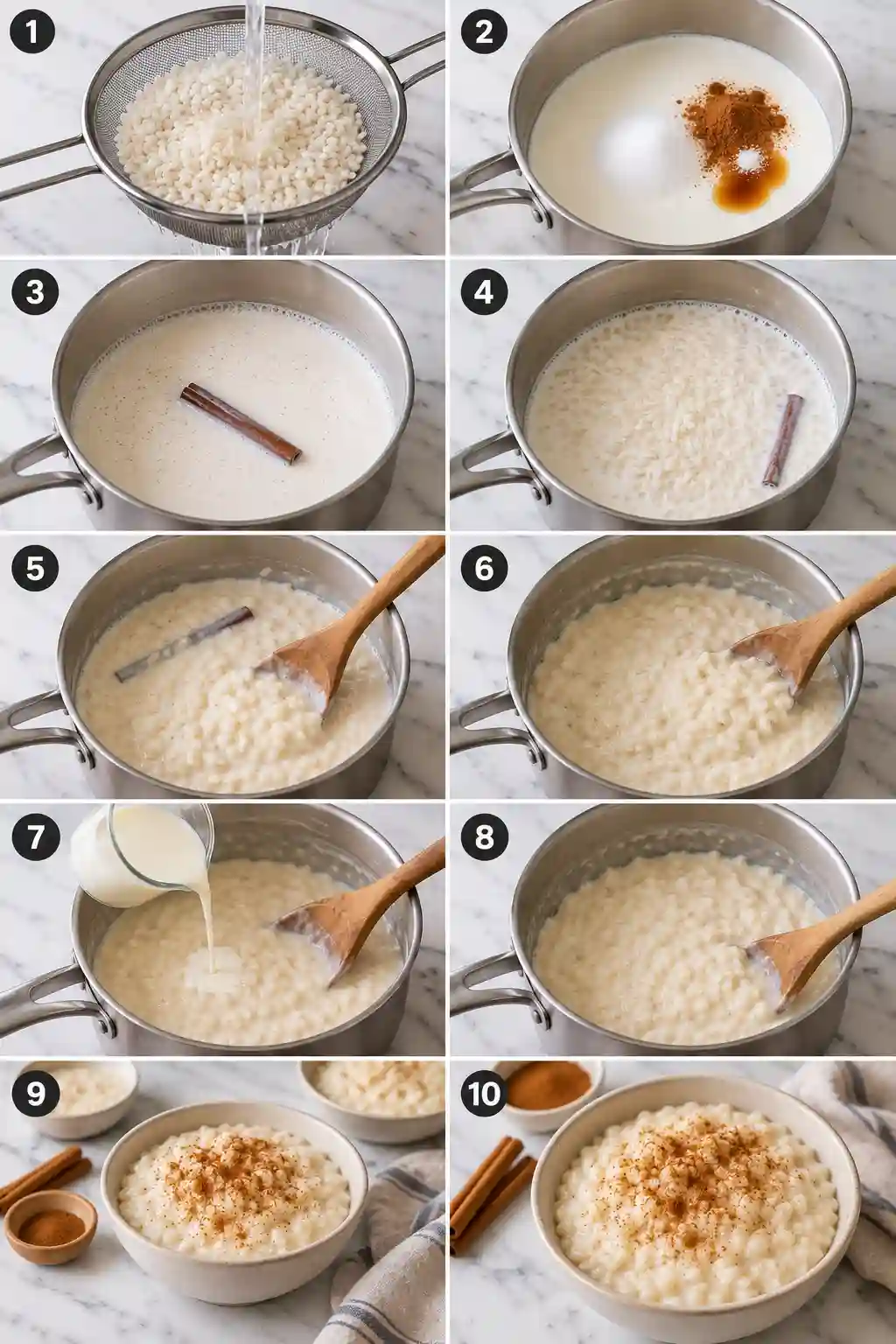
Step-by-Step Stovetop Rice Pudding Instructions
- Add the rice, whole milk, and salt to a heavy-bottomed saucepan. Bring the mixture toward a gentle simmer over medium heat, stirring regularly.
- As soon as small bubbles begin appearing around the edges, reduce the heat to low. Cook gently for about 30 to 40 minutes, stirring every few minutes and scraping the bottom of the pan.
- Once the rice is tender and the milk has noticeably thickened, stir in the sugar and cinnamon. Continue cooking for another 5 to 10 minutes. Adding the sugar toward the end gives the rice time to soften properly before the pudding becomes sweeter and thicker.
- Remove the saucepan from the heat and stir in the vanilla. If you’re making a particularly creamy Rice Pudding Recipe, this is also a good moment to add the optional heavy cream.
- Let the pudding rest for several minutes before serving. Spoon it into bowls and finish with a light dusting of cinnamon. Serve warm for a softer consistency, or refrigerate it if you prefer a thicker, chilled pudding.
How to Tell When Stovetop Rice Pudding Is Done
This is where people often second-guess themselves. The pudding can look slightly too runny in the saucepan even when it’s actually ready. Scoop up a spoonful: the milk should coat the rice rather than immediately running away from it, and the grains should be completely tender when you bite into them.
Don’t wait for the mixture to become extremely thick before removing it from the heat. Rice continues absorbing liquid as it rests, and chilled pudding thickens even further. A Rice Pudding Recipe that looks perfectly thick while boiling can end up surprisingly dense an hour later.
If yours still looks almost like rice soup after 40 minutes, give it another 5 to 10 minutes at a gentle simmer. On the other hand, if it thickens faster than expected, add a small splash of warm milk and stir it through. That little adjustment is usually enough to bring back the soft, creamy consistency you’re after.
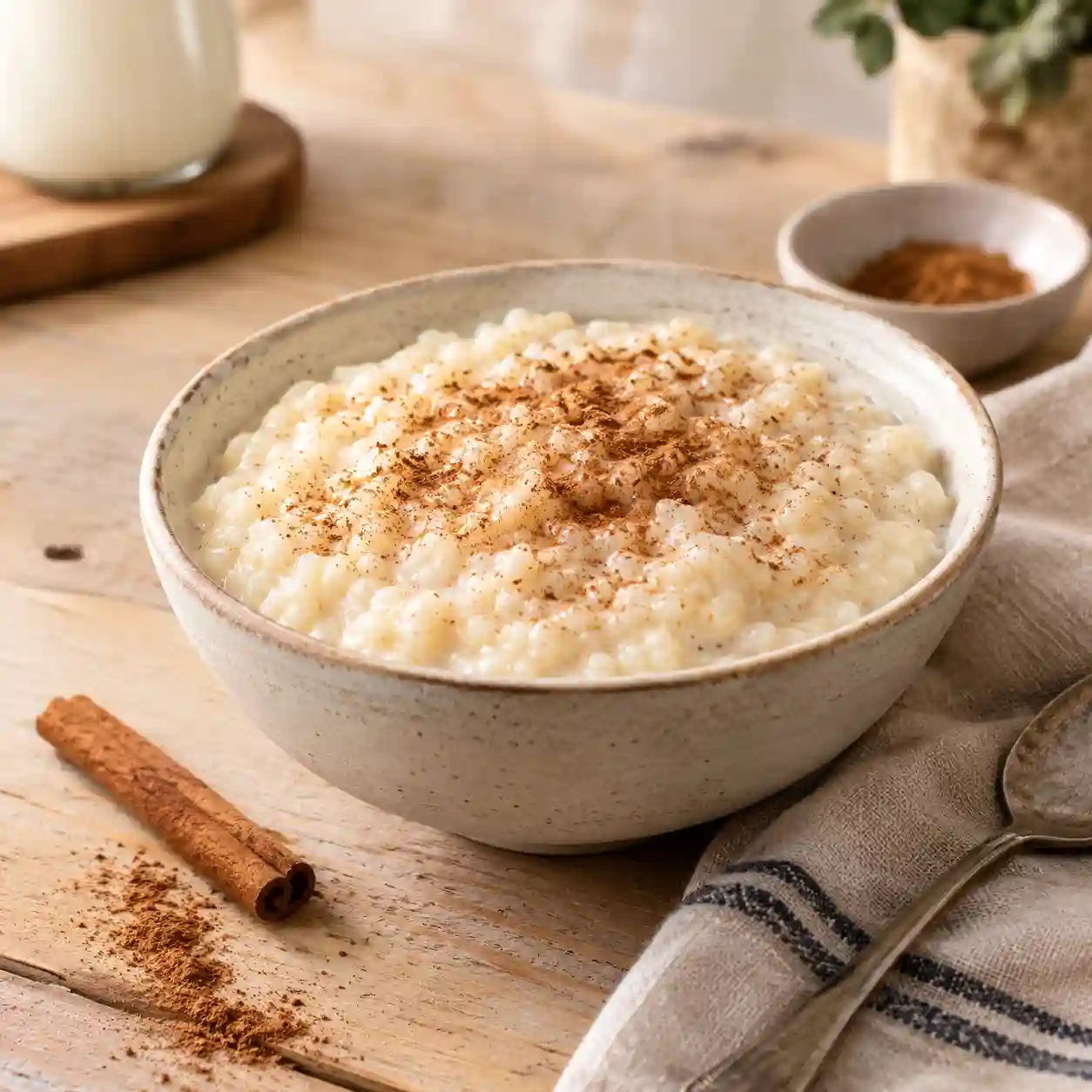

Rice Pudding Recipe
Ingredients
Method
- Add the rice, whole milk, and salt to a heavy-bottomed saucepan.
- Heat over medium heat, stirring regularly, until the milk reaches a gentle simmer.
- Reduce the heat to low and simmer for 30 to 40 minutes. Stir every few minutes and scrape the bottom of the saucepan to prevent scorching.
- Once the rice is completely tender and the milk has thickened, stir in the sugar and cinnamon.
- Continue cooking for another 5 to 10 minutes, stirring frequently, until the pudding is creamy but still slightly loose.
- Remove from the heat and stir in the vanilla extract. Add the optional heavy cream at this stage for an extra-rich texture.
- Let the rice pudding rest for several minutes. Serve warm or refrigerate until chilled and finish with a light dusting of cinnamon.
Notes
| Nutrient | Amount Per Serving |
| Calories | 245 kcal |
| Carbohydrates | 42 g |
| Protein | 7 g |
| Total Fat | 6 g |
| Saturated Fat | 4 g |
| Sugar | 25 g |
| Fiber | 0.5 g |
| Sodium | 85 mg |
| Calcium | 205 mg |
Tips for the Best Rice Pudding
The difference between an okay Rice Pudding Recipe and one you’ll actually want to make again usually comes down to texture. You want the rice completely tender, but not lost in the milk; the pudding should feel creamy and spoonable without becoming gluey. Most problems happen when the heat is too high, the pudding cooks too quickly, or it stays on the stove until it already looks as thick as you want it to be.
Keep the heat gentle once the milk reaches a simmer. Milk solids can settle on the bottom of the saucepan and scorch surprisingly quickly, so stir every few minutes and run your spoon or spatula across the entire base of the pan. And if a little milk does catch? Don’t scrape that browned layer back into the pudding. Carefully transfer the unburned portion to a clean saucepan and continue cooking.
How to Make Rice Pudding Extra Creamy
Creaminess starts with the rice itself. Short- or medium-grain rice releases more starch than many long-grain varieties, which naturally thickens the surrounding milk. Cooking it slowly gives that starch time to work while the milk gradually reduces. For an even richer Rice Pudding Recipe, stir in a small splash of heavy cream near the end rather than replacing the milk with cream from the beginning.
There’s another detail that’s easy to overlook: don’t judge the final consistency while the pudding is bubbling away in the pan. It should still move easily when you remove it from the heat. As it rests, the rice continues absorbing moisture and the whole mixture becomes thicker. This is even more noticeable after refrigeration.
For consistently creamy results:
- Use whole milk rather than low-fat milk when possible.
- Maintain a gentle simmer instead of a rolling boil.
- Stir regularly, especially as the pudding begins to thicken.
- Make sure the rice is fully tender before finishing the pudding.
- Remove it from the heat while it still looks slightly loose.
- Add warm milk a tablespoon or two at a time if it becomes too thick.
How to Fix Rice Pudding That Is Too Thick or Too Runny
A runny pudding usually just needs more time. Continue simmering it gently for 5 to 10 minutes, stirring frequently, then allow a spoonful to cool before deciding whether it needs further cooking. Hot pudding naturally looks thinner, so extending the cooking time too aggressively can leave you with an overly thick dessert later.
If your Rice Pudding Recipe has gone in the opposite direction and become too dense, the fix is pleasantly simple. Stir in a little warm milk until the pudding loosens to the consistency you like. This works especially well with leftovers because refrigerated rice pudding can become considerably thicker overnight.
The goal isn’t a pudding that holds its shape like custard. It should settle softly into the bowl and still feel creamy when you drag a spoon through it. That slightly loose finish may look questionable at first, but after a few minutes of resting, it usually turns out to be exactly right.
Rice Pudding Variations and Substitutions
One of the best things about a homemade Rice Pudding Recipe is how easily you can adjust it without losing the creamy, comforting character of the dessert. The basic combination of rice, milk, and sugar gives you plenty of flexibility, whether you want more cinnamon, a richer dairy base, or a faster version made with leftover rice.
The important thing is to change one or two elements rather than everything at once. Some variations affect only the flavor, while others change the texture or cooking time. Here are the most useful options.
Cinnamon Rice Pudding
For a warmer flavor, add 1/4 to 1/2 teaspoon of ground cinnamon while the pudding cooks. You can also simmer the milk with a cinnamon stick and remove it before serving if you prefer a subtler cinnamon flavor.
A final dusting of ground cinnamon just before serving adds aroma without overpowering the creamy milk and vanilla.
Rice Pudding Without Eggs
You don’t need eggs to make creamy rice pudding. As the rice cooks, it releases starch while the milk gradually reduces, naturally thickening the pudding.
Whole milk and short- or medium-grain rice work particularly well for an egg-free version. Keep the heat gentle and give the mixture enough time to thicken rather than adding cornstarch immediately.
Rice Pudding With Leftover Rice
Leftover cooked rice can turn this dessert into a much quicker recipe. Combine about 2 cups of plain cooked rice with 2 cups of whole milk and simmer gently for 15 to 20 minutes.
Once the mixture becomes creamy, add sugar, cinnamon, and vanilla. Because cooked rice has already absorbed liquid, add a little more milk if the pudding becomes too thick before reaching the consistency you want.
Baked Rice Pudding
For a more traditional oven-style variation, rice pudding can also be baked slowly instead of prepared entirely on the stovetop. Combine the rice, milk, sugar, vanilla, cinnamon, and a pinch of salt in a buttered baking dish and cook gently until the rice is tender and the surrounding milk has thickened.
Baked rice pudding tends to develop a firmer texture and lightly cooked surface, so don’t expect it to look exactly like creamy stovetop rice pudding.
Rice Pudding With Condensed Milk
Sweetened condensed milk gives rice pudding a richer texture and a pronounced milky sweetness. Since it already contains plenty of sugar, reduce or completely omit the granulated sugar when using it.
Start by replacing only part of the regular milk rather than all of it. Taste toward the end of cooking before adding additional sugar. This keeps the Rice Pudding Recipe creamy without making it excessively sweet.
Chocolate Rice Pudding
Chocolate is an easy way to move the pudding away from its traditional cinnamon-and-vanilla flavor. Once the rice is tender and the pudding has thickened, stir in cocoa powder or finely chopped chocolate while the mixture is still hot.
Chocolate naturally makes the dessert taste richer, so you may find that you need less sugar. A little vanilla and a small pinch of salt can also help bring out the chocolate flavor.
Rice Pudding With Cream
For an especially creamy finish, add a small amount of heavy cream toward the end of cooking. There’s no need to replace all the milk with cream; doing so can make the pudding unnecessarily heavy.
Whole milk should remain the main cooking liquid because the rice needs enough moisture to soften properly. Once the grains are tender, a splash of cream can add richness without overwhelming the delicate flavor.
Whichever variation you choose, keep the basic character of the Rice Pudding Recipe in mind: tender rice, creamy milk, balanced sweetness, and a soft consistency that thickens slightly as it cools. Cinnamon keeps things traditional, condensed milk makes it richer and sweeter, chocolate changes the flavor completely, while leftover rice offers a useful shortcut when you want dessert without starting from scratch.
How to Store and Reheat Rice Pudding Recipe
A homemade Rice Pudding Recipe stores surprisingly well, which makes it an easy dessert to prepare ahead of time. The main thing to remember is that rice pudding doesn’t keep exactly the same consistency after refrigeration. The rice continues absorbing moisture as it sits, so a pudding that was soft and creamy on the first day will usually be noticeably thicker the next day.
Let the pudding cool before transferring it to an airtight container, but don’t leave it sitting at room temperature for an extended period. Once refrigerated, keep it covered so the surface doesn’t dry out or absorb odors from other foods. If you already know you’ll be serving the pudding cold, it helps to stop cooking while the mixture is still slightly looser than your ideal serving consistency.
How Long Does Rice Pudding Last in the Fridge?
Rice pudding is best enjoyed within 3 to 4 days when stored properly in an airtight container in the refrigerator. This makes a Rice Pudding Recipe convenient for meal prep, dinner parties, or simply keeping a homemade dessert ready for the next few days.
If the pudding looks thicker after chilling, that doesn’t necessarily mean anything went wrong. It’s a normal result of the rice continuing to absorb liquid. Stir the pudding before serving and, if necessary, add a small amount of milk until the texture becomes creamy again.
For the best results:
- Store the pudding in a clean, airtight container.
- Refrigerate it promptly after cooling.
- Keep toppings such as nuts or fresh fruit separate until serving.
- Add a splash of milk if the chilled pudding becomes too thick.
- Serve it directly from the refrigerator or reheat only the portion you need.
How to Reheat Rice Pudding Without Drying It Out
The stovetop is an easy way to reheat rice pudding because you can adjust the consistency as it warms. Place the amount you want in a small saucepan, add a splash of milk, and warm it over low heat. Stir frequently so the bottom doesn’t catch, adding another tablespoon or two of milk if the pudding still feels too thick.
You can also reheat an individual portion in the microwave. Add a little milk first, cover loosely, and heat in short intervals, stirring between each one. Avoid heating it for too long at once; gentle reheating helps preserve the soft texture.
Don’t be surprised if a refrigerated Rice Pudding Recipe needs more milk than expected. The goal isn’t simply to make it hot again it’s to restore some of the moisture the rice absorbed overnight. Once it becomes soft and creamy, finish with a little cinnamon and serve it warm.
Rice Pudding Recipe Nutrition Information
This Rice Pudding Recipe is made primarily with rice and whole milk, so each serving provides carbohydrates along with protein, calcium, and fat from the dairy. The values below are estimated for a batch divided into 6 servings and do not include the optional heavy cream or additional toppings.
Estimated Nutrition Per Serving
| Nutrient | Amount Per Serving |
| Calories | 245 kcal |
| Carbohydrates | 42 g |
| Protein | 7 g |
| Total Fat | 6 g |
| Saturated Fat | 4 g |
| Sugar | 25 g |
| Fiber | 0.5 g |
| Sodium | 85 mg |
| Calcium | 205 mg |
The nutritional profile of a Rice Pudding Recipe depends mainly on the type of rice, milk, sugar, and serving size. For a deeper look at rice varieties and their nutritional differences, the Harvard T.H. Ch
These values are estimates and can vary depending on the rice, milk, sugar, vanilla, and exact serving size used in your Rice Pudding Recipe. Adding heavy cream, condensed milk, chocolate, raisins, nuts, or other toppings will also change the nutritional values.
Whole milk provides much of the richness as well as most of the protein and calcium. Rice contributes primarily carbohydrates, while the added sugar accounts for a significant portion of the total sugar content. Cinnamon and vanilla contribute flavor without substantially changing the overall nutritional profile.
If you prefer a lighter pudding, skip the optional heavy cream and reduce the added sugar slightly. Just keep in mind that changing the milk can also affect texture. Whole milk helps this Rice Pudding Recipe develop the creamy consistency that makes it so satisfying, so reducing the fat too aggressively may produce a thinner result.
Make This Creamy Rice Pudding Recipe at Home
Some desserts win you over with elaborate layers or complicated techniques. A good Rice Pudding Recipe does almost the opposite. With rice, milk, sugar, cinnamon, and vanilla, a few ordinary ingredients slowly turn into something creamy, warm, and deeply comforting. It’s simple, but that simplicity is exactly what makes it worth coming back to.
The stovetop method gives you plenty of control over the final texture, and once you understand when to stop cooking, the recipe becomes surprisingly easy to adapt. You can serve it warm and soft, let it chill until thicker and creamier, add extra cinnamon, or use leftover rice when you need a quicker version. Prefer something richer? A splash of cream works beautifully. Want a more traditional texture? The baked variation is there too.
The most important lesson with this Rice Pudding Recipe is not to rush it. Keep the heat gentle, stir regularly, and take the pudding off the stove while it still looks slightly loose. The rice will continue absorbing milk as it rests, giving you that soft, creamy consistency instead of a pudding that becomes overly thick.
Serve it with a little cinnamon on top, enjoy it straight from the refrigerator, or warm up a bowl when you want something cozy. And if this Rice Pudding Recipe earns a place in your dessert rotation, save it for later, leave a rating, and share how you made it your own.
More Creamy Dessert Recipes You’ll Love
- Mango Sago Pudding Recipe – A creamy, comforting pudding with sweet mango and chewy sago pearls.
- Rasmalai Tiramisu – A rich fusion dessert with creamy layers and aromatic flavors.
- Ube Banana Pudding with Coconut Cream – A colorful pudding combining banana, ube, and smooth coconut cream.
- Viral Japanese Yogurt Cheesecake – A light and creamy dessert that’s simple and satisfying.
- Lemon Mousse – A smooth, refreshing dessert with bright citrus flavor.
Rice Pudding Recipe FAQs
1. What is the best rice for rice pudding?
Short- or medium-grain white rice is usually the best choice for a creamy pudding because it releases more starch as it cooks. Arborio is another excellent option when you want an especially rich, creamy consistency. Long-grain rice and basmati can work too, although the individual grains tend to remain more distinct.
For this Rice Pudding Recipe, the most important thing is choosing a rice that becomes tender without needing excessive cooking time. Short- and medium-grain varieties offer a good balance between soft grains and naturally thickened milk.
2. Can you make rice pudding with leftover cooked rice?
Yes. Leftover cooked rice can be turned into rice pudding by gently simmering it with milk, sugar, cinnamon, and vanilla. Since the rice is already cooked, this method is much quicker than starting with raw rice.
A useful starting point is about 2 cups of cooked rice to 2 cups of whole milk. Add more milk as needed if the pudding becomes too thick before it reaches the texture you prefer.
3. Does rice pudding need eggs?
No. Eggs aren’t necessary for creamy rice pudding. The starch released by the rice naturally thickens the milk as the mixture slowly cooks and reduces.
An egg-free Rice Pudding Recipe works especially well with whole milk and starch-rich rice. Gentle cooking is important: give the rice enough time to soften and thicken the milk naturally rather than trying to speed things up with high heat.
4. Why is my rice pudding still runny?
If the rice is completely tender but the pudding still looks very thin, continue simmering it gently for another 5 to 10 minutes. Stir frequently so the milk doesn’t scorch on the bottom.
Keep in mind that hot rice pudding should look slightly looser than you ultimately want it. It continues to thicken while resting and becomes considerably firmer after refrigeration.
5. Why did my rice pudding become too thick?
Rice continues absorbing liquid after cooking, which is why perfectly creamy pudding can become surprisingly thick in the refrigerator. Fortunately, it’s easy to fix.
Stir in warm milk a tablespoon or two at a time until the pudding returns to a soft, creamy consistency. The same technique works when reheating leftovers.
6. Is rice pudding better warm or cold?
That comes down to preference. Warm rice pudding is softer and more fluid, while chilled pudding has a thicker, more set consistency. Cinnamon and vanilla also tend to feel particularly comforting when the dessert is served warm.
If you intend to serve it cold, remove the pudding from the heat while it still looks slightly loose.
7. Can rice pudding be made ahead of time?
Yes. You can prepare a Rice Pudding Recipe ahead of time and refrigerate it in an airtight container. It’s particularly convenient when dessert needs to be ready before guests arrive.
Because the pudding thickens during refrigeration, stir in a splash of milk before serving if necessary. You can serve it cold or gently warm it again on the stovetop.