Fire Cider Recipe for Immune Support became one of my favorite homemade tonics after I made my first jar during cold season. I still remember opening that batch after weeks of waiting. The sharp vinegar hit first, followed by ginger, garlic, horseradish, and a strong peppery kick.
You might be wondering, “Is fire cider really that intense?”
Yes, it can be. But that bold taste is part of what makes this old folk tonic so memorable. Fire cider combines fresh roots, citrus, herbs, hot peppers, and raw apple cider vinegar in one jar. After several weeks of infusion, the liquid is strained and usually mixed with raw honey for a smoother balance.
If this is your first time making it, you do not need special equipment or hard-to-find tools. The recipe takes about 20 minutes to prepare. Most of the time goes into waiting while the ingredients infuse.
Table of Contents
Table of Contents
Fire Cider Recipe Quick Reference
Before you start chopping ginger or peeling garlic, here is a quick look at the basic recipe.
| Metric | Details |
| Prep Time | 20 minutes |
| Infusion Time | 4 to 6 weeks |
| Batch Size | 1 quart |
| Primary Base | Raw, unpasteurized apple cider vinegar with the mother |
| Storage | Refrigerator or cool, dark pantry |
| Main Ingredients | Ginger, horseradish, garlic, citrus, hot peppers, herbs, and raw honey |
Fire cider is made through a cold vinegar infusion rather than cooking the ingredients. You pack the fresh ingredients into a glass jar, cover them with apple cider vinegar, and leave the mixture in a cool, dark place.
The long wait may feel strange the first time. I had the same thought when I made mine: “Do I really just leave this jar here for weeks?” That is basically the process. A little preparation at the start gives the vinegar time to draw flavor from the roots, herbs, peppers, garlic, and citrus.
After straining, you can add raw honey according to your taste. The finished fire cider should taste sharp, spicy, warming, and slightly sweet rather than simply tasting like plain vinegar.
What Is Fire Cider?
Fire Cider Recipe for Immune Support is a traditional folk tonic popularized by herbalist Rosemary Gladstar. It combines fresh roots, garlic, citrus, peppers, herbs, and raw apple cider vinegar, followed by honey after straining.
Fire cider is not fermented. It uses cold vinegar maceration, where chopped ingredients soak in vinegar for four to six weeks. The vinegar draws flavor and some soluble plant compounds from the ingredients without cooking them.
When making a Fire Cider Recipe for Immune Support, grating ginger and horseradish and crushing garlic increases their contact with the vinegar. The result is a sharp, spicy, and warming tonic.
Active Compounds & Health Benefits Matrix
Each ingredient contains natural plant compounds that have been studied on their own. This does not mean fire cider can prevent or cure colds, flu, or infections. A Fire Cider Recipe for Immune Support should be treated as a traditional food-based tonic, not medicine.
| Ingredient | Primary Compound | Commonly Studied Property |
| Horseradish Root | Sinigrin | Sharp, pungent nasal sensation |
| Fresh Garlic | Allicin | Antimicrobial activity |
| Fresh Turmeric | Curcumin | Anti-inflammatory activity |
| Black Peppercorns | Piperine | Supports curcumin absorption |
| Hot Peppers | Capsaicin | Creates heat and warmth |
| Raw Honey | Plant compounds | Coats the throat and adds sweetness |
Garlic forms allicin after it is crushed, while turmeric supplies curcumin. Black pepper contains piperine, which can increase curcumin absorption. Hot peppers add capsaicin, horseradish brings its strong bite, and raw honey balances the vinegar and heat.
Fire Cider Ingredient List
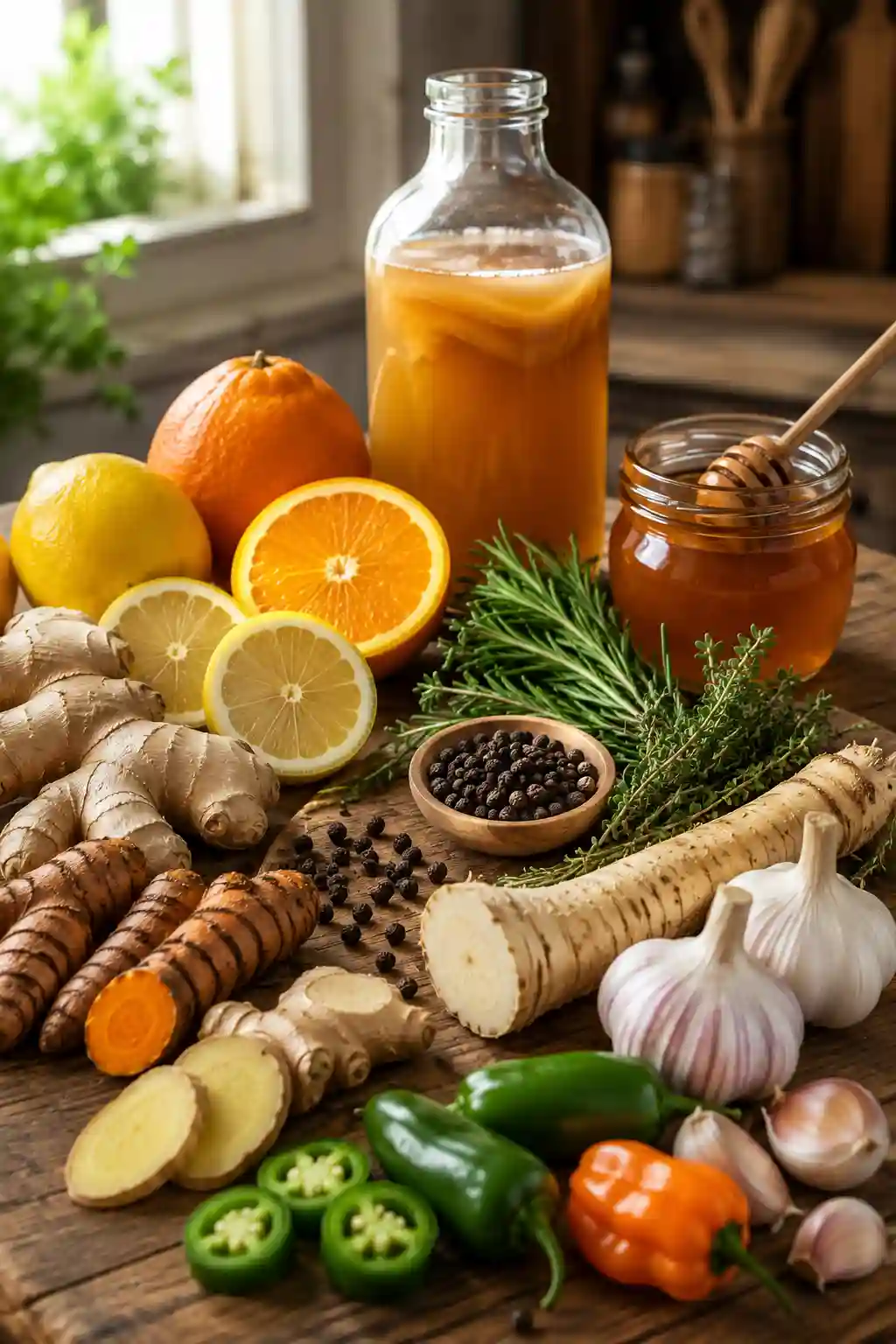
A good Fire Cider Recipe for Immune Support starts with fresh roots, citrus, herbs, and raw apple cider vinegar. Fresh ingredients give the tonic its sharp, spicy flavor and strong aroma.
For a standard 1-quart batch, you will need:
- 1/2 cup fresh horseradish root, grated
- 1/2 cup fresh ginger root, grated
- 1 head garlic, peeled and crushed
- 1 lemon, sliced
- 1/2 orange, sliced
- 1 to 2 jalapeños or habaneros, sliced
- 1 small piece fresh turmeric root, grated
- 1 teaspoon black peppercorns
- 2 sprigs fresh rosemary
- 3 to 4 sprigs fresh thyme
- 3 to 4 cups raw apple cider vinegar with the mother
- Raw honey, added after straining
Organic produce is a good choice when available, especially since many ingredients go into the Fire Cider Recipe for Immune Support with their skins intact. Wash all fresh produce well before chopping or grating.
Fire Cider Batch Size Converter
Use this table when you want to make a larger Fire Cider Recipe for Immune Support without guessing the main ingredient amounts.
| Ingredient | 1-Quart Batch | 1/2-Gallon Batch |
| Horseradish Root | 1/2 cup | 1 cup |
| Ginger Root | 1/2 cup | 1 cup |
| Garlic | 1 head | 2 heads |
| Hot Peppers | 1 to 2 | 3 to 4 |
| Raw ACV | 3 to 4 cups | 6 to 8 cups |
The exact amount of vinegar can vary because chopped ingredients take up different amounts of space. Add enough vinegar to keep all solid ingredients fully covered.
How to Make Fire Cider for Immune Support
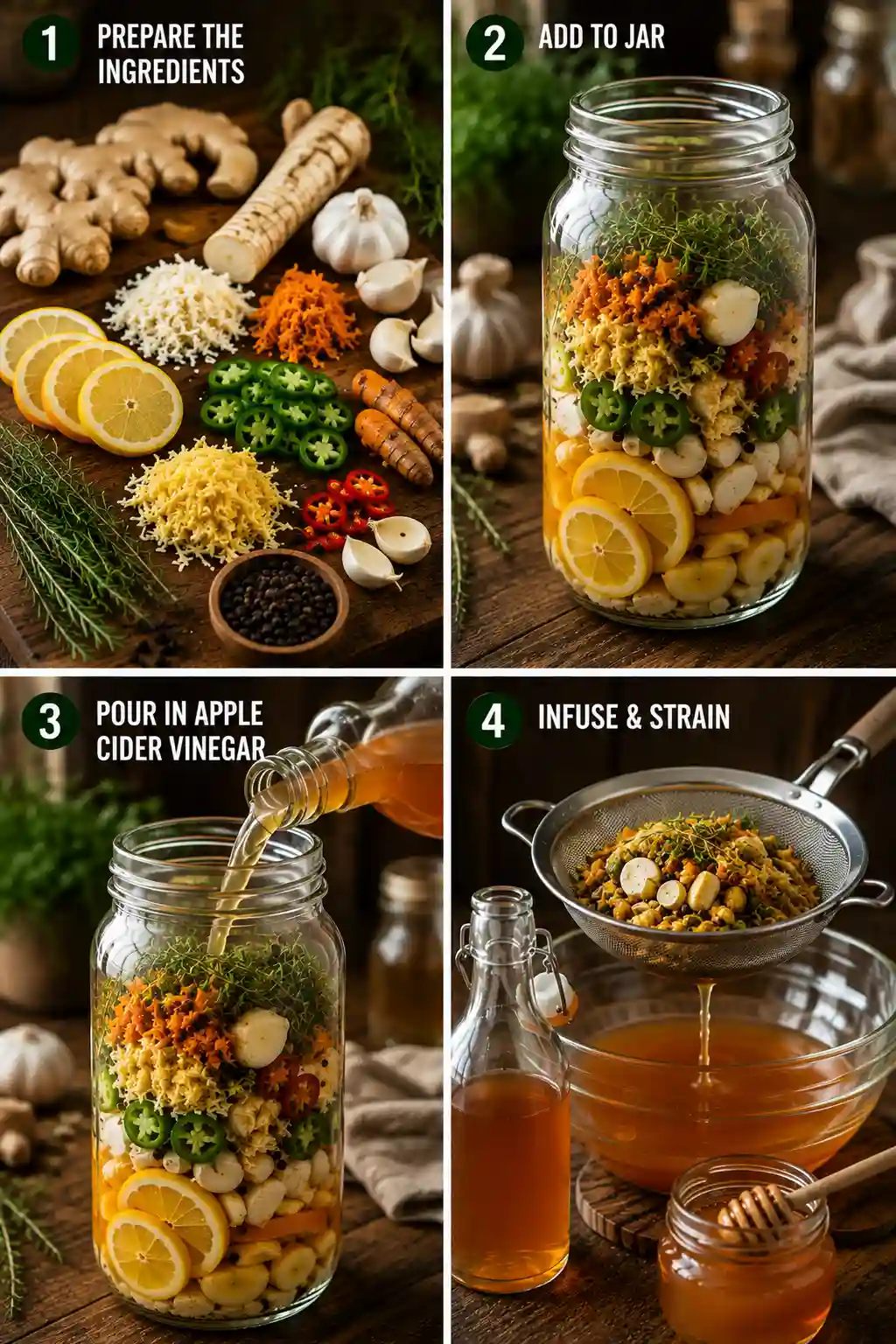
Making a Fire Cider Recipe for Immune Support takes about 20 minutes of prep, followed by four to six weeks of infusion. Use a clean glass jar large enough to hold the ingredients and vinegar.
- Prep the ingredients: Grate the ginger, horseradish, and turmeric. Slice the citrus and peppers. Crush the garlic and let it rest for about 10 minutes before adding it to the jar.
- Pack the jar: Place the prepared roots, garlic, citrus, peppers, rosemary, thyme, and peppercorns into a clean glass jar.
- Add the vinegar: Pour raw apple cider vinegar over the ingredients until they are fully submerged. Leave about 1 inch of space at the top.
- Protect the lid: Vinegar can react with metal. Place parchment or wax paper between the jar and a metal lid, or use a nonmetal lid.
- Let it infuse: Store your Fire Cider Recipe for Immune Support in a cool, dark place for four to six weeks. Shake the closed jar regularly.
- Strain and sweeten: Pour the mixture through a fine-mesh strainer or cheesecloth and press the solids to collect the liquid. Stir in raw honey to taste.
Once strained, transfer your Fire Cider Recipe for Immune Support to a clean glass bottle or jar. Label it with the date so you can keep track of storage time.
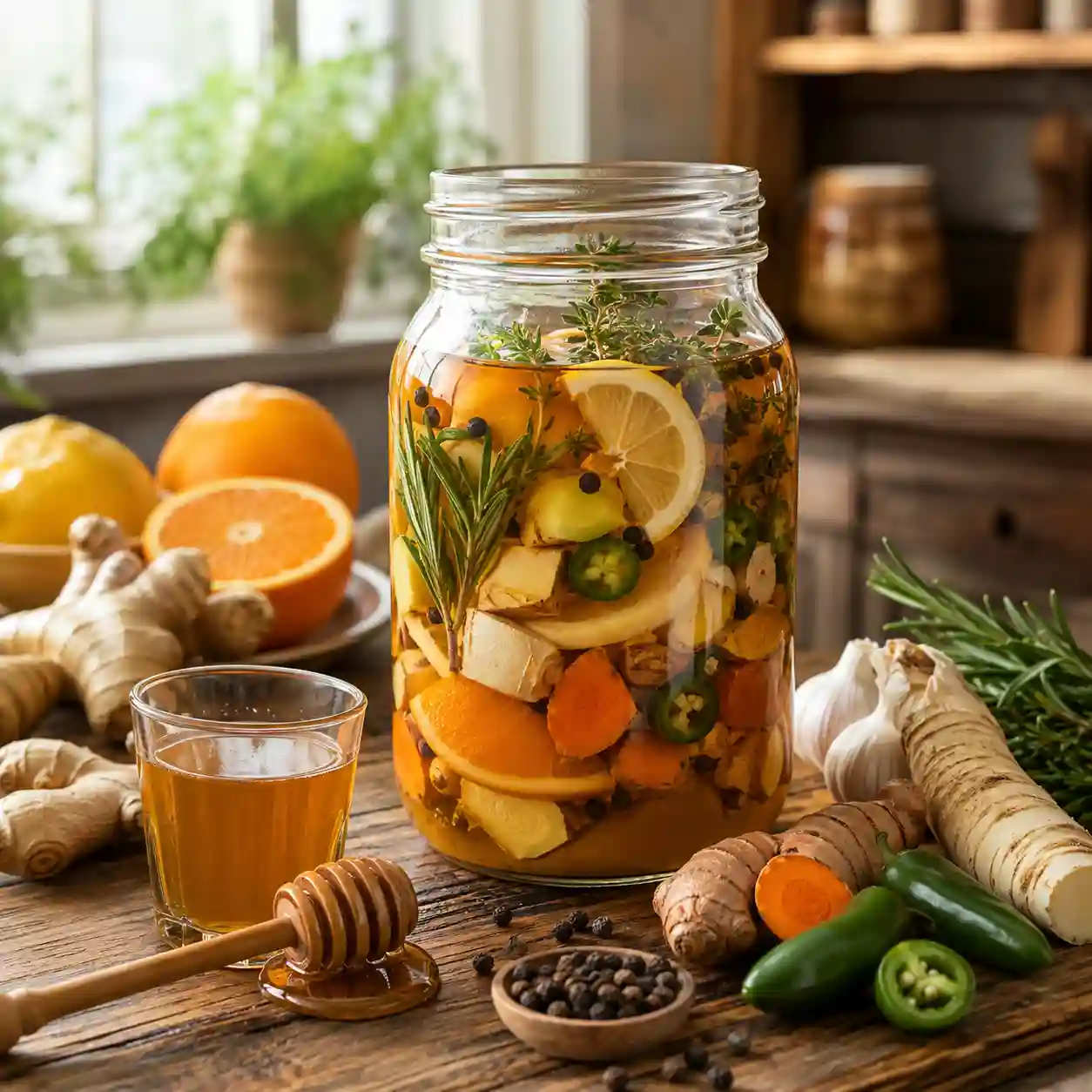

Fire Cider Recipe for Immune Support
Ingredients
Method
- Grate the ginger, horseradish, and turmeric. Slice the citrus and peppers. Crush the garlic and let it rest for about 10 minutes.
- Place the roots, garlic, citrus, peppers, rosemary, thyme, and black peppercorns in a clean 1-quart glass jar.
- Pour in enough apple cider vinegar to cover all the solid ingredients.
- Leave about 1 inch of space at the top. Use a nonmetal lid or place parchment or wax paper between the jar and a metal lid.
- Keep the sealed jar in a cool, dark place for 4 to 6 weeks. Shake it regularly.
- Strain the liquid through cheesecloth or a fine-mesh strainer. Press the solids to remove as much liquid as possible.
- Add raw honey to taste, then transfer the finished Fire Cider Recipe for Immune Support to a clean glass bottle or jar.
Notes
| Nutrient | Amount |
| Calories | 10 to 15 kcal |
| Total Fat | 0 g |
| Saturated Fat | 0 g |
| Sodium | 0 to 5 mg |
| Total Carbohydrates | 2 to 3 g |
| Dietary Fiber | 0 g |
| Total Sugars | 1 to 2 g |
| Protein | 0 g |
How to Take Fire Cider
A Fire Cider Recipe for Immune Support has a strong, acidic taste, so you can take it straight or dilute it. If you are new to fire cider, start with a small amount and see how your stomach responds.
| Use | Amount | How to Take It |
| Regular use | 1 tablespoon | Straight or diluted |
| During cold season | 1 tablespoon | Add to warm water or herbal tea |
| Sensitive stomach | Smaller serving | Dilute well with water |
Avoid treating a Fire Cider Recipe for Immune Support as a substitute for medical care or medicine. Vinegar, hot peppers, and other ingredients may also cause discomfort for people with sensitive stomachs.
Fire Cider Safety and Tooth Enamel
Apple cider vinegar is acidic and can wear down tooth enamel with repeated direct exposure. Dilute your serving, drink it through a straw, and rinse your mouth with plain water afterward. Wait at least 30 minutes before brushing your teeth.
If you have acid reflux, digestive problems, take medication, or are pregnant or breastfeeding, ask a qualified health professional before making a Fire Cider Recipe for Immune Support part of your routine.
Fire Cider Safety and Tooth Enamel
A Fire Cider Recipe for Immune Support contains apple cider vinegar, which is highly acidic. Frequent direct contact with vinegar may wear down tooth enamel over time. Dilute each serving with water or tea, drink through a straw when possible, and rinse your mouth with plain water afterward.
Wait at least 30 minutes before brushing your teeth after drinking a Fire Cider Recipe for Immune Support. If vinegar causes heartburn or stomach discomfort, reduce the amount, dilute it further, or stop using it.
People who are pregnant, breastfeeding, taking medication, or managing a health condition should speak with a qualified health professional before regularly drinking a Fire Cider Recipe for Immune Support.
How to Store Homemade Fire Cider
Store your Fire Cider Recipe for Immune Support in a clean, tightly sealed glass bottle or jar. Keep it in the refrigerator for the most consistent storage conditions and label the container with the date it was strained.
Always use clean utensils when serving your Fire Cider Recipe for Immune Support. Check the liquid before each use and discard it if you notice mold, an unusual odor, or other clear signs of spoilage.
For the best quality, keep your Fire Cider Recipe for Immune Support away from heat, sunlight, and containers that may react with vinegar.
3 Ways to Use Leftover Fire Cider Pulp
After straining your Fire Cider Recipe for Immune Support, save the pulp. The ginger, garlic, horseradish, peppers, and herbs still have a strong flavor that works well in many savory dishes.
Make Fire Cider Seasoning Salt
Dry the pulp fully in a dehydrator, then grind it with coarse sea salt. Sprinkle the seasoning over eggs, potatoes, soups, or roasted vegetables.
Turn It Into a Spicy Cooking Paste
Blend the pulp from your Fire Cider Recipe for Immune Support with a little olive oil. Use the paste in marinades, sauces, stir-fries, or roasted vegetables.
Add It to Broth
Add a spoonful of pulp to vegetable, chicken, or bone broth while it simmers. Strain the broth before serving if you want a smoother texture.
Saving the leftover pulp from your Fire Cider Recipe for Immune Support cuts food waste and gives the ingredients a second use in the kitchen.
Fire Cider Recipe Substitutions
You can adjust a Fire Cider Recipe for Immune Support when an ingredient is unavailable or too strong for your taste. Keep the main vinegar base while changing individual ingredients as needed.
Can You Make Fire Cider Without Horseradish?
Yes. You can leave out horseradish if you cannot find it or dislike its sharp taste. Fresh radish or a small amount of mustard seed can add a similar peppery note, though the final flavor will be different.
What Can Replace Hot Peppers?
Use cayenne, serrano, or another fresh chili in your Fire Cider Recipe for Immune Support. For less heat, use a small amount of jalapeño and remove the inner ribs and seeds.
Can You Use Ground Turmeric Instead of Fresh?
Yes. Ground turmeric can replace fresh turmeric when needed. Start with a small amount because the powder can settle at the bottom and make the finished cider cloudy.
Can You Make Fire Cider Without Honey?
Yes. Honey is mainly added after straining to soften the sharp and spicy taste. You can leave it out or add another sweetener to your serving.
These simple swaps let you adapt a Fire Cider Recipe for Immune Support based on what you have at home and the level of heat you prefer.
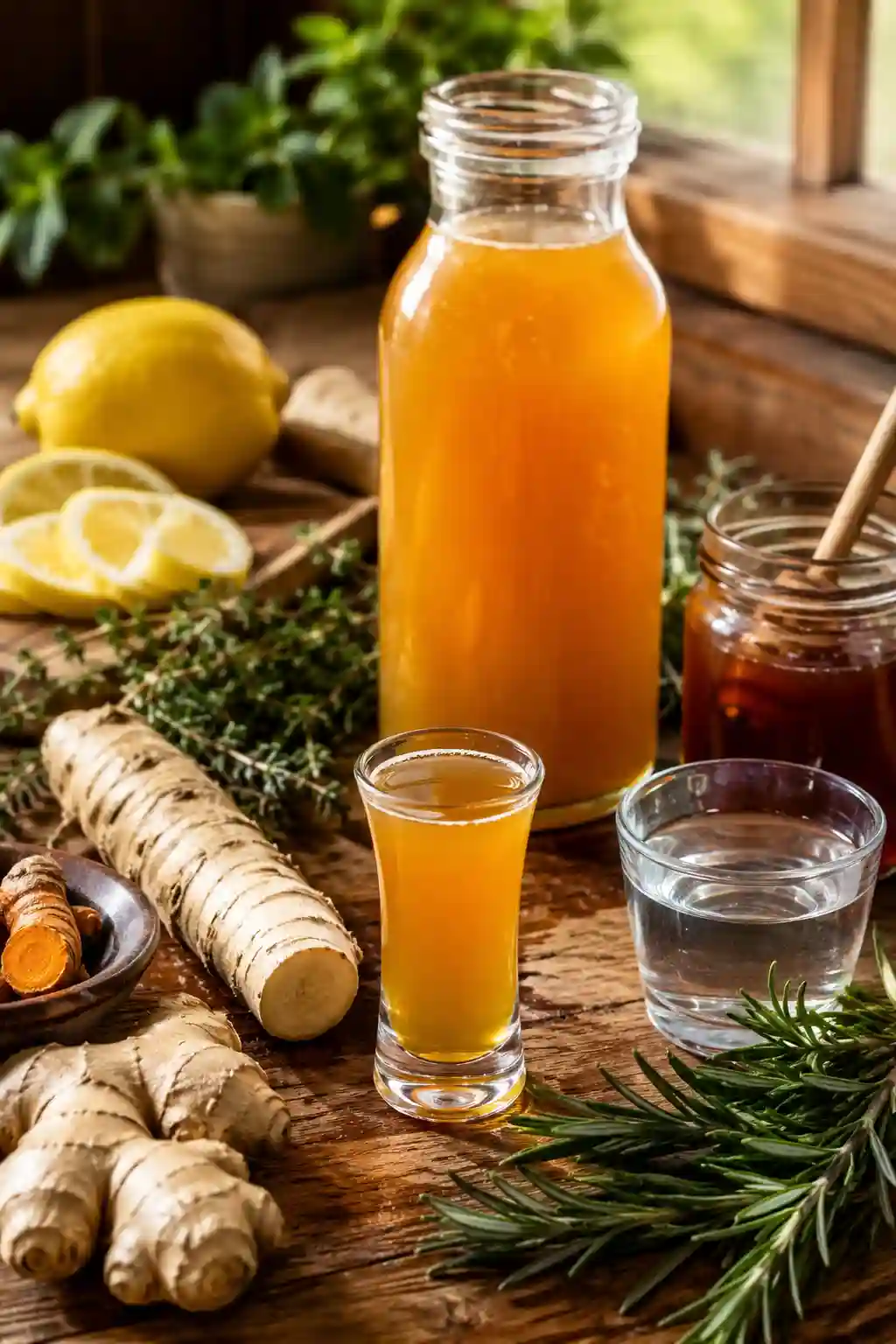
Nutrition Information
The nutrition values for a Fire Cider Recipe for Immune Support can vary based on the ingredients, infusion time, and amount of honey added. Since most solid ingredients are strained out, a serving contains only small amounts of many nutrients found in the fresh produce.
| Nutrient | Estimated Amount per 1 Tbsp (15 ml) |
| Calories | 10 to 15 kcal |
| Total Fat | 0 g |
| Sodium | 0 to 5 mg |
| Total Carbohydrates | 2 to 3 g |
| Dietary Fiber | 0 g |
| Total Sugars | 1 to 2 g |
| Protein | 0 g |
According to Harvard Health Publishing, undiluted apple cider vinegar can damage tooth enamel due to its high acidity, so diluting fire cider before drinking it is a sensible precaution.
These figures are estimates for a Fire Cider Recipe for Immune Support made with raw apple cider vinegar and a small amount of honey. Adding more honey will raise the calorie, carbohydrate, and sugar content.
For exact nutrition data, calculate the finished Fire Cider Recipe for Immune Support using the actual quantities in your batch and the final volume after straining.
Final Thoughts
Making a Fire Cider Recipe for Immune Support at home is a simple way to combine apple cider vinegar, fresh roots, citrus, herbs, peppers, and honey in one traditional tonic. The recipe requires little prep, but the four to six week infusion gives the ingredients time to develop their bold flavor.
Once you have made your first Fire Cider Recipe for Immune Support, you can adjust the heat, sweetness, and ingredients to suit your taste. You can also save the strained pulp for seasoning, cooking paste, or broth.
Keep your Fire Cider Recipe for Immune Support properly stored, dilute it if the acidity feels too strong, and enjoy it as a food-based tonic rather than a treatment for illness.
More Wellness & Immune Support Recipes You’ll Love
- Neuro Honey Blend Recipe – A honey-based wellness blend that pairs naturally with functional and everyday wellness recipes.
- Clove Tea Recipe – A comforting spiced tea that fits naturally into an immune-support recipe collection.
- Rosemary Tea Recipe – An aromatic herbal infusion that’s easy to incorporate into a wellness routine.
- Green Tea with Honey – A soothing combination of green tea and honey for a simple everyday wellness drink.
- Cumin-Vinegar Infusion for Weight Loss – A vinegar-based infusion that creates a useful topical connection with fire cider.
FAQs About Fire Cider Recipe for Immune Support
These common questions cover storage, daily use, ingredient swaps, and other practical points about a Fire Cider Recipe for Immune Support.
1. Does Fire Cider Need to Be Refrigerated?
Refrigeration is a good choice after straining because it keeps the storage conditions steady. Keep the cider in a clean, tightly sealed glass container.
2. How Long Does Homemade Fire Cider Last?
Storage time can vary based on preparation and handling. Check the cider before use and discard it if you see mold, smell an unusual odor, or notice clear signs of spoilage.
3. How Long Should Fire Cider Infuse?
Let your Fire Cider Recipe for Immune Support infuse for four to six weeks in a cool, dark place. Shake the sealed jar regularly and keep the solid ingredients covered by vinegar.
4. Can I Make Fire Cider Without Horseradish?
Yes. You can leave it out or try fresh radish or mustard seed for a peppery taste. The finished cider will have a different flavor.
5. What Can I Do With Strained Fire Cider Pulp?
Dry it for seasoning salt, blend it into a cooking paste, or add a small amount to broth. These options give the strained ingredients another use.
6. How Do I Drink Fire Cider While Protecting My Teeth?
Dilute it with water or tea and use a straw to reduce direct contact with your teeth. Rinse your mouth with plain water afterward and wait at least 30 minutes before brushing.
7. Is Fire Cider Safe During Pregnancy or Breastfeeding?
Ingredients such as herbs and hot peppers may not suit everyone during pregnancy or breastfeeding. Ask your doctor or another qualified health professional before regularly drinking fire cider.
8. Can I Drink Fire Cider Every Day?
Some people include small amounts in their daily diet, but there is no standard daily dose for fire cider. If a Fire Cider Recipe for Immune Support causes heartburn, stomach irritation, or other discomfort, stop taking it and seek medical advice if needed.
9. Why Did My Fire Cider Turn Cloudy?
Cloudiness can come from raw apple cider vinegar, fine plant particles, or sediment from the ingredients. Cloudiness alone does not always mean the cider has spoiled.
10. Can Fire Cider Go Bad?
Yes. Poor handling, exposed ingredients, or contamination can spoil a batch. Discard fire cider if you see mold or notice other clear signs of spoilage.