Baking Soda Lemon and Ice Recipe keeps showing up in videos, wellness posts, and morning routine trends. Maybe you have seen people claim it reduces bloating, helps weight loss, or gives a fresh start to the day. I had the same question the first time I saw it: Can a drink made from lemon, baking soda, and ice really do all that?
After reading health guidance, comparing common recipes, and noticing how many versions use very different amounts of baking soda, one thing became clear. Most people are not confused about the drink itself. They are confused about the safe ratio.
You might be wondering:
“Should I drink this every morning?”
“Why does it fizz so much?”
“Will it help with belly bloating?”
“How much baking soda is too much?”
Those are fair questions.
This guide explains what the mixture is, how the bubbling reaction happens, what science says about possible effects, and where internet advice often becomes risky. You will also learn why more baking soda is not better and why tooth care matters if you drink acidic mixtures often.
Table of Contents
Table of Contents
What Is the Viral Baking Soda, Lemon, and Ice “Ice Hack”?
The Baking Soda Lemon and Ice Recipe is a simple drink made with fresh lemon juice, baking soda, cold water, and ice. When these ingredients mix, a fizzy reaction happens because citric acid from lemon meets sodium bicarbonate. The result is light bubbling that feels similar to plain sparkling water.
The Baking Soda Lemon and Ice Recipe became popular through TikTok videos, Pinterest wellness tips, and morning routine posts. Many people use it hoping to reduce bloating, replace sugary drinks, or start the day with better hydration. Some online claims even link it to rapid weight loss, but those claims often leave out important facts.
Here is the reality: this drink does not directly burn fat. Long term fat loss still depends on eating habits, activity levels, and a calorie deficit. What this mixture may do for some people is support hydration, lower the urge to drink sweet beverages, or ease occasional stomach fullness after heavy meals.
The Baking Soda Lemon and Ice Recipe is best viewed as a wellness drink, not a miracle solution. Setting realistic expectations early helps avoid the confusion that surrounds many viral health trends.
The Science Behind the Mix: Citric Acid + Sodium Bicarbonate
The Baking Soda Lemon and Ice Recipe creates an instant fizzy reaction that many people mistake for a special health effect. In reality, the bubbling comes from basic chemistry. Understanding what happens inside the glass helps explain both the taste and the claims around this drink.
What Happens When Lemon Meets Baking Soda?
Lemon juice contains citric acid. Baking soda contains sodium bicarbonate, which is alkaline. When mixed together, an acid base reaction happens.
This reaction produces:
- Carbon dioxide gas
- Water
- Sodium citrate
Carbon dioxide is the reason bubbles appear almost immediately. The mixture starts foaming and expanding for several seconds before calming down.
The Baking Soda Lemon and Ice Recipe depends on this reaction. Without fresh lemon juice, the fizz becomes weaker and the drink loses much of its sparkling texture.
Why Does It Foam?
Many people see the foam and assume the drink is becoming stronger or more effective. That is not what happens.
The foam appears because carbon dioxide gas gets released quickly during the reaction. Think about opening sparkling water. Gas escapes and creates bubbles. The same idea happens here.
This is also why experts often suggest waiting 20 to 30 seconds before drinking. Active bubbling may trap extra gas that later creates stomach pressure or discomfort. Allowing the reaction to settle can make the drink easier to tolerate.
The Baking Soda Lemon and Ice Recipe should fizz briefly, not continue bubbling for several minutes. Long reactions often mean ingredient amounts are unbalanced.
Can It Help Digestion or Exercise Recovery?
Baking soda has long been studied because sodium bicarbonate can temporarily neutralize excess stomach acid. Some people report less bloating or reduced stomach discomfort after heavy meals.
That does not mean the drink cures digestive issues.
In sports nutrition, researchers have also studied sodium bicarbonate loading before intense exercise. The goal is buffering lactic acid buildup during hard efforts. Some athletes use carefully measured amounts before training sessions. Dosage is controlled because too much sodium bicarbonate can create stomach upset instead of helping performance.
The Baking Soda Lemon and Ice Recipe may support hydration habits or replace sugary beverages, but claims about direct fat burning remain unsupported.
The chemistry behind the drink is real. The exaggerated promises online are where confusion begins.
Dietitian-Approved Ingredients & Safe Dosages
The Baking Soda Lemon and Ice Recipe looks harmless because it uses common kitchen ingredients. That creates a problem. Many online versions recommend amounts that vary from a tiny pinch to a full teaspoon of baking soda in one glass.
Those differences matter.
Using too much baking soda increases sodium intake quickly and may lead to unwanted effects. Safe measurements should come before trends.
The 1/4 Teaspoon Safety Rule
One of the biggest mistakes online is recommending large amounts of baking soda every day.
For regular use, limit the Baking Soda Lemon and Ice Recipe to a maximum of:
- 1/4 teaspoon baking soda
- 1 to 2 tablespoons fresh lemon juice
- 8 ounces cold water
- Ice cubes as preferred
A 1/4 teaspoon serving already contains roughly 300 to 315 mg sodium. That is a noticeable amount from a single drink. Increasing to 1 teaspoon pushes sodium much higher than many people realize.
People with these conditions should avoid routine use unless approved by a healthcare professional:
- High blood pressure
- Kidney disease
- Heart failure
- Sodium restricted diets
More baking soda does not create stronger benefits. It mostly increases sodium exposure and digestive discomfort risk.
Baking Soda vs Baking Powder
These two products are not interchangeable.
Baking soda:
- Pure sodium bicarbonate
- Creates reaction with lemon acid
- Produces fizz
Baking powder:
- Contains extra acids and additives
- Alters taste
- Weakens expected reaction
For the Baking Soda Lemon and Ice Recipe, only pure food grade sodium bicarbonate works properly. Aluminum free versions are often preferred because some people find the taste cleaner.
Using baking powder may leave the drink flat, unpleasant, or overly bitter.
Fresh Lemon vs Bottled Lemon Juice
Fresh lemon juice produces better carbonation and brighter flavor.
Bottled lemon products may contain:
- Preservatives
- Added stabilizers
- Altered acidity levels
These differences can reduce the bubbling reaction and change taste.
The Baking Soda Lemon and Ice Recipe performs best when lemon juice is squeezed directly before mixing. Fresh juice also gives a sharper citrus flavor many people expect from sparkling drinks.
Best Water to Use
Water quality changes flavor more than most people expect.
Filtered or spring water often gives:
- Cleaner taste
- Better carbonation feel
- Less mineral interference
Highly chlorinated tap water may create a harsher aftertaste.
Cold water is commonly preferred because it keeps the drink refreshing and helps preserve remaining bubbles after mixing.
Choosing quality ingredients will not turn the drink into a miracle remedy. It simply creates a safer and more pleasant version of the recipe.
Ingredients Needed
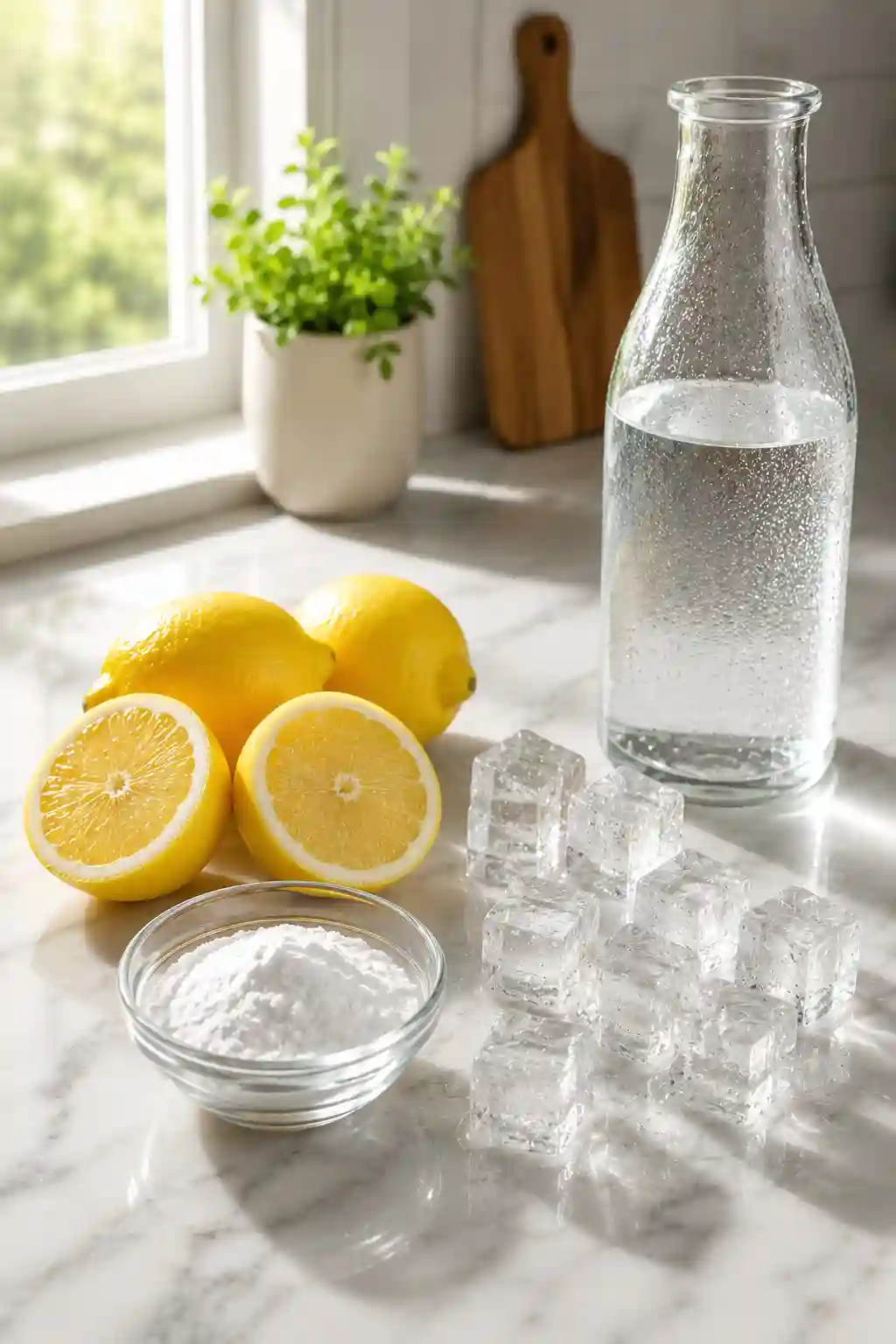
The Baking Soda Lemon and Ice Recipe uses only a few ingredients, but choosing the right type and amount changes both safety and taste. Small adjustments can affect the fizz level, sodium intake, and overall drinking experience.
Use the measurements below to keep the mixture balanced.
| Ingredient | Recommended Amount | Purpose |
| Baking soda (pure sodium bicarbonate) | 1/4 teaspoon maximum | Creates fizz and reacts with lemon acid |
| Fresh lemon juice | 1 to 2 tablespoons | Adds citric acid and citrus flavor |
| Cold filtered water | 8 ounces | Dilutes mixture and improves taste |
| Ice cubes | 4 to 6 cubes | Keeps drink cold and refreshing |
The Baking Soda Lemon and Ice Recipe works best with fresh ingredients. Fresh lemon juice creates a stronger reaction than bottled juice, while filtered water often gives a cleaner taste.
Before mixing, check these points:
- Use food grade baking soda only
- Do not replace baking soda with baking powder
- Avoid increasing baking soda amounts beyond recommended levels
- Use freshly squeezed lemon whenever possible
- Prepare the drink right before consuming it for better carbonation
Quick Ingredient Tips
Best lemon choice: Fresh, firm lemons with smooth skin often release more juice.
Best baking soda type: Aluminum free sodium bicarbonate is commonly chosen for drinking recipes.
Best water temperature: Chilled water helps maintain a refreshing taste and preserves bubbles longer.
The Baking Soda Lemon and Ice Recipe stays simple on purpose. More ingredients do not automatically make it better or healthier. The goal is balance, not excess.
How to Make This Baking Soda Lemon and Ice Recipe

Making the Baking Soda Lemon and Ice Recipe takes only a few minutes, but the mixing order matters. Adding ingredients too fast can create excess foam, stronger salty notes, or stomach discomfort from trapped gas.
Following the right sequence helps produce a smoother drink with a lighter sparkling texture.
Quick Recipe Snapshot
| Detail | Information |
| Prep Time | 2 minutes |
| Cook Time | 0 minutes |
| Total Time | 2 minutes |
| Recipe Category | Wellness Drink |
| Servings | 1 glass |
| Estimated Calories | 5 to 8 kcal |
| Sodium | Around 300 to 315 mg |
| Difficulty | Easy |
Step 1: Prepare the Lemon
Roll a fresh lemon gently on the counter for a few seconds before cutting it. This helps release more juice.
Squeeze about 1 to 2 tablespoons of fresh lemon juice directly into a tall glass.
Fresh juice produces stronger carbonation compared with bottled alternatives.
Step 2: Add the Baking Soda
Measure exactly 1/4 teaspoon of baking soda.
Sprinkle it slowly into the lemon juice.
The Baking Soda Lemon and Ice Recipe will begin bubbling almost immediately because citric acid reacts with sodium bicarbonate.
Do not exceed recommended amounts thinking it will create stronger effects. More baking soda mainly increases sodium intake.
Step 3: Let the Reaction Settle
Pause for about 20 to 30 seconds.
This small waiting period matters because active fizzing releases carbon dioxide gas. Drinking too early may create stomach pressure in some people.
The bubbling should calm before moving to the next step.
Step 4: Pour Cold Water Slowly
Add 8 ounces of chilled filtered water using a slow stream.
Pouring too quickly may flatten remaining bubbles.
Stir gently once if needed.
Step 5: Add Ice and Drink Immediately
Add 4 to 6 ice cubes after mixing.
The Baking Soda Lemon and Ice Recipe tastes best within a few minutes while carbonation remains active. Waiting too long may leave the drink flatter and slightly saltier.
For a fresher experience, prepare only one serving at a time instead of storing leftovers.


Baking Soda Lemon and Ice Recipe
Ingredients
Method
- Roll a fresh lemon on the counter, cut it, and squeeze 1 to 2 tablespoons juice into a tall glass.
- Add 1/4 teaspoon baking soda directly into the lemon juice. Allow the mixture to fizz.
- Wait 20 to 30 seconds until bubbling slows down.
- Pour 8 ounces chilled filtered water slowly into the glass.
- Add ice cubes, stir gently once if needed, and drink immediately.
- Do not exceed 1/4 teaspoon baking soda per serving.
- Fresh lemon creates better fizz than bottled juice.
- Drink through a straw to reduce contact with tooth enamel.
- Rinse mouth with plain water after drinking.
- Avoid daily long term use without medical guidance.
Notes
| Nutrient | Approximate Amount Per Serving | Notes |
| Calories | 5 to 8 kcal | Depends on lemon quantity |
| Total Fat | 0 g | Naturally fat free |
| Saturated Fat | 0 g | None |
| Cholesterol | 0 mg | None |
| Sodium | 300 to 315 mg | Main nutrient to monitor |
| Total Carbohydrates | 1 to 2 g | Comes mostly from lemon juice |
| Sugars | Less than 1 g | Natural lemon sugars only |
| Added Sugar | 0 g | No sweeteners included |
| Protein | 0 g | None |
| Fiber | 0 g | Minimal amount |
| Vitamin C | Small amount | From fresh lemon juice |
| Potassium | Trace amount | Naturally present in lemon |
Crucial Dental Safety: The Enamel Defense Protocol
Many articles about the Baking Soda Lemon and Ice Recipe talk about bloating or hydration but skip one important topic: tooth health.
Lemon juice is acidic. Frequent exposure to acidic drinks may temporarily soften tooth enamel. Even though baking soda can buffer some acidity, that does not remove all risk when the drink becomes part of a regular routine.
Protecting teeth matters just as much as measuring ingredients correctly.
Rule 1: Always Drink Through a Straw
Using a straw helps move the liquid toward the back of the mouth and reduces direct contact with front teeth.
Less contact means less repeated acid exposure on enamel surfaces.
Reusable stainless steel or silicone straws can work well if you drink acidic beverages often.
Rule 2: Rinse Your Mouth With Plain Water Right After
Finish the drink, then follow it with a full glass of plain water.
This simple habit may help:
- Wash away remaining acid
- Reduce lingering salty residue
- Lower the time teeth stay exposed to citrus compounds
Skipping this step leaves acid in contact with teeth longer than necessary.
Rule 3: Wait at Least 30 Minutes Before Brushing Teeth
Many people brush immediately after acidic drinks because they want a clean feeling.
That can backfire.
Brushing while enamel is temporarily softened may increase wear over time. Waiting around 30 minutes gives saliva time to help restore balance in the mouth before brushing.
The Baking Soda Lemon and Ice Recipe should not become a reason for extra enamel damage simply because timing was ignored.
Quick Enamel Protection Checklist
Before making the Baking Soda Lemon and Ice Recipe regularly, remember:
✓ Use a straw
✓ Rinse with water afterward
✓ Wait before brushing teeth
✓ Avoid multiple servings daily
✓ Keep lemon amounts moderate
Small habits like these may matter more long term than the drink itself.
Customizing Your Routine: 3 Functional Variations
The Baking Soda Lemon and Ice Recipe is often used in different ways depending on personal goals. Some people prefer it before exercise, while others choose a lighter version after heavy meals.
Changing ingredient amounts slightly may alter taste and sodium intake. Keep portions moderate and avoid increasing baking soda beyond recommended limits.
| Variation | Primary Goal | Key Changes | Best Timing |
| The Classic Reset | Hydration and occasional bloating support | 1/4 tsp baking soda, 1 to 2 tbsp lemon juice, 8 oz cold water, ice | 20 minutes before breakfast |
| The Pre Workout Primer | Support high intensity exercise routine | Increase water to 12 oz, optional pinch of mineral salt | Around 60 minutes before training |
| The Soothing Evening Tonic | Ease stomach fullness after heavy meals | Reduce baking soda to 1/8 tsp, use warm water, add fresh mint | About 1 hour after dinner |
The Classic Reset
This version follows the standard Baking Soda Lemon and Ice Recipe with balanced measurements.
Some people prefer it in the morning because replacing sweet drinks with lower calorie options may support hydration habits.
Suggested routine:
- Drink before breakfast
- Follow with a protein rich meal
- Avoid pairing with highly processed salty foods
The Pre Workout Primer
Athletes sometimes discuss sodium bicarbonate because of its role in buffering acid buildup during intense activity.
For this variation:
- Increase water to about 12 ounces
- Keep baking soda at safe levels
- Drink well before exercise rather than immediately before movement
The goal is comfort. Drinking too close to workouts may increase stomach discomfort in some people.
The Soothing Evening Tonic
After a heavy dinner, some prefer a gentler version.
Adjustments include:
- Lower baking soda to 1/8 teaspoon
- Replace ice with warm water
- Add 3 to 4 fresh mint leaves
Warm mixtures may feel easier on the stomach for some individuals.
Avoid drinking large amounts right before sleep, especially if nighttime reflux is an issue.
The Baking Soda Lemon and Ice Recipe does not need major changes to fit different routines. Small adjustments are often enough. The safest approach remains moderation and realistic expectations.
What to Serve With This Wellness Drink

The Baking Soda Lemon and Ice Recipe is often consumed alone, especially in the morning. Still, what you eat before or after the drink can influence comfort, fullness, and overall sodium intake.
Pairing it with balanced foods makes more sense than using it as a meal replacement.
Best Foods to Eat After Drinking It
About 20 to 30 minutes later, choose foods rich in protein and fiber. These options may help support fullness through the morning.
Examples include:
- Greek yogurt with berries
- Vegetable omelet with eggs
- Oatmeal topped with nuts
- Cottage cheese and fruit
- Whole grain toast with avocado and eggs
The goal is a balanced meal, not restriction.
The Baking Soda Lemon and Ice Recipe contains very few calories, so relying on it alone for breakfast may leave some people hungry shortly afterward.
Foods to Avoid Around This Drink
Some combinations may increase bloating or raise sodium intake unnecessarily.
Try limiting very salty foods immediately before or after, such as:
- Processed meats
- Bacon
- Smoked fish
- Fast food breakfast sandwiches
- Highly salted packaged snacks
Large sodium amounts from food plus baking soda may contribute to temporary water retention in sensitive individuals.
Heavy fried meals may also reduce the light feeling many people expect from this drink.
Can You Drink It on an Empty Stomach?
Some people tolerate the Baking Soda Lemon and Ice Recipe first thing in the morning.
Others may notice:
- Mild stomach irritation
- Increased burping from carbonation
- Temporary discomfort from acidity
Starting with a smaller serving can help determine tolerance.
Listening to your body matters more than copying online routines.
A Simple Morning Example
A moderate routine might look like:
- Drink one serving of the Baking Soda Lemon and Ice Recipe
- Wait 20 minutes
- Eat a protein rich breakfast
- Continue normal hydration through the day
Consistency with overall habits matters more than any single drink.
Small choices repeated over time usually have greater impact than short wellness trends.
Potential Risks and Who Should Avoid This Drink
The Baking Soda Lemon and Ice Recipe may look harmless because it uses common kitchen ingredients. That does not mean it is suitable for everyone.
Baking soda contains sodium. Lemon adds acidity. Repeating the mixture too often or using large amounts may increase the chance of unwanted effects.
Understanding who should avoid the drink is just as important as knowing how to make it.
People With High Blood Pressure
Individuals managing high blood pressure often need to monitor sodium intake closely.
Since the Baking Soda Lemon and Ice Recipe can add around 300 to 315 mg sodium per serving, routine use may not fit every dietary plan.
Consulting a healthcare professional matters before adding sodium based drinks regularly.
People With Kidney Disease
Kidneys help regulate minerals and fluid balance.
Extra sodium or changes in acid balance may create concerns for people with kidney conditions. Regular consumption without medical guidance is not recommended.
People With Heart Conditions or Fluid Retention Issues
Those dealing with:
- Heart failure
- Chronic swelling
- Sodium restricted diets
should avoid experimenting with frequent baking soda drinks.
Higher sodium intake may contribute to fluid retention in sensitive individuals.
Pregnant or Breastfeeding Individuals
Research on occasional consumption is limited in this context.
Pregnancy already changes digestion and fluid balance, so new wellness routines should be discussed with a qualified healthcare provider first.
People Taking Certain Medications
Baking soda may interact with absorption or effectiveness of some medicines.
Extra caution is needed for people taking treatments related to:
- Blood pressure
- Heart conditions
- Kidney health
- Acid reducing medications
Spacing medications and alkaline drinks may matter in some cases.
Possible Side Effects From Excess Intake
Using too much baking soda or drinking the mixture too often may increase risk of:
- Stomach discomfort
- Gas or bloating
- Nausea
- Increased sodium intake
- Fluid retention
Very large amounts of sodium bicarbonate can create more serious health problems.
That is why staying near the 1/4 teaspoon limit matters. More does not mean better.
Quick Safety Reminder
Stop using the drink and seek medical advice if symptoms appear after consumption, especially:
✓ Persistent stomach pain
✓ Swelling
✓ Vomiting
✓ Shortness of breath
✓ Unusual discomfort
The Baking Soda Lemon and Ice Recipe should remain an occasional wellness habit, not a replacement for medical treatment or balanced nutrition.
Nutrition Information
The Baking Soda Lemon and Ice Recipe is very low in calories and contains almost no sugar, fat, or protein. The main nutritional point to watch is sodium, since baking soda naturally adds a noticeable amount even in small servings.
The values below are estimated for one serving prepared with 1/4 teaspoon baking soda, 1 to 2 tablespoons fresh lemon juice, 8 ounces water, and ice.
| Nutrient | Approximate Amount Per Serving | Notes |
| Calories | 5 to 8 kcal | Depends on lemon quantity |
| Total Fat | 0 g | Naturally fat free |
| Saturated Fat | 0 g | None |
| Cholesterol | 0 mg | None |
| Sodium | 300 to 315 mg | Main nutrient to monitor |
| Total Carbohydrates | 1 to 2 g | Comes mostly from lemon juice |
| Sugars | Less than 1 g | Natural lemon sugars only |
| Added Sugar | 0 g | No sweeteners included |
| Protein | 0 g | None |
| Fiber | 0 g | Minimal amount |
| Vitamin C | Small amount | From fresh lemon juice |
| Potassium | Trace amount | Naturally present in lemon |
According to Harvard Health Publishing, sodium bicarbonate contains a high amount of sodium, which means people with high blood pressure, kidney disease, or sodium restricted diets should be cautious with regular use
What Matters Most in This Nutrition Profile?
- Low calorie content makes the drink different from sugary sodas or sweet juices
- Sodium is the biggest concern, especially for people limiting salt intake
- The recipe provides little nutritional value beyond hydration and small amounts of Vitamin C
- The drink should not replace balanced meals or nutrient rich foods
The Baking Soda Lemon and Ice Recipe stays popular partly because it is simple and low in calories. Low calories alone do not make a drink healthy for everyone. Ingredient balance still matters.
Conclusion
The Baking Soda Lemon and Ice Recipe gained attention because it feels simple, inexpensive, and easy to add to a morning routine. Yet most confusion comes from exaggerated claims and unsafe measurements, not from the drink itself.
This mixture may help some people replace sugary beverages, stay hydrated, or reduce occasional bloating. That is very different from promising rapid weight loss or dramatic health changes.
The safest approach is straightforward:
- Keep baking soda amounts low
- Use fresh ingredients
- Protect your teeth from repeated acid exposure
- Pay attention to sodium intake
- Avoid turning occasional use into a daily habit without guidance
The Baking Soda Lemon and Ice Recipe works best when viewed as a small part of balanced habits, not a shortcut. Long term wellness still depends on nutrition, movement, sleep, and consistency.
If you decide to try it, focus on moderation first. Viral trends come and go, but safe routines usually last longer.
More Detox & Weight Loss Drinks You’ll Love
- Cucumber Lemon Water Recipe – A refreshing hydration drink with simple ingredients.
- Aloe Vera Lemon Water for Weight Loss – A soothing blend designed to support digestion and wellness.
- Pink Salt Weight Loss Recipe – A mineral-rich drink often used in morning routines.
- Best Detox Smoothie for Weight Loss – Nutrient-packed and perfect for healthy habits.
FAQs (Weight Loss Myths Debunked)
People search for the Baking Soda Lemon and Ice Recipe hoping for quick answers about weight loss, digestion, fasting, and daily use. Many claims online sound convincing, but simple answers are often more accurate.
1. Does the Baking Soda Lemon and Ice Recipe Cause Weight Loss?
No. The Baking Soda Lemon and Ice Recipe does not directly burn body fat.
Fat loss usually happens when a calorie deficit is maintained over time. This drink may support weight management indirectly if it replaces sugary beverages or helps some people stay hydrated. That is different from causing fat loss on its own.
2. Can I Drink Baking Soda Lemon and Ice Every Day?
Daily use is not ideal for long periods without guidance.
If used, limit intake to one serving and avoid turning it into a permanent routine. Regular exposure to added sodium and lemon acidity deserves caution.
3. How Much Baking Soda Should I Use?
A common safety recommendation is:
Maximum 1/4 teaspoon baking soda
1 to 2 tablespoons fresh lemon juice
About 8 ounces water
Higher amounts increase sodium intake without proven extra benefit
4. Why Does the Drink Fizz So Much?
The bubbling comes from a reaction between citric acid in lemon and sodium bicarbonate in baking soda.
That reaction produces carbon dioxide gas, which creates the visible foam and sparkling effect. The fizz is chemistry, not a sign the drink is becoming stronger.
5. Can This Drink Help With Acid Reflux?
Some people believe baking soda helps because sodium bicarbonate may temporarily neutralize excess stomach acid.
However, reflux triggers vary. What feels soothing for one person may worsen symptoms for another. Persistent reflux symptoms should be discussed with a healthcare professional.
6. Does the Baking Soda Lemon and Ice Recipe Break a Fast?
A standard serving contains very few calories, often under 10.
For many people following time restricted eating for weight management, this amount is unlikely to affect the fasting window significantly. Those fasting for stricter reasons may prefer plain water instead.
7. Who Should Avoid This Drink Completely?
Avoid routine use if you have:
High blood pressure
Kidney disease
Heart failure
Sodium restricted diets
Medical advice limiting sodium intake
These situations deserve extra caution because baking soda contributes sodium.
8. What Happens If I Use Too Much Baking Soda?
Using excessive amounts may increase risk of:
Nausea
Stomach discomfort
Gas
Temporary swelling from sodium intake
Following measured amounts matters more than copying viral recipes.
The Baking Soda Lemon and Ice Recipe remains a simple drink. The biggest mistakes usually come from unrealistic expectations or unsafe portions.
Disclaimer
The information shared in this article on A Whimsy Plate is for educational and informational purposes only. The Baking Soda Lemon and Ice Recipe is not intended to diagnose, treat, cure, or prevent any medical condition. Individual reactions to ingredients such as baking soda and lemon may vary depending on health status, medications, and dietary needs.
People with high blood pressure, kidney disease, heart conditions, sodium restricted diets, or digestive disorders should speak with a qualified healthcare professional before trying this drink. Pregnant or breastfeeding individuals should also seek medical advice before adding new wellness routines.
Nutrition values and health discussions provided by A Whimsy Plate are estimates and should not replace personalized guidance from a doctor, registered dietitian, or healthcare provider.
Always use moderate amounts, follow safe dosage recommendations, and stop consumption if discomfort or unusual symptoms occur. Viral wellness trends should never replace balanced nutrition, medical care, or long term healthy habits.