Salmon Sushi Bake is one of those recipes I wish I had discovered years earlier. I still remember saying to a friend, “This tastes like sushi but feels like comfort food. Why isn’t this more of a thing?”
If you’ve ever tried rolling your own sushi at home, you know it’s part fun, part frustration. The rice sticks to everything, the rolls fall apart, and by the end, you’re wondering if takeout was the better call. That’s exactly what led me to this version. No rolling. No seaweed struggles. Just layers of all your favorite sushi flavors baked into a bubbling, creamy casserole.
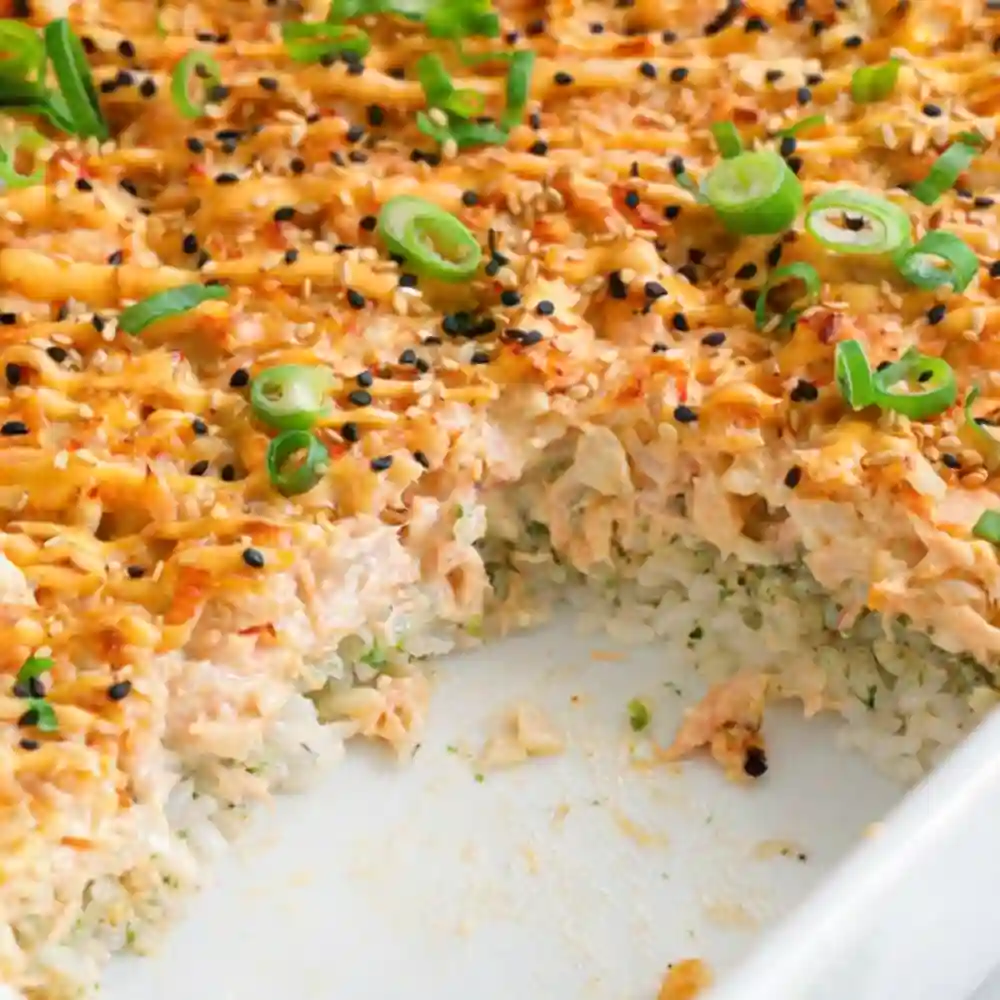
At its heart, Salmon Sushi Bake is a cross between a spicy salmon roll and a cozy rice bake. You start with seasoned sushi rice, top it with a creamy mixture of flaked baked salmon, imitation crab, spicy mayo, cream cheese, and soy sauce, then finish it off with a quick broil for that irresistible golden top. Spoon it onto roasted seaweed sheets, add avocado or cucumber if you’re feeling extra, and enjoy.
This dish is incredibly flexible too. You can swap in tuna, try a vegan version, or even play with toppings depending on what’s in your fridge. Whether you’re feeding a group or just want an easy sushi-inspired dinner, this one never disappoints.
Table of Contents
Table of Contents
Why You’ll Love This Easy Salmon Sushi Bake Recipe
There’s something uniquely satisfying about a dish that feels indulgent but comes together without stress. That’s exactly what Salmon Sushi Bake delivers. It’s comforting, flavorful, and surprisingly simple to throw together. And trust me, once you’ve made it once, it will quietly sneak its way into your regular dinner rotation.
This isn’t just food. It’s a crowd-pleaser. It’s a weeknight win. It’s also the dish you’ll want to pull out when you’re craving sushi but don’t want to deal with rolling, slicing, or precision. That balance of ease and impact is what makes it so addictive.
A Dish That Feels Fancy Without the Fuss
You know that moment when people take their first bite and look surprised? That’s the Salmon Sushi Bake effect. It tastes like something you’d get at a trendy sushi spot, but it’s made from pantry-friendly ingredients and basic kitchen tools. No sushi mat. No specialty gear. Just one baking dish and a spoon.
Even better, it doesn’t demand perfection. Slightly uneven rice? No problem. A little extra sriracha in the topping? It only makes it better. This is low-pressure cooking with high-reward flavor.
Perfect for Parties or Cozy Nights In
Whether you’re planning a sushi night with friends or just need something satisfying after a long day, this dish adapts to your mood. It scales easily for a crowd and can be made ahead of time, then broiled right before serving. That’s part of what makes it one of the best sushi party food ideas out there.
If you’ve got leftover roasted seaweed, cucumber slices, or a bit of unagi sauce in the fridge, even better. Layer it on and you’ve got a complete experience that feels far more put-together than the effort suggests.
Ingredients You Need for the Best Salmon Sushi Bake
When a recipe delivers big on flavor, it usually means every ingredient is doing its job. That is exactly what happens with a well-balanced Salmon Sushi Bake. This dish is not about complicated techniques or hard-to-find items. It is about mixing everyday ingredients that complement each other perfectly. Creamy meets spicy, salty meets sweet, and the result is a layered meal that feels both familiar and exciting.
Here is what you will need to make a version that is rich, satisfying, and easily adaptable.
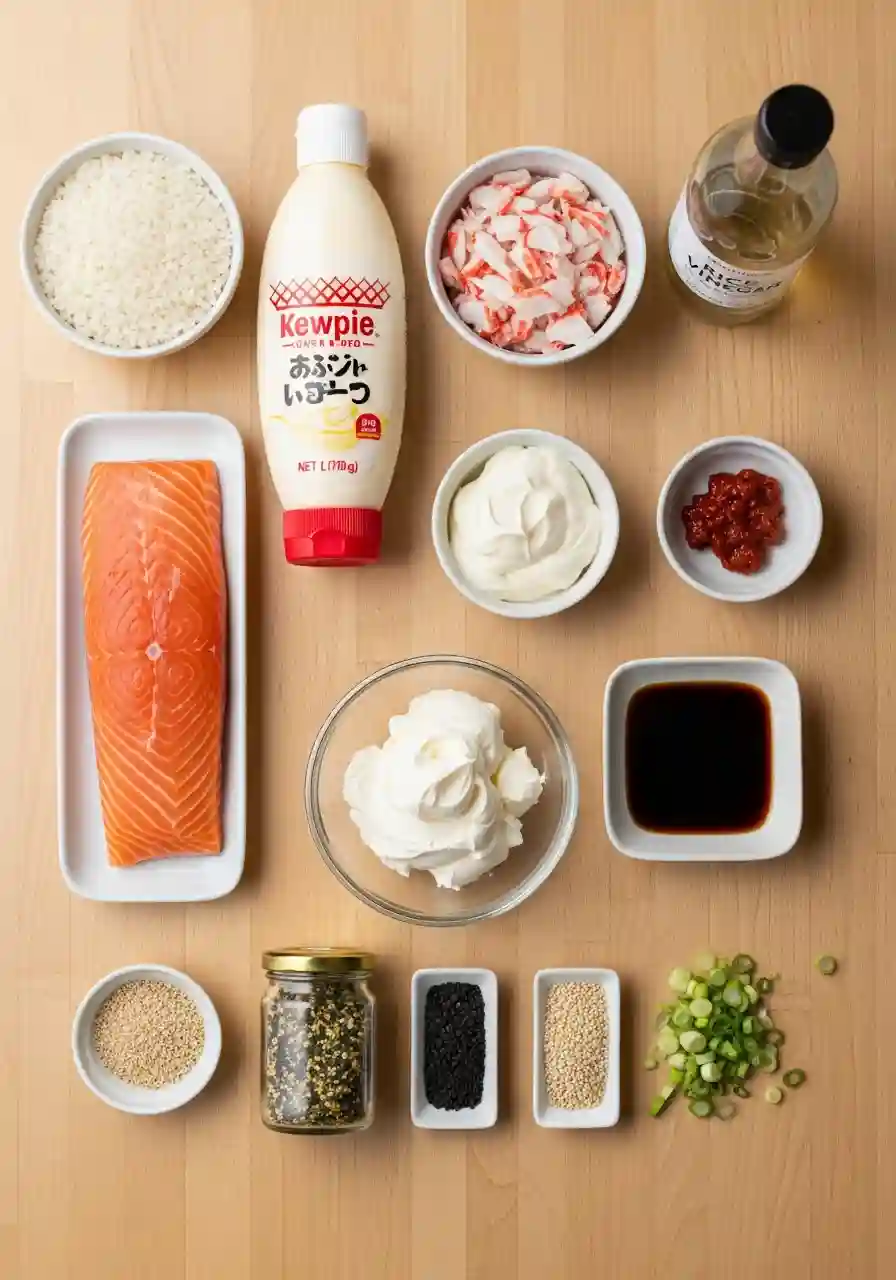
Core Ingredients
- Salmon fillet
Use a skinless and boneless fillet. Fresh is great, but thawed from frozen works too. Baking the salmon brings out a rich, tender texture. - Sushi rice (short grain)
Short-grain rice becomes sticky when cooked, which is key for the base layer. Season it with a little rice vinegar, sugar, and salt for that classic sushi rice flavor. - Imitation crab
Adds a touch of sweetness and seafood umami that pairs beautifully with salmon. Real crab works if you prefer, but imitation has the right texture and is easier to find. - Japanese mayo (Kewpie)
Creamier and slightly sweeter than regular mayo. If you do not have it, you can blend regular mayo with a bit of sugar and rice vinegar. - Cream cheese
Softened and blended in, it adds a smooth and rich layer that melts right into the seafood. - Soy sauce and sriracha
A small amount of each adds depth and heat. You can adjust the spice level to suit your taste. - Furikake seasoning
A mixture of sesame seeds, seaweed, and a few other savory elements. It adds crunch, umami, and a hint of sweetness on top of the rice.
Optional Add-ins and Smart Substitutions
- Avocado
Add slices on top or serve on the side for extra creaminess. - Cucumber
Thin matchsticks bring a fresh crunch that works well with the richness of the bake. - Tuna
You can substitute the salmon with cooked tuna to create a different but equally delicious tuna sushi bake. - Vegan version
Use plant-based mayo and swap the fish for seasoned tofu or marinated vegetables to make a vegan sushi bake that still hits all the flavor notes.
How To Make Baked Salmon Sushi Step by Step
Making Salmon Sushi Bake might sound like a project at first, but once you go through it once, you realize how straightforward and forgiving it actually is. You do not need to be a sushi chef. You just need a little prep, a baking dish, and the willingness to layer things up.
Here is exactly how to pull it all together without the stress.
Step 1: Prepare the Sushi Rice
Start by rinsing your short-grain sushi rice thoroughly. This removes excess starch and helps it cook up fluffy, not gummy. Use a mesh strainer and rinse under cold water until the water runs mostly clear.
Cook the rice using a rice cooker or stovetop method. Once done, spread it out gently on a tray or shallow bowl and fold in seasoned rice vinegar. Use a rice paddle or wooden spoon to avoid smashing the grains. Let the rice cool while you prepare the next steps.
Step 2: Bake and Shred the Salmon
Season your salmon fillet with salt, pepper, and a pinch of garlic powder. Bake it in a preheated oven at 400 degrees Fahrenheit for about 15 to 20 minutes. The fish should flake easily with a fork when it is fully cooked.
Once the salmon has cooled a bit, shred it into a large mixing bowl.
Step 3: Make the Creamy Filling
To the bowl with the salmon, add chopped imitation crab, softened cream cheese, Japanese mayo, sriracha, and a splash of soy sauce. Mix everything until it turns into a thick, creamy seafood mixture. You want it to be spreadable but not watery.
Taste and adjust seasoning. If you like it spicier, add more sriracha. Want it milder? Add a bit more mayo or cream cheese to soften the heat.
Step 4: Assemble and Bake
Lightly grease a 9 by 13 inch baking dish. Spread the cooled sushi rice across the bottom in an even layer and press down gently to pack it just a bit.
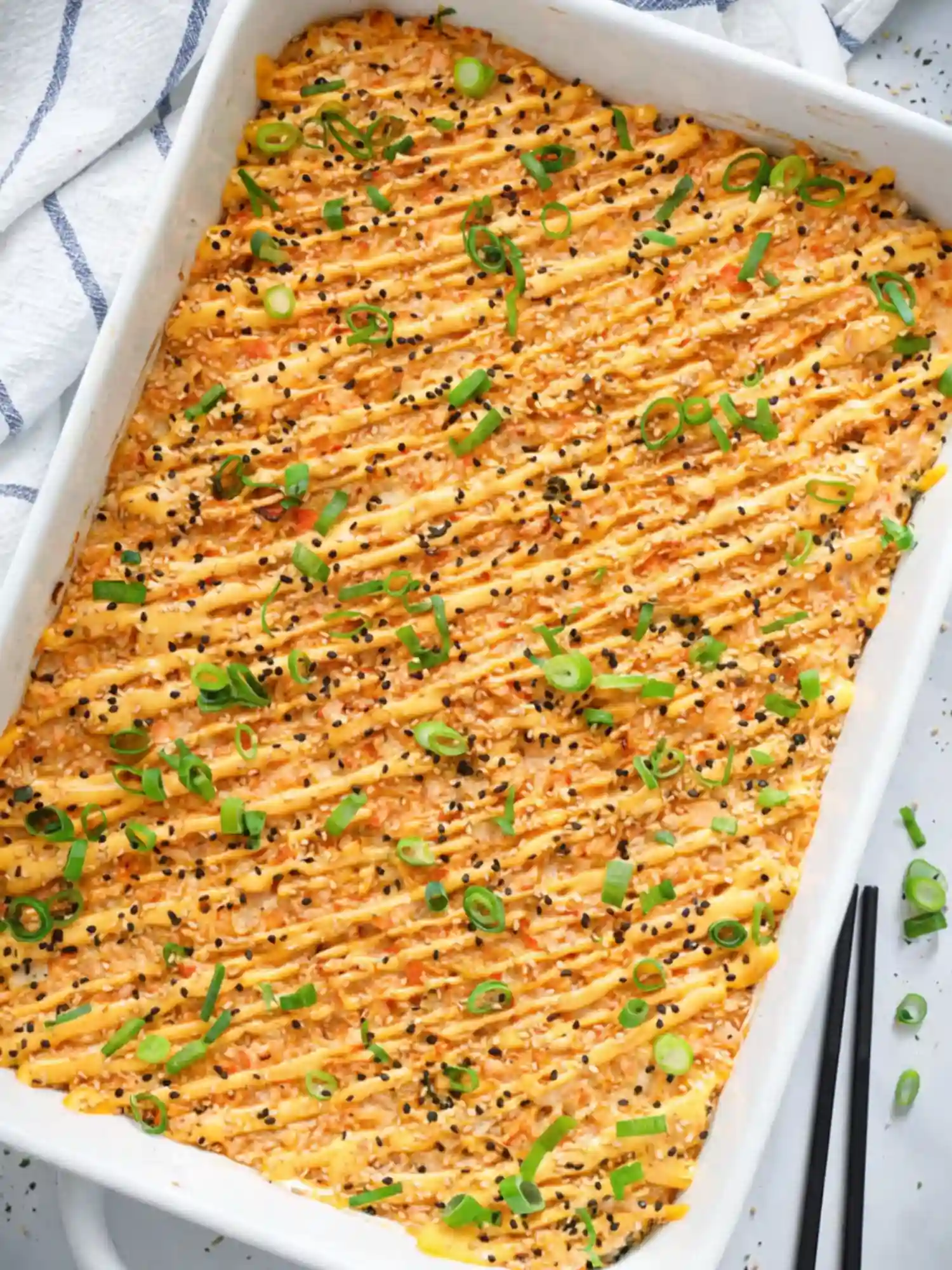
Sprinkle a layer of furikake seasoning across the rice. Then spoon the creamy salmon mixture on top and smooth it out evenly.
Place the dish under the broiler for 3 to 4 minutes. This step adds a slightly toasted surface and helps the flavors meld together.
Remove from the oven and top with extra drizzles of spicy mayo, a few sesame seeds, and sliced green onions if you like.
Scoop and serve with roasted seaweed sheets or cucumber slices for scooping.

Salmon Sushi Bake
Ingredients
Method
- Prepare the Rice: Rinse sushi rice thoroughly. Cook with water until done. Mix in rice vinegar and let cool.
- Bake the Salmon: Season salmon with salt, pepper, and garlic powder. Bake at 400°F for 15–20 minutes. Cool and shred.
- Mix the Filling: In a bowl, combine shredded salmon, crab, mayo, cream cheese, sriracha, and soy sauce. Mix until creamy.
- Assemble: Spread rice in a greased 9×13 inch baking dish. Sprinkle furikake over rice. Spread seafood mixture evenly on top.
- Bake and Finish: Broil for 3–4 minutes until the top begins to brown. Drizzle with spicy mayo, garnish with green onions and sesame seeds.
- Serve: Scoop with roasted seaweed or cucumber slices.
Notes
| Nutrient | Amount |
| Calories | 624 kcal |
| Protein | 30 g |
| Carbohydrates | 59 g |
| Total Fat | 28 g |
| Saturated Fat | 7 g |
| Polyunsaturated Fat | 12 g |
| Monounsaturated Fat | 7 g |
| Cholesterol | 93 mg |
| Sodium | 602 mg |
| Fiber | 2 g |
| Sugar | 2 g |
Variations You’ll Love
The beauty of Salmon Sushi Bake is how easily it adapts to your cravings, your pantry, or your dinner guests. Once you’ve mastered the base version, it opens the door to a whole world of flavor twists. Whether you’re looking for more heat, a seafood swap, or a plant-based option, there is a version here for you.
Try a Spicy Salmon Sushi Bake
If you enjoy bold heat, turn up the spice. Add extra sriracha to the filling or mix in a little gochujang for a deeper, fermented kick. Topping the bake with spicy mayo, chili oil, or sliced jalapeños adds another layer of heat without overpowering the richness.
You can also mix in chopped kimchi for a fusion twist that delivers spice and acidity at once. It’s a great way to refresh the dish and give it something unexpected.
Swap in Tuna for a Tuna Salmon Sushi Bake
Not a salmon fan or just want something different? Cooked tuna makes an easy substitution. Use canned tuna in water, drain it well, and follow the same mixing and layering method. You can also use seared fresh tuna if you want a meatier texture.
The tuna version leans more into the comfort food category and pairs nicely with sliced cucumber or wasabi-flavored toppings.
Make It a Vegan Sushi Bake
Yes, it is possible to create a satisfying sushi bake with no seafood at all. Swap the salmon and imitation crab for marinated tofu, seasoned jackfruit, or roasted mushrooms. Use vegan mayo and plant-based cream cheese to keep the texture creamy.
Add in thinly sliced avocado or cucumbers for coolness and crunch. A drizzle of soy sauce mixed with sesame oil brings that familiar umami, and you won’t feel like anything’s missing.
Serving and Pairing Ideas
A well-made Salmon Sushi Bake is already satisfying on its own, but pairing it with the right sides or toppings can turn it into something unforgettable. Whether you are enjoying it solo or serving it for a group, these ideas will help round out the dish and elevate the experience.
Serve It Like Sushi
The most interactive way to enjoy this dish is by scooping it onto roasted seaweed sheets. It gives you the feeling of eating sushi rolls, but without the rolling or precision. A slice of avocado or cucumber added on top can bring a cool, fresh contrast to the creamy filling.
For a build-your-own sushi vibe, lay out a tray with nori sheets, soy sauce, wasabi, and pickled ginger. Let everyone customize their own bite.
Add Crunchy or Fresh Sides
To balance out the rich and creamy base, serve your bake with light, refreshing sides. A few ideas that pair beautifully:
- Sliced cucumber tossed in rice vinegar and sesame seeds
- Simple green salad with ginger-miso dressing
- Steamed edamame with flaky sea salt
- Pickled radish or daikon for a tangy crunch
These sides cut through the heaviness and help keep the meal balanced.
Include Small Bites or Appetizers
If you are making this for a sushi night or a small dinner party, consider adding some Japanese-inspired starters. A few popular pairings include:
- Crispy shrimp tempura
- Mini spring rolls or gyoza
- Miso soup with scallions and tofu
- Cold soba noodle salad or kani salad
All of these small plates help create a complete sushi-style spread without overshadowing your Salmon Sushi Bake.
Tips for a Healthy Salmon Sushi Bake
Salmon Sushi Bake might look indulgent at first glance, but with just a few small tweaks, it easily fits into a balanced, health-conscious meal plan. The key is in how you portion, prep, and build each layer. If you’re aiming for a lighter version without sacrificing flavor, these tips will help you find that sweet spot.
Lighten the Base Without Losing Texture
Start with the rice. Sushi rice is traditionally seasoned with sugar and salt, but you can reduce the sugar or swap in a smaller amount of maple syrup or honey if you want something more natural. You can also blend your sushi rice with some cooked quinoa or cauliflower rice to increase fiber and reduce starch.
Keep the rice layer thinner than the topping if you are watching carbs. It will still hold everything together, but you’ll get more of the creamy seafood flavor in every bite.
Make Smarter Protein and Dairy Choices
Salmon is already a nutrient-rich protein, packed with omega-3s and healthy fats. To keep the rest of the filling balanced, choose light cream cheese or a plant-based version with less saturated fat. You can also use Greek yogurt in place of some of the mayo to maintain the creaminess while boosting protein and cutting calories.
For added volume and nutrients, mix in diced veggies like bell peppers, steamed spinach, or shredded carrots. They add freshness, color, and a subtle crunch without taking over the dish.
Control the Sauces and Toppings
Spicy mayo and soy sauce add tons of flavor, but they also come with added sodium and fat. Try using low-sodium soy sauce, and drizzle sauces lightly instead of mixing them directly into the filling. This lets each bite pop without overwhelming your palate or your health goals.
Toppings like sesame seeds and furikake are nutritious in moderation, so sprinkle them with a light hand for added texture and umami.
Making your Salmon Sushi Bake a little healthier is not about restriction. It is about rebalancing the components so you still get that satisfying flavor and texture while feeling good about what you’re eating.
Storage and Reheating
One of the most convenient things about Salmon Sushi Bake is that it holds up surprisingly well as leftovers. Whether you are making it ahead for a gathering or just looking to stretch it across a few meals, proper storage and reheating make all the difference.
Storing Your Sushi Bake
Once cooled, cover the baking dish tightly with foil or plastic wrap and store it in the refrigerator. You can also transfer individual portions into airtight containers for easy grab-and-go meals the next day.
It will stay fresh in the fridge for up to three days. After that, the rice tends to dry out and the texture becomes less enjoyable.
Freezing is not recommended. The creamy ingredients and rice do not hold up well after thawing and may become watery or grainy.
Best Way to Reheat
To keep the flavor and texture as close to the original as possible, reheat your Salmon Sushi Bake in the oven. Preheat to 350 degrees Fahrenheit, cover with foil to retain moisture, and warm it for about 10 minutes or until heated through.
Avoid using the microwave unless you are short on time. It will still work, but the rice may dry out and the topping can become rubbery if overheated. If you do use the microwave, add a splash of water to the rice before reheating and cover loosely with a lid.
Nutrition Information For Salmon Sushi Bake
Understanding what goes into your meal is part of making mindful food choices. While the exact values may vary depending on specific brands or portions used, here is a general estimate for one serving of Salmon Sushi Bake based on standard ingredients and quantities.
| Nutrient | Per Serving (Approx.) |
| Calories | 624 kcal |
| Protein | 30 g |
| Carbohydrates | 59 g |
| Total Fat | 28 g |
| Saturated Fat | 7 g |
| Polyunsaturated Fat | 12 g |
| Monounsaturated Fat | 7 g |
| Cholesterol | 93 mg |
| Sodium | 602 mg |
| Fiber | 2 g |
| Sugar | 2 g |
Nutrition may vary slightly based on specific brands and portion sizes. For detailed ingredient data, visit USDA FoodData Central
Conclusion For For Salmon Sushi Bake
There’s something incredibly satisfying about turning a takeout favorite into a homemade dish that feels both special and simple. That’s exactly what this Salmon Sushi Bake offers. It gives you the comfort of sushi flavors without the stress of rolling or perfection. Whether you are sharing it at a dinner party or just making a quiet night in feel a little more exciting, this bake delivers every time.
So the next time a sushi craving hits or you just want a cozy, flavorful meal with minimal fuss, remember this recipe. It is flexible, forgiving, and always a hit. And who knows it might just become your new weeknight go-to.
More Recipes You’ll Love
- Pink Salt and Lemon Grilled Salmon – A light, flavorful dish rich in minerals — a perfect complement to your salmon cravings.
FAQs About Salmon Sushi Bake
1. Can I use canned salmon instead of fresh?
Yes, you can. Canned salmon works in a pinch, especially if it is skinless and boneless. However, fresh or baked salmon will offer better texture and a more vibrant flavor.
2. Is Salmon Sushi Bake supposed to be served hot or cold?
It is best served warm, straight from the oven or shortly after broiling. That said, leftovers can be enjoyed cold or reheated. The creamy topping and seasoned rice hold up well both ways.
3. What kind of rice should I use?
Short-grain or medium-grain white rice works best. These types become sticky when cooked, which helps the layers stay together. Avoid long-grain rice like basmati, which won’t give the right texture.
4. How spicy is this dish?
The heat level depends on how much sriracha or spicy mayo you use. The standard version is mildly spicy, but you can easily dial it up or down to suit your taste.
5. Can I make this ahead of time?
Absolutely. You can prep the rice and salmon mixture in advance, assemble it, and refrigerate until you’re ready to bake. Add toppings just before serving for the freshest texture and flavor.