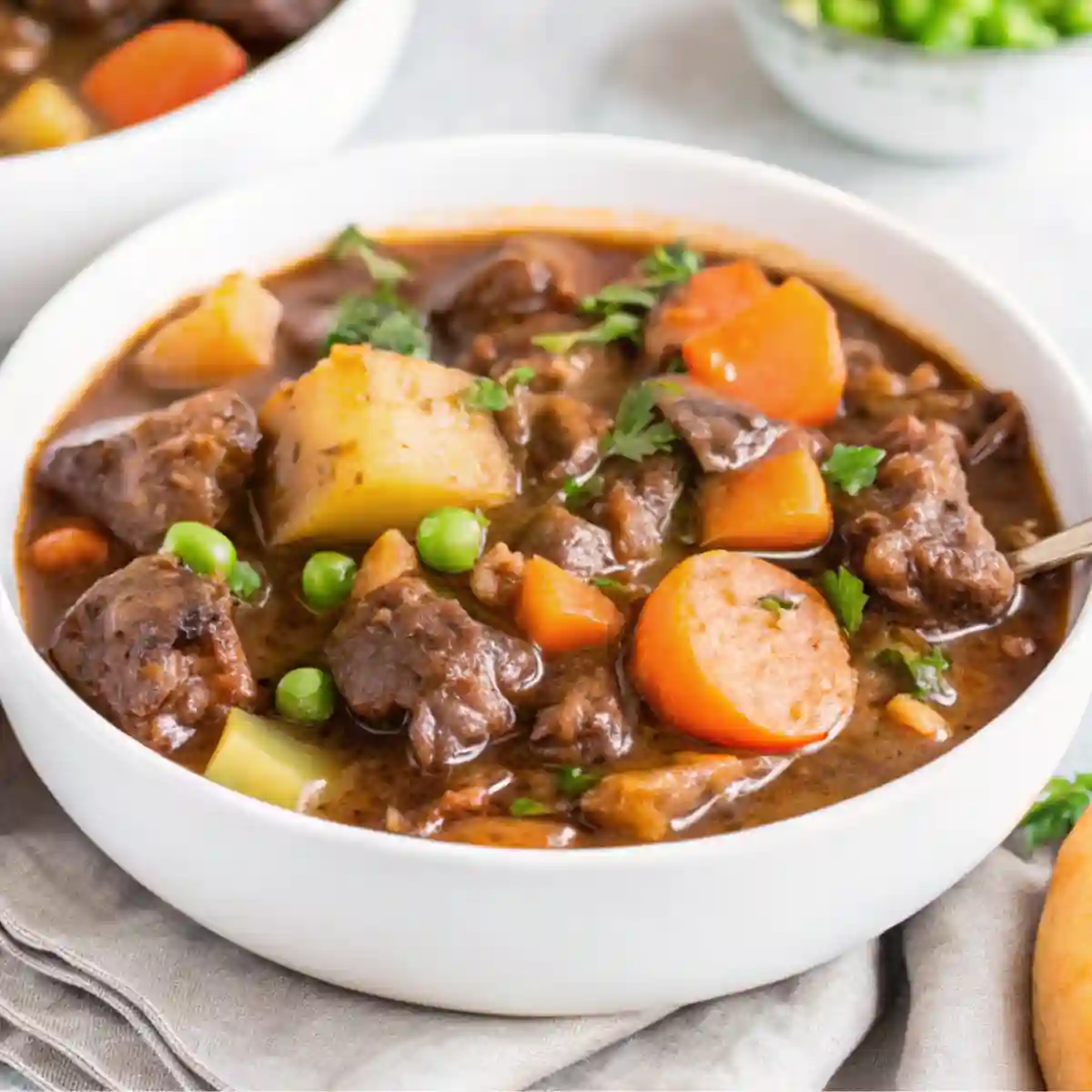

Ingredients
Method
Step 1: Prep and brown the beef
- Start by patting your beef chunks dry with paper towels. It might seem unnecessary, but trust me, moisture is the enemy of a good sear.
- Season the beef generously with salt and freshly cracked black pepper.
- Heat a Dutch oven over medium-high heat with a tablespoon of olive oil. Working in batches, brown the beef on all sides. Don’t rush this step and don’t overcrowd the pot. You want caramelized edges, not steamed meat.
- Once each batch is browned, transfer it to a plate and set it aside.
Step 2: Sauté the aromatics
- Turn the heat down to medium. Add another splash of olive oil to the same pot.
- Add your sliced onions and let them cook down until soft and golden. Be sure to scrape up those browned bits left behind by the beef. That’s flavor right there.
- Stir in the minced garlic and let it cook for about a minute.
- Then sprinkle the flour over the onions and garlic. Stir it all together until it forms a paste-like texture. This will help thicken your stew later.
Step 3: Build the base
- Add the tomato paste and stir until fully mixed.
- Slowly pour in the beef broth while scraping the bottom of the pot to release any remaining fond.
- Now add the diced tomatoes, Worcestershire sauce, your browned beef, thyme, oregano, and bay leaves. Give everything a solid stir and bring it to a low simmer.
- Once simmering, cover the pot and place it in a preheated 350-degree oven.
- Let it cook for one full hour.
Step 4: Add the vegetables
- After the first hour, remove the Dutch oven from the oven.
- Add in the chopped carrots and potatoes. Stir them into the stew.
- Cover and return the pot to the oven for another hour.
- By the end of this round, the beef should be fork-tender, and the vegetables will have soaked up all that savory broth.
Step 5: Final touches
- Take the pot out of the oven. Remove the bay leaves.
- Stir in the frozen peas and place the lid back on. Let it sit for 10 minutes. The residual heat will warm the peas through without overcooking them.
- Now give it a taste. Adjust the salt and pepper if needed.
- Ladle into bowls and serve hot. Bread on the side is highly recommended.
Notes
Nutrition Facts (Per Serving)
- Serving Size: 1 bowl (approx. 1/6 of total recipe)
- Calories: 602 kcal
- Total Fat: 23 g
- Saturated Fat: 7 g
- Trans Fat: 1 g
- Unsaturated Fat: 15 g
- Cholesterol: 187 mg
- Sodium: 747 mg
- Total Carbohydrates: 33 g
- Dietary Fiber: 6 g
- Sugars: 6 g
- Protein: 68 g