
Rosemary Tea Recipe is how my mornings quietly changed, and I want to start by speaking to you honestly. Have you ever felt that your day begins before you are fully ready for it? I remember feeling that way often. As someone who spends a lot of time working with food and simple nutrition habits, I was always searching for routines that felt realistic, not forced. That is when this tea entered my life in the simplest way possible.
The first time I tried this rosemary tea recipe, I was not chasing health promises. I was just curious. You might be feeling the same curiosity right now. I stood in my kitchen, steeping rosemary in hot water, asking myself if this small act could really matter. What surprised me was not just the taste, but the pause it created. The aroma filled the room, and I found myself slowing down without trying.
Over time, I noticed that this ritual gave me a sense of balance in the morning. I often ask readers, do you give yourself even five calm minutes before the noise of the day begins? For me, this tea became that moment. It felt grounding, warm, and easy to return to every day.
If you are looking for a gentle morning habit that fits into real life, this rosemary tea recipe may speak to you too. In the next sections, I will show you exactly how to prepare it and why it has become a trusted part of my routine.
Table of Contents
Table of Contents
What Is Rosemary Tea Recipe? A Simple Herbal Morning Drink
Rosemary Tea Recipe as a Traditional Herbal Infusion
The Rosemary Tea Recipe is based on a very old and simple idea. Fresh or dried rosemary leaves are infused in hot water to create a light herbal drink. Long before it appeared on wellness blogs, rosemary tea was used in home kitchens as a comforting herbal infusion. From my experience, this simplicity is exactly what makes it appealing. You do not need special tools, powders, or complicated steps. Just rosemary, hot water, and a few quiet minutes.
Many readers ask me if rosemary tea is meant to be medicinal. I always explain it this way. This recipe is not a treatment. It is a gentle herbal drink that fits naturally into everyday life. When you prepare it at home, it feels familiar and grounding, much like other traditional herbal teas passed down through generations.
Why Rosemary Tea Recipe Is Considered a Wellness Drink
The Rosemary Tea Recipe is often described as a wellness drink because it supports simple daily habits. From my own routine, I see it as a way to hydrate early in the day while enjoying the natural aroma of rosemary. That sensory experience matters more than most people realize.
Wellness does not always mean doing more. Sometimes it means choosing something easy enough to repeat daily. This recipe works because it does not demand effort, discipline, or strict rules. It simply invites a calm start, which is why many people return to it consistently.
Rosemary Tea Recipe vs Regular Herbal Teas
Compared to common herbal teas like chamomile or mint, rosemary tea has a more earthy and aromatic profile. In my experience, it feels more stimulating without being overwhelming. That balance is what sets it apart and makes it especially suitable for mornings.


Rosemary Tea Recipe
Ingredients
Method
- Rinse the rosemary sprig and gently bruise it to release aroma.
- Place the rosemary in a mug and pour hot water over it.
- Cover and steep for 5 to 10 minutes.
- Strain the tea and add lemon honey or ginger if desired.
- Serve warm or let cool and enjoy chilled.
Notes
| Nutrient | Amount |
| Calories | 1 to 2 kcal |
| Carbohydrates | 0 to 0.3 g |
| Protein | 0 g |
| Fat | 0 g |
| Fiber | 0 to 0.1 g |
| Sodium | 5 to 15 mg |
| Potassium | 5 to 10 mg |
| Vitamin A | Trace |
| Vitamin C | Trace |
| Calcium | Small amount |
| Iron | Small amount |
- For a stronger flavor, steep closer to 10 minutes.
- If the tea tastes bitter, reduce steep time or use a smaller sprig.
- Dried rosemary is more concentrated than fresh.
Rosemary Tea Recipe Benefits for Brain, Memory, and Focus
Rosemary Tea Recipe for Brain Health and Mental Clarity
When people talk about using a Rosemary Tea Recipe for the brain, they are often really talking about how it makes them feel during quiet moments. From my experience, this tea does not create a sudden burst of energy. Instead, it supports a calm and alert state that feels steady. I remember asking myself after a few mornings, why do I feel more settled when I start the day this way? That question comes up often when readers try it for the first time.
Rosemary has a strong natural aroma, and aroma plays a role in how we experience focus. As the tea steeps, the scent alone can help shift your mindset. You may notice that your thoughts feel a little clearer or that you ease into tasks more gently. That is where this recipe fits into brain friendly routines.
Rosemary Tea Recipe for Memory Support
Using a Rosemary Tea Recipe for memory is not about promises or quick results. I always share this honestly. Memory support often comes from habits that reduce stress and distraction. When I drink this tea in the morning, I give myself a few uninterrupted minutes. That pause matters more than we think.
Many readers tell me they remember things better simply because they start their day slower. This tea encourages that pace. Over time, it becomes associated with focus, planning, and mental organization, which naturally supports memory.
Rosemary Tea Recipe for Focus and Daily Productivity
If you are looking for a drink that helps you transition into work or study time, this recipe fits well. I often sip it before opening my laptop. It signals that the day has started with intention. Unlike stronger stimulants, it does not create tension. It supports steady focus, which is why many people keep returning to it as part of their daily rhythm.
Rosemary Tea Recipe Health Benefits for the Body
Rosemary Tea Recipe Anti Inflammatory and Antioxidant Support
When readers ask me about the physical benefits of a Rosemary Tea Recipe, I often explain it in simple terms. Rosemary contains natural compounds that support the body in quiet, background ways. From my own experience, this tea feels soothing rather than intense. It does not overwhelm the system. Instead, it gently supports balance, which is why many people enjoy it regularly.
Antioxidants are part of why rosemary has been valued for generations. Drinking this tea is an easy way to include those compounds without changing your meals or routine. I always say that small, repeatable habits tend to last longer, and this recipe fits that idea perfectly.
Rosemary Tea Recipe for Stress Relief and Calm
Stress often shows up before we even notice it. That is something I have learned both personally and through conversations with readers. Preparing a Rosemary Tea Recipe creates a pause. The warmth of the mug, the aroma, and the slow sipping all contribute to a sense of calm.
Many people tell me they drink this tea during busy afternoons or quiet evenings. From my experience, it helps signal the body to slow down without making you feel tired. That balance is what makes it useful for stress support.
Rosemary Tea Recipe for Digestion and Gut Comfort
This recipe is also commonly enjoyed after meals. I often recommend it when readers ask for gentle digestive support. Rosemary has traditionally been used to ease feelings of heaviness after eating. When prepared as tea, it feels light and comforting.
If you listen to your body, you may notice that this tea helps you feel more settled after food. It is not dramatic, but it is consistent, and that consistency is what makes the Rosemary Tea Recipe a trusted part of daily life.
Rosemary Tea Recipe as a Morning Drink and Daily Wellness Ritual
Why Rosemary Tea Recipe Works Well in the Morning
Many readers ask me why I suggest the Rosemary Tea Recipe as a morning drink. My answer is always practical. Mornings set the tone for the rest of the day. From my own routine, I noticed that starting with something warm and herbal helped me feel more centered before moving on to coffee or breakfast.
This tea feels light on the stomach, which makes it suitable early in the day. You are not shocking your system awake. Instead, you are easing into the morning. I often ask people, do you begin your day intentionally or reactively? This recipe encourages intention, even if you only have a few minutes.
Rosemary Tea Recipe as a Consistent Daily Habit
Consistency is where this recipe truly shines. I have seen many wellness habits fail because they are too complicated. The Rosemary Tea Recipe survives because it is easy to repeat. One sprig, hot water, steep, and sip. That simplicity removes excuses.
Over time, it becomes something you do without thinking. Readers tell me it becomes as natural as brushing their teeth. That is when a habit truly sticks, not because it is powerful, but because it is realistic.
When to Drink Rosemary Tea Recipe During the Day
Although mornings are popular, this tea fits other moments too. I personally enjoy it during mid afternoon breaks when I want warmth without heaviness. Some readers prefer it after meals or in the early evening.
The key is listening to your body. This recipe is flexible, and that flexibility is what allows it to support daily wellness without pressure or strict timing.
Ingredients
To make this Rosemary Tea Recipe, you only need a few simple and natural ingredients. Each one plays a small but important role in flavor and aroma, and you can easily adjust based on what you have at home.
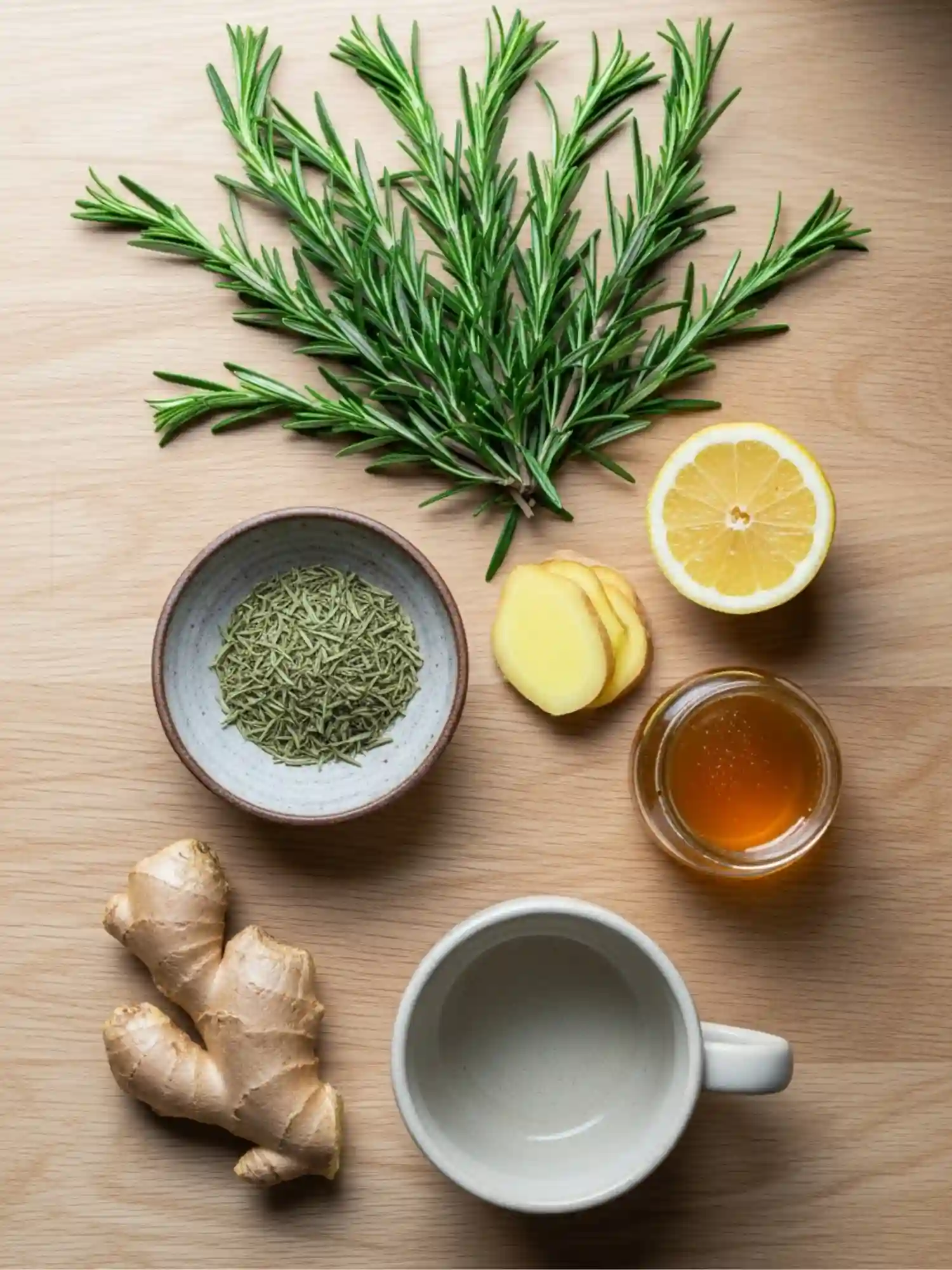
Main Ingredients
- Fresh rosemary sprig about 4 to 6 inches long
Provides a clean, aromatic herbal flavor - Hot water 1 cup or 240 ml
Just off the boil for best infusion
Optional Add Ins
- Dried rosemary leaves 1 teaspoon
Use when fresh rosemary is not available - Lemon slice or lemon juice
Adds brightness and a fresh taste - Honey or maple syrup
Balances the herbal notes with gentle sweetness - Fresh ginger slices
Adds warmth and digestive comfort
This ingredient list keeps the Rosemary Tea Recipe flexible and beginner friendly. You can start with just rosemary and water, then personalize the tea with lemon, honey, or ginger based on taste and season.
How to Make Rosemary Tea Recipe at Home
Rosemary Tea Recipe with Fresh Rosemary
Learning how to prepare a Rosemary Tea Recipe with fresh rosemary is simple, and that is what makes it so appealing. The first time I made it, I was surprised by how little effort it required. You might expect something more complex, but it truly comes down to a few mindful steps.
Start by rinsing a fresh rosemary sprig under clean water. I usually choose a sprig that is about the length of my hand. Gently press or rub it between your fingers to release its natural aroma. Place it in a mug and pour hot water over it, just after the water has stopped boiling. Cover the mug and let it steep for five to ten minutes. Straining the leaves before drinking helps keep the flavor clean and smooth.
Rosemary Tea Recipe with Dried Rosemary
If fresh rosemary is not available, dried rosemary works well too. I often use this version when I want something quick. For a dried Rosemary Tea Recipe, start with one teaspoon of dried rosemary leaves. Because dried herbs are more concentrated, a shorter steep works best.
Add the rosemary to hot water, cover, and steep for three to six minutes. Taste and adjust if needed. From my experience, starting light prevents the tea from becoming too strong or overwhelming.
Rosemary Tea Recipe with Lemon, Honey, or Ginger
One of the joys of this recipe is how easily it adapts. On cooler mornings, I like adding a little fresh ginger for warmth. Lemon adds brightness, while honey softens the herbal notes. These additions do not overpower the tea. They simply make it feel more personal.
You can experiment slowly and find what suits your taste. That flexibility is what helps this Rosemary Tea Recipe remain enjoyable over time rather than feeling repetitive.
Rosemary Tea Recipe Safety, Side Effects, and Who Should Be Careful
Is Rosemary Tea Recipe Safe for Daily Use
One of the most common questions I receive is about daily use. From my experience and professional background, a Rosemary Tea Recipe prepared in normal culinary amounts is generally safe for most healthy adults. This tea is mild, caffeine free, and easy on the body when consumed in moderation.
I often remind readers that herbal teas work best when they are treated as part of a balanced routine, not as something to overdo. One cup a day is usually enough to enjoy the flavor and the ritual without putting stress on the body.
Who Should Avoid or Limit Rosemary Tea Recipe
There are situations where extra care is needed. If you are pregnant, managing a medical condition, or taking medications that affect blood clotting, it is wise to speak with a healthcare professional first. I always emphasize this because natural does not automatically mean risk free.
It is also important to understand the difference between tea and essential oils. Rosemary essential oil is highly concentrated and should not be consumed. The Rosemary Tea Recipe uses whole leaves in water, which is much gentler and not comparable in strength.
Tips to Avoid Bitterness or Discomfort
If your tea tastes too strong or feels uncomfortable, the solution is simple. Use a smaller amount of rosemary or reduce the steeping time. I learned this through trial and error. Shorter steeps often create a smoother and more pleasant cup.
Listening to your body matters most. When prepared thoughtfully, this recipe remains a safe and comforting addition to daily life rather than something that feels overwhelming or excessive.
Rosemary Tea Recipe Nutrition Information
The Rosemary Tea Recipe is naturally very low in calories and nutrients, which is exactly why it fits well into everyday routines. This tea is not meant to replace meals or act as a supplement. Instead, it provides hydration, aroma, and small amounts of plant compounds that support overall wellness.
Approximate Nutrition Per 1 Cup of Rosemary Tea
| Nutrient | Amount |
| Calories | 1 to 2 kcal |
| Carbohydrates | 0 to 0.3 g |
| Protein | 0 g |
| Fat | 0 g |
| Fiber | 0 to 0.1 g |
| Sodium | 5 to 15 mg |
| Potassium | 5 to 10 mg |
| Vitamin A | Trace |
| Vitamin C | Trace |
| Calcium | Small amount |
| Iron | Small amount |
For general nutrient reference values of herbs and herbal infusions, data published by the United States Department of Agriculture provides a reliable benchmark for understanding trace nutrients in herbal teas like rosemary tea.
What This Nutrition Means in Real Life
From my experience, the value of this tea does not come from macronutrients like protein or carbohydrates. Its strength lies in being a zero burden drink. You are not adding sugar, caffeine, or heavy calories to your day. That makes the Rosemary Tea Recipe easy to enjoy daily without worrying about nutritional balance.
Rosemary naturally contains antioxidant compounds such as rosmarinic acid. These are present in small amounts in the tea, depending on how strong you brew it. While the nutrition numbers look modest, the real benefit comes from hydration and the calming ritual itself.
If you add lemon, honey, or ginger, the nutrition will change slightly. Honey adds natural sugars and calories, while lemon contributes a small amount of vitamin C. You can adjust these additions based on your personal needs and taste preferences.
Overall, this tea supports wellness quietly, without complicating your diet or daily nutrition goals.
Conclusion: Why Rosemary Tea Recipe Deserves a Place in Your Routine
The Rosemary Tea Recipe stands out not because it promises dramatic results, but because it fits so naturally into everyday life. From my own experience, the value of this tea comes from its simplicity. It does not ask you to change your schedule, buy special ingredients, or follow strict rules. It simply offers a quiet moment in a busy day.
What I appreciate most is how adaptable this recipe is. You can enjoy it in the morning as a gentle start, in the afternoon as a pause, or after meals as a comforting ritual. Over time, those small moments add up. I often tell readers that wellness is built through habits we actually enjoy repeating. This tea is easy to return to because it feels familiar and grounding.
If you are looking for a calm, realistic way to support daily focus and balance, this recipe may be worth trying. Give yourself the space to enjoy it slowly, notice how it makes you feel, and allow it to become part of your rhythm rather than a task. Sometimes, the simplest cup can quietly become the most meaningful one.
More Calming & Healing Herbal Teas You’ll Love
- Clove Tea Recipe – Warm, soothing, and great for immunity.
- Friendship Tea Recipe – A nostalgic, spiced blend perfect for sharing.
- Starbucks Medicine Ball Recipe – A popular citrus-mint tea for cold season relief.
- Green Tea with Honey – Simple, antioxidant-rich, and naturally energizing.
FAQs About Rosemary Tea Recipe
1. Can I Drink Rosemary Tea Recipe Every Day
This is one of the first questions readers ask me, and it is a fair one. In my experience, drinking a Rosemary Tea Recipe daily is fine for most people when kept moderate. One cup a day fits easily into a balanced routine. I always encourage paying attention to how your body responds, because individual tolerance matters more than strict rules.
2. How Long Should I Steep Rosemary Tea Recipe
Steeping time makes a big difference in flavor. From my own testing, five to ten minutes is the ideal range for fresh rosemary. For dried rosemary, a shorter steep of three to six minutes works better. If the tea tastes too strong, reduce the time rather than forcing yourself to drink something unpleasant.
3. Does Rosemary Tea Recipe Really Help with Focus
I am always careful with how I answer this. The Rosemary Tea Recipe is not a stimulant or a cure. What it does offer is a calm environment for focus. Many people, including myself, find that the aroma and the ritual help them settle into tasks with more clarity.
4. Can I Drink Rosemary Tea Recipe on an Empty Stomach
Yes, most people tolerate it well in the morning. I personally enjoy it before breakfast because it feels light and gentle. If you have a sensitive stomach, start with a shorter steep and see how you feel.
5. Can Rosemary Tea Recipe Be Served Cold
Absolutely. After brewing, let it cool and store it in the refrigerator. I often enjoy it chilled on warm days. The flavor stays refreshing, especially with a slice of lemon.
6. What Is the Best Time to Drink Rosemary Tea Recipe
There is no single correct time. Mornings are popular, but many readers enjoy it in the afternoon or after meals. The best time is the one that fits naturally into your day and feels enjoyable rather than forced.