Indian Okra and Potato Stir Fry is one of those dishes that seems simple until you actually try to cook it. If you have ever ended up with sticky, slimy okra and wondered what went wrong, you are not alone. I remember the first few times I made bhindi and thinking the spices were the problem. They were not. The real secret to this dish is technique.
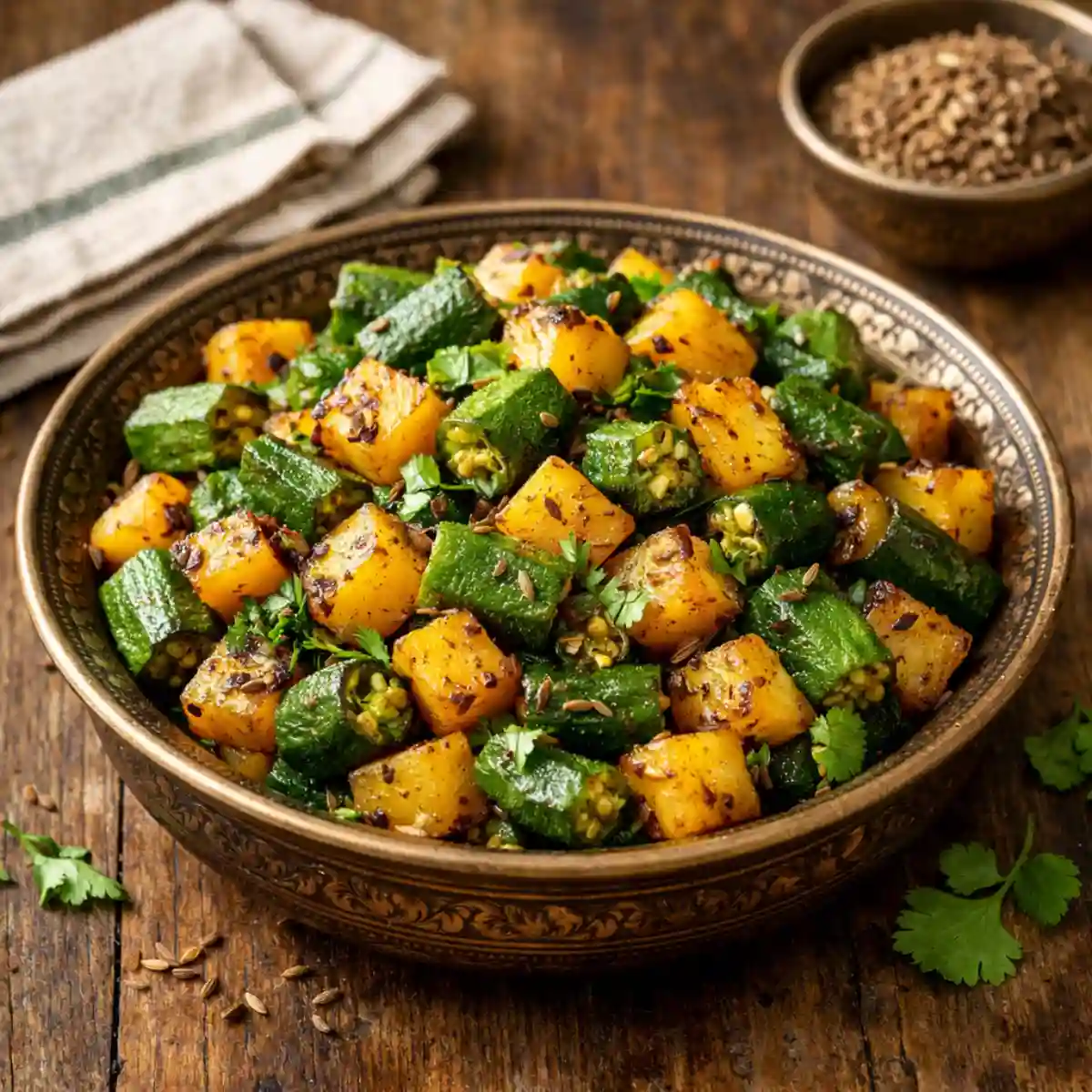
This Indian Okra and Potato Stir Fry is a classic dry bhindi recipe Indian style, made with sliced okra and golden potatoes cooked together in one pan. It is not a heavy curry. There is no thick gravy hiding mistakes. Instead, everything depends on how you prep the okra, how you control moisture, and when you add the spices. Once you understand that rhythm, the recipe becomes surprisingly easy.
I often tell readers that this is one of the most reliable okra side dish recipes you can master. The potatoes cook first to develop color and structure. The okra joins later and cooks uncovered so it dries properly and turns lightly crisp at the edges. Simple pantry spices bring warmth and depth without overpowering the vegetables.
In this guide, I will show you exactly how to make Indian Okra and Potato Stir Fry step by step, how to avoid slime completely, and how to adjust the flavor whether you prefer a Punjabi style version or a lighter healthy bhindi recipe approach. By the end, you will not just follow instructions. You will understand why the method works.
Table of Contents
Table of Contents
What Is Indian Okra and Potato Stir Fry?
Indian Okra and Potato Stir Fry is a traditional dry vegetable dish made with sliced okra and cubed potatoes cooked together with simple Indian spices. Unlike saucy curries, this dish is intentionally dry, lightly crisp, and built around texture as much as flavor. If you are familiar with Indian home cooking, you may know it as aloo bhindi or bhindi aloo. If you are new to it, think of it as one of the most reliable Indian okra side dish recipes you can master for everyday meals.
What makes Indian Okra and Potato Stir Fry stand out is its simplicity. There is no heavy tomato base. No cream. No thick gravy. Instead, cumin seeds bloom in hot oil, potatoes cook until lightly golden, and okra is added later so it dries properly and develops slight crisp edges. It is the kind of healthy bhindi recipe that feels comforting but not heavy. In many Indian households, this dish appears regularly on lunch tables because it pairs effortlessly with dal, roti, or plain rice.
A Classic Bhindi Recipe Indian Style
In North India, Indian Okra and Potato Stir Fry is considered a staple bhindi recipe Indian style. It is especially popular in Punjabi homes, where mustard oil is often used for its sharp, earthy aroma. In Sindhi kitchens, you may find slight variations in spice balance, sometimes a little tangier or slightly more robust in heat.
This dish belongs to a broader family of Indian bhindi recipes that focus on dry cooking methods. Unlike bharwa bhindi recipe variations where okra is stuffed with spiced fillings, this version keeps the vegetables sliced and sautéed. The beauty lies in restraint. Few ingredients, precise timing, and controlled moisture create the final texture.
How It Differs from Okra and Potato Curry Indian Versions
It is important not to confuse Indian Okra and Potato Stir Fry with okra and potato curry Indian style. A curry version typically includes tomatoes, onions, or a gravy base that produces a saucy consistency. Those versions are softer and meant to be eaten with rice.
In contrast, Indian Okra and Potato Stir Fry is cooked uncovered once the okra is added. The goal is to evaporate moisture rather than trap it. That is why this dish often appears under categories like okra side dish recipe rather than curry. The focus is crispness, not sauce.
Understanding this distinction is essential before cooking. If you expect a gravy, you might accidentally add moisture. If you understand that dryness equals success, the method suddenly makes sense.
Ingredients for Indian Okra and Potato Stir Fry
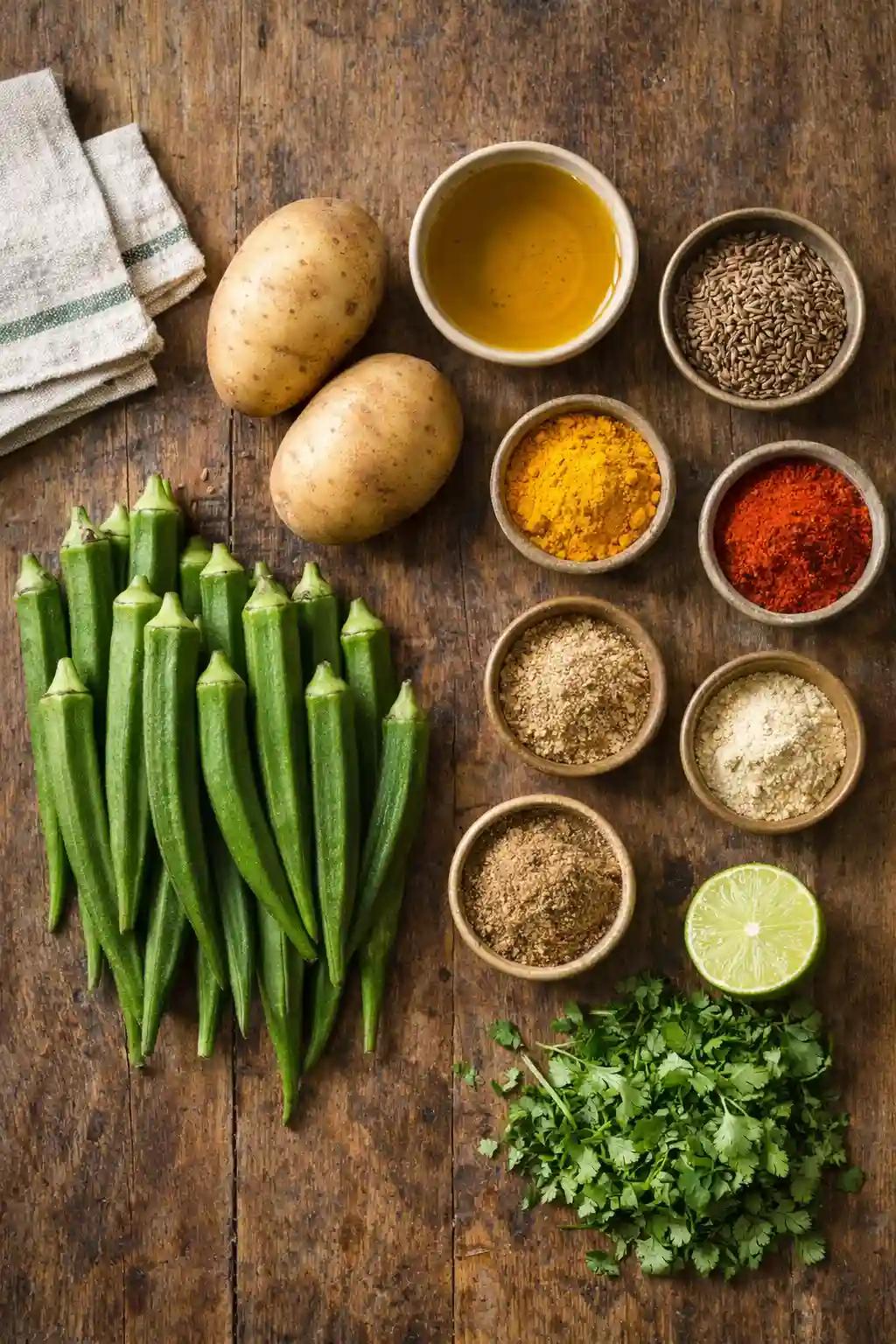
Indian Okra and Potato Stir Fry works because the ingredient list is simple but intentional. Nothing here is decorative. Every element plays a role in flavor, texture, or moisture control. If you have ever tried random fresh okra recipe ideas and felt underwhelmed, it is usually because the balance between vegetable, spice, and heat was slightly off. In this dish, that balance is everything.
The foundation is fresh okra and firm potatoes. The supporting cast is a small but powerful mix of whole and ground spices. Oil matters more than people think. Even the timing of salt makes a difference. When each ingredient is treated properly, Indian Okra and Potato Stir Fry becomes one of the most reliable okra side dish recipes you can make.
Choosing Fresh Okra for the Best Texture
When buying okra for Indian Okra and Potato Stir Fry, look for bright green pods that are under four inches long. Smaller pods are usually more tender and contain fewer mature seeds. If the okra bends slightly without snapping too easily, it is fresh. Avoid pods that feel soft, bruised, or overly thick.
You may also come across red okra recipes online and wonder if you can substitute. Yes, red okra works in the same way as green okra, although it often turns green once cooked. The texture remains similar, so it is perfectly suitable for this stir fry.
If fresh okra is not available, frozen can work, but it behaves differently because of the moisture content. Fresh will always give you better control in a dry bhindi recipe Indian style. The key is to wash the okra whole and dry it completely before slicing. That single step determines whether your healthy bhindi recipe stays crisp or turns sticky.
The Role of Potatoes and Spices
Potatoes bring structure to Indian Okra and Potato Stir Fry. Waxy varieties like Yukon Gold hold their shape well and develop a golden crust without collapsing. Russet potatoes can work, but they tend to soften more quickly. The potatoes are cooked first because they require more time. This sequencing is what prevents uneven texture.
Spices in this dish are minimal but strategic. Whole cumin seeds bloom in hot oil and provide a nutty aroma. Turmeric adds color and earthiness. Red chili powder controls heat. Chaat masala or amchoor introduces acidity, which subtly supports the anti slime technique. That tang is not just for flavor. It contributes to texture control.
In Punjabi style versions, mustard oil gives a distinctive sharpness. In lighter variations, neutral oils keep the flavor cleaner. Either way, restraint is key. Indian Okra and Potato Stir Fry should taste vibrant but not overloaded. The vegetables remain the star.
How to Make Indian Okra and Potato Stir Fry Step by Step
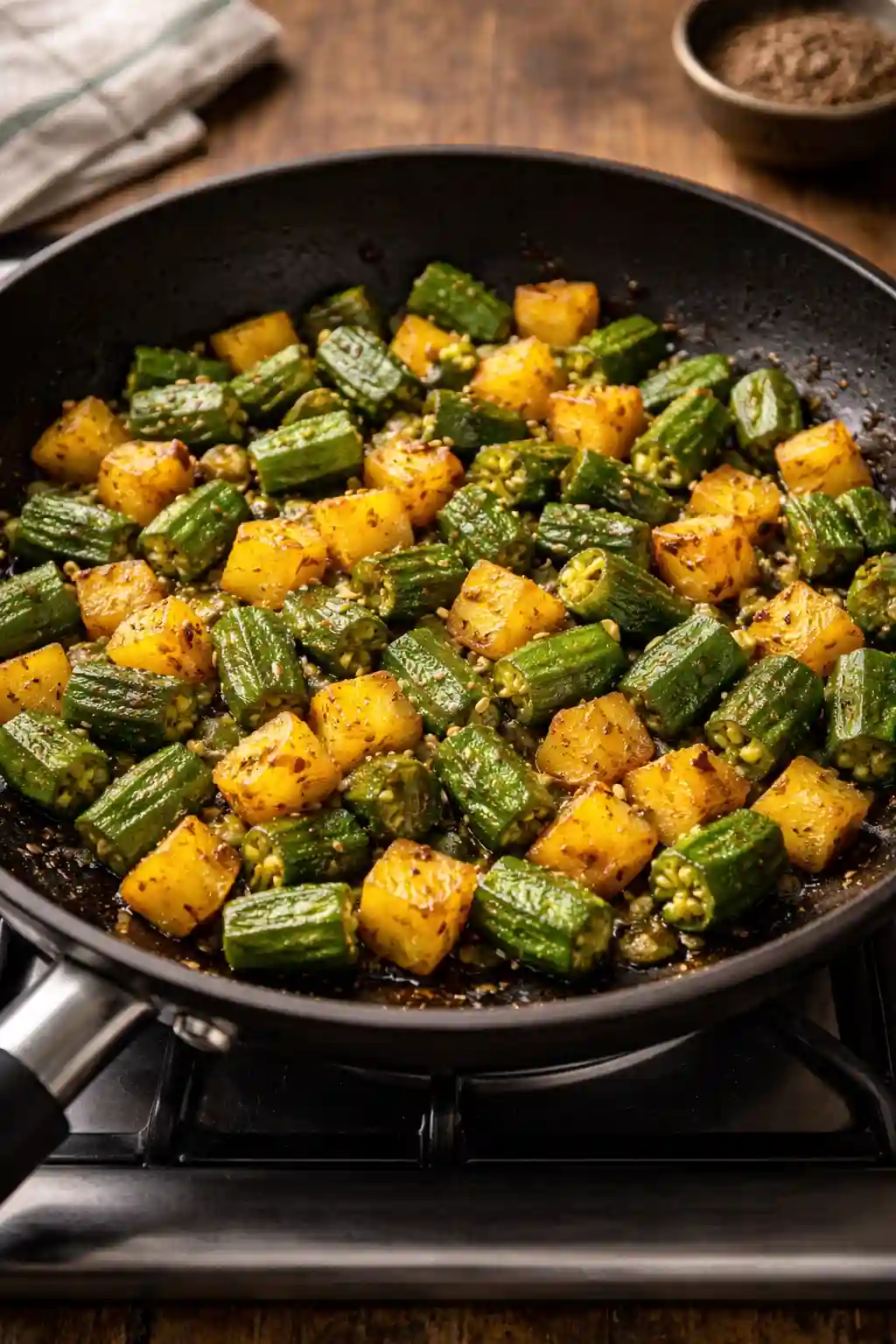
Indian Okra and Potato Stir Fry looks simple on paper, but the order of operations determines everything. If you rush the process or combine ingredients too early, the texture changes completely. Think of this less as tossing vegetables into a pan and more as building layers. The potatoes need time. The okra needs space. The spices need heat. When these three align, the result feels effortless.
One mistake I used to make was adding everything together at once. It seemed logical. Same pan, same dish. But Indian Okra and Potato Stir Fry depends on staggered cooking. Once I started respecting that sequence, the dish stopped being unpredictable and started being consistent.
Preparing Okra and Potatoes Properly
Start by washing the okra whole. This matters. If you slice first and then wash, water seeps inside and activates the natural mucilage that causes slime. After washing, dry each pod thoroughly with a kitchen towel. If you have time, let them air dry for a few extra minutes. Moisture is the real enemy in this recipe.
Trim the ends and slice into even half inch rounds. Try not to crush the pods while cutting. Use a sharp knife and a dry cutting board.
For the potatoes, peel and cube them into small, uniform pieces. About half inch cubes cook evenly and develop a golden exterior without overcooking the inside. Pat them dry before they go into hot oil. Excess surface moisture prevents proper browning.
Cooking Order That Prevents Slime
Heat oil in a wide skillet and add whole cumin seeds. When they begin to crackle, add the potatoes first. Cook them covered for about eight to ten minutes, stirring occasionally. They should be lightly golden outside and almost tender inside before the okra goes in.
Once you add the sliced okra, do not cover the pan again. This is the most important rule in Indian Okra and Potato Stir Fry. Cooking uncovered allows moisture to evaporate. Stir gently every few minutes, or better yet, shake the pan instead of aggressively stirring. Excess movement breaks the okra and releases more mucilage.
Spices go in toward the end, once the okra looks dry and slightly crisp at the edges. Salt should also be added late, since it draws out moisture. This sequencing is common in bhindi aloo fry Sindhi style preparations and in many North Indian kitchens.
When done properly, the potatoes hold their shape, the okra is tender but lightly crisp, and the spices coat everything evenly without forming a paste.
Indian Okra and Potato Stir Fry

Ingredients
- 1 lb fresh okra washed, dried, and sliced
- 2 medium potatoes peeled and cubed
- 2 tablespoons mustard oil or neutral oil
- 1 teaspoon cumin seeds
- 1 teaspoon red chili powder
- ½ teaspoon turmeric powder
- 1 teaspoon chaat masala
- ½ teaspoon amchoor powder optional
- 1 teaspoon salt adjust to taste
- ¼ teaspoon garam masala optional
- 1 tablespoon fresh lime juice
- 2 tablespoons chopped cilantro optional
Instructions
- Wash okra whole, dry completely, then slice into even rounds. Cube potatoes and pat dry.
- Heat oil in a wide skillet over medium heat. Add cumin seeds and let them crackle.
- Add potatoes first. Cover and cook for 8 to 10 minutes until lightly golden and nearly tender. Stir occasionally.
- Add sliced okra. Cook uncovered for 10 to 12 minutes, stirring gently every few minutes.
- Once okra looks dry and slightly crisp, add turmeric, chili powder, salt, chaat masala, and amchoor. Toss gently.
- Cook 2 to 3 more minutes. Turn off heat. Sprinkle garam masala, add lime juice, garnish with cilantro, and serve warm.
Notes
| Nutrient | Amount |
| Calories | 138 kcal |
| Carbohydrates | 17 g |
| Protein | 3 g |
| Fat | 7 g |
| Saturated Fat | 1 g |
| Fiber | 4 g |
| Sugar | 2 g |
| Sodium | 601 mg |
| Potassium | 528 mg |
| Vitamin A | 864 IU |
| Vitamin C | 33 mg |
| Calcium | 93 mg |
| Iron | 2 mg |
How to Keep Indian Okra and Potato Stir Fry Crisp and Not Slimy
If there is one reason people avoid making Indian Okra and Potato Stir Fry at home, it is the fear of slime. Okra has a natural substance called mucilage inside the pods. When exposed to moisture and agitation, it becomes sticky. It is completely harmless, but texture matters. And in a dry bhindi recipe Indian style, texture is everything.
The good news is that slime is not random. It happens for specific reasons. Once you understand what triggers it, you can control it. In fact, Indian Okra and Potato Stir Fry becomes one of the most predictable okra side dish recipes once you master moisture management.
Why Okra Becomes Slimy
Okra releases mucilage when it comes into contact with water and prolonged heat in a moist environment. Cutting into wet pods, covering the pan, or adding salt too early all increase moisture in the pan. That trapped steam activates the sticky texture.
Another common mistake is over stirring. Every time you break open the okra with a spatula, more of that internal gel is released. In dishes like homemade bhindi curry, where gravy is expected, this is less noticeable. But in Indian Okra and Potato Stir Fry, where dryness is the goal, it becomes obvious.
Understanding this makes the process feel less mysterious. It is not that okra is difficult. It simply reacts to moisture.
The Five Techniques That Always Work
First, always wash okra whole and dry it completely before slicing. Even slight dampness can change the final texture. If you have time, let the pods air dry for ten to fifteen minutes after patting them dry.
Second, cook Indian Okra and Potato Stir Fry uncovered once the okra is added. Steam is the enemy here. A wide pan also helps because it allows evaporation.
Third, use medium heat. Too low and the okra steams in its own juices. Too high and the outside burns before the inside dries.
Fourth, add salt toward the end. Salt draws moisture out of vegetables. Waiting until the okra is nearly cooked keeps it from releasing excess water too early.
Fifth, stir gently and less frequently. Instead of constantly mixing, allow the okra to sit for a few minutes between movements. Shaking the pan works better than aggressive stirring.
When you follow these principles, Indian Okra and Potato Stir Fry transforms into a healthy bhindi recipe that is crisp, vibrant, and reliable. Once you see those slightly blistered edges and separated slices in the pan, you will know you have done it right.
Regional Variations of Indian Okra and Potato Stir Fry
One of the reasons Indian Okra and Potato Stir Fry remains so popular across India is its adaptability. The base technique stays the same, but small regional adjustments in spices, oil, and acidity create noticeably different personalities. You might think a dry bhindi dish is just a dry bhindi dish. It is not. A slight change in tempering or spice balance can shift the flavor from earthy to tangy, from mild to bold.
If you explore Indian bhindi recipes across regions, you will notice that Indian Okra and Potato Stir Fry quietly changes identity depending on the kitchen it is cooked in. Understanding these variations allows you to adjust the dish to your own taste rather than following one rigid version.
Punjabi and Sindhi Style Variations
In Punjabi homes, Indian Okra and Potato Stir Fry often leans on mustard oil for depth. The oil is heated until slightly smoky before cumin seeds are added. This creates a sharp, robust aroma that defines many North Indian vegetable dishes. The spice level may be slightly higher, and amchoor is frequently used to add a gentle tang.
Aloo bhindi recipe Punjabi style typically keeps the texture slightly crisp but not overly dry. The potatoes are well browned, and the okra retains a tender bite.
In contrast, bhindi aloo fry Sindhi style can be more assertive in acidity and heat. Some Sindhi variations include a pinch of extra chili powder or additional dried mango powder for brightness. The texture is often cooked a bit longer, producing slightly more caramelized edges. Both styles remain dry, but the flavor emphasis shifts.
South Indian and Curry Versions
When you move toward South India, Indian Okra and Potato Stir Fry may include curry leaves, mustard seeds instead of cumin, and sometimes a hint of grated coconut. This South Indian okra and potato stir fry feels lighter and more aromatic. The spice heat is often more layered rather than sharp.
If you prefer a saucier preparation, you might explore okra and potato curry Indian versions. In those, tomatoes, onions, and sometimes ginger garlic paste are added to create a soft gravy. Homemade bhindi curry is comforting and works beautifully with rice, but it is structurally different from the dry stir fry method.
Knowing how to make bhindi curry is useful, but it is important not to confuse it with Indian Okra and Potato Stir Fry. One is moisture controlled and crisp focused. The other embraces softness and sauce.
By understanding these regional interpretations, you can adjust your seasoning, oil choice, and acidity to match your personal preference while still respecting the core technique.
Serving Indian Okra and Potato Stir Fry as an Okra Side Dish
Indian Okra and Potato Stir Fry is designed to be a dry vegetable preparation, which makes it incredibly versatile at the table. It is not meant to stand alone as a saucy centerpiece. Instead, it plays the role of a flavorful, textured okra side dish that complements softer elements in a meal. The slight crispness of the okra and the golden potatoes create contrast against dal, yogurt, or rice.
If you are looking for reliable okra side dish recipes that feel complete without being heavy, this one fits beautifully into both everyday lunches and more elaborate Indian spreads. Its dryness actually works in your favor because it travels well, packs easily, and does not turn watery after a few hours.
Pairing with Indian Breads and Dal
The most traditional way to serve Indian Okra and Potato Stir Fry is with warm roti or paratha. The bread scoops up the spiced okra and potatoes, creating a simple, satisfying bite. In many homes, this dish appears alongside dal and plain rice, forming a balanced vegetarian plate.
If you are planning lunch recipes Indian style, you can pair it with:
- Jeera rice and simple yellow dal
- Plain roti and cucumber raita
- Khichdi for a lighter comfort meal
Because it is dry, it balances well with softer dishes. That contrast prevents the meal from feeling monotonous. It also makes this recipe a dependable option among easy veg recipes for busy weekdays.
Turning It Into a Complete Meal
While traditionally served as a side, Indian Okra and Potato Stir Fry can easily become the main vegetable in a simple thali. Add a bowl of yogurt, a small salad, and perhaps another dry vegetable like aloo gobhi recipe style cauliflower and potato, and you have a complete vegetarian spread.
You can also rotate it with other potato based dishes like aloo methi recipe variations to keep weekly meals interesting without changing your grocery list too much. The spice base overlaps, which simplifies meal planning.
If packing it for lunch, place the Indian Okra and Potato Stir Fry in a separate compartment to maintain texture. Since it contains no gravy, it holds up better than many other Indian okra side dish recipe options.
When served thoughtfully, this dish stops being “just a vegetable” and becomes a dependable part of your regular meal rotation.
Global Takes on Okra and Potatoes
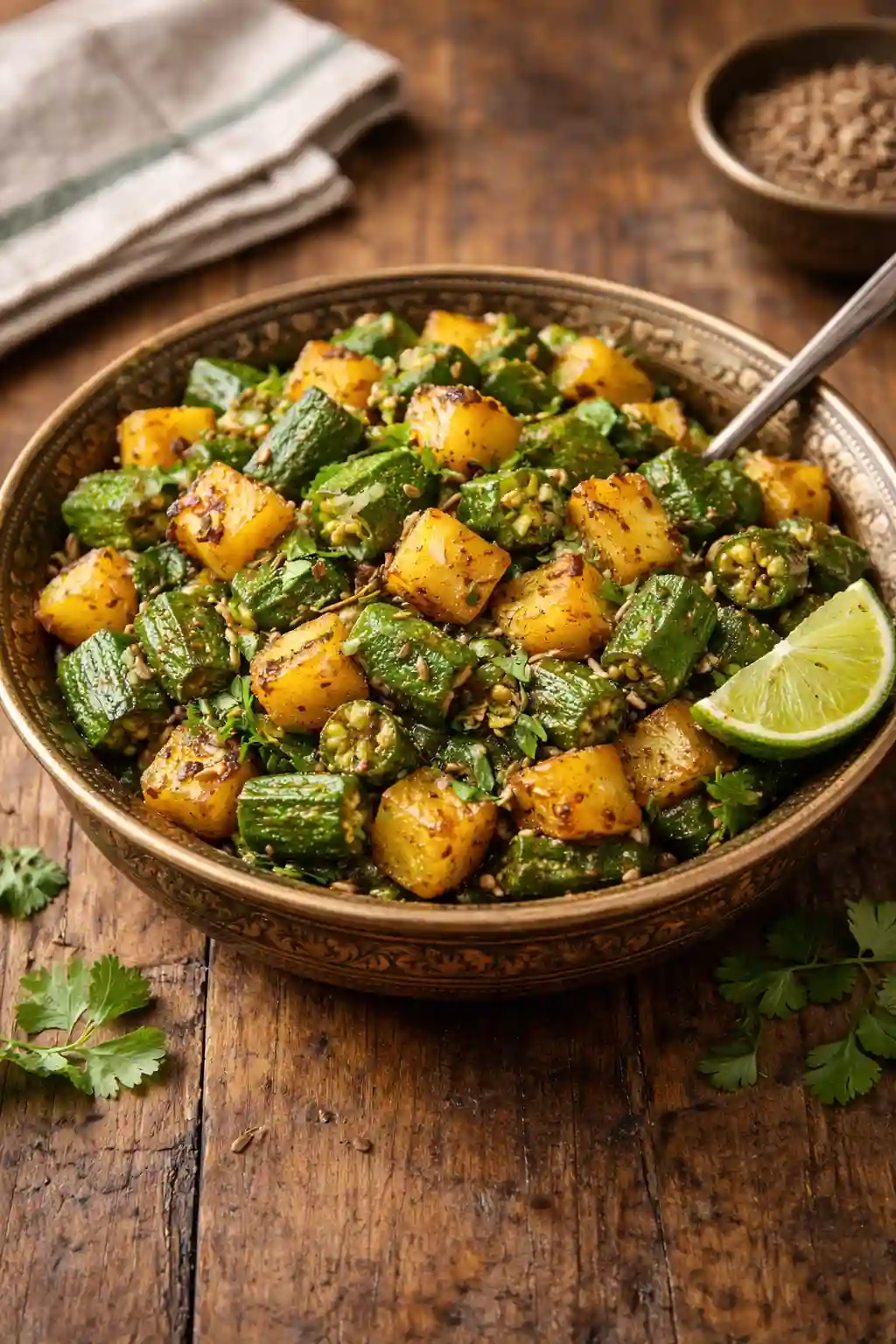
While Indian Okra and Potato Stir Fry has its own distinct identity, okra and potatoes appear in many cuisines around the world. The techniques, however, change dramatically. Some cultures embrace moisture. Others rely on quick, high heat cooking. Exploring these variations helps you understand why the Indian method focuses so strongly on dryness and texture control.
If you have ever searched for fresh okra recipe ideas beyond Indian cooking, you may have come across very different preparations. Comparing them makes the personality of Indian Okra and Potato Stir Fry even clearer.
Chinese Style Okra
In Chinese style okra, the vegetable is often stir fried quickly over high heat with garlic, soy sauce, and sometimes oyster sauce. The cooking time is shorter, and the slices are often left larger or even halved lengthwise. The goal is tenderness with a slight snap, not dryness.
Oil is usually neutral, and the flavor profile leans savory rather than tangy. There is little to no potato involved traditionally, but when potatoes are added in fusion variations, they are usually sliced thin and stir fried quickly. The emphasis is on speed and sauce coating rather than evaporation.
Compared to Indian Okra and Potato Stir Fry, Chinese style okra allows more surface gloss and moisture. The texture is softer, and the seasoning profile is built around umami instead of spice layering.
Okra and Potatoes Greek Style
In Mediterranean cooking, okra and potatoes Greek style often include tomatoes, olive oil, and herbs like oregano. This version resembles more of a braised preparation. The vegetables simmer together, absorbing tomato based flavors and becoming tender.
Olive oil plays a central role, giving richness and depth. Lemon juice is sometimes added for brightness, but the overall texture is soft and stew like. Unlike Indian Okra and Potato Stir Fry, which depends on controlled moisture and uncovered cooking, the Greek version embraces slow cooking with liquid.
These comparisons highlight something important. Indian Okra and Potato Stir Fry is not just about ingredients. It is about technique. Dry heat, spice blooming, and evaporation define its character. When you understand that difference, you appreciate why covering the pan or adding too much liquid completely changes the dish.
Storage, Reheating, and Meal Prep Tips for Indian Okra and Potato Stir Fry
One of the underrated advantages of Indian Okra and Potato Stir Fry is how well it fits into weekly meal planning. Because it is a dry preparation, it stores better than many gravy based Indian vegetable dishes. That said, texture can change slightly over time, so knowing how to store and reheat it properly makes a noticeable difference.
If you are using this as part of your rotation of easy veg recipes or lunch recipes Indian style, these small adjustments will help preserve flavor and structure.
How to Store Without Losing Texture
Allow the Indian Okra and Potato Stir Fry to cool completely before storing. Placing it in a container while still hot traps steam, which creates condensation and softens the okra.
Transfer to an airtight container and refrigerate for up to three to four days. Because this is a dry okra side dish recipe, it does not release much liquid during storage. However, the okra may lose some crispness after the first day.
For freezing, use a freezer safe glass or BPA free container. It can be frozen for up to two months, but keep in mind that freezing slightly softens the okra texture once thawed. The flavor remains intact, but the crisp edges will not be as pronounced as when freshly cooked.
If you plan to freeze, slightly undercook the okra by a minute or two. This helps maintain better texture after reheating.
Best Way to Reheat for Crispness
The best method to reheat Indian Okra and Potato Stir Fry is in a skillet over medium heat. Spread the vegetables in a thin layer and warm them for three to four minutes. This allows excess moisture to evaporate again and restores some surface crispness.
The microwave works if you are short on time, especially for packed lunches, but it will soften the okra more. If using a microwave, heat in short intervals and avoid covering the container tightly to reduce trapped steam.
For meal prep, you can portion Indian Okra and Potato Stir Fry into individual containers with roti or rice. Because it contains no gravy, it travels well and does not make bread soggy. This makes it one of the more practical okra side dish recipes for busy weekdays.
With proper storage and reheating, the dish maintains its flavor and remains a reliable part of your weekly vegetarian meal plan.
Nutrition Information for Indian Okra and Potato Stir Fry
Indian Okra and Potato Stir Fry is not just flavorful and satisfying, it also fits comfortably into a balanced vegetarian meal plan. Because it is a dry preparation with moderate oil and fiber rich vegetables, it offers a good mix of carbohydrates, plant based nutrients, and micronutrients without excessive calories.
Okra itself is naturally low in calories and rich in soluble fiber, vitamin C, vitamin K, and folate. Potatoes contribute complex carbohydrates, potassium, and additional fiber when cooked with minimal fat. When prepared as outlined in this Indian Okra and Potato Stir Fry recipe, the nutritional profile remains balanced and suitable for most vegetarian diets.
Below is the approximate nutrition breakdown per serving. Values may vary slightly depending on oil quantity and potato size.
Estimated Nutrition Per Serving
Based on 4 servings
| Nutrient | Amount Per Serving |
| Calories | 138 kcal |
| Carbohydrates | 17 g |
| Protein | 3 g |
| Fat | 7 g |
| Saturated Fat | 1 g |
| Fiber | 4 g |
| Sugar | 2 g |
| Sodium | 601 mg |
| Potassium | 528 mg |
| Vitamin A | 864 IU |
| Vitamin C | 33 mg |
| Calcium | 93 mg |
| Iron | 2 mg |
Nutritional values for okra and potatoes are based on data from the official USDA FoodData Central database
Nutritional Highlights
- High in fiber: About 4 grams per serving, supporting digestion and satiety
- Naturally plant based and vegetarian
- Moderate calorie count for a filling okra side dish
- Rich in vitamin C and potassium
- Contains no cholesterol
Because Indian Okra and Potato Stir Fry is cooked without heavy cream or gravy, it remains lighter than many curry based dishes. If you want to reduce calories further, you can slightly decrease the oil quantity, though maintaining some fat helps with spice blooming and flavor development.
If you would like, I can now optimize this section further for structured data schema markup or adjust it for a specific dietary audience such as diabetic friendly or weight loss focused.
Conclusion: Mastering Indian Okra and Potato Stir Fry at Home
Indian Okra and Potato Stir Fry is one of those dishes that quietly teaches you how good technique transforms simple ingredients. At first glance, it looks straightforward. Okra, potatoes, a few spices. But once you understand the importance of drying the okra properly, cooking the potatoes first, and keeping the pan uncovered, everything changes. The texture improves. The flavor feels cleaner. The dish finally tastes the way it should.
What makes Indian Okra and Potato Stir Fry so dependable is its balance. It works as a classic bhindi recipe Indian style for traditional meals. It fits easily into modern lunch recipes Indian home cooks rely on during busy weeks. It can be adjusted for regional preferences, whether you prefer a Punjabi style edge, a lighter variation, or even a curry based interpretation. And because it is naturally vegetable forward and fiber rich, it also fits well into a healthy bhindi recipe approach without feeling restrictive.
If you have struggled with okra before, this is the recipe that changes your perspective. Once you see those lightly crisp edges and evenly coated potatoes in the pan, you realize the dish is not complicated. It simply rewards patience and attention.
Indian Okra and Potato Stir Fry is not just another okra side dish recipe. It is a technique driven staple that, once mastered, becomes part of your regular cooking rhythm. And perhaps the best part is this. After a few successful batches, you stop worrying about slime altogether. You just cook with confidence.
More Flavorful Dinner Recipes You’ll Love
- Ragda Patties Recipe – A popular Indian street food packed with bold spices.
- Butter Chicken Recipe – Creamy, rich, and full of classic Indian flavors.
- Mongolian Ground Beef Noodles – Savory and satisfying with an Asian-inspired twist.
- Ground Turkey and Peppers – A quick, colorful, and protein-packed skillet meal.
FAQs About Indian Okra and Potato Stir Fry
1. Why is my Indian Okra and Potato Stir Fry still slimy?
The most common reason is excess moisture. If the okra was not completely dry before slicing, or if the pan was covered after adding it, steam likely built up and activated the natural mucilage inside the pods. Another common cause is adding salt too early, which draws out water. For a truly dry Indian Okra and Potato Stir Fry, always cook uncovered and add salt toward the end.
2. Can I turn Indian Okra and Potato Stir Fry into a curry?
Yes, but the structure will change. If you add onions, tomatoes, or water, you move toward an okra and potato curry Indian style preparation rather than a dry stir fry. The texture will become softer and more gravy based. Both versions are delicious, but they are fundamentally different dishes.
3. Can I use frozen okra for Indian Okra and Potato Stir Fry?
Yes, frozen okra works, but do not thaw it before cooking. Add it directly to the pan after the potatoes are partially cooked. Expect slightly longer cooking time to allow excess moisture to evaporate. The texture may be a bit softer than fresh okra, but the flavor remains good.
4. What oil is best for Indian Okra and Potato Stir Fry?
Mustard oil gives a traditional Punjabi style flavor with a slightly sharp aroma. If you prefer a milder taste, avocado oil or another neutral oil works well. Olive oil is not ideal because its flavor can compete with the spices.
5. Is Indian Okra and Potato Stir Fry healthy?
Yes, it can be part of a balanced diet. Okra is rich in fiber, vitamins C and K, and antioxidants. When cooked with moderate oil and simple spices, Indian Okra and Potato Stir Fry becomes a healthy bhindi recipe option that fits well into vegetarian and plant focused meal plans.
6. Can I make this dish ahead for meal prep?
Absolutely. Indian Okra and Potato Stir Fry stores well in the refrigerator for up to four days. Reheat in a skillet to restore some crispness. Because it is a dry okra side dish recipe, it travels well in lunch boxes without becoming soggy.