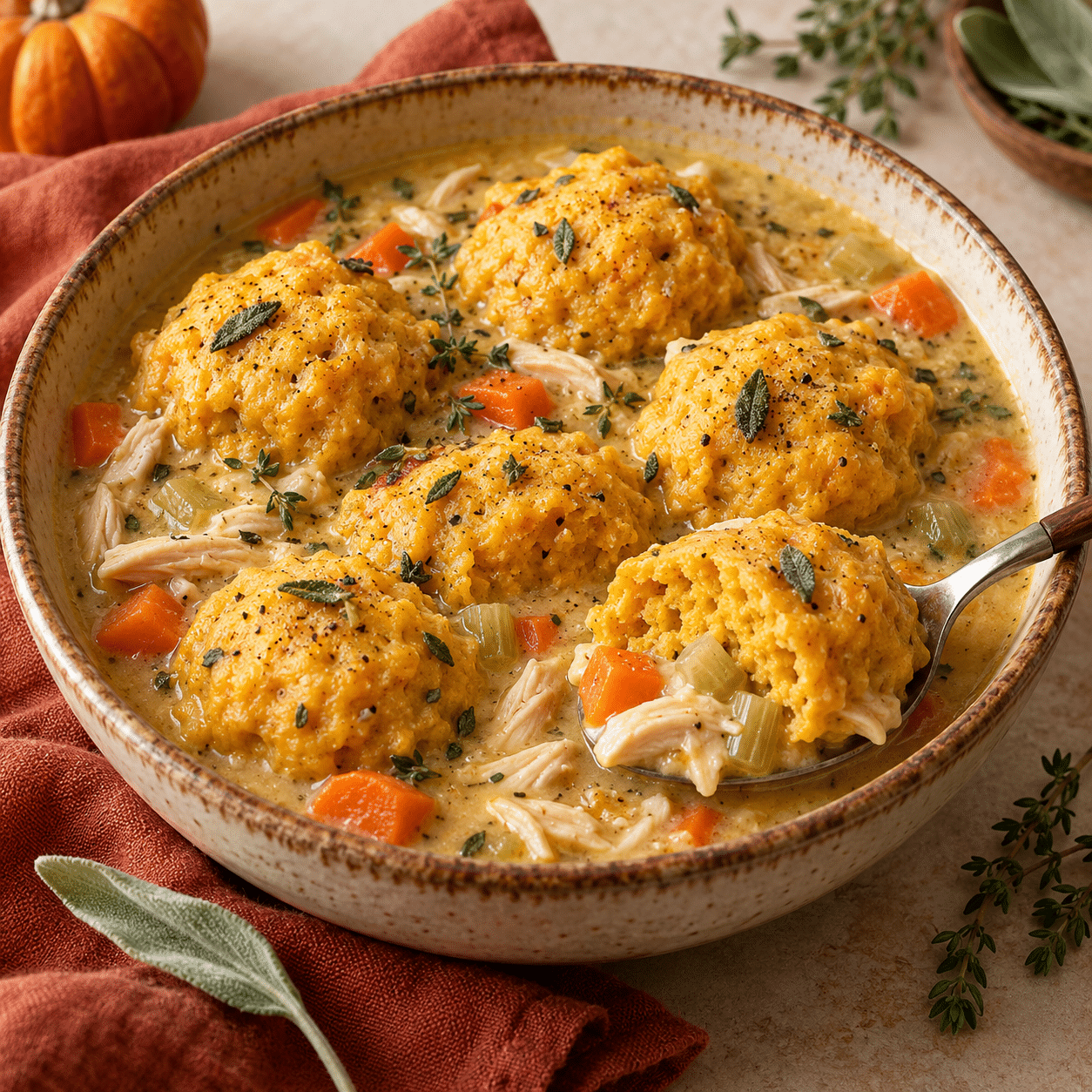
There is something deeply comforting about a pot of homemade Chicken Soup simmering on the stove. The golden broth, tender chicken, sweet carrots, earthy parsnips, and fragrant herbs create a meal that feels both familiar and restorative. This version is light enough for lunch yet satisfying enough to serve as a complete dinner, and it comes together in about 40 minutes with simple, everyday ingredients.
Instead of relying on noodles or cream for body, this soup gets its hearty texture from a generous mix of vegetables. Chicken breasts poach gently in the seasoned broth, which keeps them juicy while adding even more flavor to the pot. Fresh thyme and tarragon give the broth a clean, aromatic finish, while parsley added at the end brings brightness to every spoonful.
Table of Contents
Why You’ll Love This Chicken Soup
This recipe proves that wholesome food does not need to be complicated. It uses one pot, requires only a little chopping, and creates layers of flavor without a long cooking time. It is an excellent option when you want Healthy Chicken Soup For Dinner but do not want a heavy meal.
- One-pot simplicity: The vegetables, chicken, and broth cook in the same Dutch oven, so cleanup stays easy.
- Fresh, balanced flavor: Thyme, tarragon, garlic, and parsley make the broth taste lively without overpowering the chicken.
- Plenty of vegetables: Carrots, parsnips, celery, leek, and onion provide color, texture, and natural sweetness.
- Naturally satisfying: Lean chicken provides protein, while the vegetables make each serving substantial without pasta.
- Meal-prep friendly: The soup tastes wonderful after the flavors have had time to mingle and freezes well for future meals.
- Flexible: You can swap vegetables, use chicken thighs, add grains, or adjust the herbs according to what you have.
Among Healthy Chicken Soups, this one stands out because it feels generous rather than restrictive. The broth remains clear and light, but every bowl is filled with tender pieces of chicken and colorful vegetables. It is the kind of practical recipe you can make repeatedly throughout fall and winter.
Ingredients You’ll Need
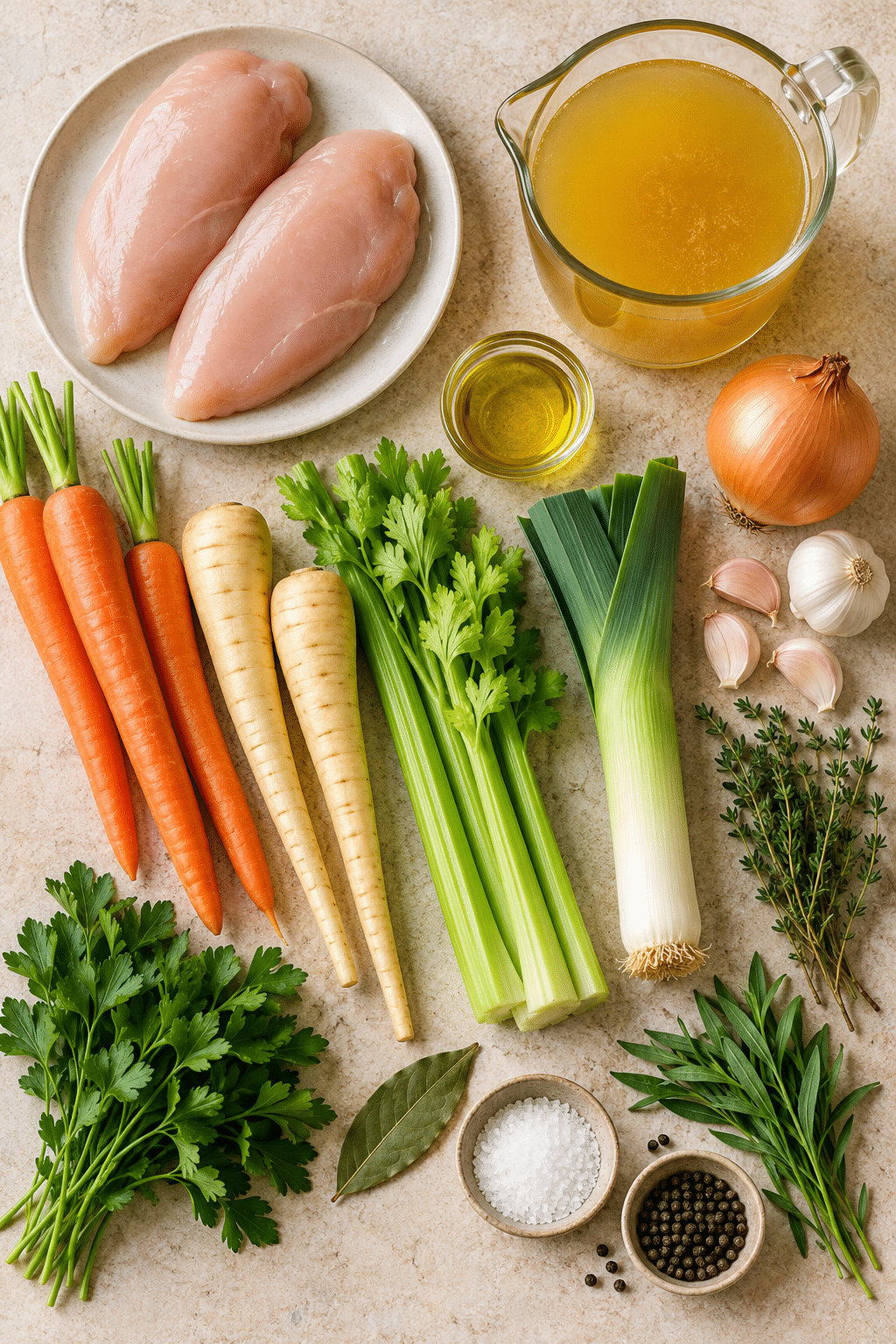
The ingredient list is intentionally straightforward. Because there are no rich sauces to hide behind, fresh vegetables and flavorful broth make a noticeable difference. Exact quantities are available in the printable recipe card below.
Chicken
Boneless, skinless chicken breasts cook quickly and shred neatly. Poaching them directly in the broth makes this a true Poached Chicken Soup and allows the meat to stay moist. Chicken thighs are also excellent if you prefer richer flavor and a slightly more tender texture.
Carrots and Parsnips
Carrots add sweetness and their familiar orange color. Parsnips bring a mild earthy flavor and make the soup feel hearty without noodles. Slice both vegetables to a similar thickness so they soften at the same rate. If parsnips are unavailable, use a peeled turnip, rutabaga, or a small Yukon Gold potato.
Celery, Leek, and Onion
This trio forms the savory foundation of the broth. Celery supplies freshness, onion adds sweetness, and leek contributes a delicate allium flavor. Leeks can hold soil between their layers, so slice them lengthwise and rinse them thoroughly under cool running water before chopping.
Garlic and Fresh Herbs
Garlic, thyme, tarragon, bay leaf, and parsley turn a simple pot into a fragrant Healthy Chicken Soup With Herbs. Tarragon has a gentle anise-like note that pairs beautifully with chicken. If you do not enjoy it, replace it with dill, rosemary, or additional thyme. Add parsley near the end so its flavor stays fresh.
Chicken Broth
Choose a good-quality low-sodium broth. Starting with less salt gives you better control because the liquid reduces slightly as it simmers. Homemade stock works beautifully and may have more body, but a dependable store-bought broth keeps this recipe convenient.
How to Make Chicken Soup
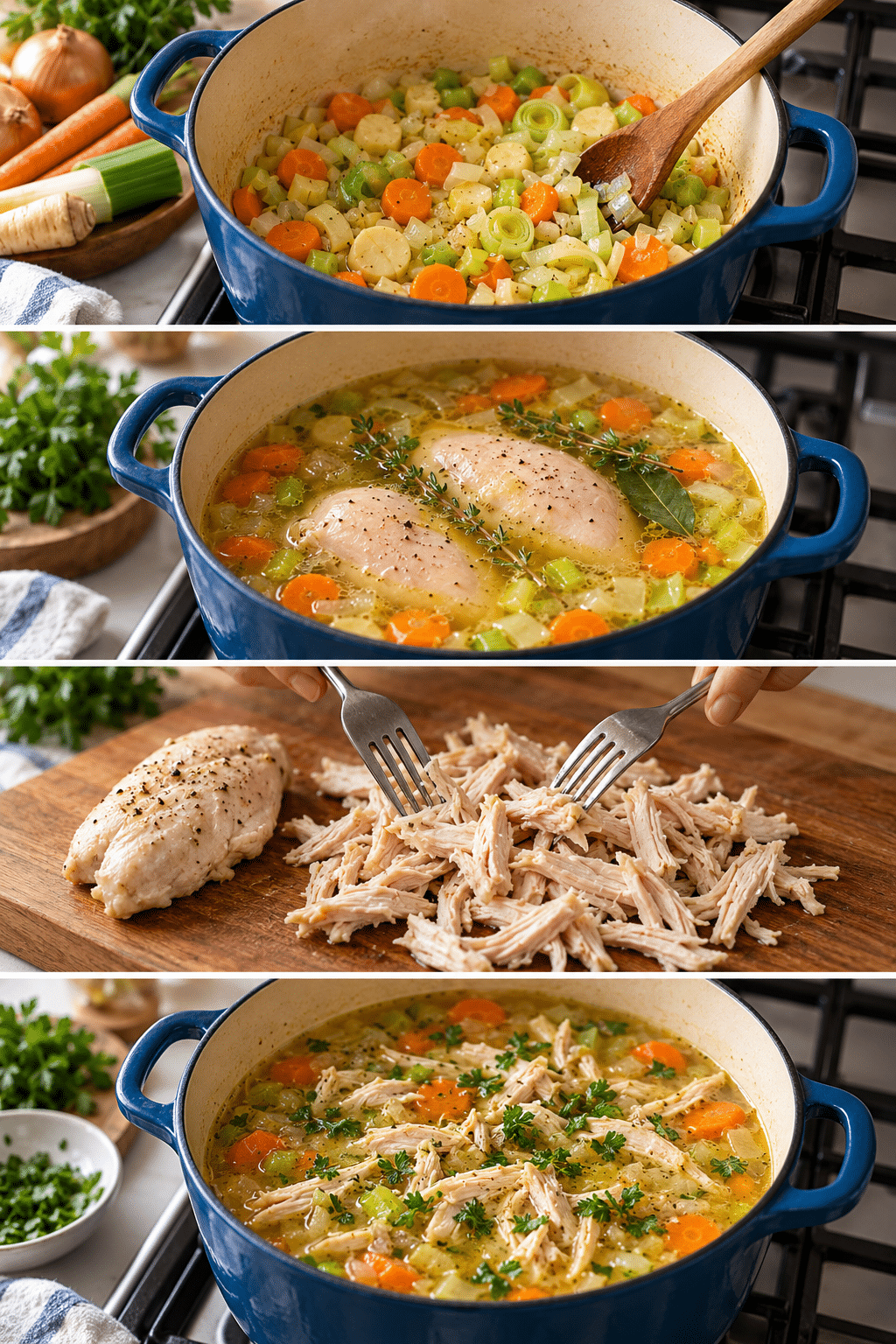
This Homemade Chicken And Vegetable Soup follows a simple sequence: soften the aromatic vegetables, poach the chicken in broth, shred it, and finish the pot with fresh parsley. Keep the heat gentle once the broth reaches a boil; vigorous bubbling can make lean chicken less tender.
Step 1: Prepare the Vegetables
Peel and slice the carrots and parsnips. Slice the celery, dice the onion, and thoroughly wash and slice the leek. Try to keep the pieces bite-sized and relatively even. This makes the finished soup easier to eat and prevents smaller pieces from becoming mushy before the larger ones are tender.
Step 2: Build the Flavor Base
Warm olive oil in a large Dutch oven over medium heat. Add the carrots, parsnips, celery, leek, and onion. Cook for about 6 minutes, stirring occasionally, until the onion and leek soften around the edges. The vegetables do not need to brown deeply. Stir in the garlic, salt, and pepper for the final minute.
Step 3: Poach the Chicken
Nestle the chicken breasts among the vegetables, then add the broth, thyme, tarragon, and bay leaf. Bring the liquid just to a boil. Immediately reduce the heat to low, cover the pot, and maintain a gentle simmer for 15 to 18 minutes. The exact time depends on the thickness of the chicken.
Check the thickest part with an instant-read thermometer. According to the USDA’s poultry safety guidance, chicken should reach an internal temperature of 165°F before serving.
Step 4: Shred and Finish
Transfer the cooked chicken to a clean cutting board. Let it rest for a few minutes, then pull it into bite-sized shreds with two forks. Remove the herb stems and bay leaf from the pot. Return the chicken to the soup and simmer for 2 minutes, just long enough to warm it through.
Stir in the chopped parsley, then taste the broth. Add more salt, black pepper, or a squeeze of fresh lemon if it needs brightness. Ladle the soup into warm bowls and garnish with extra herbs. This final adjustment is what turns a good soup into one that tastes completely balanced.
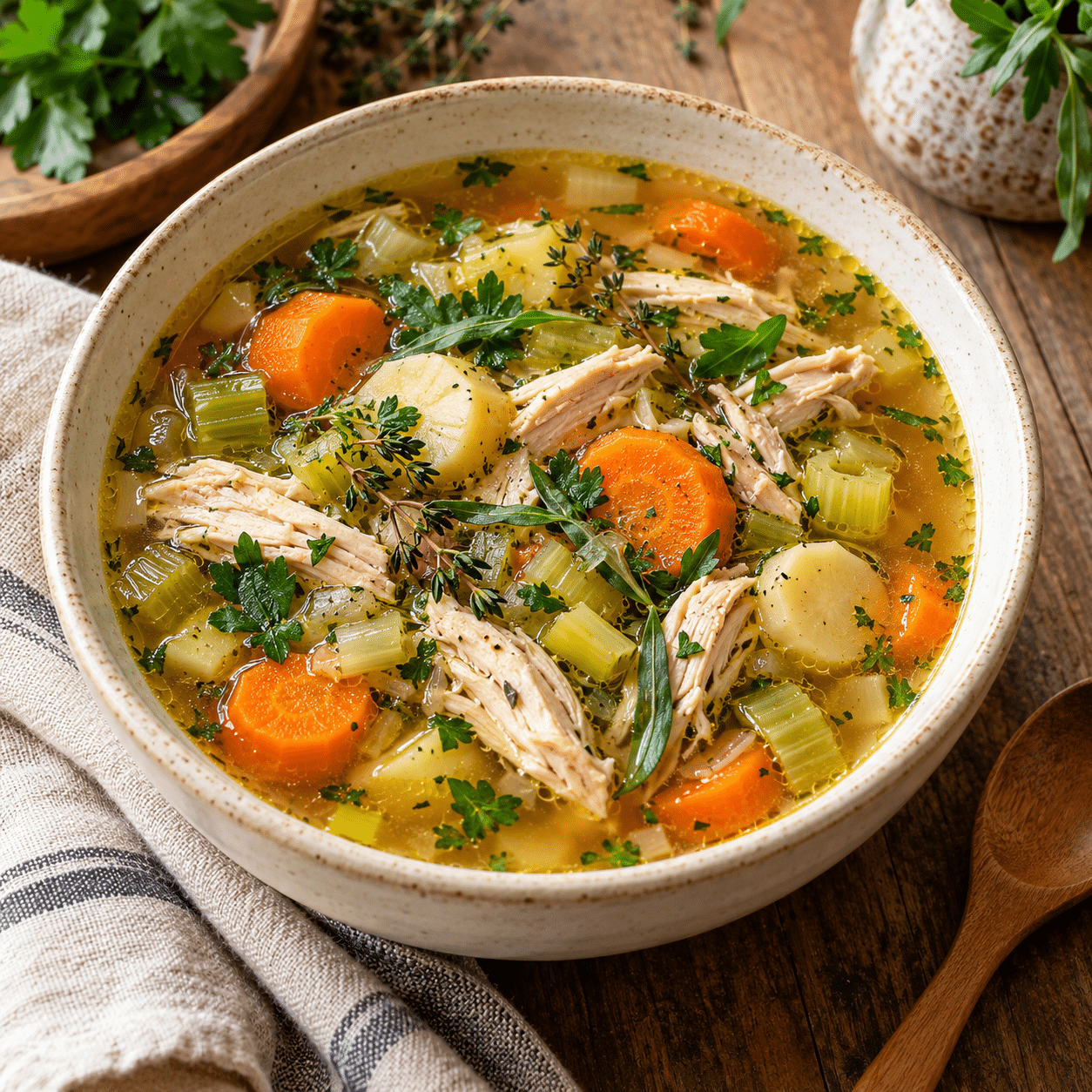

Chicken Soup
Ingredients
Equipment
Method
- Peel and slice the carrots and parsnips. Slice the celery, dice the onion, and halve, rinse, and slice the leek so no grit remains between its layers.
- Heat the olive oil in a large Dutch oven over medium heat. Add the carrots, parsnips, celery, onion, and leek. Cook for about 6 minutes, stirring occasionally, until the aromatics begin to soften.
- Stir in the garlic, salt, and black pepper. Cook for 1 minute, stirring constantly, until the garlic smells fragrant.
- Add the chicken breasts, thyme, tarragon, bay leaf, and broth. Bring just to a boil, then reduce the heat to low and cover. Simmer gently for 15 to 18 minutes, or until the thickest part of the chicken reaches 165°F.
- Transfer the chicken to a clean cutting board and rest it for 3 minutes. Shred it into bite-sized pieces with two forks. Remove the thyme stems, tarragon stems, and bay leaf from the soup.
- Return the shredded chicken to the pot and simmer for 2 minutes. Stir in the parsley. Taste and adjust with additional salt, black pepper, and optional lemon juice.
- Ladle the hot soup into bowls and garnish with extra parsley, fresh thyme leaves, or cracked black pepper.
Notes
- Keep the broth at a gentle simmer after adding the chicken; a hard boil can make lean chicken breast tough.
- Chicken thighs may be substituted and should also reach 165°F.
- For dried herbs, begin with 1/2 teaspoon each of thyme and tarragon.
- Refrigerate cooled soup in airtight containers for up to 4 days or freeze for up to 3 months.
- Nutrition is an estimate and varies with the broth and exact ingredient sizes used.
Tips for the Best Homemade Chicken Soup
Cut the Vegetables Evenly
Uniform slices are not only attractive; they also cook consistently. Thick carrot rounds may stay firm while tiny celery pieces become overly soft. Aim for slices around one-quarter inch thick and cut especially wide parsnips in half lengthwise before slicing.
Use a Gentle Simmer
Once the broth boils, lower the heat promptly. A calm simmer cooks the chicken evenly and helps keep the broth clear. If the surface is rolling aggressively, the chicken may tighten and the vegetables can break apart. A few small bubbles around the edge of the pot are enough.
Season in Layers
Season the vegetables as they sauté, use low-sodium broth, and taste again after the chicken returns to the pot. This gradual method gives you control. Remember that a bland soup may need acidity rather than more salt, so try a teaspoon of lemon juice before adding another pinch.
Do Not Overcook the Chicken
Chicken breasts vary greatly in size, so temperature is more reliable than time alone. Begin checking at 15 minutes. Remove the breasts as soon as they are safely cooked, shred them, and return them only briefly. This is the key to tender chicken rather than dry, stringy meat.
Easy Chicken Soup Variations
A good soup recipe should adapt to your pantry. Keep the basic ratio of chicken, vegetables, and broth, then personalize the additions. These variations preserve the cozy character of the dish while giving you something different each time.
- Chicken thigh version: Use boneless, skinless thighs and simmer until they reach 165°F. Their richer flavor is especially good for cold-weather dinners.
- With noodles: Add 4 ounces of egg noodles after removing the chicken. Simmer until tender, then return the shredded meat.
- With rice: Stir in 1 to 2 cups of already-cooked rice at the end. Cooking rice separately prevents it from absorbing all the broth during storage.
- Extra green vegetables: Add peas, chopped kale, spinach, green beans, or zucchini during the last few minutes.
- Lemony herb soup: Add lemon zest while the broth simmers and fresh lemon juice just before serving.
- Gluten-free option: The base recipe is naturally gluten-free when the packaged broth is certified gluten-free.
- Using leftover chicken: Simmer the vegetables and herbs in broth until tender, then add 3 cups of cooked shredded chicken for the final 5 minutes.
For a classic Chicken Soup With Carrots And Herbs, keep the vegetables simple and use extra thyme and parsley. For a more robust Chicken Soup With Herbs And Vegetables, add kale and green beans. The recipe remains comforting either way because the golden broth and poached chicken stay at its center.
How to Create a Richer Broth Without Cream
The clean, golden broth is one of this recipe’s best features, but light does not have to mean weak. Start by giving the vegetables their full sauté time. Warm oil draws out their aromatic compounds, and the softened onion, leek, carrot, and parsnip contribute gentle sweetness. Stirring the garlic in only for the last minute prevents it from scorching and becoming bitter.
Fresh herb sprigs also season the liquid more evenly than a large amount of chopped herbs. Keep them whole while the chicken poaches, then remove the woody stems before serving. A bay leaf adds quiet depth in the background. If your broth still tastes flat after cooking, salt is not always the only answer. A teaspoon of lemon juice creates contrast and can make the savory flavor seem fuller without adding fat.
For even more body, use homemade chicken stock or a broth that naturally gels when chilled. That gelatin melts into the hot soup and gives each spoonful a silky texture. You can also mash a few cooked parsnip pieces against the side of the pot and stir them into the broth. This subtle trick thickens the soup slightly while keeping it dairy-free.
A Practical Make-Ahead Dinner Plan
To make weeknight cooking faster, chop the carrots, parsnips, celery, onion, and leek up to 2 days ahead. Store them together in an airtight container in the refrigerator, but keep the minced garlic and fresh herbs separate. When dinner time arrives, most of the hands-on work is already finished.
You can also prepare the entire soup one day early. Cool it quickly, refrigerate it, and reheat it gently the next evening. The flavor often becomes rounder after resting overnight. Save a little fresh parsley and lemon for serving so the reheated soup still tastes bright. This approach makes Homemade Chicken Soup With Carrots realistic even on a busy schedule.
What to Serve with Chicken Soup
A warm bowl can stand alone as a light dinner, but a simple side makes it more substantial. Serve it with crusty bread, warm dinner rolls, whole-grain crackers, or a grilled cheese sandwich. A green salad with lemon vinaigrette provides a crisp contrast to the hot broth.
If you are feeding a family, place sliced bread, grated Parmesan, chopped parsley, lemon wedges, and cracked pepper on the table so everyone can finish their own bowl. The mild flavor also makes this soup friendly for children; simply cut their vegetables and chicken into smaller pieces.
How to Store, Freeze, and Reheat Chicken Soup
Refrigerating
Let the soup cool, then transfer it to airtight containers within two hours. Refrigerate for up to 4 days. Dividing it into individual portions makes lunches easy and helps the soup cool more quickly. The herbs become slightly more pronounced overnight, so taste before adding extra seasoning.
Freezing
This noodle-free recipe freezes very well. Leave a little space at the top of each freezer-safe container for expansion and freeze for up to 3 months. Thaw overnight in the refrigerator. If you plan to add noodles or rice, freeze the soup without them and prepare them fresh when reheating.
Reheating
Warm the soup in a covered saucepan over medium-low heat, stirring occasionally, until steaming throughout. Add a splash of broth or water if it has thickened. For a single portion, microwave in short intervals and stir between each one so the chicken and broth heat evenly.
More Cozy Recipes You’ll Love
- Chicken Tortellini Soup – a satisfying one-pot meal with tender pasta.
- Best Detox Soup – a colorful vegetable-packed option for lighter days.
- Creamy Garlic Potato Soup – rich, smooth comfort in every bowl.
- Chicken and Pumpkin Dumplings – a cozy chicken dinner with fluffy fall dumplings.
Final Thoughts on Homemade Chicken Soup
This Chicken Soup is proof that a few fresh ingredients can produce remarkable comfort. Gently poached chicken, sweet root vegetables, savory aromatics, and fresh herbs create a broth that is clean, fragrant, and full of flavor. The entire process is approachable enough for a weeknight, yet the result tastes as though it has been simmering much longer.
Whether you make it for meal prep, a chilly evening, or simply because you want a Wholesome Chicken Soup, this recipe deserves a regular place in your kitchen. Prepare it exactly as written the first time, then use the variations to make it your own. A dependable pot of homemade soup is one of the most useful recipes any cook can have.
Chicken Soup FAQs
1. Can I use chicken thighs instead of chicken breasts?
Yes. Boneless, skinless chicken thighs are flavorful and remain tender during simmering. They may need a few additional minutes depending on their size. Use an instant-read thermometer and cook them to 165°F before shredding.
2. Can I make chicken soup with already-cooked chicken?
Absolutely. Simmer the vegetables, broth, and herbs until the vegetables are tender. Add about 3 cups of shredded rotisserie or leftover chicken during the last 5 minutes, just long enough to heat it without drying it out.
3. Why does my chicken soup taste bland?
It may need salt, acidity, or fresher herbs. Add salt gradually, then try a squeeze of lemon juice. Fresh parsley and black pepper added immediately before serving also wake up the broth without making it heavy.
4. How do I keep chicken breast tender in soup?
Poach it at a gentle simmer rather than a hard boil and remove it as soon as its center reaches 165°F. Shred it after a short rest, then return it to the broth only for the final couple of minutes.
5. Can I make this chicken soup in a slow cooker?
Yes. Add everything except the parsley to the slow cooker and cook on low for 5 to 6 hours or high for 2½ to 3½ hours. Remove and shred the chicken, return it to the cooker, and stir in parsley before serving.
6. What can I use instead of parsnips?
Use turnips, rutabaga, Yukon Gold potatoes, or additional carrots. Potatoes may take slightly longer to soften, so cut them into small cubes. Each choice changes the flavor a little but works well with the herbs and chicken.
7. Is this chicken soup good for meal prep?
It is an excellent meal-prep recipe because it stores for up to 4 days and freezes for up to 3 months. Portion it into airtight containers, cool it promptly, and reheat only the servings you need.