Fall Harvest Salad with Apple Cider Vinaigrette is one of those recipes I start craving as soon as crisp apples come back into season. You know that point in fall when a plain green salad suddenly feels a little too… plain? That’s usually when I want something with more texture, a little sweetness, and enough personality to actually look forward to eating it.
For me, it starts with the apples. I love that first crunchy bite against peppery arugula, especially when there are creamy goat cheese crumbles and maple-roasted pecans involved. Then come the dried figs and thinly sliced red onion, which give the salad little pockets of sweetness and sharpness. You might be thinking, “Isn’t that a lot happening in one bowl?” Kind of. But that’s exactly why it works. Each ingredient brings something different without making the salad feel heavy.
And the dressing? I wouldn’t overcomplicate it. A homemade apple cider vinaigrette gives a fall salad with apples exactly the bright, tangy contrast it needs. Apple cider vinegar, olive oil, maple syrup, Dijon mustard, and garlic create that sweet and sharp balance that pulls the whole bowl together. I tend to make a little extra because, somehow, it disappears faster than expected.
This easy harvest salad recipe works just as well for a quick autumn lunch as it does beside a bigger dinner. Add chicken or salmon and it becomes a satisfying meal, or serve it as a colorful Thanksgiving salad recipe when the table needs something fresh between all those richer dishes.
Best of all, there is no complicated technique hiding ahead. Once the pecans are toasted and the apple cider vinaigrette is whisked together, most of the work is simply slicing, tossing, and trying not to snack on all those maple pecans before they reach the salad bowl.
Table of Contents
Table of Contents
Fall Harvest Salad with Apple Cider Vinaigrette Ingredients
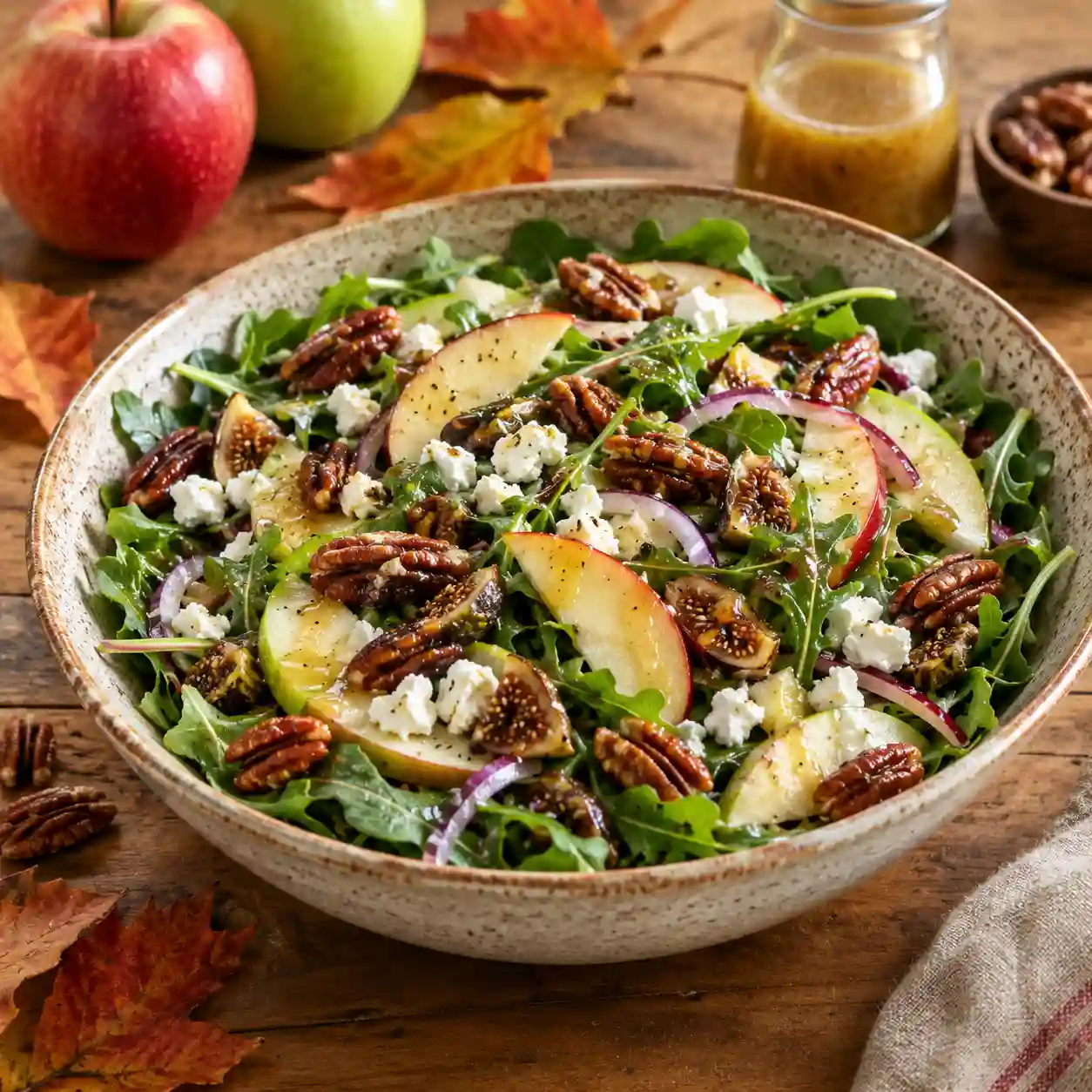
The ingredients in this Fall Harvest Salad with Apple Cider Vinaigrette are simple, but each one earns its place in the bowl. I’ve made versions of harvest salads where there were so many toppings that the flavors started competing with each other. Here, the balance feels much more natural. You get crisp apples, peppery arugula, creamy goat cheese, sweet dried figs, a little bite from red onion, and maple-roasted pecans for crunch. It feels unmistakably autumnal without becoming too heavy.
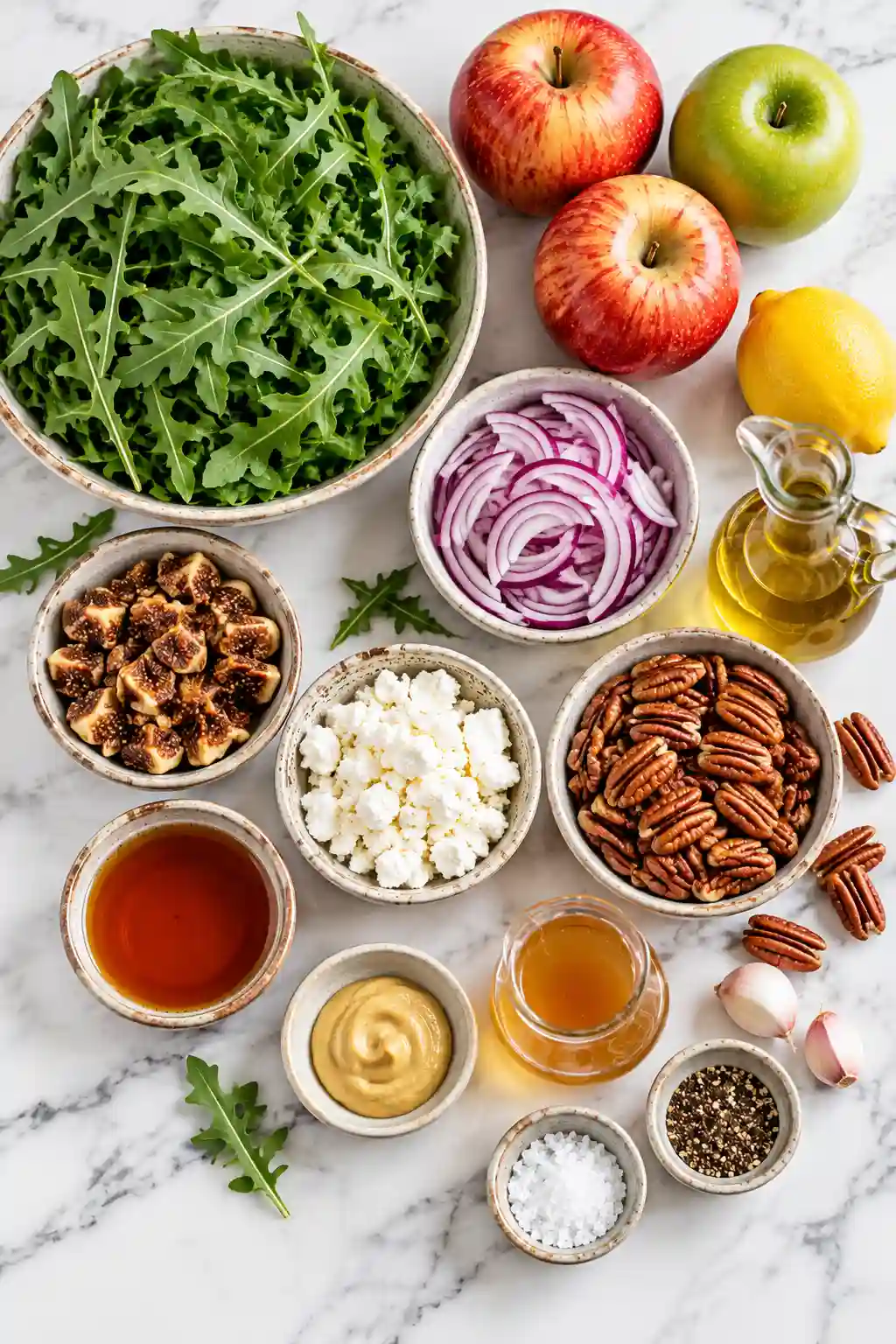
For the salad, you’ll need:
- 3 apples, very thinly sliced
- 5 oz baby arugula
- 1/4 cup red onion, thinly sliced
- 1/2 cup dried figs, chopped
- 1/2 cup goat cheese crumbles
- 1 cup pecan halves
- 2 tablespoons pure maple syrup
- A pinch of sea salt
Best Apples for a Fall Harvest Salad
I usually reach for Fuji or Gala apples because they stay crisp and bring enough natural sweetness to balance the peppery arugula. Honeycrisp is another excellent choice if you like a slightly more pronounced sweet-tart bite. More importantly, choose an apple you genuinely enjoy eating raw. This Fall Harvest Salad with Apple Cider Vinaigrette depends on that fresh crunch, so a soft or mealy apple can change the whole experience.
There’s also no need to peel the apples. Leaving the skin on adds color and texture, and honestly, it saves a little prep time too. Slice them fairly thin so you can get apple, greens, cheese, and pecans in the same forkful instead of wrestling with oversized wedges.
Ingredients for the Apple Cider Vinaigrette
A harvest salad dressing needs enough acidity to cut through the goat cheese and maple pecans while still complementing the fruit. That’s where apple cider vinegar fits beautifully. Instead of covering the ingredients, the vinaigrette should make the apples taste brighter and give the greens a little more character.
For the apple cider vinaigrette, use:
- 1/2 cup extra virgin olive oil
- 3 tablespoons apple cider vinegar
- 2 teaspoons pure maple syrup
- 1 teaspoon fresh lemon juice
- 1 1/2 teaspoons Dijon mustard
- 1 garlic clove, minced
- 1/2 teaspoon black pepper
- 1/4 to 1/2 teaspoon sea salt, adjusted to taste
One small detail matters here: taste the dressing before pouring it over the salad. Apples vary in sweetness, and maple syrup does too, so the balance may need a tiny adjustment. I sometimes add another splash of vinegar when the apples are particularly sweet. Other times, I leave it alone.
Once everything comes together, the Fall Harvest Salad with Apple Cider Vinaigrette has that sweet, tangy, creamy, and crunchy combination that makes an easy harvest salad feel much more interesting than an everyday green salad.
How to Make Fall Harvest Salad with Apple Cider Vinaigrette
Making Fall Harvest Salad with Apple Cider Vinaigrette is mostly about timing. Nothing here is technically difficult, but a few small choices make a noticeable difference. The pecans need time to cool, the apples are best sliced close to serving, and the dressing should go on at the very end. I learned pretty quickly that tossing everything together too early gives you a perfectly tasty salad, just not that crisp, fresh one you were picturing.
Step 1: Make the Maple-Roasted Pecans
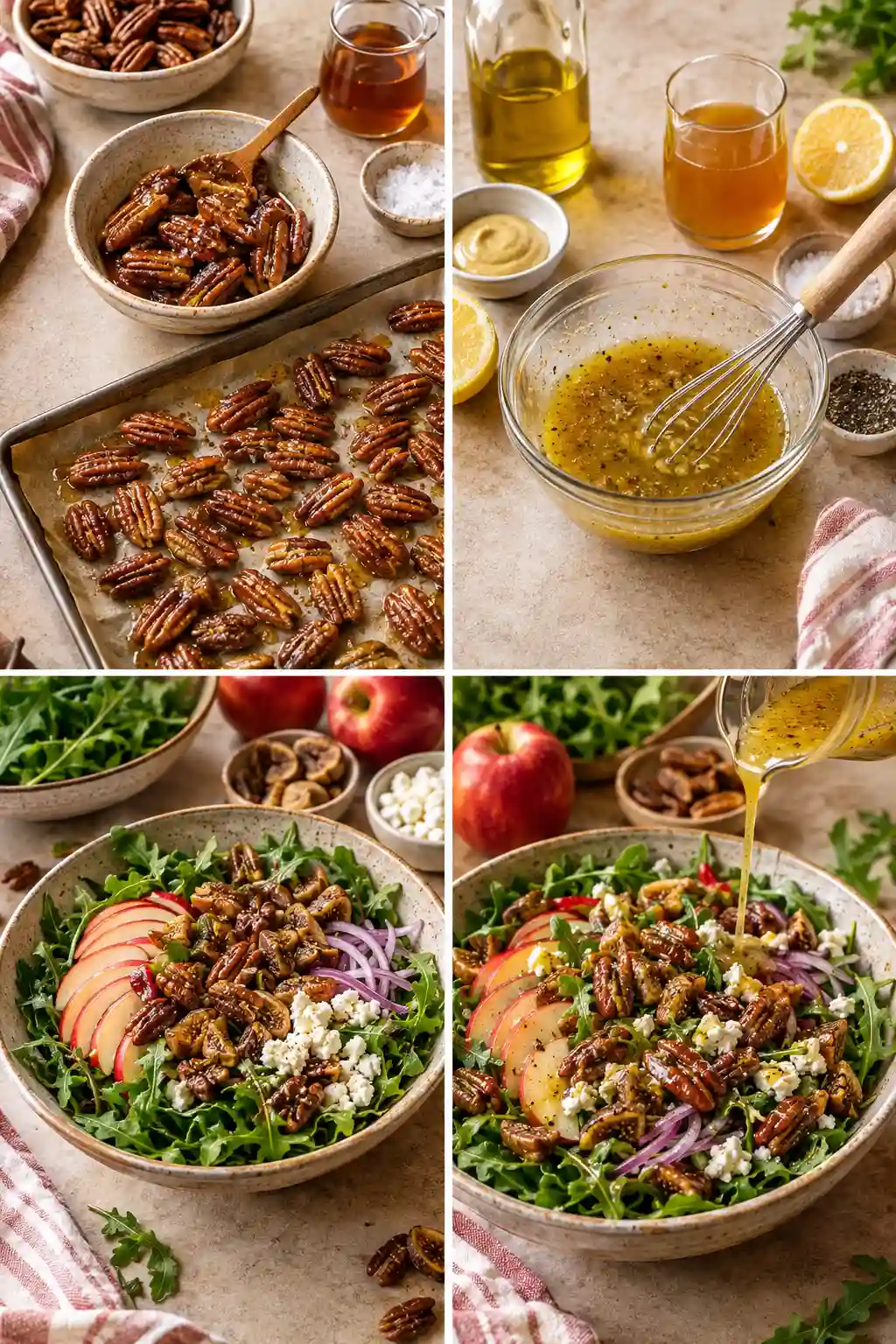
Preheat the oven to 350°F. Add the pecan halves to a bowl with 2 tablespoons of maple syrup and a small pinch of sea salt. Toss until the pecans are lightly coated, then spread them across a parchment-lined baking sheet.
Bake for about 5 to 7 minutes, watching them closely toward the end. Maple syrup can go from beautifully caramelized to a little too dark surprisingly fast. Once the pecans look toasted, remove the pan from the oven and let them cool. They will become crunchier as they sit.
Step 2: Prepare the Apple Cider Vinaigrette
While the pecans are roasting, whisk the olive oil, apple cider vinegar, maple syrup, lemon juice, Dijon mustard, minced garlic, black pepper, and sea salt together.
Taste it before moving on. Too sharp? A touch more maple syrup can soften the acidity. Too sweet for your apples? Add a little more apple cider vinegar. I prefer making this adjustment now rather than trying to fix the entire salad later.
That bright dressing is what gives Fall Harvest Salad with Apple Cider Vinaigrette its sweet and tangy backbone, so a quick taste really is worth the extra few seconds.
Step 3: Assemble the Harvest Salad
Place the baby arugula in a large salad bowl. Arrange the thinly sliced apples, chopped dried figs, red onion, goat cheese crumbles, and cooled maple pecans over the greens.
You can toss everything immediately, but I usually wait. Keeping the ingredients layered until close to serving helps protect the texture, particularly if you’re preparing the salad while finishing the rest of dinner.
Step 4: Dress and Serve
Just before serving, drizzle roughly half of the prepared vinaigrette over the salad and gently toss. Start with less dressing than you think you need. You can always add another spoonful, while rescuing overdressed arugula is… well, not really happening.
Serve the Fall Harvest Salad with Apple Cider Vinaigrette right away while the apples are crisp, the pecans still have their crunch, and the goat cheese is just beginning to mingle with the vinaigrette. Save any remaining dressing on the side so everyone can add more according to taste.

Fall Harvest Salad with Apple Cider Vinaigrette
Ingredients
Method
- Preheat the oven to 350°F. Toss the pecans with maple syrup and a pinch of sea salt. Spread them on a parchment-lined baking sheet and roast for 5 to 7 minutes. Remove from the oven and allow them to cool.
- Add the olive oil, apple cider vinegar, maple syrup, lemon juice, Dijon mustard, garlic, pepper, and salt to a bowl or jar. Whisk or shake until combined, then taste and adjust the seasoning.
- Place the baby arugula in a large salad bowl. Add the sliced apples, dried figs, red onion, goat cheese, and cooled maple pecans.
- Pour about half of the vinaigrette over the salad just before serving. Toss gently and add additional dressing only if needed.
- Serve Fall Harvest Salad with Apple Cider Vinaigrette immediately while the apples and pecans are still crisp. Store any remaining vinaigrette separately for serving.
- For the freshest texture, assemble the salad within about an hour of serving. If the apples need to be sliced ahead, soak them for approximately 10 minutes in a mixture of 1 teaspoon salt per cup of water, then rinse and pat them dry.
- The nutrition estimate assumes that approximately half of the prepared dressing is used. Actual nutrition will vary according to portion size, ingredients, substitutions, and the amount of dressing served.
Notes
| Nutrient | Amount |
| Calories | 379 kcal |
| Carbohydrates | 30 g |
| Protein | 6 g |
| Total Fat | 28 g |
| Saturated Fat | 5 g |
| Polyunsaturated Fat | 5 g |
| Monounsaturated Fat | 16 g |
| Cholesterol | 9 mg |
| Sodium | 92 mg |
| Potassium | 338 mg |
| Fiber | 5 g |
| Sugar | 21 g |
| Vitamin A | 844 IU |
| Vitamin C | 9 mg |
| Calcium | 101 mg |
| Iron | 1 mg |
How to Make Apple Cider Vinaigrette
A good apple cider vinaigrette should taste bright first, then slightly sweet, with just enough richness from the olive oil to soften the vinegar. For Fall Harvest Salad with Apple Cider Vinaigrette, that balance matters because there is already plenty happening in the bowl. Sweet apples, maple pecans, dried figs, and creamy goat cheese don’t need an overly sugary dressing. What they need is acidity, and apple cider vinegar brings exactly that.
To make the dressing, combine extra virgin olive oil, apple cider vinegar, maple syrup, fresh lemon juice, Dijon mustard, minced garlic, black pepper, and sea salt. Whisk everything vigorously until the mixture looks blended and slightly emulsified. You can also add the ingredients to a jar, close the lid tightly, and shake it. I tend to use the jar method when I’m making the dressing ahead because there’s one less bowl to wash, and yes, that absolutely counts as a benefit.
Getting the Sweet and Tangy Balance Right
This apple cider vinaigrette recipe isn’t something I’d follow blindly without tasting. Start with the listed quantities, then dip in a leaf of arugula or a small apple slice. That gives you a much better idea of how the dressing will actually behave in the finished salad.
If the vinegar feels too sharp, add a small amount of maple syrup. If the dressing tastes sweeter than you’d like, another splash of apple cider vinegar can bring it back into balance. Dijon mustard helps tie those flavors together while garlic adds a savory note that keeps the dressing from tasting like a sweet glaze.
That balance is particularly useful in Fall Harvest Salad with Apple Cider Vinaigrette because the dressing has to work with both fruit and greens. It should complement the apples without making them taste sweeter, while giving the peppery arugula enough acidity to mellow its sharper edge.
Making the Dressing Ahead
You can prepare the apple cider vinegar salad dressing before assembling the salad and keep it covered in the refrigerator. The olive oil may thicken or separate when chilled, which is completely normal. Let the dressing sit at room temperature briefly, then shake or whisk it again before serving.
I actually prefer making the vinaigrette a little early. The garlic has time to settle into the mixture, and having the dressing ready makes final assembly much easier, especially when the salad is part of a larger fall dinner.
Don’t pour all of it into the bowl at once, though. Start with about half, toss gently, and taste. The goal with Fall Harvest Salad with Apple Cider Vinaigrette is to lightly coat the ingredients while keeping the apples crisp, the pecans crunchy, and the arugula fresh rather than weighed down.
Tips for the Best Fall Harvest Salad
The difference between an okay salad and a really memorable Fall Harvest Salad with Apple Cider Vinaigrette often comes down to texture. You want the apples crisp, the pecans crunchy, the arugula fresh, and the goat cheese creamy rather than disappearing into an overdressed bowl. None of that requires extra cooking skill. It mostly comes down to when you prepare and combine each ingredient.
One thing I wouldn’t do is assemble the entire salad several hours before dinner and hope for the best. I’ve tried that shortcut with apple salads, and while they’re still edible, they lose the contrast that makes them so good in the first place. A little preparation ahead is useful. Complete assembly ahead of time? Not so much.
Keep the Apples Fresh and Crisp
For the best fall salad with apples, slice the fruit shortly before serving. Once an apple is cut, its exposed flesh gradually begins to brown. The lemon juice in the dressing can help somewhat, but there is another simple trick if you need to prepare the apples earlier.
Mix about 1 teaspoon of salt with 1 cup of water and soak the apple slices for approximately 10 minutes. Rinse them afterward and pat them dry before adding them to the salad. This helps slow browning without requiring you to cover the apples in lemon juice. It’s particularly handy when you’re preparing Fall Harvest Salad with Apple Cider Vinaigrette for guests and don’t want to be slicing fruit while everyone else is already at the table.
Also, use crisp apples whenever possible. Fuji, Gala, and Honeycrisp all work well because they hold their shape and provide that clean crunch against the softer cheese and figs.
Add the Dressing at the Right Time
Wait until just before serving to add the fall harvest salad dressing. Arugula is delicate, and once it sits under vinaigrette for too long, it begins to soften. Start with roughly half the dressing, toss gently, and then decide whether the salad actually needs more.
The same restraint helps with the maple pecans. Let them cool completely after roasting before they meet the greens. Warm, sticky pecans can soften the arugula and clump together, while cooled pecans stay crisp and distribute more evenly through the bowl.
If you’re making the salad for Thanksgiving or another fall gathering, prepare the vinaigrette and roast the pecans ahead of time. Keep the components separate, then slice the apples and assemble everything closer to serving. That approach makes Fall Harvest Salad with Apple Cider Vinaigrette much easier to manage while preserving the fresh textures that make the recipe worth serving in the first place.
Fall Harvest Salad Variations and Substitutions
One reason I keep coming back to Fall Harvest Salad with Apple Cider Vinaigrette is that it doesn’t fall apart when you change an ingredient or two. Maybe you don’t like goat cheese. Maybe the pecans somehow disappeared from the pantry. Or perhaps you’re looking at a butternut squash on the counter and wondering whether it belongs in the bowl. Most of the time, the answer is yes.
The trick is to think about what each ingredient contributes before replacing it. Apples bring sweetness and crunch, goat cheese adds creaminess, pecans give the salad texture, and arugula provides that peppery bite. Swap within those roles and the salad still feels balanced rather than like a completely different recipe.
Make It a Warm Harvest Salad
For a warm harvest salad recipe, roasted butternut squash or sweet potatoes are probably my first additions. Cut either into bite-sized pieces, toss lightly with olive oil, salt, and pepper, then roast until tender and caramelized around the edges.
Let them cool for a few minutes before adding them to the greens. They can still be warm, just not straight-from-the-oven hot. Otherwise, the arugula starts wilting before the salad reaches the table.
You can also add roasted chickpeas for a little more substance. If you’re turning Fall Harvest Salad with Apple Cider Vinaigrette into a main meal, sliced chicken, salmon, or another simple protein works without competing with the sweet and tangy flavors.
Easy Ingredient Swaps
Don’t have arugula? Baby spinach, spring greens, or a mixture of both can take its place. The flavor becomes milder, which some people may actually prefer. For cheese, feta is an easy substitute for goat cheese and brings a saltier, slightly firmer bite.
Pecans can be replaced with walnuts or almonds. Toast them first if you have time. It’s a small step, but it makes their flavor much more noticeable. Dried cranberries or golden raisins can replace the figs, while pomegranate arils or halved red grapes can add another fresh, juicy element. These are also useful options when you’re adapting the recipe into an autumn harvest salad for a larger gathering.
And if you’re thinking ahead to colder months, the same basic combination can become a winter salad with apple cider vinaigrette. Use heartier greens, roasted squash, pomegranate, or other seasonal ingredients while keeping the dressing as the connecting flavor.
That’s really the useful part of Fall Harvest Salad with Apple Cider Vinaigrette. You don’t need every original ingredient in exactly the same form. Keep a balance of fresh greens, crisp or roasted produce, something creamy, something crunchy, and a bright apple cider dressing, and the salad still makes sense.
How to Serve This Fall Harvest Salad
Fall Harvest Salad with Apple Cider Vinaigrette can easily sit in that slightly awkward space between side dish and full meal, and I actually think that’s one of its strengths. Serve a smaller portion alongside dinner and it brings freshness to the plate. Add a good source of protein and suddenly it becomes the kind of healthy fall salad you can happily call lunch or dinner.
At home, I tend to keep the rest of the meal fairly simple. There is already sweetness from the apples and figs, richness from the goat cheese, crunch from the maple pecans, and acidity from the dressing. Pairing all of that with something heavily sauced can feel like too much. A straightforward chicken breast, salmon fillet, or roasted main dish gives the salad room to do its thing.
Turn It Into a Healthy Fall Salad Meal
If you want something more substantial, sliced chicken is probably the easiest addition. Rotisserie chicken works when time is tight, while freshly grilled or roasted chicken makes the dish feel a little more intentional. Salmon is another natural match, particularly because its richness works nicely with apple cider vinaigrette. The original recipe also suggests chicken, steak, salmon, or roasted chickpeas as ways to turn the salad into a more complete meal.
For a meat-free version, try roasted chickpeas or add roasted butternut squash and sweet potato. Avocado can work too, although I would use it sparingly. Between avocado and goat cheese, the salad can become surprisingly rich.
Fall Harvest Salad with Apple Cider Vinaigrette also works well with:
- Roasted chicken or turkey
- Grilled or baked salmon
- Pork tenderloin
- Grilled steak
- Roasted chickpeas
- Butternut squash
- Sweet potatoes
- A simple fall soup
- Rustic bread or dinner rolls
Serve It as a Thanksgiving Salad
This is where the recipe really earns its place. Thanksgiving meals tend to lean rich, warm, buttery, and comforting, which is exactly why something crisp and acidic can be so welcome on the table. A Thanksgiving salad recipe doesn’t necessarily need more ingredients. Sometimes it needs fewer, better-chosen ones.
You can prepare several components in advance. Roast the maple pecans, mix the apple cider vinaigrette, chop the figs, and slice the red onion earlier in the day. Keep everything separate. Then slice the apples and assemble the salad closer to mealtime so the greens remain fresh and the fruit stays crisp.
For a more festive presentation, pomegranate arils or dried cranberries can add deep red color without changing the character of the dish too much. Roasted squash is another good addition if you want the salad to feel more substantial and distinctly autumnal.
I’d still resist dressing it early, even on a busy holiday. It saves a minute or two, sure, but you lose the contrast between crisp greens and creamy cheese. Assemble Fall Harvest Salad with Apple Cider Vinaigrette shortly before everyone sits down, toss it lightly with the dressing, and bring the remaining vinaigrette to the table for anyone who wants an extra splash.
Fall Harvest Salad with Apple Cider Vinaigrette Nutrition Information
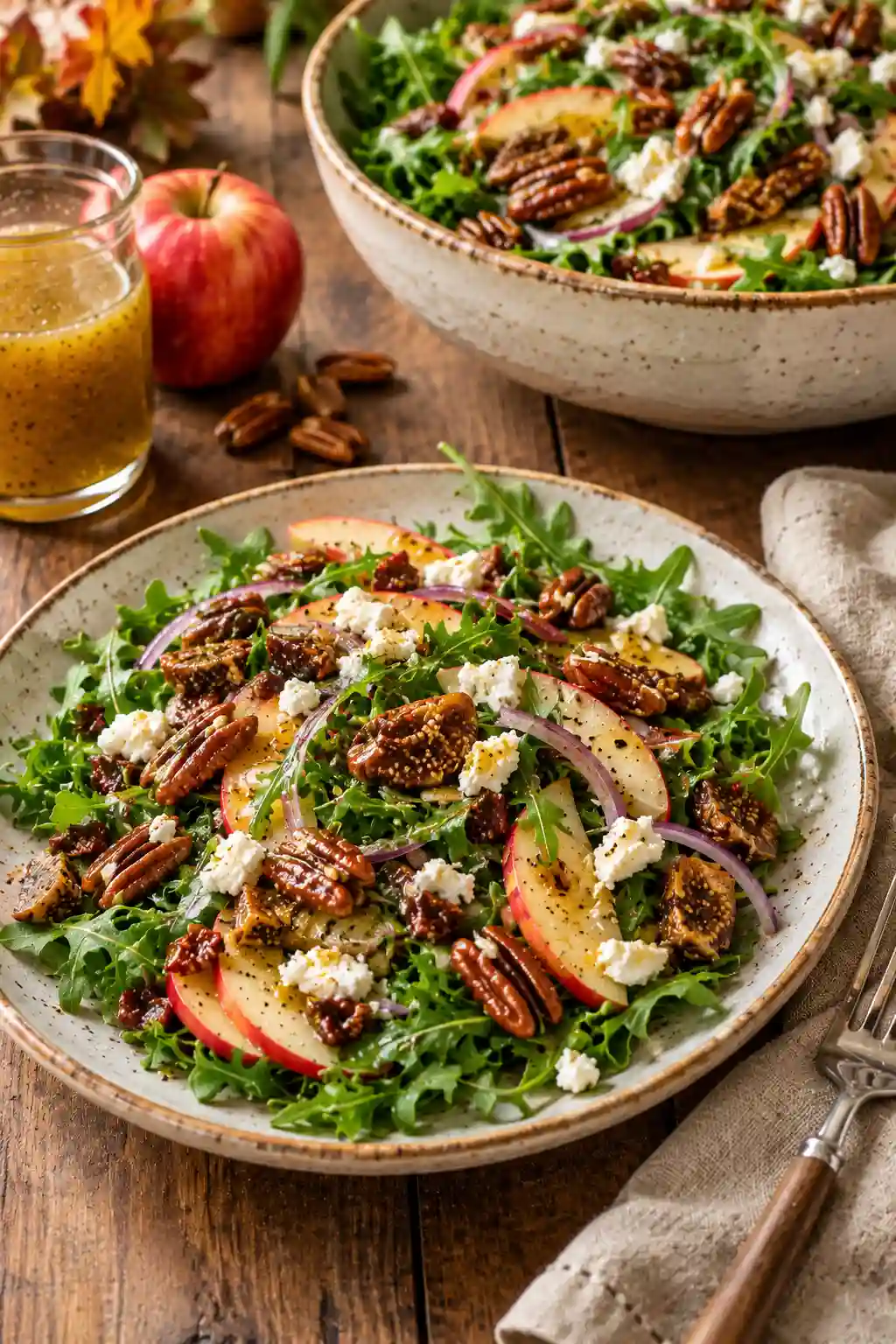
Fall Harvest Salad with Apple Cider Vinaigrette brings together fresh fruit, leafy greens, pecans, goat cheese, and a homemade dressing, so it is more substantial than a basic green salad. Based on the original recipe, each serving contains approximately 379 calories. That estimate assumes that only half of the prepared dressing is used for the entire salad, which is worth keeping in mind when looking at the numbers below.
Nutrition Per Serving
| Nutrient | Amount |
| Calories | 379 kcal |
| Carbohydrates | 30 g |
| Protein | 6 g |
| Total Fat | 28 g |
| Saturated Fat | 5 g |
| Polyunsaturated Fat | 5 g |
| Monounsaturated Fat | 16 g |
| Cholesterol | 9 mg |
| Sodium | 92 mg |
| Potassium | 338 mg |
| Fiber | 5 g |
| Sugar | 21 g |
| Vitamin A | 844 IU |
| Vitamin C | 9 mg |
| Calcium | 101 mg |
| Iron | 1 mg |
According to Harvard Health Publishing, leafy greens such as arugula provide essential vitamins and minerals while adding fiber and nutrient density to everyday meals.
What I like about Fall Harvest Salad with Apple Cider Vinaigrette is that each ingredient brings something different to the bowl. Apples and dried figs contribute carbohydrates and fiber, while arugula adds leafy greens without making the salad feel heavy. Pecans and olive oil account for much of the fat, and goat cheese contributes some protein, fat, and calcium.
Adjusting the Salad to Fit Your Meal
If you’re serving this as a side dish, the original portions work nicely alongside chicken, salmon, turkey, pork, or another main course. To turn it into a more filling lunch or dinner, you can add grilled chicken, salmon, roasted chickpeas, or another protein you enjoy. Naturally, those additions will change the nutritional values shown in the table.
The amount of apple cider vinaigrette you use will make a difference too. The original nutrition calculation is based on using half of the prepared dressing, not the entire batch. I prefer starting with a smaller amount anyway. You can always add more after tossing, and the lighter coating helps keep the arugula and sliced apples fresh rather than weighed down.
These nutritional values should be treated as estimates because apple size, ingredient brands, substitutions, serving portions, and dressing quantity can all change the final numbers. Still, they offer a useful reference when deciding how Fall Harvest Salad with Apple Cider Vinaigrette fits into the rest of your meal.
Enjoy This Fall Harvest Salad with Apple Cider Vinaigrette
Fall Harvest Salad with Apple Cider Vinaigrette is the kind of recipe that reminds me why seasonal salads don’t need to be complicated. Crisp apples, peppery arugula, sweet dried figs, creamy goat cheese, and maple-roasted pecans already bring plenty of contrast to the bowl. Add that tangy apple cider dressing, and suddenly a handful of fairly simple ingredients feels like something you’d happily serve when friends come over.
I especially like that you can adapt it without losing what makes it good. Keep it fresh and light for lunch, add chicken or salmon when you want a complete meal, or bring in roasted butternut squash for something warmer. And when Thanksgiving rolls around, Fall Harvest Salad with Apple Cider Vinaigrette offers a fresh contrast to the richer dishes that usually fill the table.
If you make it, don’t be afraid to adjust the vinaigrette to your own taste. Maybe your apples are particularly sweet and need another splash of vinegar. Maybe you’re firmly in the extra-goat-cheese camp. I get it. Recipes like this are better when there’s a little room to make them yours.
So grab the crispest apples you can find, toast those maple pecans, and give Fall Harvest Salad with Apple Cider Vinaigrette a try while fall produce is at its best. And if it earns a repeat appearance at your table, save or print the recipe so it’s ready the next time that autumn salad craving shows up.
More Seasonal Side & Salad Recipes You’ll Love
- Roasted Broccoli Recipe – A simple roasted vegetable side dish that pairs perfectly with cozy fall meals.
- Peach Burrata Salad – A fresh fruit-and-cheese salad combining sweet and savory flavors.
- Jennifer Aniston Salad – A fresh, satisfying salad packed with colorful ingredients and texture.
- Blueberry Chicken Salad with Avocado and Feta – A hearty salad combining fruit, protein, avocado, and feta.
- Mango Cucumber Salad – A colorful salad featuring juicy mango and crisp cucumber.
Fall Harvest Salad with Apple Cider Vinaigrette FAQs
1. What is a fall harvest salad?
A fall harvest salad combines fresh greens with ingredients that are especially popular during autumn, such as apples, pecans, figs, squash, cranberries, or other seasonal produce. This version uses arugula, crisp apples, dried figs, goat cheese, and maple-roasted pecans, finished with a homemade apple cider vinaigrette. The result is a mix of sweet, tangy, creamy, and crunchy flavors in the same bowl.
2. What apples are best for Fall Harvest Salad with Apple Cider Vinaigrette?
Fuji, Gala, and Honeycrisp apples are all excellent choices because they are crisp and naturally sweet. Honeycrisp provides a more noticeable sweet-tart flavor, while Fuji and Gala tend to be sweeter. I would avoid softer, mealy apples since texture is a big part of what makes this salad work.
3. Can I make this fall harvest salad ahead of time?
Yes, but keep the components separate until you’re ready to serve. You can prepare the apple cider vinaigrette and maple pecans ahead of time and slice the red onion and figs in advance. For the freshest result, add the apples and dressing shortly before serving. The original recipe recommends preparing the assembled salad within about an hour of serving for the best texture.
4. How do you keep apples from turning brown in a salad?
Soak sliced apples in lightly salted water for about 10 minutes using approximately 1 teaspoon of salt per cup of water. Rinse the slices afterward and pat them dry before adding them to the salad. This simple step can slow browning when you need to prepare the apples in advance.
5. Can I substitute the goat cheese?
Yes. Feta is an easy substitute if you prefer a saltier flavor and slightly firmer texture. You can also experiment with another creamy cheese that pairs well with apples. If you’re making Fall Harvest Salad with Apple Cider Vinaigrette without dairy, simply leave out the goat cheese or use your preferred dairy-free alternative.
6. What can I use instead of pecans?
Walnuts or almonds work well in place of pecans. Toasting them before adding them to the salad will deepen their flavor and give you the crunch that makes a harvest salad so satisfying. Pumpkin seeds are another option, particularly if you want a nut-free variation.
7. Can I turn this salad into a main dish?
Yes. Add grilled or roasted chicken, salmon, steak, or roasted chickpeas to make the salad more substantial. Roasted sweet potatoes or butternut squash can also add warmth and make it more filling without adding meat.
8. Is Fall Harvest Salad with Apple Cider Vinaigrette good for Thanksgiving?
Yes. The combination of apples, maple pecans, figs, greens, and apple cider vinaigrette fits naturally into an autumn or Thanksgiving menu. Its crisp texture and tangy dressing can also provide a fresh contrast to richer holiday dishes. Prepare the components beforehand, then assemble and dress the salad shortly before serving.