Ube Taho with Coconut Cream takes one of the Philippines’ most beloved breakfast treats and turns it into a rich, colorful dessert that feels both familiar and special.
Have you ever heard the long, drawn out call of “Tahoooo!” echoing through a quiet neighborhood in the early morning?
If you grew up in the Philippines, that sound probably brings back memories right away. The magtataho would walk down the street carrying two large aluminum buckets balanced across his shoulders. One bucket held warm soft silken tofu. The other carried homemade arnibal syrup and chewy sago pearls. Children and adults alike would hurry outside with cups in hand.
I still remember waiting for that call. The moment I heard it, I knew a warm cup of taho was only minutes away. The soft, custardy texture of the tofu, the sweet brown sugar syrup, and the chewy pearls created a simple combination that never got old.
Now let me ask you something.
What happens when that classic taho meets vibrant purple ube and silky coconut cream?
The result is a creamy ube taho that feels luxurious while staying true to the heart of the original dessert. The mild flavor of steamed tofu pairs beautifully with a thick ube cream layer made from ube halaya, ube extract, and full-fat creamy coconut milk. Every spoonful delivers rich flavor, beautiful color, and comforting warmth.
Unlike many modern versions that rely on dairy cream, this recipe uses unsweetened coconut cream to create a completely plant-based dessert. That means you get a velvety texture without heavy dairy while keeping the tropical flavor profile that works perfectly with purple yam.
It is naturally dairy-free, gluten-free, and packed with the nostalgic flavors that make traditional taho so loved across generations.
Table of Contents
Table of Contents
What is Ube Taho?
Ube Taho with Coconut Cream is a modern take on traditional Filipino taho, a beloved street food made with soft silken tofu, sweet arnibal syrup, and chewy sago pearls. This version adds a rich purple yam layer and creamy coconut goodness, creating a dessert that feels both comforting and indulgent.
At its core, taho is surprisingly simple. Warm tofu serves as the base, while brown sugar syrup adds sweetness and sago pearls contribute a pleasant chewy texture. Together, these ingredients create one of the most recognizable breakfast treats in the Philippines.
Today, many home cooks enjoy Ube Taho with Coconut Cream because it combines the nostalgic flavors of classic taho with the earthy sweetness of ube and the richness of coconut cream. The result is a dessert that looks beautiful and tastes even better.
The Three Traditional Components of Taho
Every cup of taho starts with three essential elements that work together to create its signature taste and texture.
Soft Silken Tofu
The foundation of taho is soft silken tofu. Unlike firm tofu, it has a smooth, custardy texture that melts gently in your mouth. Ready-made silken tofu from refrigerated packs or shelf-stable cartons works perfectly for homemade taho.
Its mild flavor allows the toppings to shine while creating a delicate base that balances the sweetness of the dessert.
Arnibal Syrup
Arnibal is a rich brown sugar syrup that gives taho its distinct sweetness. Traditional recipes often use dark brown sugar or muscovado sugar to create a deeper flavor with notes of caramel and molasses.
Some cooks also simmer the syrup with a pandan leaf for extra aroma. When prepared correctly, the syrup should lightly coat a spoon and pour smoothly over the tofu.
Sago Pearls
Sago pearls are small translucent pearls made from palm starch. They add a satisfying chewy texture that contrasts beautifully with the soft tofu.
When cooked properly, the pearls become clear and tender while still maintaining a slight bite. This texture is one reason why Ube Taho with Coconut Cream feels so satisfying with every spoonful.
What Does Ube Taho Taste Like?
The flavor of Ube Taho with Coconut Cream is layered and balanced. The tofu offers a light and creamy base, while the arnibal brings warm sweetness with hints of caramel. The thick ube cream layer contributes nutty, vanilla-like notes and a vibrant purple color that makes the dessert instantly recognizable.
Coconut cream adds richness without overpowering the other ingredients. Together, they create a smooth and comforting dessert with a combination of soft, creamy, and chewy textures.
The Roots of Taho
Taho traces its origins to douhua, a Chinese tofu pudding brought to the Philippines by early Chinese settlers. Over generations, local ingredients and traditions shaped it into the version enjoyed across the country today.
Street vendors known as magtataho became a familiar part of daily life, serving warm cups of taho to customers during the early morning hours. Modern creations such as Ube Taho with Coconut Cream continue this tradition while introducing new flavors that appeal to today’s home cooks.
Sago vs. Tapioca Pearls: What’s the Difference?
If you are making Ube Taho with Coconut Cream for the first time, you may notice that some recipes call for sago pearls while others use tapioca pearls. Although they look similar after cooking, they come from different sources and behave differently in the pot.
Understanding these differences can help you achieve the ideal chewy texture for your dessert.
Where Sago Comes From
True sago pearls are made from the starch extracted from tropical palm trees. They are widely used across Southeast Asia and are a traditional ingredient in many Filipino desserts.
Mini sago pearls are especially popular because they cook relatively quickly and blend perfectly with the soft silken tofu found in Ube Taho with Coconut Cream.
Once cooked, they become translucent pearls with a tender and pleasantly chewy texture.
Where Tapioca Pearls Come From
Tapioca pearls are produced from cassava root starch. They are commonly used in bubble tea and many Asian desserts.
They range in size from very small pearls to large boba balls. Larger pearls require significantly longer cooking times and absorb more liquid during preparation.
Many home cooks use small tapioca balls as a substitute when sago pearls are unavailable. In Ube Taho with Coconut Cream, both options can produce excellent results when cooked correctly.
Can You Use Them Interchangeably?
Yes, sago pearls and tapioca pearls can generally be used interchangeably in this recipe. The main factor to watch is size.
Small pearls cook faster and create a more delicate texture. Larger pearls require extra boiling and resting time before they become fully translucent.
For the most authentic Ube Taho with Coconut Cream experience, many Filipino cooks prefer mini sago because it distributes evenly throughout the dessert and provides a softer bite.
Quick Comparison Table
| Feature | Mini Sago Pearls | Large Tapioca Pearls |
| Source | Palm starch | Cassava root starch |
| Cooking Time | 15 to 20 minutes | 30 to 45 minutes |
| Water Ratio | 4 to 6 times the volume of pearls | 6 to 8 times the volume of pearls |
| Texture | Soft and chewy | Extra chewy |
| Appearance | Small translucent pearls | Large glossy pearls |
| Best Use | Traditional taho desserts | Bubble tea and specialty drinks |
Which One Should You Choose?
If your goal is to recreate a classic Filipino breakfast treat, mini sago pearls are usually the best choice. They cook faster, blend smoothly with custardy tofu, and match the texture most people expect from taho.
If you only have tapioca pearls available, there is no need to worry. They still work beautifully in Ube Taho with Coconut Cream as long as you adjust the cooking time based on their size and cook them until the centers are completely clear.
Ingredients You’ll Need
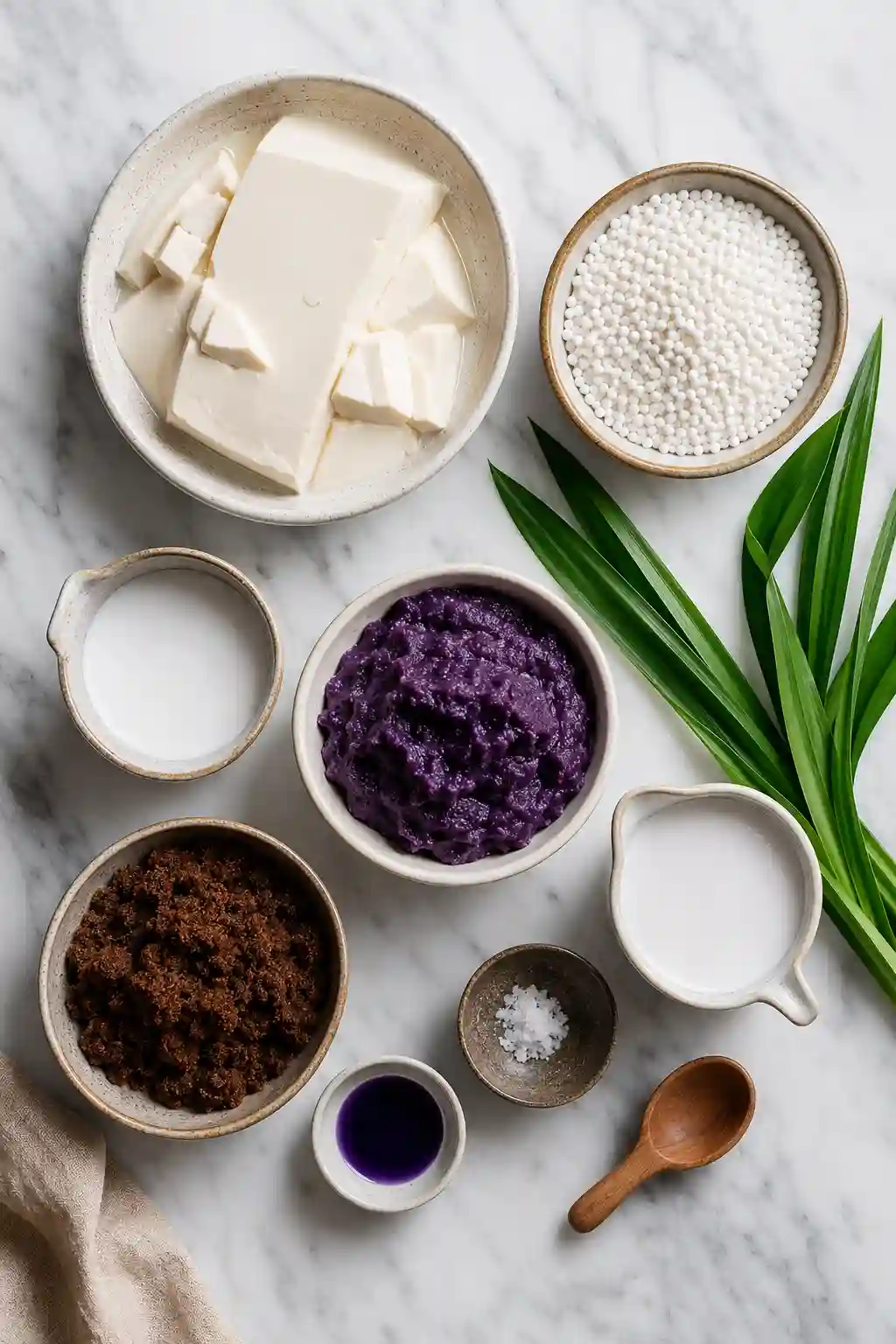
Gathering the right ingredients is the first step toward creating a smooth, creamy, and satisfying dessert. Each component plays an important role in building the flavor and texture that make Ube Taho with Coconut Cream so memorable.
The Tofu Base
The foundation of this dessert is soft silken tofu.
For the best results, choose:
- 2 blocks soft silken tofu
- Shelf-stable Tetra Pak tofu or refrigerated silken tofu
Avoid medium, firm, or extra-firm tofu. They lack the delicate custardy texture that gives traditional taho its signature character.
The Elevated Arnibal Syrup
A rich arnibal syrup adds warmth, sweetness, and depth.
You’ll need:
- 1 cup dark brown sugar or muscovado sugar
- 1 cup water
- 1 knotted pandan leaf or 1 teaspoon pure vanilla extract
- 1 pinch sea salt
Muscovado sugar creates a darker color and a deeper molasses flavor, making it an excellent choice for Ube Taho with Coconut Cream.
The Starch Pearls
The chewy pearls provide contrast to the smooth tofu and creamy topping.
Prepare:
- ½ cup mini sago pearls or small tapioca balls
- 4 to 6 cups water for boiling
Using plenty of water prevents excess starch buildup and helps the pearls cook evenly.
The Premium Ube Coconut Cream
This layer transforms a classic taho into a striking purple dessert.
You’ll need:
- 1 cup full-fat coconut cream
- ½ cup ube halaya
- 1 teaspoon ube extract
- 2 to 3 tablespoons granulated sugar or coconut sugar
The combination of coconut cream and ube creates the thick topping that sets Ube Taho with Coconut Cream apart from many traditional versions.
Ingredient Notes for the Best Results
- Use full-fat coconut cream for a richer texture.
- Choose quality ube halaya for a stronger purple yam flavor.
- Fresh pandan leaves add a pleasant aroma to the syrup.
- Mini sago pearls create the most traditional texture.
- Silken tofu should remain chilled until ready to warm and serve.
With these ingredients ready, you have everything needed to prepare Ube Taho with Coconut Cream at home. Each layer contributes something unique, resulting in a dessert that is creamy, chewy, sweet, and deeply comforting.
Step-by-Step How to Make Ube Taho with Coconut Cream
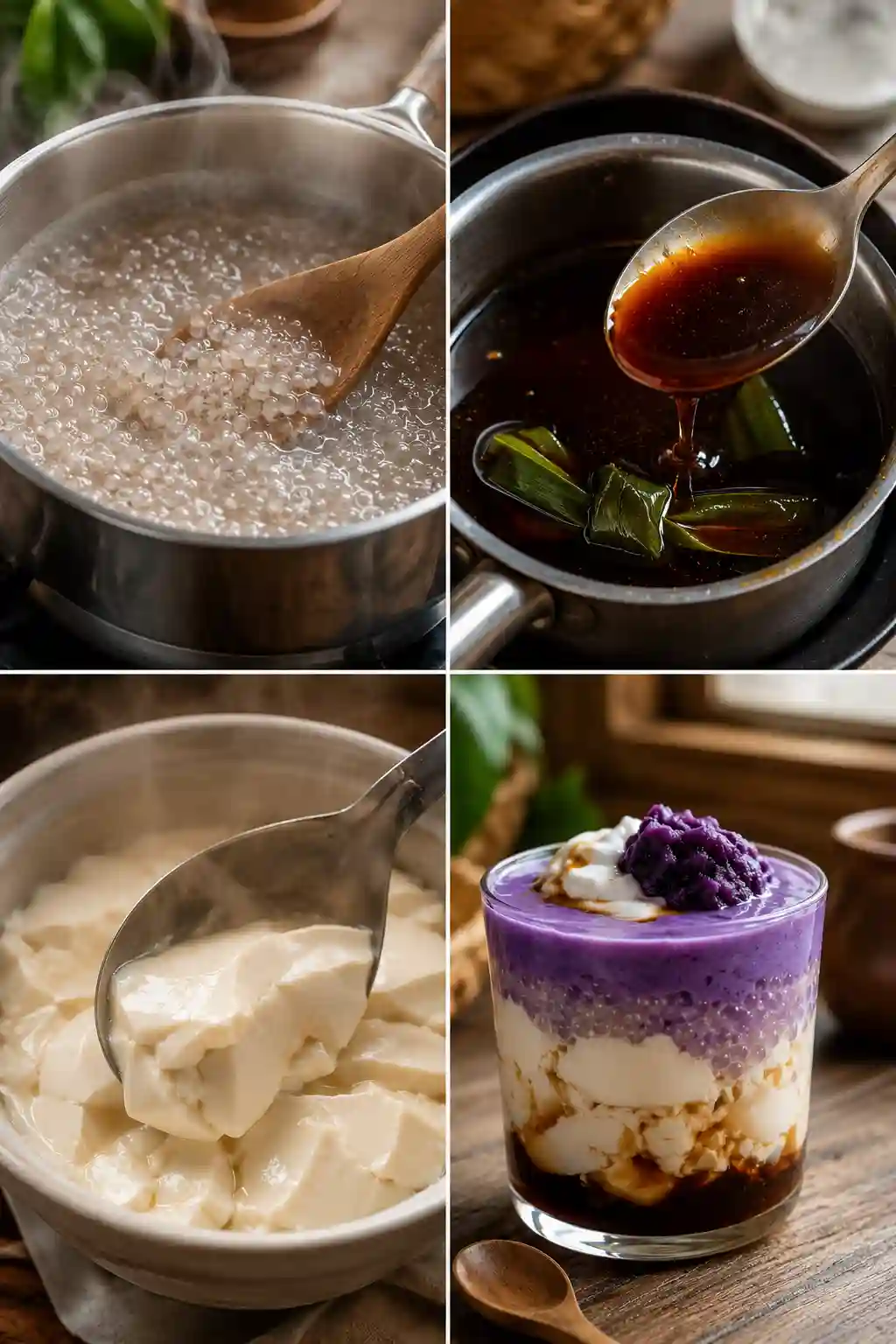
Step 1: Cook the Sago Pearls to Translucent Perfection
Bring 4 to 6 cups of water to a rolling boil in a medium saucepan. Using plenty of water matters because sago releases a large amount of starch during cooking. Once the water is boiling, add the mini sago pearls and stir immediately.
Reduce to a gentle simmer and cook for 15 to 20 minutes, stirring often to prevent sticking. Check the pearls as they cook. If you notice a small white center inside the pearl, it still needs more time.
Turn off the heat, cover the pot with a lid, and let the pearls rest for 10 minutes. The trapped heat will finish cooking the centers without making the outside too soft.
Drain the pearls and rinse them under cold running water. This quick rinse stops the cooking process and helps keep their chewy texture. For the best result, mix the cooked pearls with a spoonful of arnibal syrup before adding them to Ube Taho with Coconut Cream.
Step 2: Reduce the Glossy Arnibal Syrup
In a small saucepan, combine dark brown sugar or muscovado sugar, water, a knotted pandan leaf, and a pinch of sea salt. Place the pan over medium heat and stir until the sugar dissolves fully.
Allow the mixture to simmer gently for 5 to 7 minutes. As it cooks, the syrup will develop a richer color and deeper flavor.
To test the texture, dip a spoon into the syrup and lift it out. The syrup should lightly coat the back of the spoon rather than running off at once. If it still appears watery, continue simmering for a few more minutes.
Remove the pandan leaf and set the syrup aside. It should remain glossy, smooth, and easy to pour into Ube Taho with Coconut Cream.
Step 3: Steam and Slice the Silken Tofu
Place the silken tofu in a steamer basket lined with cheesecloth or parchment paper. Steam gently for 5 to 7 minutes until warmed through. You can also microwave the tofu for 1 to 2 minutes in a microwave-safe dish.
Once warm, use a wide flat spoon to scoop the tofu sideways. This method creates delicate ribbons and slivers while keeping the smooth custardy texture.
Avoid pressing directly downward into the tofu. Gentle handling helps keep the soft texture that makes Ube Taho with Coconut Cream so enjoyable.
Step 4: Whip Up the Thick Ube Coconut Cream Layer
Combine the coconut cream, ube halaya, sugar, and ube extract in a small saucepan. Place over low heat and whisk until the mixture becomes smooth and fully blended.
Warm the mixture gently without allowing it to boil. Excess heat can cause the coconut fat to separate and affect the final texture.
If the cream becomes too thick, stir in a small splash of coconut milk until it reaches a smooth, spoonable consistency. The finished mixture should be rich, creamy, and vibrant purple.
Step 5: Assemble and Layer Like a Pro
Choose a clear glass or serving cup to show the beautiful layers.
Start with a spoonful of warm arnibal syrup at the bottom. Add a generous layer of warm silken tofu, followed by a scoop of chewy sago pearls.
Finish with a thick layer of ube coconut cream on top. For a taller serving, repeat the layers once more.
Serve Ube Taho with Coconut Cream right away while warm, or chill briefly before serving if you prefer a cooler dessert.
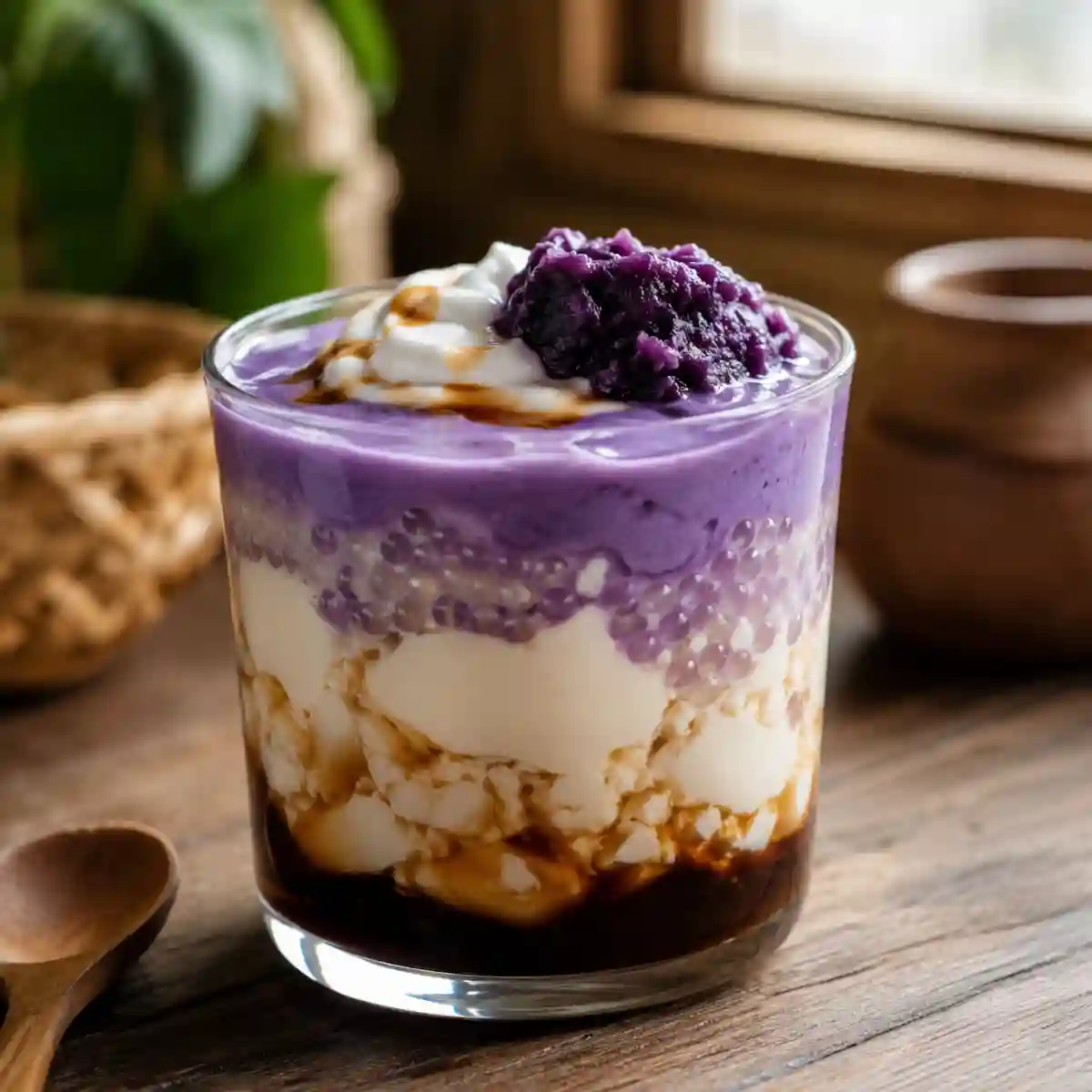

Ube Taho with Coconut Cream
Ingredients
Method
- Bring 4 to 6 cups of water to a rolling boil.
- Add the sago pearls and stir immediately.
- Simmer for 15 to 20 minutes, stirring occasionally.
- Turn off the heat and cover the pot for 10 minutes.
- Drain and rinse under cold running water.
- Toss with a spoonful of arnibal syrup to prevent sticking.
- Combine sugar, water, pandan leaf, and sea salt in a saucepan.
- Heat over medium heat until the sugar dissolves.
- Simmer for 5 to 7 minutes.
- Remove the pandan leaf.
- Set aside until ready to use.
- Steam the tofu for 5 to 7 minutes or microwave for 1 to 2 minutes.
- Use a wide spoon to scoop the tofu into delicate slivers.
- Combine coconut cream, ube halaya, sugar, and ube extract in a saucepan.
- Warm over low heat while whisking continuously.
- Do not allow the mixture to boil.
- Remove from heat once smooth and creamy.
- Add a spoonful of arnibal syrup to each serving glass.
- Layer with warm silken tofu.
- Add cooked sago pearls.
- Top with the ube coconut cream.
- Serve immediately.
- Use soft silken tofu only for the best texture.
- Mini sago pearls provide the most traditional result.
- Full-fat coconut cream creates a richer topping.
- Arnibal syrup can be stored in the refrigerator for up to 1 week.
- Ube coconut cream can be stored for up to 4 days.
- Sago pearls are best prepared fresh.
Notes
| Nutrient | Amount |
| Calories | 320 kcal |
| Carbohydrates | 44 g |
| Protein | 7 g |
| Total Fat | 13 g |
| Saturated Fat | 10 g |
| Cholesterol | 0 mg |
| Sodium | 85 mg |
| Fiber | 2 g |
| Sugar | 29 g |
| Calcium | 180 mg |
| Iron | 2 mg |
| Potassium | 230 mg |
Pro Tips for Flawless Homemade Taho
Making Ube Taho with Coconut Cream is simple, but a few small techniques can make a noticeable difference in texture, flavor, and presentation.
DIY Tofu Steaming Hacks
No steamer basket? No problem.
You can place a heat-safe plate on top of a crumpled piece of aluminum foil inside a deep pot. Add a small amount of water to the bottom, cover with a lid, and steam the tofu gently until warmed through.
Another option is lining a colander with parchment paper and placing it over simmering water. Both methods work well when preparing Ube Taho with Coconut Cream at home.
Make-Ahead Storage Guide
The arnibal syrup can be stored in an airtight container in the refrigerator for up to one week. Warm it slightly before serving to restore its smooth consistency.
The ube coconut cream can be prepared 3 to 4 days in advance and stored in the refrigerator.
Sago pearls are different. They tend to harden and become less pleasant after extended storage. For the best texture, cook them on the day you plan to serve Ube Taho with Coconut Cream.
Texture Fixes
If the ube cream becomes too thick after chilling, stir in a small amount of coconut milk until it reaches the desired consistency.
If the arnibal syrup appears too thin, return it to low heat and cook for another 3 to 5 minutes.
If the sago pearls become firm after sitting for several hours, soak them briefly in warm water before serving.
These simple adjustments help keep Ube Taho with Coconut Cream smooth, creamy, and enjoyable from the first spoonful to the last.
Presentation Tips
Serve the dessert in clear glasses to showcase the beautiful contrast between the golden syrup, white silken tofu, translucent pearls, and vibrant purple topping.
For special occasions, garnish with a small drizzle of coconut cream or an extra spoonful of ube halaya. These finishing touches make Ube Taho with Coconut Cream look as impressive as it tastes.
Nutrition Information for Ube Taho with Coconut Cream
The following values are estimates for one serving of Ube Taho with Coconut Cream. Actual nutrition may vary depending on the brands and ingredient quantities used.
| Nutrient | Amount Per Serving |
| Calories | 320 kcal |
| Carbohydrates | 44 g |
| Protein | 7 g |
| Total Fat | 13 g |
| Saturated Fat | 10 g |
| Cholesterol | 0 mg |
| Sodium | 85 mg |
| Fiber | 2 g |
| Sugar | 29 g |
| Calcium | 180 mg |
| Iron | 2 mg |
| Potassium | 230 mg |
According to Harvard T.H. Chan School of Public Health, soy-based foods such as tofu can be part of a balanced eating pattern and provide plant-based protein, minerals, and other beneficial nutrients
Nutritional Highlights
- Dairy-free and naturally lactose-free.
- Gluten-free when prepared with certified gluten-free ingredients.
- Good source of plant-based protein from silken tofu.
- Contains healthy fats from coconut cream.
- Provides calcium and iron from soy-based ingredients.
- Can be made with less sugar for a lighter version.
For a lower-calorie serving, reduce the amount of arnibal syrup or use less sugar in the ube coconut cream layer.
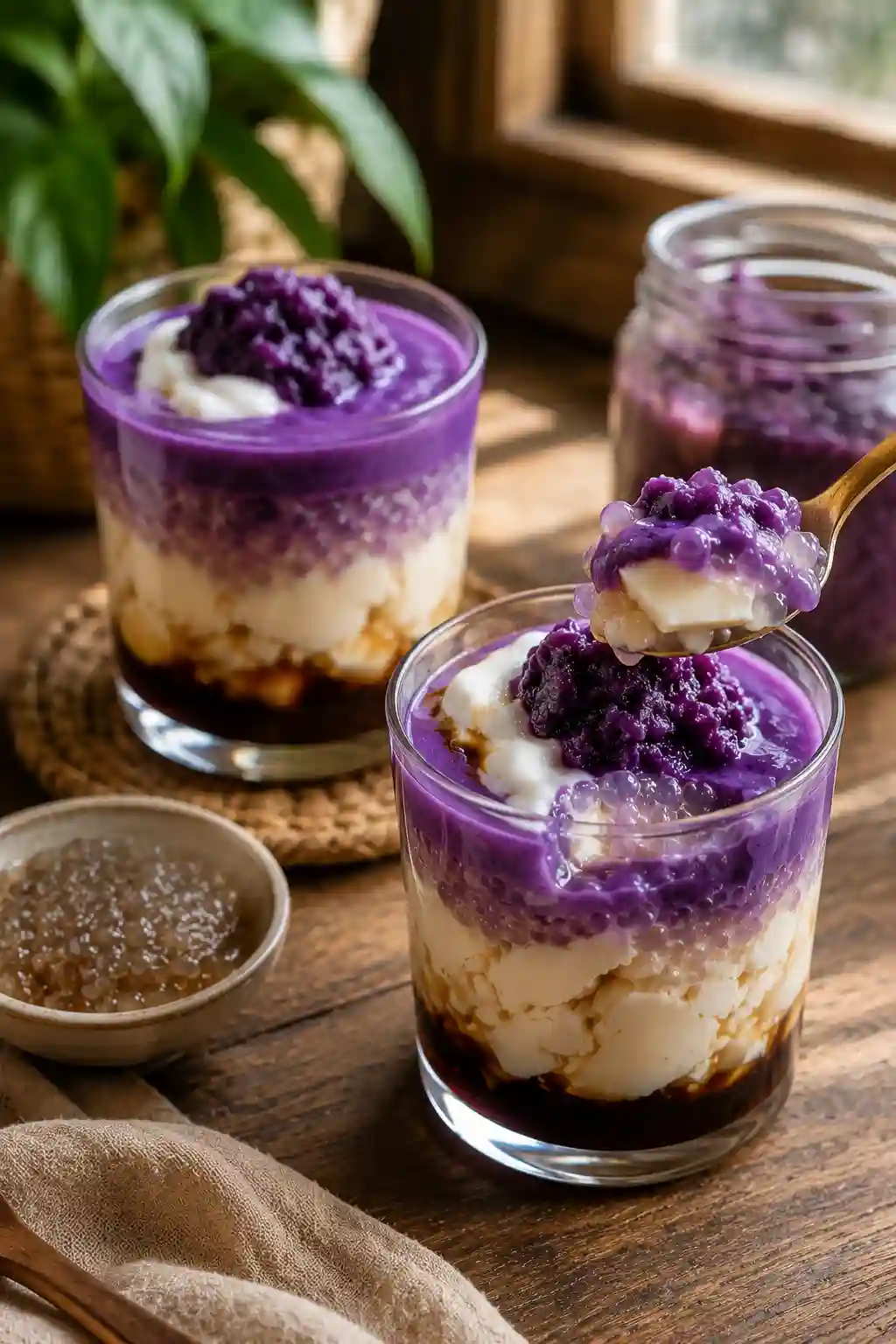
Conclusion & Call to Action
Bringing a traditional Filipino favorite into your own kitchen is easier than many people think. With soft silken tofu, chewy sago pearls, rich arnibal syrup, and a creamy purple topping, Ube Taho with Coconut Cream transforms a simple street food into a dessert that feels special enough for any occasion.
One of the best things about Ube Taho with Coconut Cream is its balance of textures and flavors. The warm tofu provides a smooth foundation, the syrup adds sweetness, the pearls contribute chewiness, and the ube coconut layer delivers a rich finish in every bite.
Whether you enjoy it as a comforting breakfast, an afternoon treat, or a light dessert after dinner, Ube Taho with Coconut Cream offers a delicious way to experience a beloved part of Filipino food culture from home.
Now it’s your turn to give Ube Taho with Coconut Cream a try.
If you made this recipe, leave a star rating on the recipe card below and share your experience in the comments. Do you prefer your taho warm or chilled?
Feel free to share photos of your beautiful purple creations on social media and tag the blog so others can see your results. Your feedback and creativity help inspire fellow home cooks to make this classic dessert their own.
More Creamy & Asian-Inspired Desserts You’ll Love
- Ube Banana Pudding with Coconut Cream – A rich and creamy purple yam dessert with tropical flavor.
- Mango Sago Pudding Recipe – A refreshing Asian-inspired treat with mango and chewy sago pearls.
- Viral Japanese Yogurt Cheesecake – Light, fluffy, and melt-in-your-mouth delicious.
- Lemon Mousse – Smooth, airy, and perfectly refreshing after any meal.
FAQs About Ube Taho with Coconut Cream
1. Can You Use Coconut Cream Instead of Heavy Cream for Ube Taho?
Yes. Coconut cream is an excellent alternative to heavy cream. It creates a rich texture while keeping the dessert completely plant-based. Many people prefer coconut cream because it complements the flavor of purple yam and adds a subtle tropical note to Ube Taho with Coconut Cream.
2. Why Is My Homemade Arnibal Syrup Thin and Watery?
The syrup likely needs more cooking time. Continue simmering it over low heat for 3 to 5 additional minutes until it lightly coats the back of a spoon. As the liquid reduces, the flavor becomes richer and the texture improves.
3. How Do You Keep Sago Pearls From Getting Hard?
Cooked sago pearls naturally firm up as they sit. For the best texture, use them on the same day they are prepared. If they begin to harden, soak them in warm water for a few minutes before serving them with Ube Taho with Coconut Cream.
4. What Is the Difference Between Sago and Tapioca Pearls?
Sago pearls are made from palm starch, while tapioca pearls come from cassava root starch. Both can be used in this recipe, although cooking times vary depending on the size of the pearls.
5. Can I Store or Freeze Assembled Taho?
Freezing is not recommended. Silken tofu contains a high amount of water, and freezing changes its texture significantly. Once thawed, the tofu can become grainy and watery. For the best results, store each component separately and assemble Ube Taho with Coconut Cream just before serving.
6. Is Taho Eaten Warm or Cold?
Traditionally, taho is served warm and enjoyed as a breakfast treat purchased from street vendors. However, many people enjoy a chilled version during warm weather. Both options are delicious, and the choice depends on personal preference.
7. What Is Taho and What Does It Taste Like?
Taho is a Filipino soy dessert made from soft silken tofu, sweet arnibal syrup, and chewy sago pearls. It has a smooth texture and a balanced sweetness that makes it comforting and easy to enjoy. Modern versions such as Ube Taho with Coconut Cream add a rich purple yam layer and coconut flavor for extra depth.
8. Can I Use Ready-Made Silken Tofu?
Absolutely. Ready-made silken tofu is convenient and works very well for homemade taho. Both refrigerated and shelf-stable varieties can be used as long as they are labeled as soft silken tofu.