
Let’s be honest for a second.
If you’re here searching for water stacking vs intermittent fasting, you’re probably stuck in that same loop I was in not long ago. You try one method, it works a little, then suddenly it doesn’t. Then you see another “better” method online and start questioning everything again.
I remember asking myself, “Am I just doing this wrong… or is everyone else exaggerating results?”
Maybe you’ve had that exact thought too.
At one point, I tried intermittent fasting. The 16:8 intermittent fasting schedule sounded simple enough. Skip breakfast, eat later, lose fat. And for a few days, it actually felt like something was happening. Less bloating, a bit lighter, even a small drop on the scale. But then hunger kicked in at the worst times. Social meals became awkward. Energy dipped when I needed it most. And I started wondering if this was really sustainable or just another short-term win.
Then I came across something way less talked about. Water stacking. Honestly, I almost ignored it because it sounded too simple to be effective. Just drink water before meals? That’s it?
But here’s where it gets interesting.
When you compare intermittent fasting vs hydration method approaches, you start noticing something most articles don’t really explain. One relies on restriction and timing. The other works more subtly, almost quietly, by changing how your body responds to hunger.
So the real question isn’t just which one works.
It’s which one works for you when life gets messy, when motivation drops, when routines break.
In this guide, we’re going to break down water stacking vs fasting in a way that actually reflects real experience, not just theory. We’ll look at the best intermittent fasting for weight loss, what results you can realistically expect, and why some people eventually search for things like “why I stopped intermittent fasting.”
And somewhere along the way, you’ll probably start recognizing which path fits you without forcing it.
Or maybe, and this is where it gets interesting, you’ll realize you don’t actually have to choose just one.
Table of Contents
Table of Contents
Water Stacking vs Intermittent Fasting — What’s the Real Difference?
You’d think the difference between water stacking vs intermittent fasting is obvious. One is about drinking water, the other is about not eating for hours. Simple, right?
Well… not exactly.
Because when you actually try both, the difference doesn’t just sit in what you do, it shows up in how your body reacts, how your mind behaves, and honestly, how long you can stick with it without getting frustrated.
Let me explain it the way I wish someone explained it to me earlier.
Water Stacking vs Fasting: Two Completely Different Approaches
At first glance, both methods fall under weight loss comparison methods. But the philosophy behind them is almost opposite.
With intermittent fasting, you’re controlling when you eat. You create a structured intermittent fasting schedule, like the popular 16:8 intermittent fasting method, where you eat during a fixed window and fast the rest of the time.
Water stacking, on the other hand, doesn’t care about time. It focuses on behavior. You drink water strategically, usually before meals, to reduce appetite and naturally lower your calorie intake.
So really, this is what it comes down to:
- Intermittent fasting = time restriction
- Water stacking = appetite control
Sounds small, but the experience feels completely different.
Intermittent Fasting vs Hydration Method: How Your Body Responds
Here’s where things get more interesting.
With intermittent fasting vs hydration method approaches, your body reacts in two distinct ways.
When fasting, your body eventually shifts into fat-burning mode because insulin levels drop. That’s why it’s often promoted as the best intermittent fasting for weight loss, especially for people looking for faster results.
But there’s a catch. That shift doesn’t always feel smooth.
You might feel:
- hunger spikes at weird hours
- low energy in the beginning
- strong cravings, especially at night
Now compare that to water stacking.
Instead of forcing your body into a state, you’re subtly guiding it. Drinking water before meals can make you feel full faster, which reduces overeating without triggering that same internal resistance.
It feels easier. Almost too easy, which is why many people underestimate it at first.
Fasting vs Hydration Weight Loss: The Real-Life Difference
If we’re being honest, the biggest difference isn’t scientific. It’s practical.
Fasting vs hydration weight loss plays out differently in real life.
Intermittent fasting works well if:
- you like structure
- you can handle delayed eating
- your schedule is predictable
Water stacking works better if:
- you want flexibility
- you struggle with hunger control
- you don’t want strict rules
And this is where a lot of people get it wrong.
They don’t fail the method. They pick a method that doesn’t match their lifestyle.
So when people ask, “which weight loss method works best,” what they’re really asking is:
“Which one will I actually stick to when motivation disappears?”
That’s the question we’re going to keep coming back to.
What Is Water Stacking? Hydration-Based Weight Loss Explained
If you heard about water stacking for the first time, your first reaction is probably the same as mine was.
“Wait… that’s it? Just drink water?”
I remember thinking it sounded way too basic to be part of any serious weight loss comparison methods. No restrictions, no complicated intermittent fasting schedule, no strict rules. Just water before meals.
But here’s the thing most people miss.
Water stacking is simple, yes. But it’s not random.
How Water Stacking Works for Weight Loss
At its core, water stacking is about timing your water intake in a way that naturally reduces how much you eat without forcing you to restrict food.
The idea is straightforward:
- Drink water before meals
- Stay consistently hydrated throughout the day
- Use water to manage hunger signals
When you do this, something subtle happens.
You start feeling full faster. Not stuffed, not uncomfortable, just… satisfied earlier than usual. And that small shift can reduce your calorie intake without you even noticing it.
This is why some people compare water stacking vs fasting. Both aim to reduce calories, but they take completely different paths to get there.
One restricts eating windows. The other gently influences appetite.
Why Water Stacking Feels Easier to Maintain
Let’s be real for a second.
Most people don’t quit weight loss methods because they don’t work. They quit because they’re hard to live with.
That’s where water stacking has a quiet advantage.
There’s:
- no strict schedule
- no forbidden foods
- no social limitations
You’re not skipping meals or checking the clock. You’re just adding a habit that fits into your day without friction.
And honestly, that matters more than people think.
Because when comparing fasting vs hydration weight loss, sustainability becomes the deciding factor. Not intensity.
Water Stacking vs Fasting: The Hidden Advantage
Here’s something I didn’t expect when I tried it.
Water stacking doesn’t feel like a “method.”
It feels like a small tweak. Something you can do even on messy days when your routine falls apart.
And maybe that’s why it works for certain people.
Because instead of relying on discipline, it relies on consistency. And those are not the same thing.
Of course, it’s not magic.
If your diet is completely out of control, water alone won’t fix everything. But if your issue is overeating, snacking, or confusing thirst with hunger, this approach can quietly solve those problems in the background.
So when people ask whether water stacking vs intermittent fasting is better, this is usually where the split begins.
One method asks you to change your schedule.
The other asks you to change one small behavior.
And depending on who you are, that difference can either feel insignificant… or completely game-changing.
Water Stacking vs Intermittent Fasting: How to Start Water Stacking (Step-by-Step)
If you’re leaning toward the simpler side of Water Stacking vs Intermittent Fasting, this is probably the part you’ve been waiting for.
Because understanding the method is one thing.
Actually starting it… is something else.
And the good news is, water stacking doesn’t require a complete lifestyle reset. You don’t need to plan your entire day around it. You just need to start small and stay consistent.
Step 1: Start Your Day With Water Before Anything Else
Before coffee, before breakfast, before checking your phone… drink water.
It sounds almost too basic, but this step sets the tone for everything else.
A glass of water in the morning helps:
rehydrate your body after sleep
wake up your digestion
reduce early hunger signals
You’re not forcing anything here. You’re just giving your body what it actually needs first.
And sometimes, what feels like hunger is just dehydration.
Step 2: Drink Water Before Every Meal
This is the core of water stacking.
About 20 to 30 minutes before eating, drink one to two glasses of water.
That’s it.
This simple habit can:
reduce how much you eat without restriction
help you feel full faster
slow down impulsive eating
At first, you might not notice a big difference.
But after a few days, something shifts.
You stop eating until you’re full. You start eating until you’re satisfied.
And that small difference adds up.
Step 3: Stay Consistently Hydrated Throughout the Day
Water stacking is not just about before meals. It’s also about maintaining a steady level of hydration.
Instead of drinking a lot at once, try to spread your intake across the day.
For example:
one glass every 1 to 2 hours
more if you’re active or in a hot environment
This helps stabilize your appetite and prevents sudden hunger spikes.
It also keeps your energy more stable, which is something people often struggle with when comparing Water Stacking vs Intermittent Fasting.
Step 4: Use Water to Manage Cravings (Not Fight Them)
Here’s a trick that changed things for me.
Whenever you feel a sudden craving, pause and drink a glass of water first.
Not to suppress hunger, but to check it.
Wait a few minutes.
If you’re still hungry, eat. No restriction.
But you’ll notice that many cravings fade once your body gets hydrated.
This step alone can reduce unnecessary snacking without making you feel deprived.
Step 5: Keep It Flexible and Realistic
This is where water stacking really stands out.
You don’t need to be perfect.
If you forget one time, it doesn’t break anything. If your schedule changes, you adapt. There’s no strict rule to “fail.”
And that’s exactly why it works for so many people.
Because unlike stricter methods, it doesn’t rely on discipline alone. It fits into your life instead of trying to control it.
Water Stacking vs Intermittent Fasting: How to Start Water Stacking (Step-by-Step)

Starting water stacking might seem too simple at first. Honestly, that was my first reaction too. Just drink water… and that’s supposed to help with weight loss?
But once you actually apply it consistently, you start noticing small changes. You feel less hungry. You eat a bit less without trying. And somehow, things feel easier instead of forced.
That’s the real difference when comparing Water Stacking vs Intermittent Fasting. One relies on structure and discipline. The other quietly adjusts your habits.
So here’s how to start it properly.
Step 1: Start Your Day With Water
Before coffee. Before food. Before anything.
Drink a full glass of water as soon as you wake up.
This helps:
- rehydrate your body after sleep
- wake up your digestion
- reduce early hunger signals
Sometimes what feels like hunger in the morning is actually just dehydration. This step alone can already make a difference.
Step 2: Drink Water Before Every Meal
This is the core of water stacking.
About 20 to 30 minutes before eating, drink 1 to 2 glasses of water.
Why it works:
- you feel full faster
- you naturally reduce portion sizes
- you avoid overeating without restriction
At first, it feels like nothing. Then after a few days, you realize you’re eating less… without forcing yourself.
Step 3: Stay Consistently Hydrated Throughout the Day
Water stacking is not just about meals. It’s about maintaining hydration all day.
Instead of drinking a lot at once, spread it out:
- one glass every 1 to 2 hours
- more if you’re active
This helps stabilize:
- energy levels
- hunger signals
- cravings
Compared to intermittent fasting, where hunger can spike, this approach feels more balanced.
Step 4: Use Water to Test Hunger vs Cravings
Here’s a simple trick that changes everything.
When you feel hungry, don’t react immediately.
Drink a glass of water first. Wait 5 to 10 minutes.
Then ask yourself:
Am I still hungry?
You’ll notice that many cravings disappear once your body is hydrated.
This step is especially useful if you tend to snack out of habit rather than real hunger.
Step 5: Keep It Flexible and Realistic
This is where water stacking really stands out in the Water Stacking vs Intermittent Fasting comparison.
You don’t need to be perfect.
- missed a glass? it’s fine
- ate without water first? no problem
- routine changed? adapt
There are no strict rules to break.
And that’s exactly why people stick with it longer.
Why This Method Works So Well
Water stacking doesn’t force your body.
It supports it.
Instead of controlling when you eat, it helps control how much you eat naturally. And over time, those small changes create real results.
It may feel slower than intermittent fasting at first.
But it’s often easier to maintain.
And in weight loss, consistency always wins over intensity.
Water Stacking vs Intermittent Fasting: What Is Intermittent Fasting and How Does It Work
When people compare Water Stacking vs Intermittent Fasting, the first thing they usually try to understand is how fasting actually works.
Because on the surface, it sounds almost too simple.
You just stop eating for a certain number of hours, and your body starts burning fat. That’s the promise. And honestly, that’s what pulled me in at the beginning. It felt structured, logical, almost clean compared to traditional diets.
But once you actually try it, you realize intermittent fasting is not just about skipping meals. It’s about timing, habits, and how your body reacts when its usual rhythm gets disrupted.
Types of Intermittent Fasting and Why They Feel So Different
To really understand Water Stacking vs Intermittent Fasting, you need to know that fasting isn’t one single method. There are several types, and they don’t all feel the same in real life.
The most common ones include:
- 16:8 fasting
- 18:6 fasting
- 5:2 fasting
- alternate day fasting
Most beginners start with 16:8 because it seems manageable. You eat during an 8 hour window and fast for 16 hours.
In theory, that sounds balanced.
But in practice, it depends heavily on your routine. If your mornings are busy, it might feel natural. If you wake up hungry, it can feel like a constant struggle. And that difference is exactly why comparing Water Stacking vs Intermittent Fasting is not just about results, but about experience.
Intermittent Fasting Schedule: Easy to Plan, Harder to Live
A typical fasting routine follows a fixed structure. You might eat between 12 PM and 8 PM, then fast until the next day.
At first, this kind of intermittent fasting schedule feels simple. No need to think too much about food, no constant snacking, just clear boundaries.
But then real life shows up.
You get invited to a late dinner. You feel hungry earlier than expected. Your energy drops at the wrong moment. And suddenly, the structure that felt helpful starts feeling restrictive.
This is where many people start questioning things quietly. Not because the method is bad, but because it doesn’t always fit smoothly into everyday life.
Intermittent Fasting Benefits: Powerful but Not Effortless
There’s a reason intermittent fasting is always part of the conversation when discussing Water Stacking vs Intermittent Fasting.
When done consistently, it can:
- reduce calorie intake naturally
- improve insulin sensitivity
- support fat burning
- simplify eating habits
These intermittent fasting benefits are real. But they come with a condition that people often underestimate.
You have to stick with it.
And that’s where things get interesting.
Because while fasting can be powerful, it also asks for discipline. It asks you to follow timing, resist hunger at certain moments, and adapt your lifestyle around it.
So when you compare Water Stacking vs Intermittent Fasting, you’re not just comparing two methods.
You’re comparing structure versus flexibility.
And depending on who you are, that difference can either feel motivating… or exhausting.
Water Stacking vs Intermittent Fasting: 16:8 Method, Belly Fat and Real Results
When people dig deeper into Water Stacking vs Intermittent Fasting, they almost always land on one specific question.
What is the best intermittent fasting window to lose belly fat?
And most of the time, the answer they see is the same. The 16:8 method.
I remember thinking, “If this is the most recommended one, then it must be the most effective.” It felt like the safest place to start. Not too extreme, not too complicated.
But once you actually follow it, you realize the experience is a bit more nuanced than the promise.
16:8 Intermittent Fasting: Why It’s So Popular
The 16:8 intermittent fasting approach is simple.
You fast for 16 hours and eat during an 8 hour window. Most people choose something like 12 PM to 8 PM. It fits relatively well into a normal day, at least on paper.
This is why it’s often considered the best intermittent fasting for weight loss, especially for beginners.
There’s no need to count calories strictly. No need to eliminate entire food groups. You just shift your eating window.
And for a few days, it can feel surprisingly easy.
You feel lighter. Less bloated. Maybe even a bit more in control.
But then something subtle starts happening.
What Is the Best Intermittent Fasting Window to Lose Belly Fat
Here’s where expectations and reality start to separate.
Yes, the 16:8 window can help with belly fat, mainly because it reduces insulin levels and encourages your body to use stored fat for energy.
But the real question is not just what is the best intermittent fasting window to lose belly fat.
It’s whether you can follow that window consistently without friction.
Because belly fat loss does not come from the window itself. It comes from what that window allows you to maintain over time.
If you:
- overeat during your eating window
- feel too hungry and compensate later
- break the routine frequently
Then the results slow down or disappear.
And that’s usually the part people don’t expect.
16:8 Fasting Weight Loss Results 1 Week: What Actually Happens
A lot of people search for 16:8 fasting weight loss results 1 week, hoping to see fast transformation.
And yes, in the first week, you might notice:
- a small drop on the scale
- reduced bloating
- a feeling of lightness
But let’s be honest for a second.
Most of that early change is not pure fat loss. It’s often water weight and reduced food volume.
Real fat loss takes longer.
This is where Water Stacking vs Intermittent Fasting becomes interesting again.
Fasting can create faster visible changes at the beginning. But it also comes with more pressure to maintain the routine.
Water stacking, on the other hand, feels slower… but often easier to sustain.
And depending on your personality, that difference can completely change your long-term results.
Water Stacking vs Intermittent Fasting: Why I Stopped Intermittent Fasting
This is usually the part nobody talks about at the beginning.
When you first explore Water Stacking vs Intermittent Fasting, everything sounds promising. Structured eating, fat burning, better control. And honestly, for a short time, it can feel exactly like that.
But then something shifts.
Not suddenly. Not dramatically. Just small things that start to add up.
I remember reaching a point where I wasn’t asking “does this work?” anymore. I was asking “can I actually keep doing this long term?”
And that’s a very different question.
Why I Stopped Intermittent Fasting: The Hidden Struggles
At first, intermittent fasting feels like discipline.
Then, slowly, it starts feeling like effort.
The most common issues are not extreme. They’re subtle, but persistent:
- hunger at times that don’t match your schedule
- low energy during important parts of the day
- constant awareness of the clock
- frustration when plans don’t fit your eating window
And the tricky part is this.
You don’t quit immediately.
You adjust. You push through. You tell yourself it’s normal.
But over time, that quiet friction builds up.
That’s why so many people end up searching things like why I stopped intermittent fasting. Not because the method failed completely, but because it stopped fitting their real life.
When Structure Becomes a Limitation
One of the biggest realizations for me came from something very simple.
Life is not predictable.
Some days are easy. Others are chaotic. And intermittent fasting works best when your routine is stable.
But what happens when:
- your schedule changes
- you travel
- you eat with family or friends at different times
You either break the routine… or you force yourself to stick to it and feel uncomfortable.
And that’s where the method starts losing its flexibility.
When comparing Water Stacking vs Intermittent Fasting, this is one of the biggest differences.
Fasting gives you structure, but sometimes that structure becomes rigid.
The Turning Point: Looking for an Easier Alternative
At some point, I stopped looking for the most “effective” method.
I started looking for the most sustainable one.
Something that:
- doesn’t depend on strict timing
- doesn’t create tension in daily life
- works even when motivation is low
And that’s usually where people start exploring alternatives.
Not because intermittent fasting doesn’t work, but because it doesn’t always fit the way they live.
That’s exactly where water stacking starts to feel different.
Less strict. Less demanding. But maybe… more realistic.
And that shift in perspective changes everything.
Water Stacking vs Intermittent Fasting: Full Comparison and Key Differences
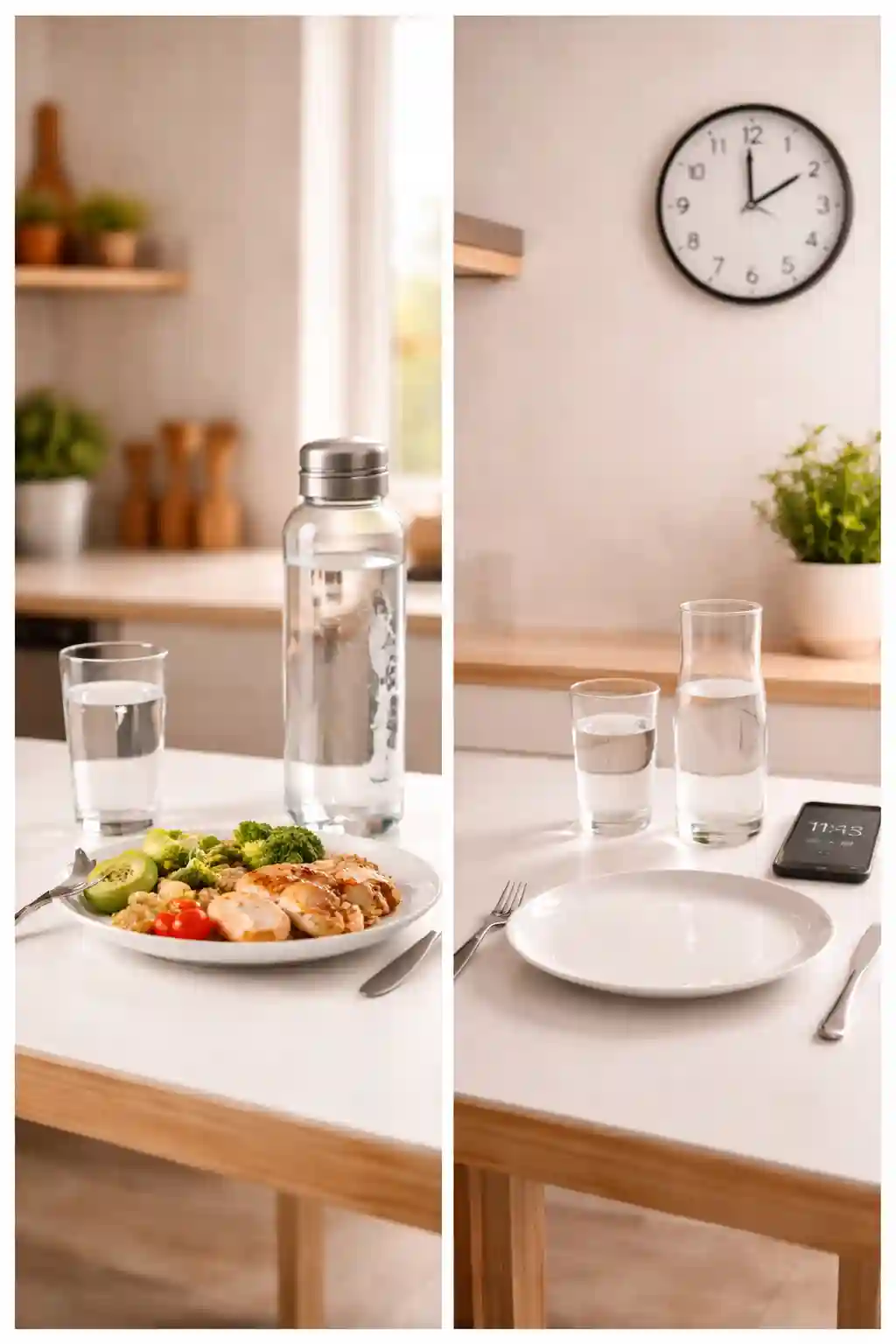
Let’s break down Water Stacking vs Intermittent Fasting in a simple and clear way.
| Feature | Water Stacking | Intermittent Fasting |
| Approach | Hydration-based | Time-restricted eating |
| Difficulty | Easy | Moderate |
| Flexibility | High | Low to medium |
| Hunger level | Lower | Can be higher |
| Sustainability | High | Depends on lifestyle |
| Results speed | Gradual | Faster at the beginning |
Now let’s go beyond the table, because real-life experience tells a different story.
Water Stacking vs Intermittent Fasting: Water Trick vs Fasting Results
At some point, the comparison between Water Stacking vs Intermittent Fasting becomes very simple in your mind.
You stop asking “how does it work” and start asking “what results will I actually see?”
And this is where a lot of expectations get… slightly distorted.
Because both methods can work. But they don’t feel the same, and more importantly, they don’t deliver results in the same way.
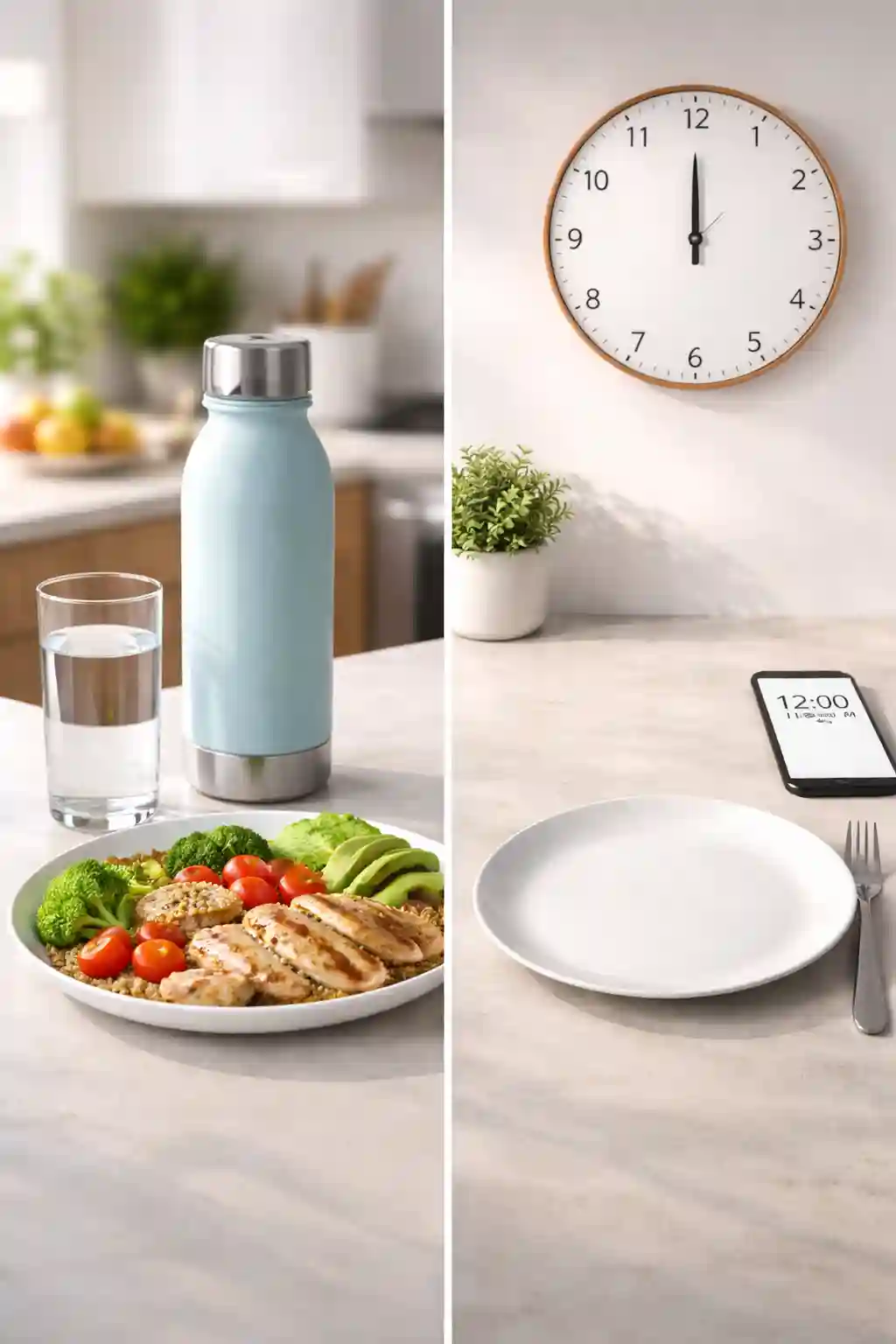
Water Trick vs Fasting Results: Fast vs Sustainable Progress
Let’s talk honestly.
Intermittent fasting often gives you faster visible changes at the beginning. You might notice a drop in weight within the first week, especially if your eating habits improve at the same time.
It feels motivating. You feel like something is happening.
That’s why many people believe it’s the best intermittent fasting for weight loss.
But here’s the part that usually comes later.
Those early results are not always consistent. Some days feel easy, others feel like a struggle. And if the routine breaks, the results can slow down quickly.
Now compare that to water stacking.
The “water trick vs fasting results” comparison is almost the opposite experience.
With water stacking:
- results feel slower
- changes are more subtle
- progress builds over time
At first, it might even feel like nothing is happening.
But then you notice:
- you eat less without forcing it
- cravings become easier to manage
- your portions naturally decrease
And that’s when you realize the method is working quietly in the background.
Water Stacking vs Intermittent Fasting: Which One Feels Better Over Time
Here’s something I didn’t expect when comparing Water Stacking vs Intermittent Fasting.
The real difference shows up after the initial phase.
In the beginning, fasting can feel exciting. Structured. Almost like a challenge you want to win.
But over time, that same structure can feel repetitive or restrictive, especially if your lifestyle isn’t perfectly aligned with it.
Water stacking, on the other hand, doesn’t feel impressive at first.
But it doesn’t create resistance either.
It fits into:
- irregular schedules
- social situations
- days where motivation is low
And that makes a huge difference over weeks and months.
Because weight loss is not just about intensity. It’s about what you can keep doing when things are not ideal.
Can You Combine Water Stacking and Intermittent Fasting
Now here’s where things get interesting.
You don’t actually have to choose strictly between Water Stacking vs Intermittent Fasting.
You can combine both.
For example:
- follow a light fasting window
- drink water before meals during your eating period
- use hydration to control hunger instead of fighting it
This hybrid approach can:
- reduce hunger during fasting
- improve consistency
- make the whole process feel less restrictive
And for many people, this balance works better than going all in on one method.
Because instead of forcing your body, you’re supporting it.
Water Stacking vs Intermittent Fasting: Best Method for Weight Loss
So now we arrive at the real question behind Water Stacking vs Intermittent Fasting.
Which one is actually the best method for weight loss?
At this point, you’ve probably already started forming your own answer. Maybe you’re leaning toward fasting because it seems more powerful. Or maybe water stacking feels more realistic for your daily life.
And honestly… both reactions make sense.
Which Weight Loss Method Works Best in Real Life
If we stay purely technical, intermittent fasting often looks like the stronger option. It can reduce calorie intake quickly and trigger fat burning mechanisms faster.
That’s why it’s often labeled as the best intermittent fasting for weight loss.
But real life doesn’t work in perfect conditions.
The method that works best is not the one with the strongest short-term effect. It’s the one you can follow when:
- your schedule changes
- your motivation drops
- your routine gets disrupted
This is where Water Stacking vs Intermittent Fasting becomes less about performance and more about compatibility.
Water stacking works best if you want something:
- flexible
- easy to maintain
- low effort
Intermittent fasting works best if you:
- like structure
- can follow time-based rules
- don’t mind temporary discomfort
And if you’re being honest with yourself, you probably already know which side you fall on.
Best Method for Weight Loss: It Depends More Than You Think
There’s a phrase you’ve probably heard before.
“The best method for weight loss is the one you can stick to.”
It sounds simple. Maybe even a bit cliché.
But when you really compare Water Stacking vs Intermittent Fasting, it becomes very real.
Because both methods can work.
Both can help you lose weight.
But only one of them will feel natural enough for you to keep going without constantly forcing yourself.
And that difference changes everything.
Final Thoughts: Choosing Between Simplicity and Structure
If you step back for a second, this whole comparison is not really about which method is better.
It’s about what kind of approach fits your personality and your lifestyle.
Water stacking feels simple. Almost invisible. It blends into your day without asking much from you.
Intermittent fasting feels structured. Clear. It gives you rules, but also expects you to follow them consistently.
So instead of asking which one is better, maybe a better question is:
Which one will I still be doing a month from now?
Because that’s where real results come from.
Not from the method itself, but from how well it fits into your life when things are not perfect.
And once you answer that honestly, the choice becomes much clearer.
Water Stacking vs Intermittent Fasting: Nutrition Information
Nutrition Comparison
| Factor | Water Stacking | Intermittent Fasting |
| Calorie intake | Slightly reduced | Often reduced more |
| Meal frequency | 3–4 meals/day | 1–2 meals/day |
| Hydration | High | Medium |
| Hunger | More stable | Can fluctuate |
| Energy | Stable | Can drop |
| Nutrient balance | Easier to maintain | Depends on diet |
Understanding how your body responds to food and hydration is essential, and according to the U.S. Department of Agriculture, maintaining proper hydration and balanced nutrition plays a key role in overall health and weight management.
Quick Insight
Water stacking supports stable nutrition and hydration.
Intermittent fasting can reduce calories faster, but requires better meal quality to avoid deficiencies.
Water Stacking vs Intermittent Fasting: Final Thoughts
At the end of the day, the debate around Water Stacking vs Intermittent Fasting is not really about which method is universally better.
It’s about which one actually fits into your life without creating constant resistance.
Intermittent fasting can feel powerful. Structured. Even motivating at the beginning. And for some people, it becomes a routine that works long term.
But for others, it slowly turns into something harder to maintain than expected.
Water stacking, on the other hand, almost feels too simple to take seriously at first. No strict rules, no pressure, no major lifestyle shift. And yet, that simplicity is exactly what makes it sustainable for many people.
And maybe that’s the part most people overlook.
Because weight loss is not just about results you see in one week. It’s about what you can repeat consistently, even on days when things are not perfect.
So instead of asking which method works best in theory, a better question might be:
Which one will still feel manageable when motivation fades?
If you prefer structure, clear rules, and don’t mind adjusting your routine, intermittent fasting might suit you.
If you want flexibility, ease, and something that blends naturally into your day, water stacking may be the better choice.
And if you’re somewhere in between, combining both approaches might actually give you the balance you’re looking for.
In the end, the best method is not the most intense one.
It’s the one you don’t feel the need to escape from.
More Weight Loss Methods & Recipes You’ll Love
- Water Stacking for Weight Loss – Learn how this method works step-by-step for hydration and fat loss.
- Prebiotic Water for Weight Loss – A gut-friendly drink to support digestion and metabolism.
- Pink Salt Weight Loss Recipe – A simple mineral drink to enhance hydration and balance.
- Dr Oz Pink Gelatin Recipe for Weight Loss – A popular low-calorie dessert used in many weight-loss routines.
FAQs: Water Stacking vs Intermittent Fasting
1. Is water stacking better than intermittent fasting for weight loss
It depends on what you mean by “better.”
In the Water Stacking vs Intermittent Fasting debate, intermittent fasting can lead to faster short-term results, especially in the beginning. But water stacking is often easier to maintain over time because it doesn’t rely on strict schedules.
If you struggle with consistency, water stacking may actually give you better long-term results.
2. Can you lose weight with water stacking alone
Yes, but it works differently than restrictive methods.
Water stacking helps reduce appetite, control portions, and prevent overeating. It doesn’t force weight loss, but it creates the conditions for it to happen naturally.
That’s why it’s often compared in fasting vs hydration weight loss discussions. One is direct, the other is more gradual.
3. What is the best intermittent fasting window to lose belly fat
The most commonly recommended option is the 16:8 method.
This intermittent fasting schedule allows your body enough time to lower insulin levels and start using stored fat for energy. But the effectiveness depends less on the exact window and more on how consistently you follow it.
If the schedule doesn’t fit your lifestyle, the results may not last.
4.Why do some people stop intermittent fasting
This is more common than people think.
Many people start strong but later search for why I stopped intermittent fasting because of:
persistent hunger
low energy during fasting hours
difficulty maintaining social meals
frustration with rigid timing
It’s not always about failure. Sometimes it’s just a mismatch with daily life.
5.Can you combine water stacking and intermittent fasting
Yes, and for many people, this is actually the most balanced approach.
You can follow a light intermittent fasting schedule while using water stacking to control hunger and reduce overeating during your eating window.
This combination makes the process feel less restrictive and more sustainable.
Disclaimer
This article is for informational purposes only and does not constitute medical or professional advice.
The comparison between water stacking vs intermittent fasting is based on general knowledge, personal experiences, and publicly available information. Individual results may vary depending on factors such as health condition, lifestyle, and diet.
Before starting any weight loss method, including water stacking or intermittent fasting, it is recommended to consult a qualified healthcare professional or nutritionist, especially if you have underlying health conditions.
The author is not responsible for any outcomes resulting from the use of the information provided in this article.