Shrimp rice bowl… you know that kind of meal you look for when you want something quick, but still actually satisfying?
I’m saying that because I’ve tried quite a few versions. And honestly, most of them are either too bland or weirdly overcomplicated for what should be a simple dinner. You end up eating it thinking, “yeah… it’s fine,” but you never make it again.
Then I tried this tropical twist. At first, I wasn’t fully convinced. Sweet pineapple with shrimp? It sounded a bit off. But once I actually made it… yeah, it changed my mind.
The balance just works. Juicy shrimp, caramelized pineapple, a bit of lime to cut through everything. Suddenly, this shrimp rice bowl feels fresh, flavorful, and not boring at all.
If you’re looking for something easy, a little different, and still healthy enough to feel good about… this might be the one you keep coming back to.
Table of Contents
Table of Contents
Why You’ll Love This Shrimp Rice Bowl Recipe
Some recipes look good on paper but don’t really stick. You try them once… and that’s it. This shrimp rice bowl is not one of those. It’s the kind of meal you make, then suddenly it becomes part of your regular rotation without even planning to.
And honestly, it’s not just because it’s easy. It’s because it solves multiple “what should I eat?” problems at once.
It’s quick, but doesn’t feel rushed
You know those “quick dinner recipes” that technically take 20 minutes but leave you with something underwhelming? Yeah, this isn’t that.
This shrimp rice bowl comes together fast, but still feels complete. You get:
- A proper balance of flavors
- A satisfying texture in every bite
- Something that actually feels like a real meal
It’s one of those rare cases where “quick” doesn’t mean “basic.”
And let’s be real, on busy days, that matters more than anything.
It’s a healthy shrimp rice bowl that doesn’t feel like one
There’s this idea that healthy meals have to be boring. Dry. Repetitive. You eat them because you “should,” not because you want to.
But this healthy shrimp rice bowl flips that completely.
You’re getting:
- Lean protein from juicy shrimp
- Natural sweetness from pineapple
- Freshness from lime and cilantro
- A balanced mix of carbs, protein, and flavor
It feels like comfort food, but lighter. Cleaner. You finish eating and don’t feel heavy, which is… actually kind of underrated.
It’s flexible enough to fit your mood
Some days you want something simple. Other days you want to switch things up a bit. This recipe handles both.
You can easily turn this shrimp rice bowl into:
- A meal prep bowl for the week
- A tropical version with coconut rice
- A brighter version with mango salsa
- A spicier version with extra chili
And none of these require you to start from scratch. You’re just adjusting, not reinventing.
It looks as good as it tastes
This might sound superficial… but it’s not.
There’s something about a colorful bowl that makes the whole experience better. The golden shrimp, the caramelized pineapple, the green cilantro, the fluffy rice underneath… it just feels more satisfying before you even take the first bite.
And yeah, if you like sharing your food or just enjoy a nice-looking plate, this shrimp rice bowl delivers on that too.
It’s the kind of recipe you actually come back to
Maybe this is the biggest thing.
A lot of recipes are “one-time tries.” This one feels different. It’s simple enough to repeat, flexible enough to not get boring, and flavorful enough to crave again.
And once you get the shrimp right, which we’ll talk about next, it becomes almost automatic.
Ingredients for the Best Shrimp Rice Bowl Recipe
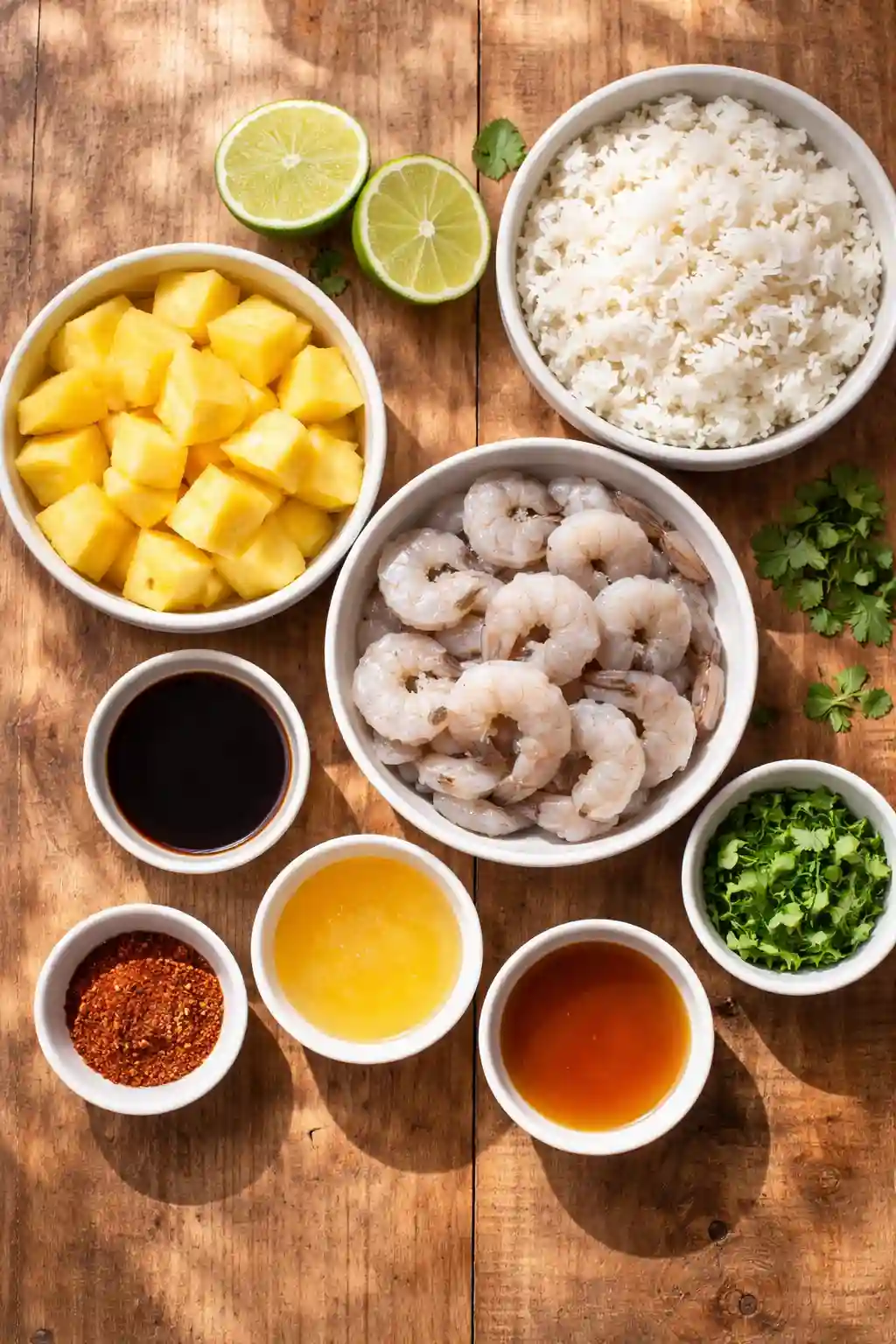
Before we even start cooking, let’s be honest about something. A shrimp rice bowl can go two ways. Either it turns into something fresh, vibrant, and addictive… or it ends up tasting flat and forgettable.
And most of the time, the difference comes down to the ingredients. Not necessarily fancy ones. Just the right combination, used the right way.
Choosing juicy shrimp that actually stay tender
Shrimp is the star here, so if it’s overcooked or low quality, the whole bowl suffers. And yeah, it happens fast.
If you can, go for:
- Fresh shrimp, peeled and deveined
- Medium to large size for better texture
- Or frozen shrimp that’s fully thawed and dried properly
The key isn’t just what you buy, it’s how you handle it. If the shrimp is too wet when it hits the pan, it won’t sear. It’ll steam. And that’s usually where things start going wrong.
Also, quick note, shrimp doesn’t need much. A bit of lime juice, a touch of chili, maybe some pineapple juice… that’s already enough to bring it to life.
Fresh pineapple vs canned: does it really matter?
This is one of those questions people overthink. I did too, at first.
Fresh pineapple gives you:
- Better texture
- Slightly sharper sweetness
- More control over caramelization
But canned pineapple? Honestly, it works just fine.
If you’re short on time, canned is:
- Faster
- More consistent
- Still flavorful once it hits the pan
The real trick isn’t which one you use. It’s letting it sear properly. That’s what brings out that deeper, almost caramel-like flavor that makes this shrimp rice bowl feel a bit more special.
Building flavor with simple but balanced ingredients
What makes this shrimp rice bowl stand out isn’t complexity. It’s balance.
You’re working with a few key elements:
- Soy sauce for saltiness
- Honey for a soft sweetness
- Lime juice and zest for brightness
- Chili powder for a subtle kick
- Fresh cilantro for that clean finish
Individually, none of these are surprising. But together, they create layers. And that’s what most simple rice bowls are missing.
And maybe this is just personal preference, but I’ve noticed something. When a recipe relies too much on heavy sauces, it kind of hides everything else. Here, you actually taste each ingredient.
The base: why rice choice changes everything
Let’s talk about the part people often ignore. The rice.
Because yeah, technically you could use any rice. But it won’t feel the same.
Jasmine rice works best because:
- It’s light and slightly fragrant
- It doesn’t overpower the shrimp
- It absorbs the sauce really well
And adding a bit of cilantro at the end? Small detail, big difference.
It makes the whole bowl feel fresher. Almost like it ties everything together without you really noticing why.
How to Make a Shrimp Rice Bowl (Step-by-Step)
Alright, this is where things usually go wrong… or really right.
Because making a shrimp rice bowl sounds simple. And it is. But there’s a small difference between “throwing ingredients together” and actually building something that tastes balanced and intentional.
Let’s go step by step, without overcomplicating it.
Step 1: Start with the rice (don’t rush this part)
If your rice is off, the whole shrimp rice bowl feels off. It’s the base, so it matters more than people think.
- Cook jasmine rice according to package instructions
- Add a pinch of salt while cooking
- Once done, fluff it and mix in fresh cilantro
That last step? Easy to skip, but it makes the bowl feel fresher instantly.
And if you’re thinking of using leftover rice, that works too. Just make sure it’s not dry. A splash of water or broth when reheating helps bring it back.
Step 2: Season the shrimp properly
Now the shrimp. This is where flavor starts building.
In a bowl, mix:
- Shrimp
- Lime juice
- Pineapple juice
- Chili powder
- A bit of salt
Let it sit for a few minutes. Not too long, just enough to absorb some flavor.
And here’s something people don’t always realize. You don’t need a long marinade. Shrimp is delicate. Too much time and the texture starts changing in a weird way.
Step 3: Cook the shrimp quickly (and don’t overthink it)
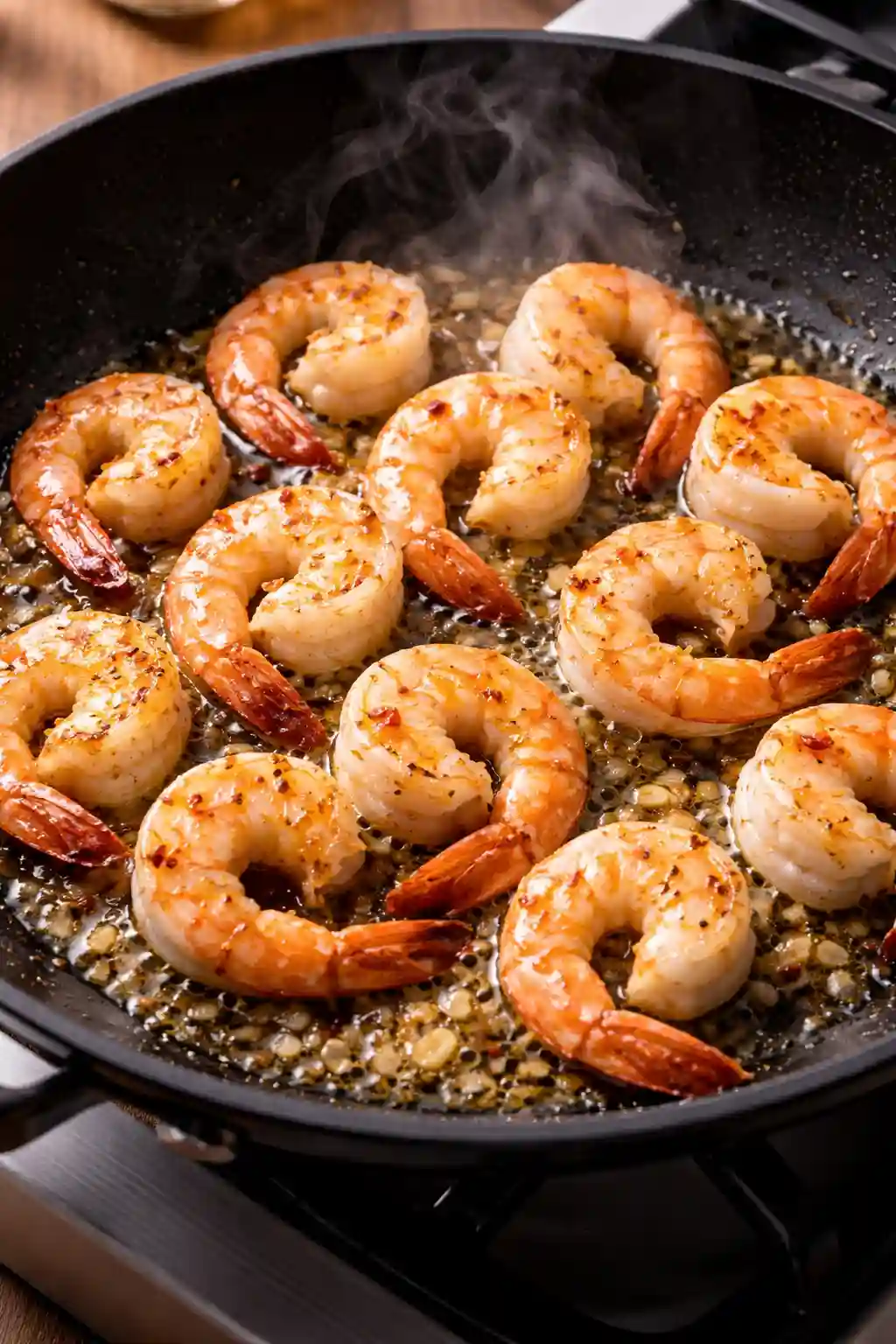
Heat a pan over medium-high heat and add a bit of oil.
Place the shrimp in the pan and… don’t touch them immediately.
Let them sear for about a minute or so, then flip.
What you’re looking for:
- Pink color
- Opaque texture
- Slight curl into a “C” shape
That’s it. Once they’re done, take them out right away.
If you leave them too long, even by a minute, they go from juicy to rubbery. And yeah, it’s frustrating, but once you get the timing, it becomes second nature.
Step 4: Caramelize the pineapple for real flavor
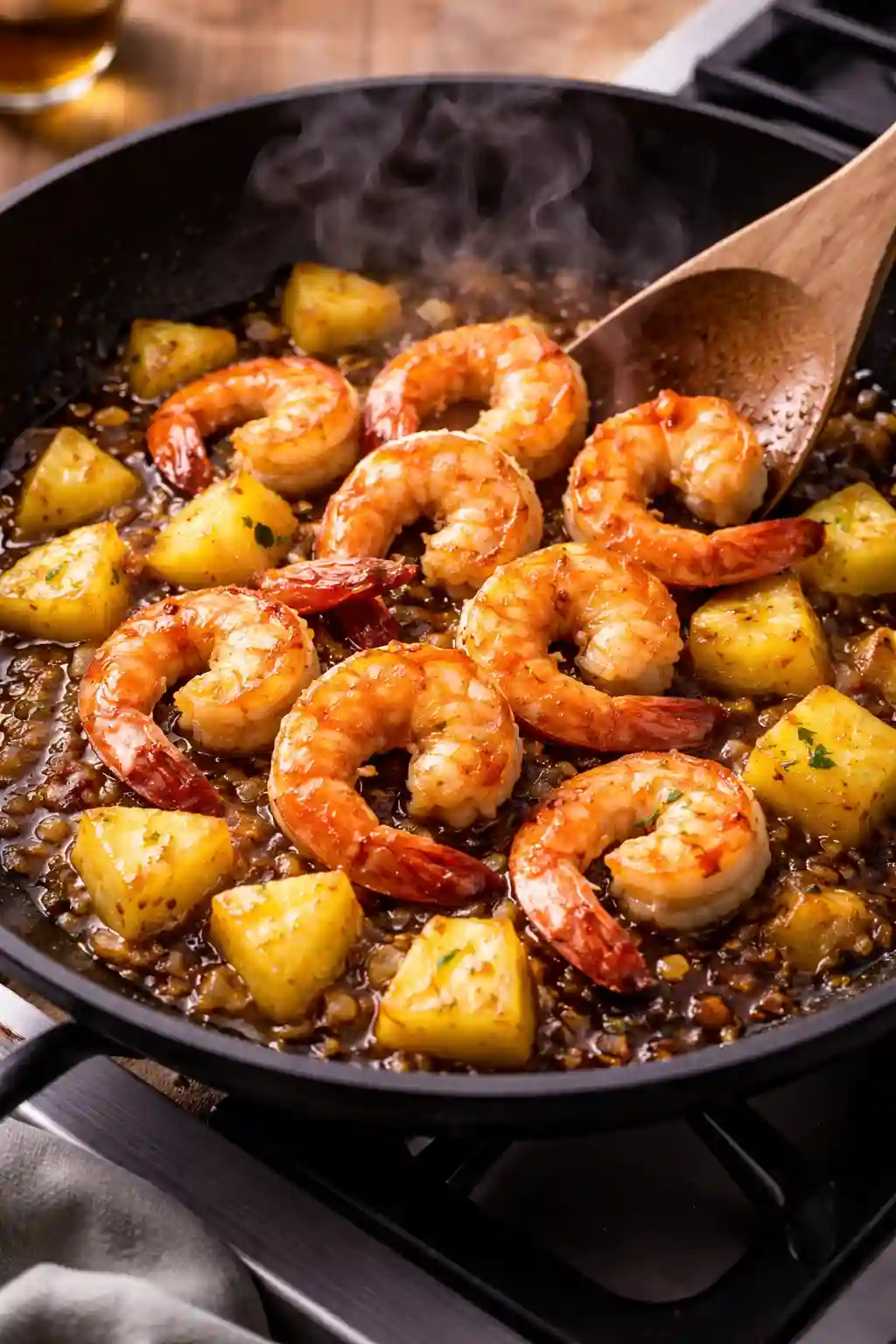
Same pan, lower heat slightly, add a bit more oil if needed.
Add your pineapple chunks and let them sit.
Don’t stir too much. Let them brown.
This is where the flavor changes. The sugars in the pineapple start to caramelize, and suddenly it’s not just sweet… it’s deeper, richer.
It’s one of those small steps that makes a big difference in the final shrimp rice bowl.
Step 5: Build the sauce and bring everything together
Now add your sauce ingredients:
- Pineapple juice
- Soy sauce
- Honey
- Lime juice and zest
- Chili powder
- Cilantro
Let it simmer for a couple of minutes.
Then add the shrimp back in. Toss everything together briefly. Not too long, just enough to coat.
At this point, it already smells like something you’d order at a restaurant. Maybe better.
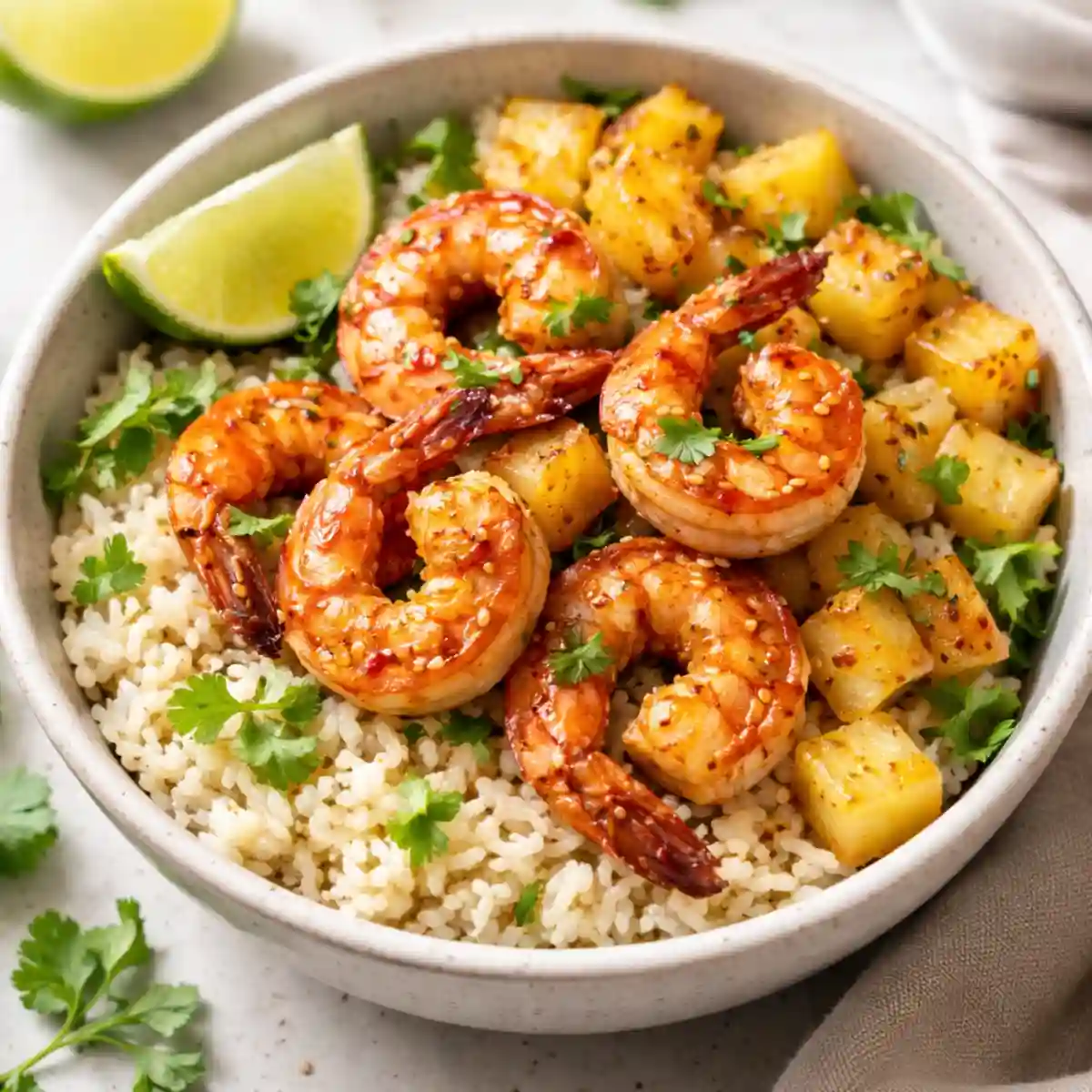
Step 6: Assemble your shrimp rice bowl
Now the fun part.
- Add rice to your bowl
- Top with shrimp and pineapple
- Spoon some extra sauce over everything
And that’s it.
Simple, but not basic.

Shrimp Rice Bowl
Ingredients
Method
- Cook the jasmine rice according to package instructions in lightly salted water. Fluff the rice once cooked and mix in the minced cilantro. Set aside.
- In a bowl, combine the shrimp with lime juice, pineapple juice, chili powder, and salt. Let it sit while you prepare the rest.
- In a separate bowl or measuring cup, whisk together the pineapple juice, soy sauce, honey, lime zest, lime juice, chili powder, and cilantro to make the sauce.
- Heat a skillet over medium to medium-high heat and add a little oil.
- Add the shrimp to the hot skillet without the marinade. Cook until pink and opaque on both sides, then remove from the skillet and set aside.
- Reduce the heat to medium. Add a little more oil, then add the pineapple chunks. Sear until lightly browned.
- Pour the sauce into the skillet with the pineapple and let it simmer for 2 to 3 minutes.
- Return the shrimp to the skillet and toss briefly to coat in the sauce.
- Divide the cilantro rice between bowls, then top with the shrimp and pineapple mixture. Serve immediately.
Notes
| Nutrient | Amount |
| Calories | 480 to 520 kcal |
| Protein | 20 to 25 g |
| Carbohydrates | 60 to 70 g |
| Fat | 8 to 12 g |
| Saturated Fat | 1 to 2 g |
| Fiber | 3 to 5 g |
| Sugar | 18 to 25 g |
| Sodium | 900 to 1200 mg |
- Use frozen shrimp if needed, but thaw completely and pat dry before cooking.
- Do not overcook the shrimp or it may become rubbery.
- For a gluten-free version, use tamari or gluten-free soy sauce.
- For extra freshness, top with more lime juice and cilantro before serving.
The Secret to Juicy Shrimp in Any Shrimp Rice Bowl
Let’s be honest for a second. A shrimp rice bowl can look amazing… but if the shrimp is overcooked, it ruins everything.
And yeah, it happens easily. Probably more often than people admit.
I’ve done it too. You leave the shrimp in the pan just a little longer “to be safe”… and suddenly it turns chewy, dry, almost rubbery. At that point, no sauce can really fix it.
So if there’s one thing that separates a good shrimp rice bowl from a great one, it’s this.
Don’t cook shrimp by time, cook it by look
Most recipes will tell you “cook shrimp for 2 to 3 minutes.” Sounds simple, right?
The problem is, shrimp size changes everything. Small shrimp cook faster. Large shrimp take a bit longer. So relying on time alone is risky.
Instead, look for these signs:
- The color turns from gray to pink
- The flesh becomes opaque
- The shape curls into a loose “C”
If it curls too tightly into an “O”, it’s already overcooked.
This might seem like a small detail, but once you start paying attention to it, your shrimp rice bowl instantly improves.
Dry shrimp = better sear (and better flavor)
Here’s something that’s easy to overlook.
If your shrimp is wet when it hits the pan, it won’t sear. It’ll steam. And steamed shrimp… well, it’s not bad, but it’s not what you want here.
Before cooking:
- Pat the shrimp dry with paper towels
- Avoid adding marinade directly into the pan
- Use medium-high heat so it sears quickly
That light golden sear on the outside? That’s flavor. That’s what gives your shrimp rice bowl that slightly charred, restaurant-style finish.
High heat, short cooking time
Shrimp doesn’t need patience. It needs precision.
Cook it:
- On medium-high heat
- Without overcrowding the pan
- For a very short time
If you add too many shrimp at once, the temperature drops. Then instead of searing, everything starts releasing moisture. That’s where texture gets weird.
It’s better to cook in batches than rush it.
Remove shrimp early, not late
This one feels counterintuitive.
You might think, “I’ll leave it a bit longer just to be sure.” But shrimp continues to cook even after you remove it from the pan.
So the trick is:
- Take it off just as it turns opaque
- Let residual heat finish the job
It’s a small adjustment, but it makes a big difference in keeping the shrimp juicy.
Why this matters more than the sauce
You can have the perfect sauce. Balanced, flavorful, slightly sweet, slightly tangy. But if the shrimp texture is off, the whole shrimp rice bowl feels disappointing.
On the other hand, perfectly cooked shrimp can carry a simple bowl.
And maybe this is just me, but once you get this right, you stop worrying about recipes so much. You start trusting your instinct more.
Which is usually when cooking becomes a lot more enjoyable.
Healthy Shrimp Rice Bowl: A Balanced and Protein-Rich Meal
There’s this moment when you finish a meal and immediately regret it. Too heavy. Too greasy. You tell yourself “next time I’ll eat something lighter”… and then repeat the same thing the next day.
That’s kind of where a shrimp rice bowl fits in differently.
It doesn’t feel like a “diet meal.” It just happens to be balanced in a way that makes you feel good after eating. Not stuffed, not sluggish. Just… satisfied.
Why this shrimp rice bowl is actually a balanced meal
Let’s break it down in a simple way. A good meal isn’t just about calories. It’s about how everything works together.
This shrimp rice bowl gives you:
- Protein from juicy shrimp
- Carbohydrates from rice for energy
- Natural sugars from pineapple
- Fresh herbs and citrus for digestion and flavor
It’s not extreme in any direction. And maybe that’s the point.
A lot of “healthy bowl recipes” go too far. Either too low-carb, too restrictive, or just not enjoyable. Here, you’re getting a balanced meal without overthinking it.
High protein without feeling heavy
Shrimp is one of those underrated protein sources.
- It’s lean
- It cooks fast
- It doesn’t feel dense like red meat
So when you build a shrimp rice bowl around it, you get a protein-rich meal that doesn’t weigh you down.
And honestly, that matters more than people realize. Because the goal isn’t just to eat healthy. It’s to eat in a way you can actually maintain.
Clean eating that still feels satisfying
If you’re into clean eating meals, you probably already know the struggle. Food can start to feel repetitive… or worse, boring.
This is where this shrimp rice bowl stands out.
You’re using:
- Fresh pineapple instead of processed sweetness
- Lime juice instead of heavy creamy sauces
- Simple ingredients that actually taste like themselves
So even though it fits into a “healthy shrimp rice bowl” category, it doesn’t feel restrictive.
It feels like real food.
It works for both lunch and dinner
Some meals are clearly “dinner only.” Others feel like meal prep lunches that you force yourself to eat.
This one sits right in the middle.
- Light enough for a shrimp lunch bowl
- Filling enough for a quick shrimp rice bowl dinner
- Easy to portion for meal prep ideas
And maybe this is just me, but meals that work at any time of day tend to get used more often. You don’t have to think twice about it.
Why balanced meals are easier to stick with
At the end of the day, consistency matters more than perfection.
A shrimp rice bowl like this makes it easier because:
- You’re not cutting out entire food groups
- You’re not relying on extreme rules
- You actually enjoy eating it
And when you enjoy your food, you’re way more likely to keep coming back to it.
Which, if we’re being honest, is probably the real goal.
Tropical Shrimp Rice Bowl Variations You Need to Try
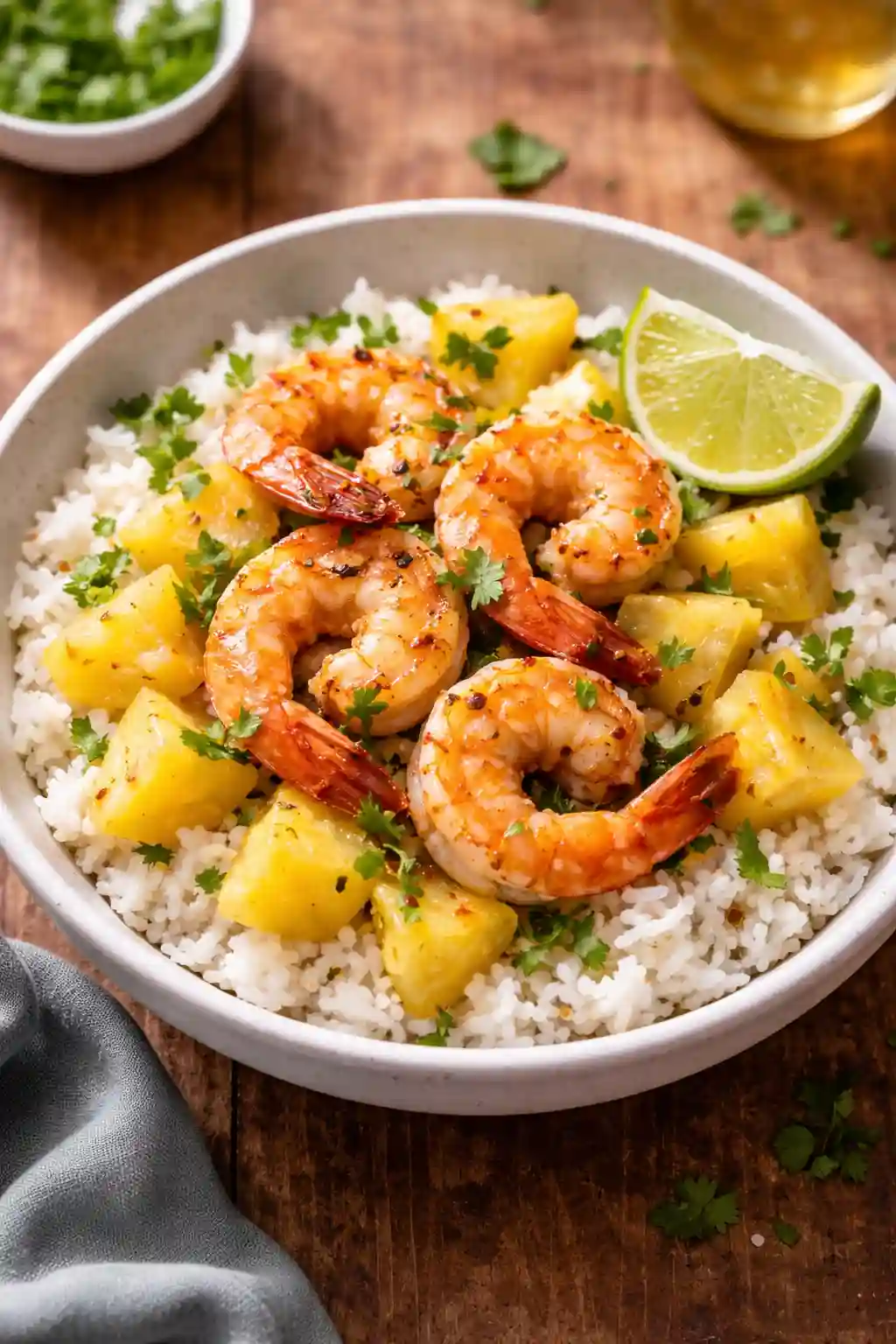
Here’s the thing… once you get the base shrimp rice bowl right, it almost feels like a waste to keep making it the exact same way every time.
Not because it gets boring, but because it’s so easy to tweak.
And honestly, this is where the recipe becomes more than just a one-time dinner. It turns into something you can adjust depending on your mood, what you have in your fridge, or even how “healthy” you feel that day.
Shrimp rice bowl with mango salsa for a fresher twist
If you like the tropical vibe but want something even lighter, mango salsa is a game changer.
Instead of relying only on cooked pineapple, you add:
- Fresh diced mango
- Red onion
- Lime juice
- A bit of cilantro
It brings a fresh, slightly tangy sweetness that feels brighter than the cooked version.
And maybe it’s just me, but this version feels more like a lunch bowl. Something you’d eat when you want to feel refreshed, not full.
Tropical shrimp bowl with coconut rice for extra comfort
Now, if you want the opposite feeling… something a bit richer, more comforting, coconut rice is the move.
You simply replace regular rice with:
- Rice cooked in coconut milk
- A pinch of salt to balance the sweetness
That’s it.
But the result? Completely different experience.
The creaminess of the coconut pairs with the shrimp and pineapple in a way that feels almost indulgent. Not heavy, just… deeper.
This version leans more toward a dinner you actually sit down and enjoy slowly.
Healthy shrimp rice bowl with pineapple and extra greens
If your goal is to keep things lighter, you can push the “healthy shrimp rice bowl” angle a bit further.
Add:
- Avocado slices
- Cucumber
- Shredded cabbage or spinach
Now your bowl becomes:
- More filling
- More colorful
- More nutrient-dense
And the best part is, it doesn’t feel like you’re “adding vegetables just to be healthy.” It actually improves the texture and freshness.
Shrimp bowl recipe for meal prep (without losing flavor)
Meal prep can be tricky with shrimp. That’s probably what you’re thinking right now.
Because yeah, shrimp can dry out if you’re not careful.
But here’s how to make it work:
- Store shrimp separately from rice if possible
- Keep sauce slightly extra to rehydrate when reheating
- Add fresh elements like cilantro or lime after reheating
This way, your shrimp meal prep bowl still tastes fresh, not like leftovers.
Why these variations actually matter
You could stick to one version and be fine.
But having options changes how often you use a recipe.
- Feeling light? Go mango salsa
- Want comfort? Coconut rice
- Eating clean? Add greens
- Planning ahead? Meal prep version
And suddenly, this shrimp rice bowl isn’t just one recipe anymore. It’s like… a base you keep coming back to, just slightly different each time.
Shrimp Rice Bowl Meal Prep: Save Time Without Losing Flavor
Let’s talk about real life for a second.
You might love this shrimp rice bowl, but making it every single day? Not realistic. That’s where meal prep comes in. But also… that’s where things can go wrong.
Because shrimp isn’t chicken. You can’t just cook a big batch, throw it in containers, and expect it to taste the same three days later.
Or at least… not without a few adjustments.
How to meal prep a shrimp rice bowl the right way
The goal isn’t just to save time. It’s to keep the texture and flavor as close as possible to fresh.
Here’s what actually works:
- Cook the rice in advance and portion it out
- Cook the shrimp fresh or slightly undercook it for reheating
- Store sauce separately if possible
- Keep fresh toppings for later (like cilantro or lime)
This way, when you reheat your shrimp rice bowl, it doesn’t feel like leftovers. It still has some life to it.
And yeah, it takes a tiny bit more effort upfront, but the difference is noticeable.
The biggest mistake people make with shrimp meal prep
Let’s be honest… most people overcook the shrimp the first time.
Then they reheat it.
Which means it gets cooked twice.
And that’s exactly how you end up with that dry, rubbery texture everyone complains about.
If you want to avoid that:
- Slightly undercook the shrimp during the first cook
- Reheat it quickly, not slowly
- Avoid microwaving it too long
Or even better, reheat everything except the shrimp, then add it at the end.
It sounds like a small detail, but it completely changes the final result.
How to reheat your shrimp rice bowl without ruining it
Reheating is where most meal prep meals fall apart.
For this shrimp rice bowl, the best approach is simple:
- Reheat rice with a splash of water or broth
- Warm the sauce separately if you stored it
- Add shrimp last, just until heated through
Avoid blasting everything in the microwave at once. That’s the fastest way to lose texture and flavor.
And maybe this is just me, but once you reheat it properly, it almost feels like you just cooked it again. Not exactly the same… but close enough to enjoy.
How long does a shrimp rice bowl last in the fridge?
This is one of those questions people don’t always ask… but should.
In general:
- 2 to 3 days in the fridge is ideal
- Store in airtight containers
- Let everything cool before storing
After that, the texture starts to change. Not unsafe, but definitely less enjoyable.
And since shrimp cooks so fast anyway, sometimes it’s worth just prepping the components and cooking the shrimp fresh.
Why this works for busy weeks
A shrimp rice bowl like this fits perfectly into meal prep ideas because it’s flexible.
- You can prep everything ahead
- You can adjust portions easily
- You can switch variations during the week
So instead of eating the exact same meal five times, you’re slightly changing it each day.
And that alone makes meal prep feel a lot less repetitive.
Common Shrimp Rice Bowl Mistakes (And How to Avoid Them)
Let’s be real… most shrimp rice bowl recipes don’t fail because of the ingredients. They fail because of small mistakes that don’t seem important at the moment.
And the frustrating part? You only notice them after everything is done.
You sit down, take a bite, and something feels off. Not terrible. Just… not as good as it could’ve been.
So let’s fix that before it happens.
Overcooking the shrimp without realizing it
This is the most common mistake. By far.
And the tricky part is, it doesn’t look wrong while it’s happening. You just leave the shrimp in the pan a little longer, thinking “just to be safe.”
Then you taste it… and it’s slightly rubbery.
To avoid that:
- Remove shrimp as soon as it turns opaque
- Don’t wait for a tight curl shape
- Remember it keeps cooking after you take it off heat
If your shrimp rice bowl feels “almost good but not quite,” this is usually why.
Not getting a proper sear on the shrimp
A lot of people skip this without realizing it.
If your pan isn’t hot enough, or if your shrimp is too wet, you won’t get that light golden sear. Instead, the shrimp releases water and steams.
The result?
- Less flavor
- Softer texture
- A flatter overall bowl
Fixing it is simple:
- Pat shrimp dry before cooking
- Use medium-high heat
- Don’t overcrowd the pan
It’s a small change, but it gives your shrimp rice bowl that extra depth.
Skipping the pineapple caramelization step
It might feel like an optional step. It’s not.
Raw or just warmed pineapple doesn’t bring the same flavor. When you let it sear properly, the sugars caramelize and create something much richer.
If you skip this:
- The bowl tastes more one-dimensional
- The sweetness feels less integrated
So let it sit in the pan. Don’t rush it. That slight browning is where the magic happens.
Using too much sauce or not balancing it
More sauce doesn’t always mean more flavor.
In fact, too much sauce can:
- Overpower the shrimp
- Make the rice soggy
- Kill the balance of the dish
What you want is coating, not drowning.
A good shrimp rice bowl should taste layered, not heavy.
Ignoring the rice quality
This one gets overlooked a lot.
People focus on shrimp and toppings, but if the rice is:
- Overcooked
- Dry
- Or bland
It pulls everything down.
Make sure your rice is:
- Fluffy, not sticky
- Lightly seasoned
- Fresh or properly reheated
Because at the end of the day, it’s still a rice bowl.
Why fixing these mistakes changes everything
None of these are complicated.
But together, they make a huge difference between:
- A shrimp rice bowl that’s “fine”
- And one you actually crave again
And maybe that’s the goal.
Not just to cook something edible… but something you genuinely look forward to making again.
Shrimp Rice Bowl vs Other Popular Rice Bowls
At some point, you’ve probably wondered… what actually makes a shrimp rice bowl different from all those other bowls out there?
Because let’s be honest, everything is a “bowl” now. Sushi bowls, teriyaki bowls, Hawaiian bowls… it can all start to feel a bit repetitive.
But once you look a little closer, the differences are actually pretty clear.
Shrimp rice bowl vs sushi bowl
A shrimp sushi bowl usually leans more toward:
- Raw or lightly cooked fish
- Vinegared rice
- Clean, minimal flavors
It’s lighter, more delicate, and honestly… a bit more specific in taste.
A shrimp rice bowl like this one is different:
- Fully cooked, warm ingredients
- Bolder flavor combinations
- More comfort-focused
It feels less “precise” and more satisfying when you’re actually hungry.
Shrimp rice bowl vs teriyaki shrimp bowl
Teriyaki shrimp bowls are great, but they tend to go heavy on one thing.
Sauce.
- Thick, sweet glaze
- Strong soy-based flavor
- Less contrast overall
And yeah, it tastes good… at first.
But after a few bites, it can feel repetitive.
This shrimp rice bowl, especially the tropical version, balances things differently:
- Sweet from pineapple
- Acid from lime
- Light sauce instead of heavy coating
So instead of one dominant flavor, you get variation in every bite.
Shrimp rice bowl vs Hawaiian-style bowls
Hawaiian bowls, like poke-inspired ones, often focus on:
- Fresh, raw fish
- Cold ingredients
- Simple seasoning
They’re refreshing, no doubt.
But this shrimp rice bowl sits somewhere else entirely.
It’s:
- Warm
- Slightly caramelized
- More comforting
You still get that tropical vibe, but with a cooked, deeper flavor profile.
Why this shrimp rice bowl stands out
If you had to sum it up, here’s the difference.
Other bowls tend to focus on one direction:
- Light and fresh
- Or rich and saucy
This shrimp rice bowl sits in the middle.
- Fresh, but still warm
- Flavorful, but not heavy
- Simple, but not boring
And maybe that’s why it works so well for everyday meals.
You’re not committing to something too specific. You’re just making something that hits the right balance.
So which one should you choose?
It depends on what you’re craving.
- Want something light and clean → sushi bowl
- Want something rich and sweet → teriyaki bowl
- Want something fresh but satisfying → shrimp rice bowl
And if you’re not sure… that’s usually a sign this one is the safest bet.
Because it covers more ground without trying too hard.
Shrimp Rice Bowl Nutrition Information
If you’re wondering whether this shrimp rice bowl is actually healthy, the answer is yes… but it also depends on how you build it.
The version here is designed to be a balanced, protein-rich meal that gives you energy without feeling too heavy. You’re getting lean protein from shrimp, carbs from rice, and natural sugars from pineapple, all working together in a pretty clean way.
Here’s an estimated breakdown per serving.
Nutritional Breakdown (Per Serving)
| Nutrient | Amount (Approx.) |
| Calories | 480–520 kcal |
| Protein | 20–25 g |
| Carbohydrates | 60–70 g |
| Fat | 8–12 g |
| Saturated Fat | 1–2 g |
| Fiber | 3–5 g |
| Sugar | 18–25 g |
| Sodium | 900–1200 mg |
For accurate nutrition data on shrimp and ingredients used in this shrimp rice bowl, you can refer to the USDA FoodData Central, a trusted source for detailed food composition information.
What these numbers actually mean
At first glance, you might think the carbs are a bit high. And yeah, rice is the main contributor here. But it’s also what makes this shrimp rice bowl a solid energy-boosting meal, especially for lunch or post-workout.
The protein level is where things get interesting. Shrimp gives you a good amount of lean protein without adding much fat, which is why this works well as a clean eating meal.
The sugar mostly comes from pineapple and a bit of honey. It’s not empty sugar, but still something to keep in mind if you’re adjusting for specific diets.
How to make this shrimp rice bowl even healthier
If you want to tweak the nutrition without losing flavor, here are a few simple adjustments:
- Swap white rice for brown rice for more fiber
- Use less honey or skip it entirely
- Add more vegetables like cucumber, cabbage, or spinach
- Use low-sodium soy sauce
- Control portion size of rice vs shrimp
And maybe this is the important part… you don’t have to optimize everything at once.
Sometimes, just making a shrimp rice bowl at home instead of ordering takeout already puts you in a much better place nutritionally.
Final Thoughts on This Shrimp Rice Bowl
At this point, you’ve probably realized something… this isn’t just another shrimp rice bowl recipe.
It’s one of those meals that quietly solves a problem. You want something quick, but not boring. Something healthy, but not restrictive. Something simple, but still worth looking forward to.
And somehow, this shrimp rice bowl lands right in that space.
It’s flexible enough to adapt to your mood. Light enough for lunch, satisfying enough for dinner. You can keep it classic with pineapple, switch it up with mango salsa, or make it richer with coconut rice. It doesn’t lock you into one version.
But more than anything, it’s reliable.
Once you get the shrimp right and understand how the flavors come together, it stops feeling like a “recipe” you have to follow. It becomes something you just know how to make. Something you can throw together without overthinking.
And maybe that’s the real win here.
Not just cooking something good once… but having a shrimp rice bowl you’ll actually come back to, again and again, without getting tired of it.
More Bowl & Easy Dinner Recipes You’ll Love
- Mongolian Ground Beef Noodles – Savory, saucy, and perfect for quick dinners.
- Ground Turkey and Peppers – A colorful, protein-packed meal ready in minutes.
- Salmon Sushi Bake – A comforting, shareable twist on sushi flavors.
- Chicken and Wild Rice Soup – Hearty, nourishing, and perfect for cozy nights.
Shrimp Rice Bowl FAQs
1. Can I use frozen shrimp for a shrimp rice bowl?
Yes, frozen shrimp works perfectly for a shrimp rice bowl. In fact, most home cooks use it. Just make sure to thaw it completely in the refrigerator and pat it dry before cooking. If the shrimp is too wet, it won’t sear properly and will lose that slightly crispy texture that adds flavor.
2. What rice is best for a shrimp rice bowl recipe?
Jasmine rice is the most popular choice for a shrimp rice bowl recipe because it’s light, fluffy, and slightly fragrant. If you want to switch things up, you can use brown rice for a healthier shrimp rice bowl, coconut rice for a tropical flavor, or even cauliflower rice for a low-carb option. Each variation changes the overall feel of the dish.
3. How do I keep shrimp juicy in a shrimp rice bowl?
To keep shrimp juicy, cook it quickly over medium-high heat and remove it as soon as it turns opaque. Shrimp cooks very fast, usually within 2 minutes. Overcooking even slightly can make it rubbery. Also, remember that shrimp continues to cook after being removed from the pan.
4. Can I make a shrimp rice bowl for meal prep?
Yes, a shrimp rice bowl works well for meal prep if handled properly. For best results, store the shrimp separately from the rice, reheat the rice with a small amount of liquid, and add fresh toppings like cilantro or lime after reheating. This helps maintain both flavor and texture.
5. What can I add to a shrimp rice bowl for more flavor?
You can easily enhance your shrimp rice bowl by adding ingredients like mango salsa, avocado, extra lime juice, chili flakes, or fresh herbs. These small additions bring contrast and make the bowl more dynamic without complicating the recipe.
6. Is a shrimp rice bowl a healthy meal?
Yes, a shrimp rice bowl can be a healthy and balanced meal. It provides lean protein from shrimp, carbohydrates for energy from rice, and fresh ingredients like pineapple, lime, and herbs. It fits well into clean eating meals and works for both lunch and dinner.