Matcha Milk Bread Turtles started as a simple experiment that quickly turned into one of my favorite baking creations. At first, I wasn’t even sure they would work. Shaping soft green dough into tiny turtles sounded adorable in theory, but I remember thinking, “What if they just turn into blobs?”
But once I understood how the tangzhong makes the dough incredibly soft and how the chocolate Dutch crunch forms that beautiful cracked shell, everything changed. These aren’t just cute turtle buns. They’re fluffy, lightly sweet matcha milk bread with a crisp cocoa topping that adds texture and character.
In this guide, I’ll show you exactly how to make Matcha Milk Bread Turtles step by step, from shaping the turtle form to achieving that perfect shell finish. Even if your first one isn’t perfect, I promise they’ll taste incredible.
Table of Contents
Table of Contents
What Are Matcha Milk Bread Turtles?
Matcha Milk Bread Turtles are soft, fluffy Japanese style milk bread rolls flavored with green tea powder and shaped into tiny turtles, then topped with a chocolate crackle shell. At first glance, they look playful and almost too cute to eat. But underneath that adorable shape is a deeply tender crumb created using the tangzhong method, which keeps the bread moist and pillowy.
When people hear the name Matcha Milk Bread Turtles, they usually imagine novelty food. Something decorative. Maybe something dry or overly sweet. I thought the same before I made them the first time. But these are not just turtle buns for display. They are structured, enriched milk bread rolls with real depth of flavor. The matcha adds a subtle earthiness that balances the sweetness, and the chocolate Dutch crunch topping gives contrast and texture.
The Matcha Milk Bread Turtle Shape Explained
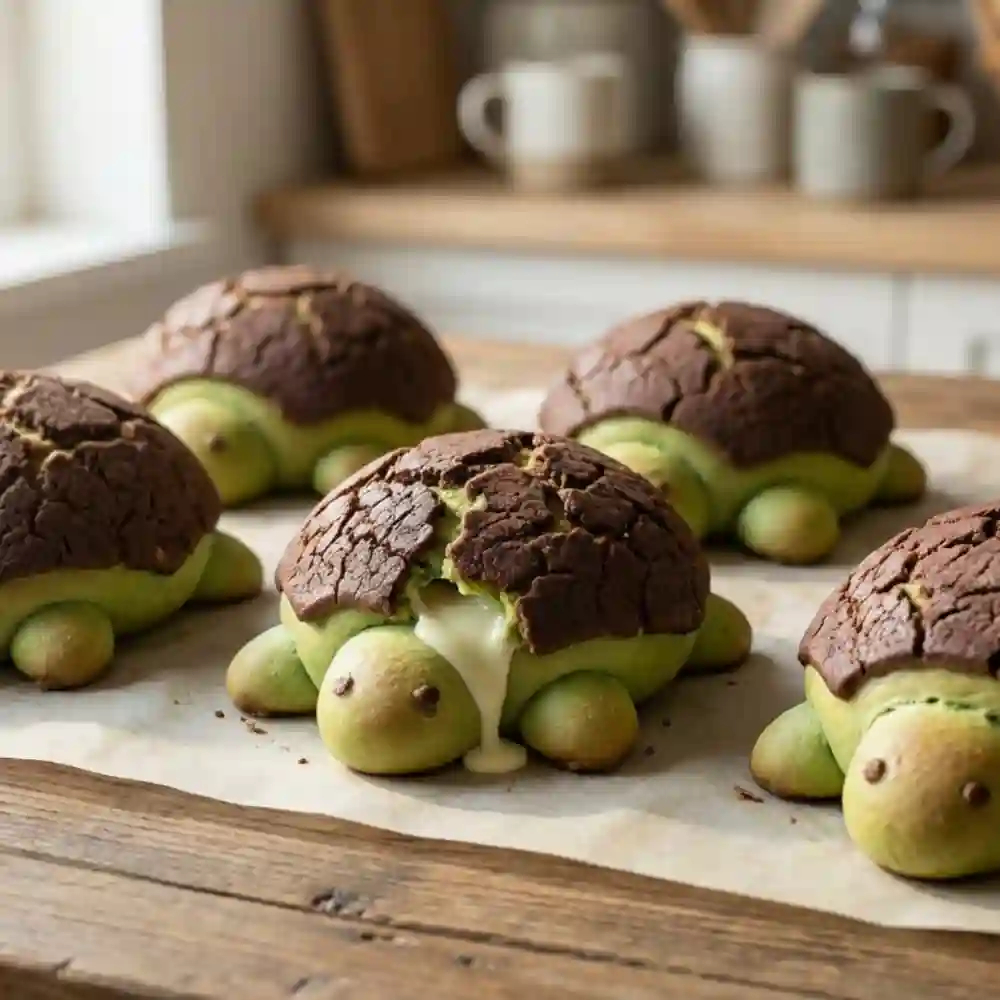
The defining feature of Matcha Milk Bread Turtles is the shaping technique. The main dough ball becomes the turtle’s body. Smaller portions form the head and feet. Black sesame seeds become the eyes. It sounds simple, but the proportion matters more than you’d expect.
Too large a head and it looks awkward. Too small and the turtle loses character. The beauty of this turtle shaped bread recipe is that it turns traditional Japanese milk bread into something expressive. It feels almost sculptural. And yet, the shaping does not compromise the softness of the bread because everything is sealed from underneath.
This is where many bakers hesitate. “Will shaping ruin the rise?” Not if the dough is properly kneaded and proofed. The elasticity from the enriched dough actually supports the structure.
Why They Are Different From Regular Matcha Bread
Regular matcha milk bread focuses purely on flavor and texture. Matcha Milk Bread Turtles add visual storytelling. The chocolate crackle topping acts like a turtle shell, creating a patterned crust similar to conchas or shell bread, but with a cocoa twist.
What makes them special is the contrast:
- Soft interior from the tangzhong technique
- Light sweetness from enriched dough
- Slight bitterness from quality matcha
- Crisp, crackled chocolate shell
It is that combination that transforms them from simple matcha pastry into memorable turtle themed food.
And maybe that’s the real reason they stand out. They don’t just taste good. They make people smile before the first bite.
Ingredients for Perfect Matcha Milk Bread Turtles
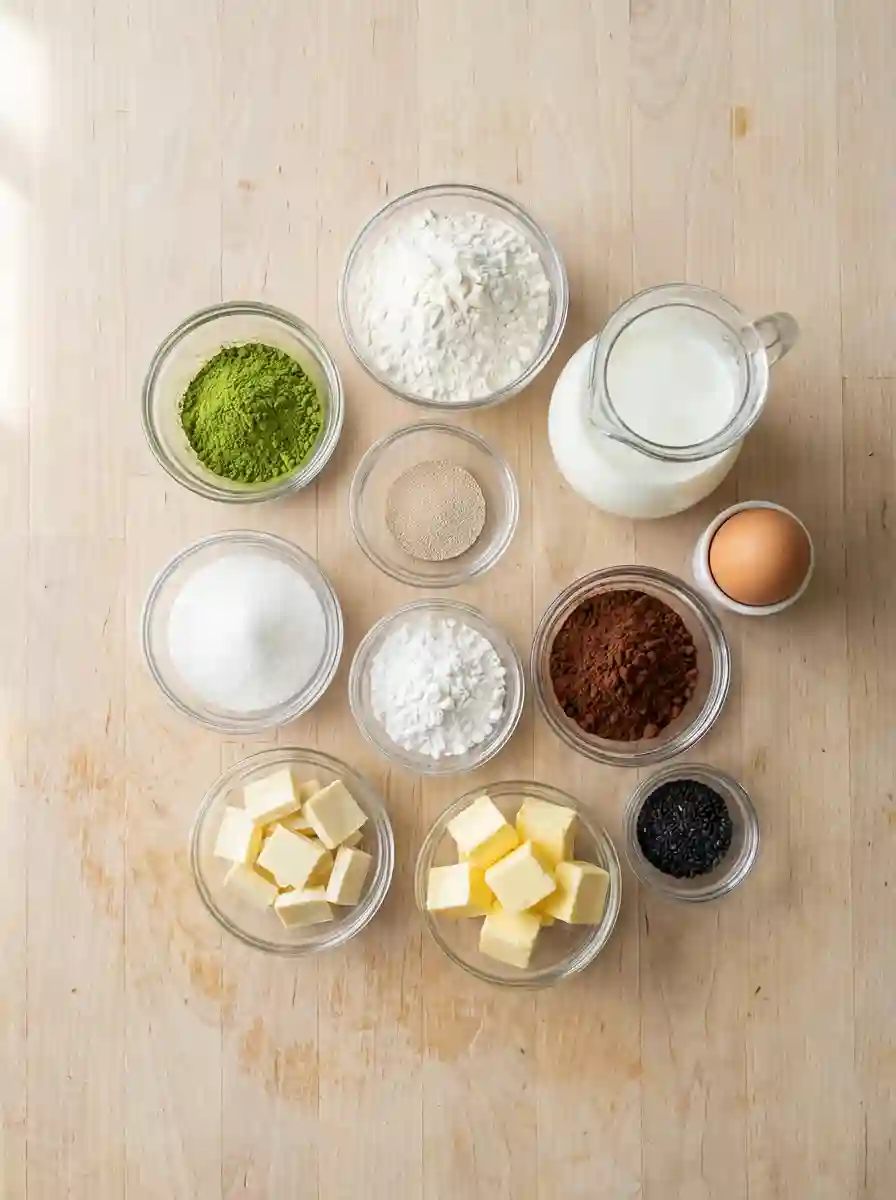
If you want your Matcha Milk Bread Turtles to look cute and taste bakery level soft, the ingredients matter more than most people think. I learned this the hard way. The first time, I treated it like regular bread dough. It worked, technically. But it did not have that cloud like texture that makes you pause mid bite.
Matcha Milk Bread Turtles rely on an enriched dough. That means milk, egg, butter, and sugar are not optional extras. They are structural. They affect softness, flavor balance, and even how well your turtle shape holds during proofing and baking.
Let’s break it down properly so nothing feels random.
The Core Dough Ingredients
Bread flour is essential here. All purpose flour can work, but bread flour gives stronger gluten development. That elasticity is what allows the Matcha Milk Bread Turtles to stretch, rise, and still support the head and feet without collapsing.
Matcha powder is more than coloring. Use culinary grade matcha for baking. If you use ceremonial grade, the flavor can become grassy and bitter once heated. On the other hand, low quality matcha can turn dull green and taste flat. The sweet spot is vibrant green with a smooth aroma.
Milk, egg, and butter create the enriched structure. They:
- Tenderize the crumb
- Add subtle sweetness
- Help the rolls brown evenly
- Keep the bread soft longer
Instant yeast gives consistent rise. If using active dry yeast, bloom it properly in warm liquid first.
And then there is tangzhong. That simple cooked flour paste changes everything. It locks moisture into the dough so your Matcha Milk Bread Turtles stay soft even the next day.
The Chocolate Filling and Shell Components
Inside each turtle, chopped white chocolate melts gently into the matcha bread. It adds creamy sweetness that balances the earthy green tea notes. You could use dark chocolate, but white chocolate creates a softer contrast.
The shell topping is what transforms these into something closer to turtle conchas or shell bread. Rice flour is key here. It creates the crackled texture once baked. Cocoa powder adds color and deepens the chocolate profile. A little sugar sprinkled on top encourages that signature crack pattern.
Black sesame seeds for the eyes may seem decorative, but they also add a subtle nutty note. Tiny detail, but it matters.
When you line up all these ingredients together, you start to see the logic behind Matcha Milk Bread Turtles. Nothing is random. Every element supports either texture, flavor balance, or visual impact.
Next, we’ll talk about the technique that truly makes these turtles impossibly soft.
Tangzhong Method for Ultra Soft Matcha Milk Bread Turtles
If there is one reason Matcha Milk Bread Turtles turn out impossibly soft instead of just “nice bread,” it is the tangzhong method. I’ll be honest, the first time I heard about tangzhong, I thought it sounded overly technical. Cook flour and liquid before making dough? Why complicate things?
But once I tested it side by side with regular dough, the difference was obvious. Without tangzhong, the bread was fine. With tangzhong, the Matcha Milk Bread Turtles became lighter, more elastic, and stayed soft the next day. That is not a small upgrade. That is the difference between homemade bread and bakery style texture.
What Tangzhong Actually Does to the Dough
Tangzhong is a simple cooked paste made from flour and liquid. When heated gently, the starches gelatinize and absorb water more effectively. This means your dough can hold more moisture without becoming sticky or unstable.
For Matcha Milk Bread Turtles, this matters because:
- The dough needs to stay soft while supporting the turtle shape
- The head and feet should not dry out faster than the body
- The crumb should feel pillowy, not tight
When you whisk flour, milk, and water over medium low heat, you are looking for a thick paste where streaks appear from the whisk. Not too runny. Not stiff. Just smooth and glossy. If you overcook it, it becomes gluey. If you undercook it, it will not strengthen the dough properly.
How Tangzhong Improves Structure Without Making Bread Heavy
You might wonder if adding a cooked paste makes the dough dense. Surprisingly, it does the opposite. Because the starches hold onto moisture, the gluten network can stretch more evenly during kneading and proofing.
That elasticity is especially important for Matcha Milk Bread Turtles. The shaping process puts slight tension on different parts of the dough. If the structure is weak, the turtles can lose definition. If it is too tight, they may crack in strange places.
Tangzhong creates balance. The dough feels supple and slightly tacky, but not sticky. When properly kneaded, it passes the windowpane test with a smooth, stretchy membrane.
It is one small extra step, but it transforms the entire texture of these rolls. And once you try it, going back to standard milk bread feels like something is missing.
Next, we will move into the shaping technique that brings the Matcha Milk Bread Turtles to life.
How to Shape Matcha Milk Bread Turtles Step by Step
Shaping is the moment where Matcha Milk Bread Turtles either become adorable or slightly… abstract. Let’s be honest. The first one might not look like a turtle. Mine looked more like a green rock with limbs. But once you understand proportions and tension, the process becomes surprisingly intuitive.
The key is confidence and gentle handling. This dough is soft, elastic, and forgiving thanks to the tangzhong. If you press too aggressively, you deflate the structure. If you are too timid, the seams will not seal properly. The sweet spot is somewhere in between.
Forming the Turtle Body
Start by dividing your dough evenly. Consistency matters because uneven pieces proof at different rates. For uniform Matcha Milk Bread Turtles, weigh the dough portions instead of eyeballing them.
Flatten each main portion into a small round disc. Add the chopped white chocolate to the center. Press it slightly into the dough so it does not shift later. Then gather the edges and seal tightly underneath. The seam must be completely closed or the filling may leak during baking.
Flip the ball seam side down and gently cup it with your hands to create surface tension. This tension is what gives the turtle body a smooth, rounded shell.

Matcha Milk Bread Turtles
Ingredients
Method
- Prepare the Tangzhong
- Whisk flour, water, and milk in a saucepan. Cook over medium low heat until thick and smooth. Let cool completely.
- Make the Dough
- Mix dry ingredients in a stand mixer bowl. Combine milk, vanilla, egg, and cooled tangzhong. Add to dry ingredients and mix. Add butter and knead 7 to 10 minutes until elastic.
- First Rise
- Place dough in a greased bowl. Cover and let rise 1.5 hours until doubled.
- Shape the Matcha Milk Bread Turtles
- Divide dough. Fill main portions with white chocolate and seal. Shape heads and feet using reserved dough. Attach gently underneath. Add sesame seed eyes. Proof 30 minutes.
- Prepare Dutch Crunch
- Mix all topping ingredients until smooth. Let rest while turtles finish rising.
- Bake
- Preheat oven to 350°F. Spread chocolate Dutch crunch on turtle bodies. Sprinkle sugar. Bake 20 minutes until golden.
- Cool
- Cool 10 to 15 minutes before serving.
Notes
| Nutrient | Amount per Serving |
| Calories | 320 to 350 kcal |
| Carbohydrates | 45 g |
| Sugar | 14 g |
| Protein | 7 g |
| Total Fat | 11 g |
| Saturated Fat | 6 g |
| Cholesterol | 45 mg |
| Sodium | 210 mg |
| Fiber | 1.5 g |
| Calcium | 8% DV |
| Iron | 10% DV |
Adding the Head and Feet Without Distorting the Shape
This is where the character appears. Divide reserved dough into smaller pieces for heads and even smaller ones for feet. The ratio matters. A head that is too large overwhelms the body. Feet that are too big look awkward after baking.
Lightly pinch one end of each head piece to create a slight point. Slide that pinched end under the main body and press gently at the connection point. You are not attaching it externally. You are tucking it underneath so it bakes as one structure.
Repeat the same logic for the four feet. Pinch one end, tuck slightly under, and press just enough to secure. This keeps the Matcha Milk Bread Turtles stable during the second rise.
Finally, press two black sesame seeds into each head for eyes. Do not push too deep. Just enough so they stay in place.
At this stage, the turtles might look delicate. That is normal. During the second proof, they will puff slightly and become rounder. The shape softens but should remain clearly defined.
Take a moment here. This is the stage where they start to feel real. Next, we will give them their signature chocolate shell.
Chocolate Dutch Crunch Shell for Matcha Milk Bread Turtles
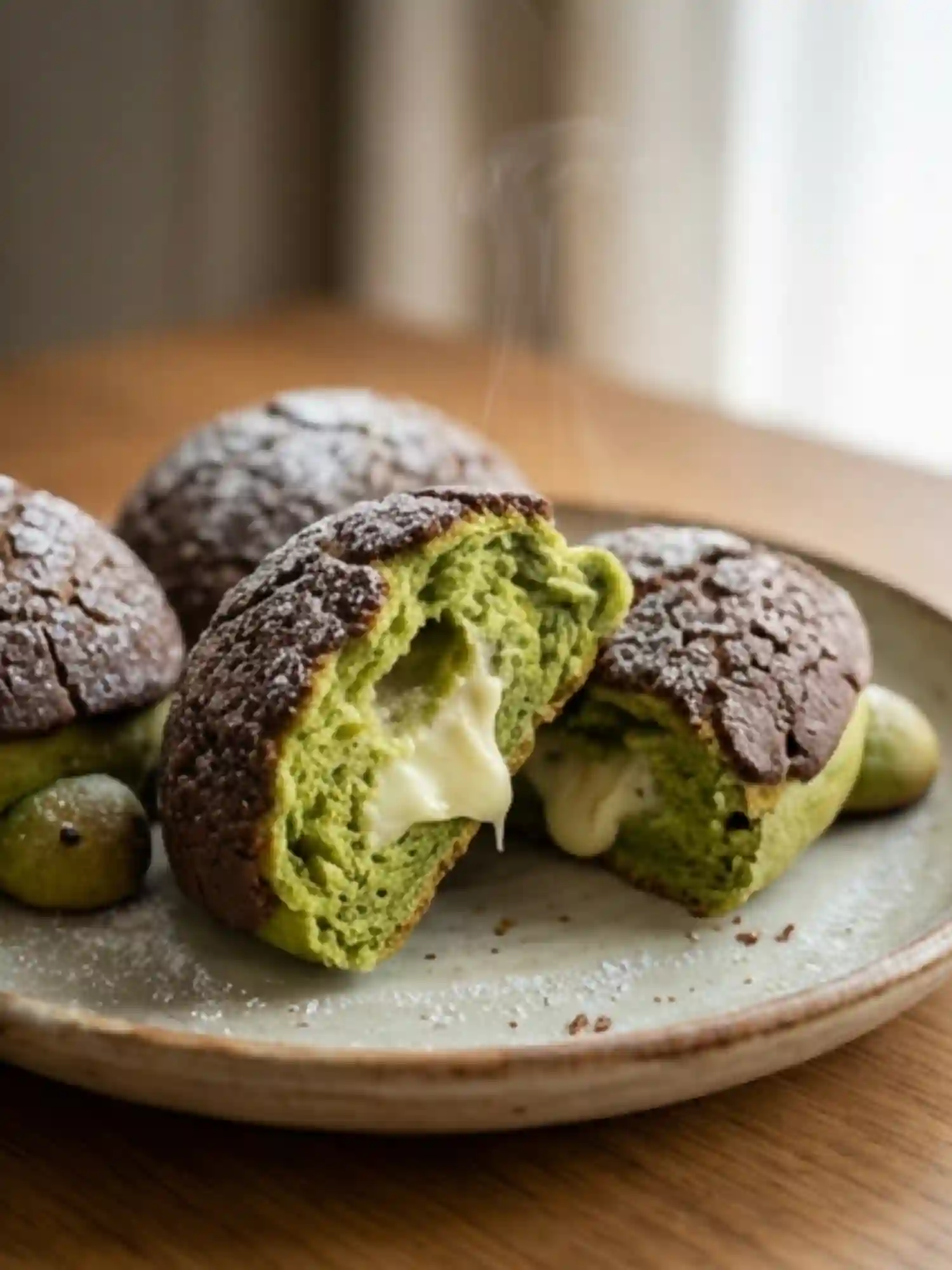
This is the moment where Matcha Milk Bread Turtles transform from cute green rolls into something visually striking. Without the chocolate Dutch crunch topping, they are soft and charming. With it, they suddenly look bakery level. The crackled cocoa shell creates contrast against the green dough and gives that signature turtle shell effect.
The first time I made the topping, I assumed it was just decorative. I was wrong. The texture contrast changes the entire experience. You bite through a thin, crisp layer before reaching the pillowy matcha milk bread underneath. That contrast is subtle but memorable.
Understanding the Dutch Crunch Texture
Dutch crunch topping is made with rice flour, yeast, sugar, oil, and in this case cocoa powder. The rice flour is essential. It does not behave like wheat flour. As the rolls bake, the topping dries and splits, forming natural cracks across the surface.
For Matcha Milk Bread Turtles, the topping needs to be thick enough to sit on top without dripping down the sides. If it is too runny, it spreads and loses the shell effect. If it is too thick, it may not crack properly.
The texture you want is smooth and spreadable, similar to a thick paste. When you lift a spoon, it should slowly fall back into the bowl without being watery.
After mixing, let it rest briefly while the turtles complete their second rise. This short fermentation activates the yeast in the topping, which helps create those beautiful fissures during baking.
Applying the Shell Without Deflating the Turtles
Once your Matcha Milk Bread Turtles are proofed and slightly puffed, gently spoon the chocolate Dutch crunch mixture onto the top of each body. Avoid pressing too hard. You are coating the surface, not pushing into the dough.
Spread evenly across the rounded top only. Leave the head and feet uncovered so the shell effect stays focused on the body. Sprinkle a small amount of sugar over the topping to encourage better cracking and slight caramelization.
As the rolls bake, you will see the surface begin to dry, then split. This is the moment where they truly resemble tiny turtles. The cocoa darkens, the green matcha dough rises beneath, and the cracks form naturally.
When they come out of the oven, the topping should feel lightly crisp but not hard. After a few minutes of cooling, the shell settles into that perfect balance between delicate crunch and soft interior.
Next, we will cover baking timing, doneness cues, and how to store Matcha Milk Bread Turtles so they stay soft even the next day.
Baking, Cooling and Storing Matcha Milk Bread Turtles
At this point, your Matcha Milk Bread Turtles look beautiful, but baking is where everything either comes together or slightly falls apart. I used to rely only on timing. Set the oven, wait 20 minutes, done. But with enriched dough like this, visual and tactile cues matter just as much as minutes on a timer.
Preheat your oven fully before baking. If the oven is not hot enough when the rolls go in, the Dutch crunch topping may not crack properly and the turtles can spread too much before setting. A stable temperature helps the shells form cleanly while the interior rises evenly.
How to Tell When Matcha Milk Bread Turtles Are Done
Color is your first indicator. The chocolate shell should deepen slightly in shade, and the green matcha dough should look set, not wet or glossy. The bottom of each turtle should be lightly golden, not pale.
If you gently tap the top, it should feel set but not hard. Another reliable method is internal temperature. For fully baked Matcha Milk Bread Turtles, the center should reach around 88 to 93°C. This ensures the crumb is cooked through without drying out.
Be careful not to overbake. A few extra minutes can tighten the crumb and reduce the soft, fluffy texture that defines these rolls.
Cooling and Storage Without Losing Softness
Once out of the oven, transfer the turtles to a wire rack. Let them cool for about 10 to 15 minutes. This brief rest allows the crumb to stabilize and prevents the bottoms from becoming soggy.
Matcha Milk Bread Turtles are at their absolute best slightly warm. The chocolate inside remains soft, and the shell still has light crispness. But if you need to store them, place them in an airtight container once fully cooled.
At room temperature, they stay soft for up to two days thanks to the tangzhong method. To reheat, microwave for about 15 to 20 seconds. This restores moisture and softness without drying them out.
For longer storage, freeze them individually wrapped. When ready to eat, thaw at room temperature and warm gently in the oven for a few minutes. The texture comes back surprisingly well.
Next, we will explore creative variations on Matcha Milk Bread Turtles and how you can adapt the recipe without losing their signature softness and charm.
Creative Variations of Matcha Milk Bread Turtles
Once you have mastered the base recipe, Matcha Milk Bread Turtles become a canvas rather than just a fixed formula. And honestly, this is where things get fun. The structure stays the same, but small changes in filling, topping, or flavor balance can completely shift the personality of the bread.
The beauty of Matcha Milk Bread Turtles is that the dough itself is stable and adaptable. Because it is enriched and uses tangzhong, it can support different fillings without becoming dry or collapsing. That gives you room to experiment without fear of ruining texture.
Filling Variations That Still Work
White chocolate is classic because it softens the earthy matcha flavor. But you can adjust based on preference:
- Dark chocolate for a stronger cocoa contrast
- Sweetened red bean paste for a more traditional Japanese profile
- Cream cheese for a slightly tangy center
- Hazelnut spread for a richer dessert version
Each of these keeps the identity of Matcha Milk Bread Turtles intact while adding a different flavor direction. If using softer fillings like cream cheese, chill slightly before shaping so it is easier to seal.
Turning Matcha Milk Bread Turtles Into Other Styles
You can also adapt the outer profile. Instead of chocolate Dutch crunch, try a vanilla crackle topping for a brighter contrast. This creates something closer to cute conchas but still keeps the turtle shell effect.
For a slightly sweeter finish, brush the baked turtles lightly with simple syrup. This enhances shine and moisture. If you want something closer to Japanese matcha chocolate rolls, skip the turtle shaping and form spirals with the same dough and filling.
You can even miniaturize them into bite sized turtle buns for parties. Smaller portions bake faster, so reduce oven time slightly and monitor color closely.
The key is maintaining the balance between soft interior and structured exterior. That balance is what defines Matcha Milk Bread Turtles. Change the personality, but protect the texture.
Next, we will bring everything together with a clear and thoughtful conclusion.
Nutrition Information for Matcha Milk Bread Turtles
Below is an estimated nutritional breakdown for 1 Matcha Milk Bread Turtle based on a batch of 6 rolls, including white chocolate filling and chocolate Dutch crunch topping. Values are approximate and may vary depending on ingredient brands and portion size.
Estimated Nutrition Per 1 Roll
| Nutrient | Amount per Serving |
| Calories | 320 to 350 kcal |
| Carbohydrates | 45 g |
| Sugar | 14 g |
| Protein | 7 g |
| Total Fat | 11 g |
| Saturated Fat | 6 g |
| Cholesterol | 45 mg |
| Sodium | 210 mg |
| Fiber | 1.5 g |
| Calcium | 8% DV |
| Iron | 10% DV |
You can verify specific ingredient values using the USDA FoodData Central database, which provides standardized nutritional data for flour, milk, butter, sugar, and chocolate used in Matcha Milk Bread Turtles.
Macronutrient Breakdown
- Carbohydrates come mainly from bread flour, sugar, and rice flour in the shell.
- Protein comes from flour, milk, and egg.
- Fat content is influenced by butter and white chocolate filling.
- Matcha contributes antioxidants but minimal calories.
Important Notes
These Matcha Milk Bread Turtles are considered an enriched sweet bread, so they are more indulgent than standard dinner rolls. If you reduce the sugar slightly or omit the white chocolate filling, calories may drop by 30 to 50 kcal per roll.
Matcha Milk Bread Turtles That Are Worth the Effort
By the time you pull your final batch of Matcha Milk Bread Turtles from the oven, something shifts. What started as flour, matcha, and a shaping experiment becomes a tray of soft, crackled, turtle shaped bread that feels almost too charming to break apart. Almost.
There is something deeply satisfying about watching the chocolate shell form, seeing the green dough rise beneath it, and realizing you made that from scratch. Not just bread, but structured, enriched, carefully shaped bread. And once you taste the contrast between the fluffy interior and the crisp cocoa shell, you understand why Matcha Milk Bread Turtles are more than a novelty bake.
They combine technique and playfulness in a way that feels rare. The tangzhong gives you that pillowy crumb. The matcha adds subtle depth. The shaping brings personality. And the Dutch crunch topping finishes it with texture and visual drama. Every element supports the others.
Maybe your first turtle was slightly uneven. Maybe one leaned to the side. That is part of the charm. The goal is not mechanical perfection. It is balance of flavor, softness, and character.
If you follow the structure carefully and pay attention to dough texture, shaping tension, and baking cues, Matcha Milk Bread Turtles become repeatable. Reliable. Something you can make for guests, for family, or just because you want something comforting and a little whimsical.
And honestly, once you make them once, you will probably start imagining new variations. Different fillings. Different shell flavors. Maybe even different shapes.
But it starts here. With one batch. One tray. One bite while they are still warm.
More Unique & Sweet Treats You’ll Love
- Lemon Lavender Cookies – Delicate, floral, and perfectly balanced with citrus notes.
- Cranberry Bliss Bars Recipe – Soft, sweet, and topped with creamy frosting.
- Heart Shaped Chocolate Chip Cookies – A fun and shareable twist on a classic favorite.
- Viral Japanese Yogurt Cheesecake – Light, fluffy, and beautifully airy.
FAQs About Matcha Milk Bread Turtles
1. Why are my Matcha Milk Bread Turtles dense instead of fluffy?
Dense texture usually means the dough was under kneaded or under proofed. Matcha Milk Bread Turtles rely on strong gluten development because of the enriched ingredients. If the dough does not pass the windowpane test, it will not trap enough air during rising. Another common issue is adding too much flour while kneading. The dough should feel slightly tacky but elastic, not dry or stiff.
2. Why didn’t the chocolate Dutch crunch crack on top?
If the shell did not crack, the topping may have been too thin or too thick. The ideal texture is a thick paste that spreads easily but does not drip. Also, the topping needs a short rest to activate the yeast before baking. Oven temperature matters too. If the oven is not fully preheated, the surface may dry slowly and fail to split properly.
3. Can I make Matcha Milk Bread Turtles ahead of time?
Yes. You can prepare the dough and refrigerate it after the first rise. Let it come back to room temperature before shaping. You can also freeze fully baked Matcha Milk Bread Turtles once cooled. Reheat gently in the oven or microwave to restore softness. Thanks to the tangzhong method, they retain moisture very well.
4. Why does my matcha taste bitter in the bread?
Bitterness usually comes from low quality matcha or overheating. Use culinary grade matcha with a vibrant green color. Overbaking can also intensify bitterness slightly. If you prefer a milder flavor, reduce the matcha by a small amount and balance it with white chocolate filling.
5. Can I make these Matcha Milk Bread Turtles without white chocolate?
Absolutely. The filling is optional. You can substitute dark chocolate, red bean paste, or even leave them plain. The structure of Matcha Milk Bread Turtles remains soft and fluffy as long as the dough is properly kneaded and proofed.