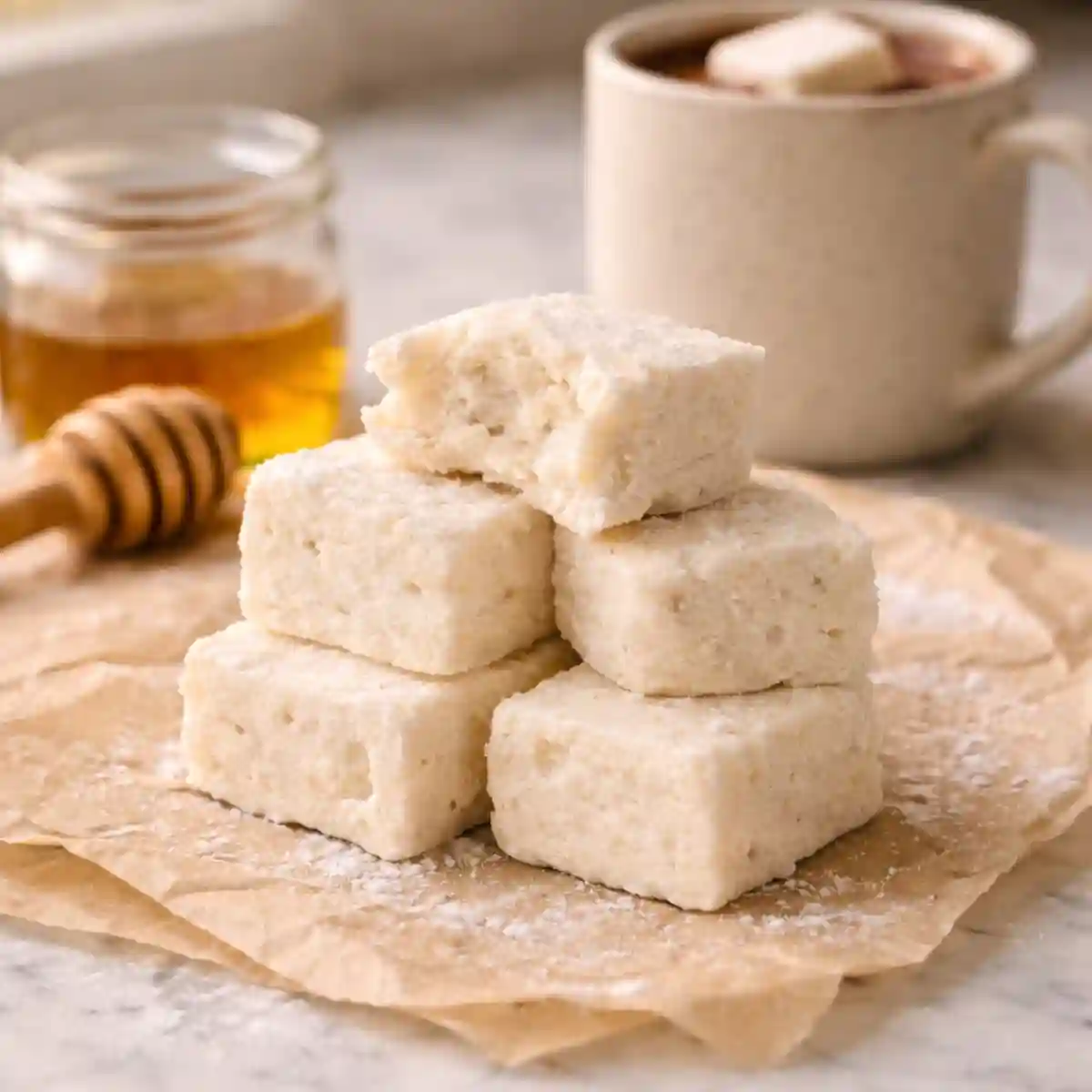
Healthy Homemade Marshmallows changed the way I look at dessert. I know that sounds dramatic for something fluffy and square, but stay with me for a second. Have you ever flipped over a bag of store bought marshmallows and thought, what exactly am I eating? I did. One random afternoon, standing in my kitchen, craving something sweet for my coffee, I caught myself thinking, there has to be a better way.
Maybe you have been there too. You want something nostalgic, something that reminds you of campfires or winter hot chocolate, but you also care about what goes into your body. You read labels. You try to avoid high fructose corn syrup. You are probably wondering if marshmallows can even be considered healthy. I used to think the same thing.
The first time I made Healthy Homemade Marshmallows, I was skeptical. I remember telling a friend, this is either going to be amazing or a sticky disaster. She laughed and said, text me if it explodes. It did not explode. It turned into glossy, pillowy fluff right in my mixing bowl, and I stood there thinking, wait, this is it? Just gelatin, honey, and water?
What surprised me most was not just the texture. It was how intentional the ingredients felt. Instead of refined sugar and corn syrup, I was using grass fed gelatin and raw honey. Instead of empty sweetness, there was actual nourishment built into the recipe. That shift, from treat to nourishing treat, is what makes Healthy Homemade Marshmallows worth making at least once in your life.
If you are here because you want a refined sugar free option, a paleo marshmallow recipe, or something that fits into a gut healing approach, you are in the right place. In this guide, I will walk you through exactly how to make Healthy Homemade Marshmallows at home, why gelatin matters, how to avoid sticky mistakes, and how to get that perfect fluffy texture every time.
Let’s start with what really makes these marshmallows different.
Table of Contents
Table of Contents
What Makes These Healthy Homemade Marshmallows Different?
Why Store Bought Marshmallows Are Not the Same
Let’s be honest. Most of us did not question marshmallows growing up. They were just there. In hot chocolate. In cereal bars. On top of sweet potato casseroles during the holidays. But the moment you read the ingredient list, something shifts. Corn syrup. Refined sugar. Artificial flavors. Stabilizers.
Healthy Homemade Marshmallows are different because they start from a completely different philosophy. Instead of being engineered for shelf life, they are made for nourishment. That may sound idealistic, but ingredients matter. When you swap high fructose corn syrup for raw honey or maple syrup, you are not just changing sweetness. You are changing the metabolic impact and the mineral profile.
This recipe is not about pretending marshmallows are a superfood. It is about upgrading something nostalgic into something intentional.
The Role of Gelatin in Gut Health
Here is where Healthy Homemade Marshmallows truly stand apart. The gelatin.
Gelatin is rich in glycine and proline, amino acids that support connective tissue and may help maintain the integrity of the gut lining. If you follow a paleo diet, GAPS protocol, or simply care about digestive health, you have probably heard about the importance of collagen rich foods.
When you bloom and whip gelatin in this recipe, you are not just creating structure. You are creating a soft, airy treat that still carries the structural proteins your body can use. It feels indulgent, but the foundation is functional.
That is a very different starting point from conventional marshmallows.
Refined Sugar Free and Naturally Sweetened
Another reason Healthy Homemade Marshmallows stand out is the sweetener choice.
Using honey or maple syrup means:
• No refined white sugar
• No corn syrup
• No artificial additives
• A more complex flavor profile
The sweetness is rounder. Slightly deeper. Depending on the honey you use, you might even notice subtle floral notes. Maple syrup gives a warmer undertone. It is not aggressively sweet. It is balanced.
And yes, they still whip into glossy, fluffy marshmallow fluff. That part still feels like kitchen magic every time.
Healthy Homemade Marshmallows are not just a recipe swap. They are a mindset shift. You still get the softness, the stretch, the melt in hot chocolate. But you also get ingredients you can pronounce, trust, and feel good about serving to your family.
Ingredients for Healthy Homemade Marshmallows That Actually Matter
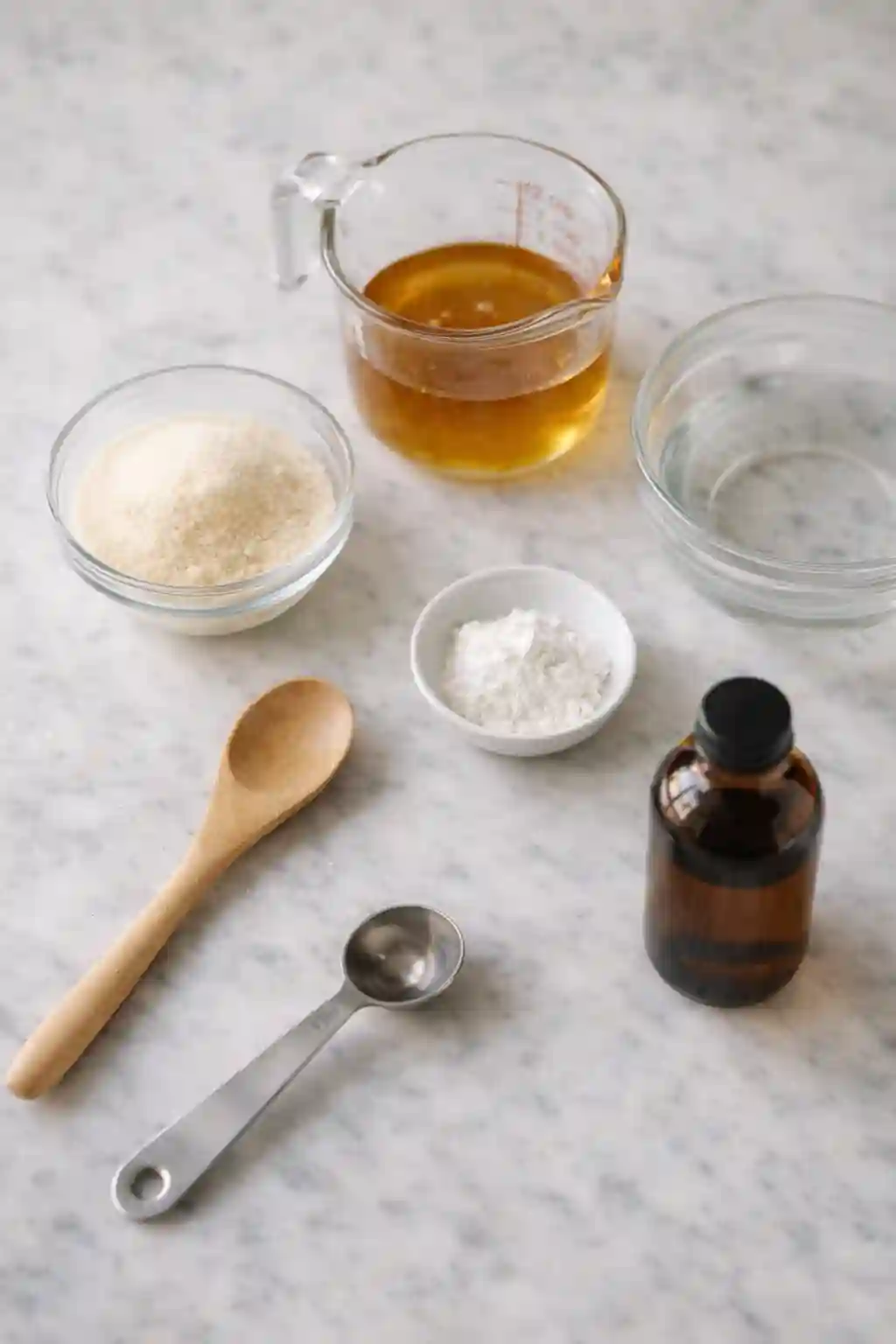
Choosing the Right Gelatin for Structure and Nutrition
If you have never worked with gelatin before, it can feel slightly intimidating. I remember the first time I sprinkled it over water and thought, is this supposed to look like that? It thickens. It wrinkles. It looks almost questionable. But that blooming stage is exactly what gives Healthy Homemade Marshmallows their signature bounce.
Not all gelatin performs the same. High quality grass fed gelatin tends to whip better and set more consistently. More importantly, it contains the amino acids that make this recipe more than just candy. Gelatin provides glycine and proline, which are often missing in modern diets focused mostly on muscle meats.
When making Healthy Homemade Marshmallows, gelatin is not just a thickener. It is the backbone. Without it, you do not get that pillowy texture. You do not get that clean slice. And you certainly do not get the same gut supportive properties that make this recipe stand out from traditional marshmallows.
Honey vs Maple Syrup and How It Affects Texture
The sweetener you choose changes more than flavor. It changes structure, color, and even how your marshmallows roast.
Honey creates a slightly firmer, glossier finish. It also tends to produce a brighter white marshmallow if you use a light colored variety. Maple syrup, on the other hand, gives a soft off white tone and a deeper, almost caramel like background flavor.
Here is what I have noticed over time:
• Honey sets a bit firmer
• Maple syrup gives a softer bite
• Dark sweeteners create darker marshmallows
• All natural options prevent that artificial sweetness
Healthy Homemade Marshmallows rely on the balance between gelatin strength and sweetener viscosity. If your marshmallows ever feel too soft, the issue is often either under whipping or sweetener variation.
Optional Additions That Change Everything
Once you master the base recipe, you can start experimenting without compromising the integrity of your Healthy Homemade Marshmallows.
Vanilla extract adds warmth and familiarity. Peppermint turns them into a holiday treat. A spoonful of raw cacao creates a subtle chocolate version that feels surprisingly indulgent. Even a pinch of sea salt can elevate the sweetness and make the flavor more complex.
Arrowroot powder is optional, but helpful if you want perfectly clean edges. It reduces sticking and improves storage texture, especially in humid climates.
The beauty of Healthy Homemade Marshmallows is their simplicity. You are working with only a few ingredients, but each one plays a precise role. Change one variable and the outcome shifts. That is not a flaw. It is what makes this recipe feel alive and responsive, like real food should.
How to Make Healthy Homemade Marshmallows Step by Step
Blooming the Gelatin the Right Way
This is the part most people rush. I did too, the first time. I sprinkled the gelatin, stirred it immediately, and then wondered why the texture felt slightly off. Blooming is not complicated, but it does require patience.
To begin your Healthy Homemade Marshmallows, you pour half of the water into your mixing bowl and gently sprinkle the gelatin over the top. Then you wait. No stirring. No poking. Just let it absorb the water naturally. Within a few minutes, it will look thick and slightly rubbery.
That texture is exactly what you want.
Blooming allows the gelatin granules to hydrate evenly. If you skip this step or rush it, your marshmallows may not whip properly later. Think of it as building the foundation. Everything that follows depends on this stage being done correctly.
Heating the Sweetener to the Right Consistency
While the gelatin blooms, you heat the remaining water with your honey or maple syrup. Bring it to a gentle boil, then reduce to a simmer for about five minutes.
You are not trying to caramelize it. You are simply dissolving and slightly concentrating the sweetener so it integrates smoothly into the gelatin. The mixture should look fluid and glossy, not thick like candy.
When you slowly pour this hot mixture into the bloomed gelatin while mixing on low speed, something subtle happens. The heat melts the gelatin fully, creating a smooth base. At this stage, it will still look like liquid. That is normal.
If you are wondering whether temperature matters, the answer is yes, but not obsessively. You do not need a candy thermometer for this version of Healthy Homemade Marshmallows. Gentle simmering is enough to activate structure without overcooking the sugars.
Whipping Until Glossy and Thick
Now comes the transformation.
Increase the mixer speed to high and let it run for eight to ten minutes. At first, it will look like frothy syrup. Then it thickens. Then suddenly it turns opaque and white. This is the moment that still feels a little magical every time I see it.
You are looking for a thick, glossy marshmallow fluff that barely drips from the beaters. If it pours like a sauce, it needs more time. If it looks matte and stiff, you may have slightly over whipped, though it usually still works.
Healthy Homemade Marshmallows rely heavily on this whipping stage. The air you incorporate here determines the final texture. Under whip them and they will be dense. Whip properly and they will be soft, bouncy, and slice cleanly after setting.
Work quickly when transferring the fluff into your prepared dish. It sets faster than you expect. Let it rest overnight at room temperature before slicing.
That is it. No complicated techniques. Just timing, attention, and a little trust in the process.
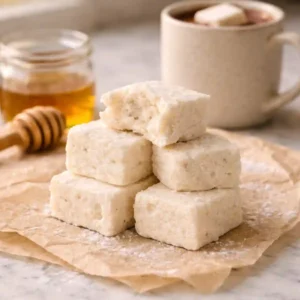
Healthy Homemade Marshmallows

Ingredients
- 1 cup water divided
- 3 tablespoons grass fed gelatin
- 1 cup raw honey or pure maple syrup
- 1 tablespoon vanilla extract
- 1 tablespoon arrowroot powder optional for dusting
- Each ingredient plays a precise role. The gelatin creates structure. The honey provides sweetness and helps with consistency. The vanilla adds warmth and depth. The arrowroot simply reduces surface stickiness if needed.
Instructions
- Pour 1 half cup of water into a stand mixer bowl or large mixing bowl.
- Evenly sprinkle the gelatin over the water. Let it bloom undisturbed for several minutes.
- In a saucepan, combine the remaining water with the honey or maple syrup. Bring to a gentle boil, then reduce to a simmer for about 5 minutes.
- Turn the mixer on low speed and slowly pour the hot sweetener mixture into the bloomed gelatin.
- Add the vanilla extract.
- Increase the mixer speed to high and whip for 8 to 10 minutes until thick, glossy, and white. The mixture should barely drip from the beaters.
- Quickly transfer the marshmallow fluff into a parchment lined dish.
- Allow to set at room temperature overnight before slicing.
- Lightly dust with arrowroot powder if desired.
- Healthy Homemade Marshmallows may feel like a novelty the first time you make them. After that, they become one of those recipes you return to without overthinking it.
Notes
| Nutrient | Per Marshmallow (Approx.) |
| Calories | 35 to 40 kcal |
| Protein | 1.2 g |
| Total Carbohydrates | 7 to 8 g |
| Sugars | 7 g |
| Fat | 0 g |
| Fiber | 0 g |
| Sodium | 5 mg |
| Collagen Protein | Present from gelatin |
Troubleshooting Healthy Homemade Marshmallows That Did Not Turn Out Right
Why Are My Healthy Homemade Marshmallows Too Sticky?
Let’s talk about the most common frustration first. You slice into your Healthy Homemade Marshmallows, and instead of clean cubes, you get sticky edges that cling to everything. It feels like you did something wrong. Maybe you did. Or maybe your kitchen humidity is higher than you realize.
Humidity plays a bigger role than most people think. Marshmallows naturally absorb moisture from the air. If your environment is humid, they will stay softer and tackier.
Other possible causes include:
• Under whipping the mixture
• Not letting them set long enough
• Using a darker, more liquid sweetener
• Skipping any dusting agent in a humid space
Letting them dry slightly at room temperature can firm them up. A light coating of arrowroot powder also helps reduce surface moisture. If you prefer skipping that step, just accept slightly imperfect edges. They still taste the same.
Why Didn’t My Marshmallows Whip Properly?
This is the second most common issue. You whip and whip, and it never turns into that thick white fluff you expected. It stays thin or only slightly foamy.
Usually, one of three things happened:
- The gelatin was not fully bloomed.
- The sweetener mixture was too cool when added.
- The mixture simply needed more whipping time.
Healthy Homemade Marshmallows depend on properly hydrated gelatin and enough air incorporation. Sometimes mixers vary in strength. If yours is smaller or older, you may need a few extra minutes.
There is also a moment during whipping when it seems like nothing is happening. Then suddenly the texture shifts. If you stop too early, you miss that transformation.
Why Are They Too Dense or Too Soft?
Texture problems often come down to ratios or timing.
If your Healthy Homemade Marshmallows are dense and rubbery, you may have:
• Used too much gelatin
• Over whipped the mixture
• Let them set in a very cold environment
If they are too soft, you may have:
• Slightly under measured gelatin
• Not simmered the honey long enough
• Cut them before fully set
The good news is this recipe is forgiving. Even imperfect marshmallows can be melted into hot chocolate or stirred into coffee. They rarely go to waste.
Making Healthy Homemade Marshmallows is part technique and part observation. The more you make them, the more intuitive it becomes. And honestly, even the imperfect batches still feel more satisfying than opening a plastic bag from the store.
Flavor Variations for Healthy Homemade Marshmallows
Classic Vanilla and Subtle Upgrades
Once you have mastered the base version of Healthy Homemade Marshmallows, something interesting happens. You stop thinking of them as just marshmallows. You start seeing them as a blank canvas.
Vanilla extract is the obvious starting point. It adds warmth and that familiar bakery aroma that makes everything feel nostalgic. If you want to elevate it slightly, try real vanilla bean powder. The tiny specks make them look beautiful, and the flavor feels deeper and more rounded.
You can also experiment with small additions that do not overwhelm the structure:
• A pinch of sea salt for balance
• Cinnamon for a subtle warmth
• A splash of almond extract for a bakery style twist
Healthy Homemade Marshmallows are delicate, so restraint matters. Too much liquid flavoring can affect the final texture. Keep additions concentrated and minimal.
Chocolate, Coffee, and Richer Profiles
If you prefer something less traditional, richer variations work surprisingly well.
For chocolate Healthy Homemade Marshmallows, sift in one to two tablespoons of raw cacao powder during the last minute of whipping. The texture remains fluffy, but the flavor becomes more dessert like. They are incredible in hot chocolate.
Coffee lovers can add a teaspoon of espresso powder dissolved in a tiny bit of warm water before whipping. The flavor is subtle but layered. Think marshmallow meets latte.
If you want something slightly indulgent without being overpowering:
• Add cacao for a chocolate version
• Add espresso powder for depth
• Swirl in a small amount of melted dark chocolate before setting
The swirl technique creates a marbled effect that feels almost bakery level, even though the base is still simple and nourishing.
Fruity and Seasonal Twists
Fruity versions require more care. Adding fruit puree directly can introduce too much moisture. Instead, use powdered freeze dried fruit. Strawberry powder or raspberry powder blends beautifully into Healthy Homemade Marshmallows without compromising structure.
For seasonal ideas:
• Peppermint extract for winter
• Pumpkin spice blend in autumn
• Lemon zest for a spring version
Healthy Homemade Marshmallows adapt surprisingly well to subtle seasonal shifts. The key is maintaining the balance between structure and flavor intensity.
What I love most about experimenting with this recipe is that even small adjustments feel creative. You are not just making candy. You are crafting something that feels personal.
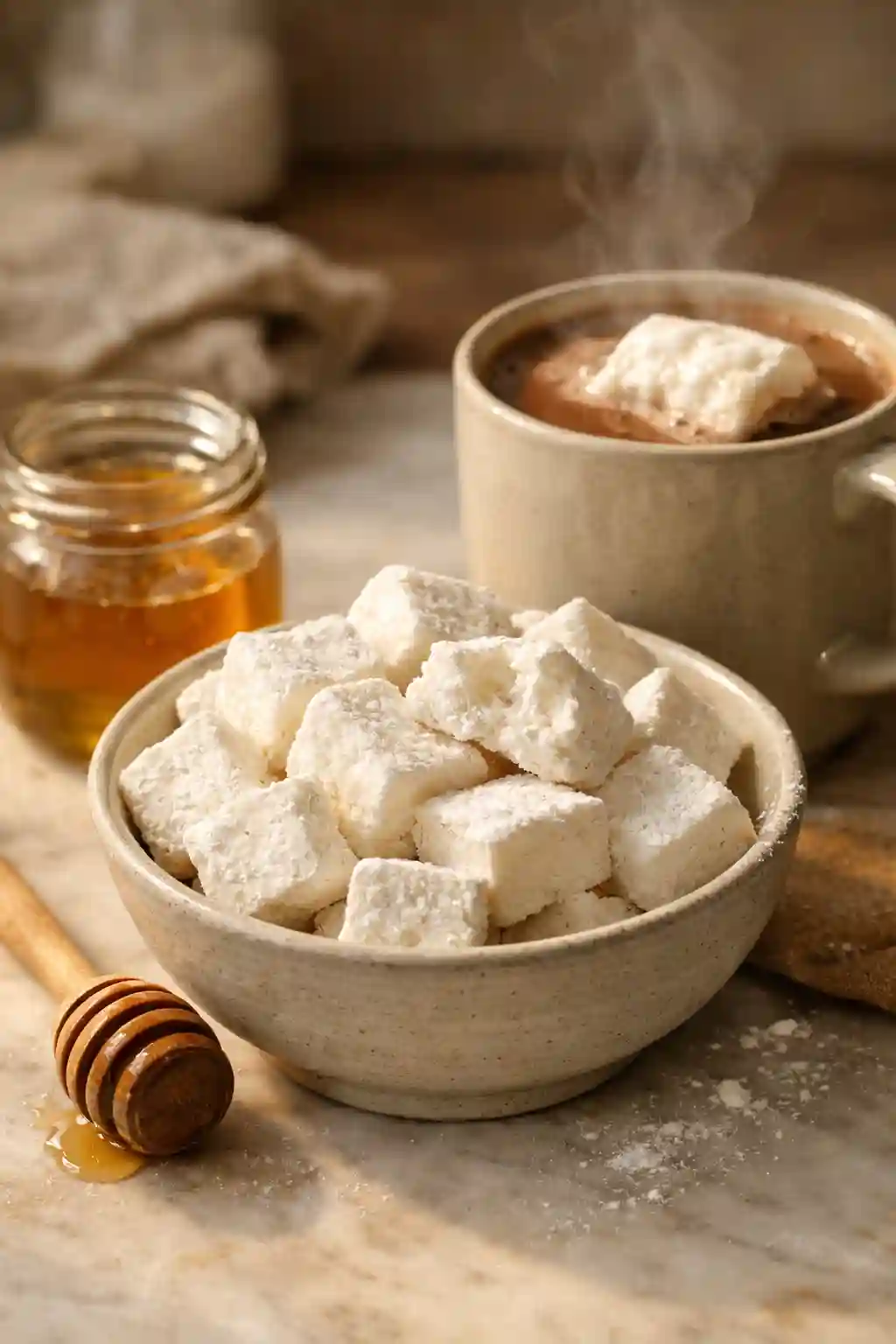
How to Store and Roast Healthy Homemade Marshmallows Properly
Best Way to Store Healthy Homemade Marshmallows
Once your Healthy Homemade Marshmallows are sliced and set, storage becomes more important than most people expect. I used to assume they needed refrigeration. It felt safer somehow. But after a few batches, I realized room temperature actually works better.
Healthy Homemade Marshmallows are happiest in a cool, dry environment. Store them in an airtight container at room temperature for the best texture. Refrigeration can introduce moisture and make them slightly sticky.
Here is what works best:
• Store in an airtight container
• Keep at room temperature
• Avoid humid areas
• Separate layers with parchment if stacking
If you live in a humid climate, a very light dusting of arrowroot powder can help prevent sticking. But if you prefer skipping that step like I often do, just know they may cling slightly to each other. It does not affect flavor at all.
When stored properly, Healthy Homemade Marshmallows can last about one to two weeks. In my kitchen, they rarely last that long.
Can You Roast Honey Based Marshmallows?
This is the question everyone eventually asks.
Yes, you can roast Healthy Homemade Marshmallows. But they behave a little differently than store bought versions.
Because they are made with honey or maple syrup instead of corn syrup, they tend to brown faster. The sugars caramelize more quickly. That means you need a little more patience over the fire.
Instead of placing them directly into strong flames, hold them slightly farther from the heat source. Rotate slowly. Let the exterior toast gradually. The inside will soften beautifully.
They will not puff up in exactly the same exaggerated way as commercial marshmallows, but they still develop a golden crust and soft center.
Letting Them Dry for Better Roasting
If you know in advance that you want to roast your Healthy Homemade Marshmallows, leave them uncovered on the counter for a day or two after slicing.
This slight drying period helps create a firmer outer layer. That outer layer makes roasting easier and reduces melting too quickly over heat.
It is a small adjustment, but it makes a noticeable difference.
Healthy Homemade Marshmallows are not engineered for shelf life or extreme heat resistance. They are simple. Real. Slightly more delicate. And honestly, that is part of their charm.
Nutrition Information for Healthy Homemade Marshmallows
When people hear Healthy Homemade Marshmallows, the first question is usually about ingredients. The second question is almost always about nutrition. Are they actually better? Or do they just sound healthier?
The truth sits somewhere in the middle. Healthy Homemade Marshmallows are still a sweet treat, but their nutritional profile is different from conventional marshmallows because they contain gelatin and natural sweeteners instead of refined sugar and corn syrup.
Below is an estimated nutritional breakdown per serving.
Assumptions:
Recipe yields approximately 24 marshmallows
Made with raw honey
No arrowroot coating included
Estimated Nutrition Per Marshmallow
| Nutrient | Per Marshmallow (Approx.) |
| Calories | 35 to 40 kcal |
| Protein | 1.2 g |
| Total Carbohydrates | 7 to 8 g |
| Sugars | 7 g |
| Fat | 0 g |
| Fiber | 0 g |
| Sodium | 5 mg |
| Collagen Protein | Present from gelatin |
Nutritional values are estimates based on publicly available data from the USDA FoodData Central database
What Makes the Nutrition Different?
The most notable difference in Healthy Homemade Marshmallows is the protein content from gelatin. Traditional marshmallows contain almost no meaningful protein. Here, each piece provides a small amount of collagen derived protein.
While 1.2 grams of protein may not sound dramatic, it changes the metabolic profile slightly compared to pure refined sugar confections. The presence of glycine from gelatin may also support connective tissue and digestion when consumed regularly as part of a balanced diet.
That said, these still contain natural sugars from honey or maple syrup. They are not low carb. They are not keto. They are simply a more intentional option.
If you prefer maple syrup over honey, calories and carbohydrates remain very similar, though mineral content varies slightly depending on the source.
Healthy Homemade Marshmallows are best viewed as an upgraded treat. Cleaner ingredients. Some protein. No artificial additives. Still sweet, but purposefully made.
The Gut Health Benefits of Healthy Homemade Marshmallows
Why Gelatin Supports Digestive Health
This is the part that makes people pause. Marshmallows and gut health in the same sentence? It sounds almost contradictory. I thought so too at first. But when you look at the ingredients in Healthy Homemade Marshmallows, it starts to make sense.
The key ingredient is gelatin. Gelatin is derived from collagen and contains amino acids such as glycine and proline. These amino acids play a role in supporting connective tissue and may help maintain the integrity of the gut lining. For people who follow a gut focused diet like paleo or GAPS, gelatin rich foods are often encouraged because they are easy to digest and supportive of overall digestive balance.
Healthy Homemade Marshmallows are not medicine. They are still a sweet treat. But unlike conventional marshmallows made from refined sugar and corn syrup, these actually contain a protein source that contributes something functional to the body.
Glycine, Collagen, and Modern Diet Gaps
Modern diets tend to emphasize muscle meats like chicken breast and steak. What we often miss are the connective tissues, skin, and collagen rich parts that traditional cultures consumed regularly.
Gelatin helps fill that gap. Glycine in particular is known for its calming properties and its potential role in supporting sleep quality and digestion. When you make Healthy Homemade Marshmallows, you are incorporating that collagen derived protein into something enjoyable.
Instead of forcing down another cup of bone broth, you are adding a cube of something soft and sweet to your coffee or hot chocolate. It feels indulgent, but there is still a structural protein benefit underneath it.
That psychological shift matters. Nourishing food does not always have to feel restrictive.
Are Healthy Homemade Marshmallows Truly Healthy?
This is where balance comes in.
Healthy Homemade Marshmallows are healthier than conventional marshmallows because they avoid refined sugar and artificial additives. They include gelatin, which provides beneficial amino acids. They use natural sweeteners like honey or maple syrup.
But they are still sweet. They still impact blood sugar. They are best enjoyed intentionally, not mindlessly.
Think of them as a bridge food. Something that satisfies cravings while aligning more closely with whole food principles. If you are transitioning away from processed foods, this recipe can make that shift feel less extreme.
Healthy Homemade Marshmallows represent a middle ground. Comfort food, upgraded. Familiar, but made with purpose.
More Sweet & Light Treats You’ll Love
- Rice Krispie Treats Recipe – A chewy, nostalgic favorite perfect for all ages.
- S’mores Crescent Rolls – Gooey, chocolatey, and irresistibly fun.
- Protein Coffee Jello – A lighter dessert option with a boost of energy.
- Cranberry Bliss Bars Recipe – Sweet, soft, and perfect for sharing.
FAQs About Healthy Homemade Marshmallows
1. Can I Make Healthy Homemade Marshmallows Without Gelatin?
Technically, gelatin is what gives Healthy Homemade Marshmallows their structure and signature bounce. Without it, you will not achieve the same fluffy texture. Some people experiment with agar agar as a plant based alternative, but the texture is usually firmer and less airy.
If your goal is gut supportive benefits, gelatin is essential. It provides the amino acids that make this recipe different from conventional marshmallows. If you simply want a plant based sweet, it becomes a different recipe entirely.
2. Why Are My Healthy Homemade Marshmallows Not White?
Color depends almost entirely on your sweetener.
Light raw honey produces a pale cream or soft white color. Dark honey creates a beige tone. Maple syrup gives an off white or slightly golden shade.
Healthy Homemade Marshmallows made with natural sweeteners will rarely look bright white like store bought versions. Commercial marshmallows often contain refined sugar and stabilizers that create that stark appearance. A natural tint is completely normal and does not affect flavor or texture.
3. How Long Do Healathy Homemade Marshmallows Last?
When stored in an airtight container at room temperature, Healthy Homemade Marshmallows typically last one to two weeks.
Keep them away from humidity and direct heat. If they begin to feel slightly sticky, you can allow them to air dry briefly on the counter. Avoid refrigeration unless your kitchen is very warm, as excess moisture can affect texture.
4. Can I Use Collagen Instead of Gelatin?
This is a common point of confusion. Collagen peptides do not behave the same way as gelatin.
Gelatin thickens and sets when cooled, which is why it works for Healthy Homemade Marshmallows. Collagen peptides dissolve but do not gel. If you substitute collagen for gelatin in this recipe, the mixture will not set properly.
For proper structure and that classic marshmallow texture, stick with traditional gelatin.
5. Do Healthy Homemade Marshmallows Raise Blood Sugar?
They are still sweetened with honey or maple syrup, so they will impact blood sugar. However, they avoid refined sugar and corn syrup, which may create a more balanced sweetness profile.
Healthy Homemade Marshmallows are best enjoyed intentionally, as part of an overall whole food lifestyle. They are a more nourishing alternative, not a zero sugar dessert.