I didn’t expect dill pickle potato salad to become that one dish people keep asking about. It just kind of slipped into the rotation. One summer BBQ, then a picnic, then suddenly it’s the thing you’re “supposed” to bring every time. Funny how that happens.
There’s always that moment, right? You’re standing near the table, plate in hand, scanning the usual lineup of bbq side dishes. Pasta salad, coleslaw, maybe a classic potato salad that looks fine but feels… predictable. And then this one shows up. Creamy, yes, but with a sharp edge. You take a bite, pause for a second, and think, “Wait… why is this actually good?”
That’s the difference. This isn’t just another cold potato salad trying to play it safe. The pickles don’t sit quietly in the background. They lead. The flavor hits with that tangy, slightly salty kick, then softens into something creamy and comforting. And just when you expect it to get heavy, the texture pulls you back in. Soft potatoes, a little bit smashed, mixed with those crunchy pickles. It just works. Maybe better than it should.
Let’s be honest for a second. Most potato salad recipes miss something. Either they’re too bland, like they forgot seasoning exists, or they go all in on mayo and end up feeling heavy after two bites. This one somehow finds the middle ground. It keeps that rich, creamy side dish feel, but balances it with a bright, tangy flavor salad profile that makes you want another spoonful. And then another.
There’s also something a bit nostalgic about it. Not in a perfect, polished way. More like those slightly improvised family recipes where someone says, “Just add a bit more pickle juice, trust me.” It feels familiar, but not boring. Like a comfort food classic that got a small upgrade without losing its personality.
And maybe that’s why it sticks. It’s simple enough to make without overthinking, built from simple ingredients, but it doesn’t taste simple. It feels like effort, even when it isn’t.
By the time you bring this to a summer party, you already know what’s going to happen. Someone will ask what’s in it. Someone else will say it’s the best they’ve had. And you’ll probably downplay it, like it’s nothing special. But internally, you’ll know… yeah, this one hits different.
Table of Contents
Table of Contents
Ingredients for Dill Pickle Potato Salad (Simple & Flavor-Packed)
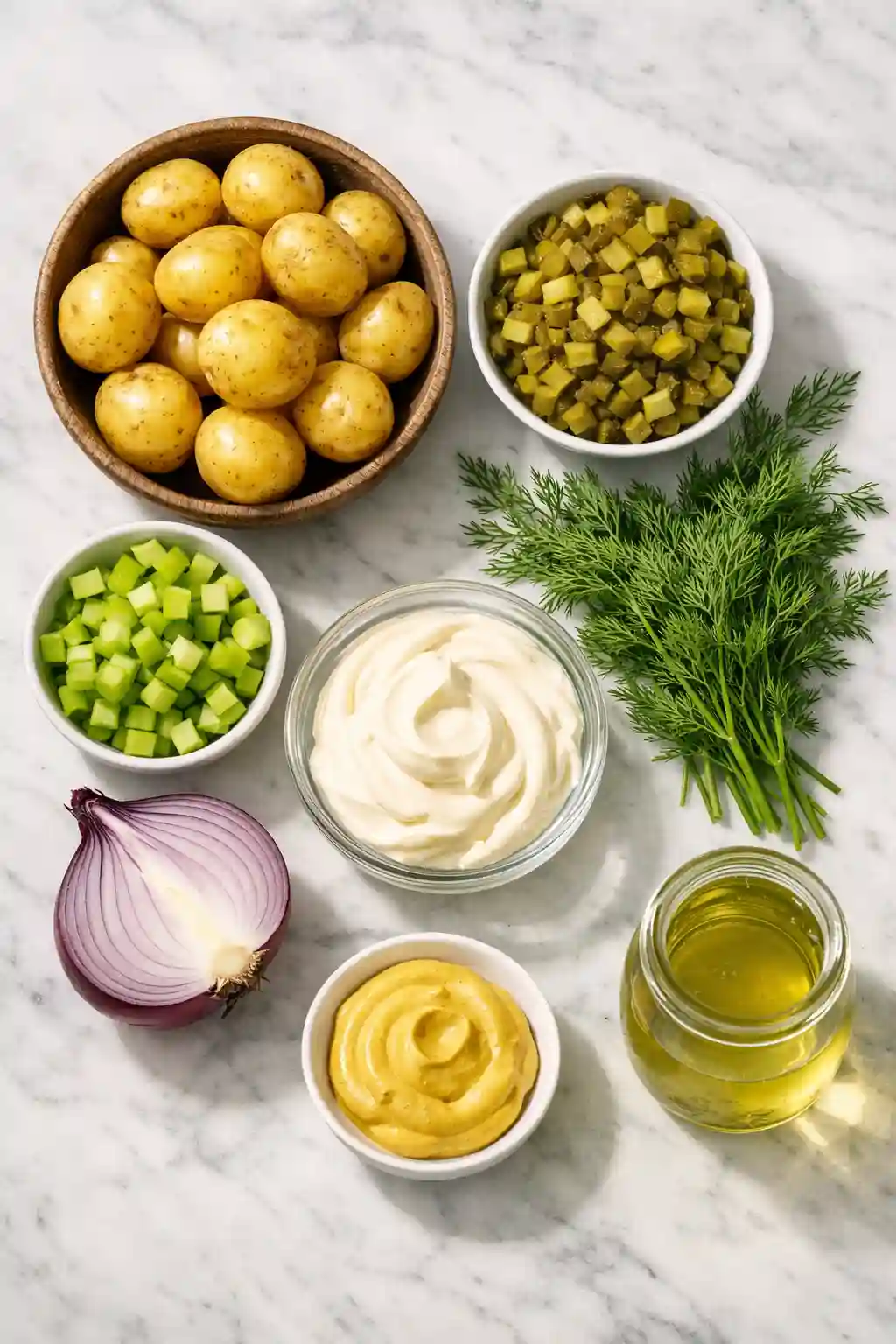
If you’ve ever made a dill pickle potato salad that tasted flat, there’s a good chance it wasn’t the recipe… it was the ingredients. Or more precisely, how they were chosen. Because on paper, this looks like one of those easy salad recipes you can throw together without thinking. In reality, every ingredient here pulls its weight.
And honestly, this is where most people underestimate the difference between an average homemade potato salad and one that people actually remember.
The Core Ingredients You’ll Need
- 3 pounds baby potatoes or red skin potatoes
- 1 cup dill pickles chopped (go for crunchy, not soft)
- 1 ½ cups diced celery
- 3 tablespoons minced red onion or white onion
- 4 tablespoons pickle juice dressing base (straight from the jar)
- 1 ¼ cup mayonnaise
- 1 tablespoon mustard (Dijon or classic yellow)
- 4 tablespoons fresh dill (or dried if needed)
- Salt and black pepper to taste
Optional but highly recommended:
- 4 to 6 hard boiled eggs for a richer texture
- A spoon of sour cream for extra creaminess
At first glance, it’s pretty standard. But here’s where things get interesting.
Why These Ingredients Actually Matter
Not all potatoes behave the same. Using baby potatoes or red skin potatoes gives you that creamy texture without falling apart. If you’ve ever tried a russet potatoes salad, you probably noticed it gets softer, almost too soft if you’re not careful. That’s not what we want here.
Then there’s the pickles. This isn’t just about adding something salty. The dill pickles chopped bring crunch, yes, but also a sharpness that cuts through the richness. That’s what turns this into a proper tangy flavor salad instead of just another heavy side.
And the real quiet hero here is the pickle juice. It’s easy to overlook, but that pickle juice dressing is what ties everything together. It seeps into the potatoes, adds depth, and keeps the whole dish from feeling flat. Without it, the salad works. With it, it actually pops.
Small Choices That Change Everything
This might sound minor, but these little adjustments matter more than people think:
- Fresh dill gives a brighter, more vibrant taste than dried
- Red onion adds a sharper bite, while white onion keeps things milder
- A mix of mayo and a touch of mustard creates balance instead of heaviness
- Adding eggs turns it into a more filling savory side dish
And maybe this is just personal preference, but slightly overloading on pickles? Not a bad idea. If you like that bold flavor, lean into it.
At the end of the day, this is still built on simple ingredients, but the way they interact is what makes it feel like more than just another quick side dish. It’s layered, a bit unexpected, and honestly… kind of addictive once everything comes together.
How to Make Dill Pickle Potato Salad (Step-by-Step Easy Recipe)
Making dill pickle potato salad isn’t complicated, but the way you move through each step changes everything. If you rush it, it’s fine. If you slow down just a little, it turns into something noticeably better.
Step 1: Prepare and cut the potatoes
Start by washing your potatoes and cutting them into bite-sized pieces. Keep them roughly the same size so they cook evenly and you don’t end up with a mix of mushy and undercooked pieces.
Step 2: Boil until just tender
Place the potatoes in salted water and bring to a boil. Let them cook for about 12 to 15 minutes until fork-tender. They should hold their shape, not fall apart.
Step 3: Let the potatoes cool completely
Drain the potatoes and allow them to cool fully before mixing. This step helps keep the texture right and prevents the dressing from becoming too heavy or uneven.
Step 4: Lightly mash a few pieces
Gently mash a small portion of the potatoes. Not all of them, just enough to create a slightly creamy base while keeping most pieces intact.
Step 5: Mix the dressing
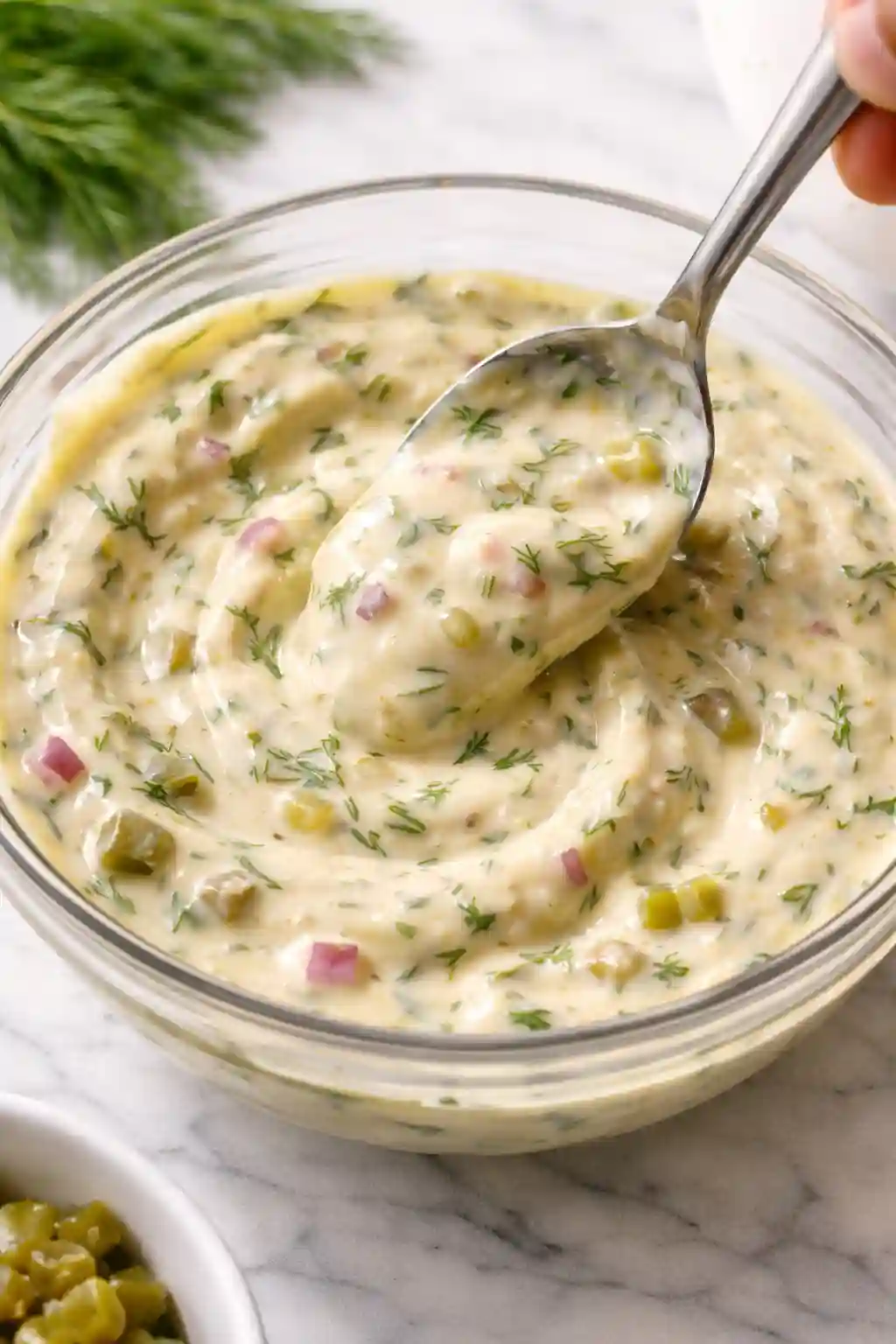
In a large bowl, combine mayonnaise, mustard, pickle juice, chopped dill, onion, salt, and pepper. Stir until smooth, then taste and adjust depending on how tangy or creamy you want it.
Step 6: Add the crunchy ingredients
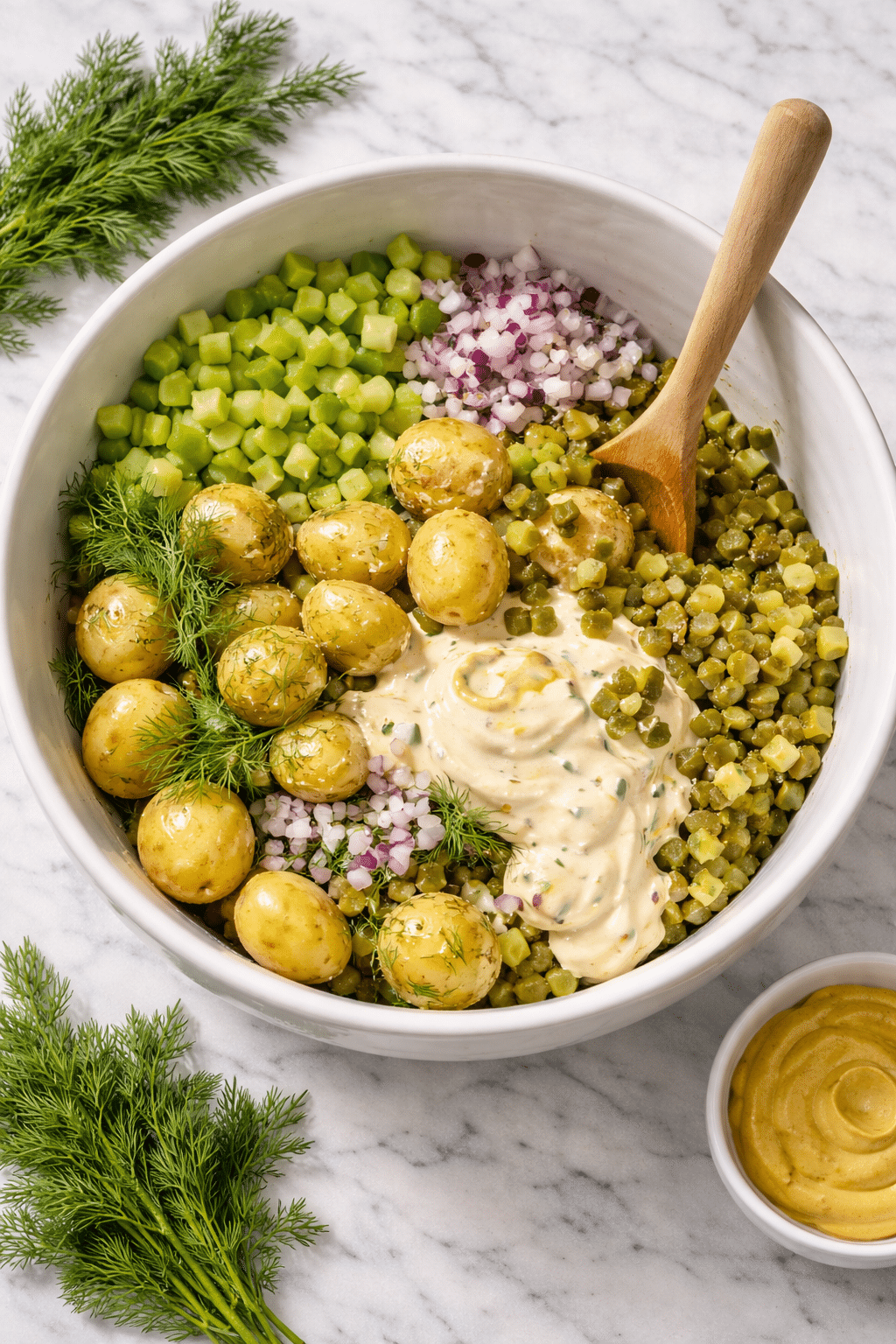
Add chopped pickles, celery, and optional eggs into the dressing. Mix gently to keep that contrast between creamy and crunchy.
Step 7: Combine everything together
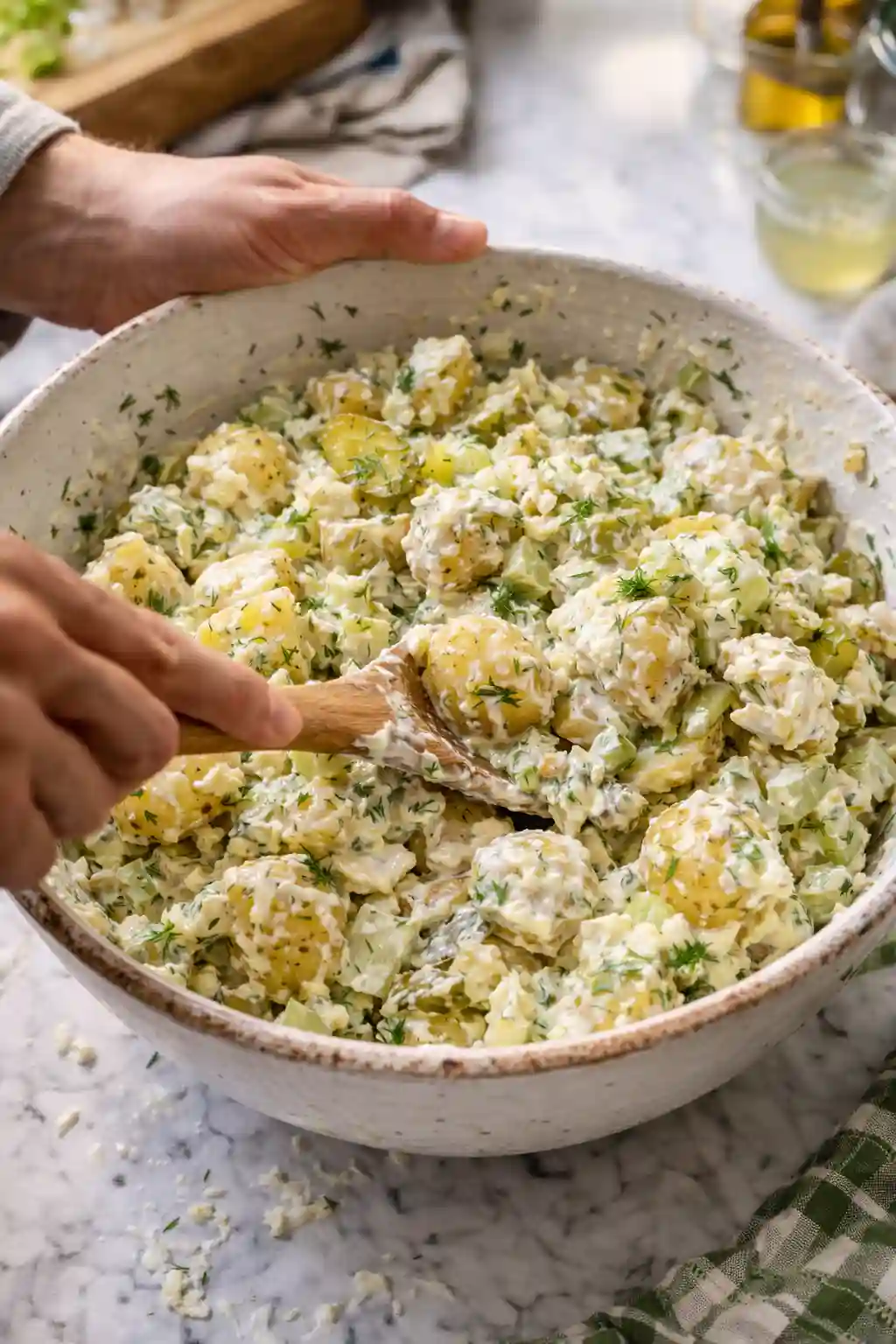
Add the cooled potatoes to the bowl and fold everything together carefully so the potatoes stay intact while getting evenly coated.
Step 8: Chill before serving
Cover and refrigerate for at least 2 hours. This is where dill pickle potato salad really develops its flavor and texture, turning into a proper chilled salad recipe that feels balanced and complete.
Small Details That Make a Big Difference
- Don’t overcook the potatoes or they’ll fall apart during mixing
- Always let the salad rest in the fridge before serving
- Taste after chilling and adjust seasoning if needed
- If it feels dry the next day, a small spoon of mayo or pickle juice brings it back instantly
There’s something slightly surprising about this whole process. Nothing feels complicated, yet the final result tastes like you did something extra. That’s kind of the beauty of dill pickle potato salad. It’s simple, but not basic.
And maybe you’ll notice this too. Right after mixing, it tastes good. But after a few hours in the fridge? It turns into something else entirely. A proper chilled salad recipe that feels balanced, creamy, and just sharp enough to keep you coming back.
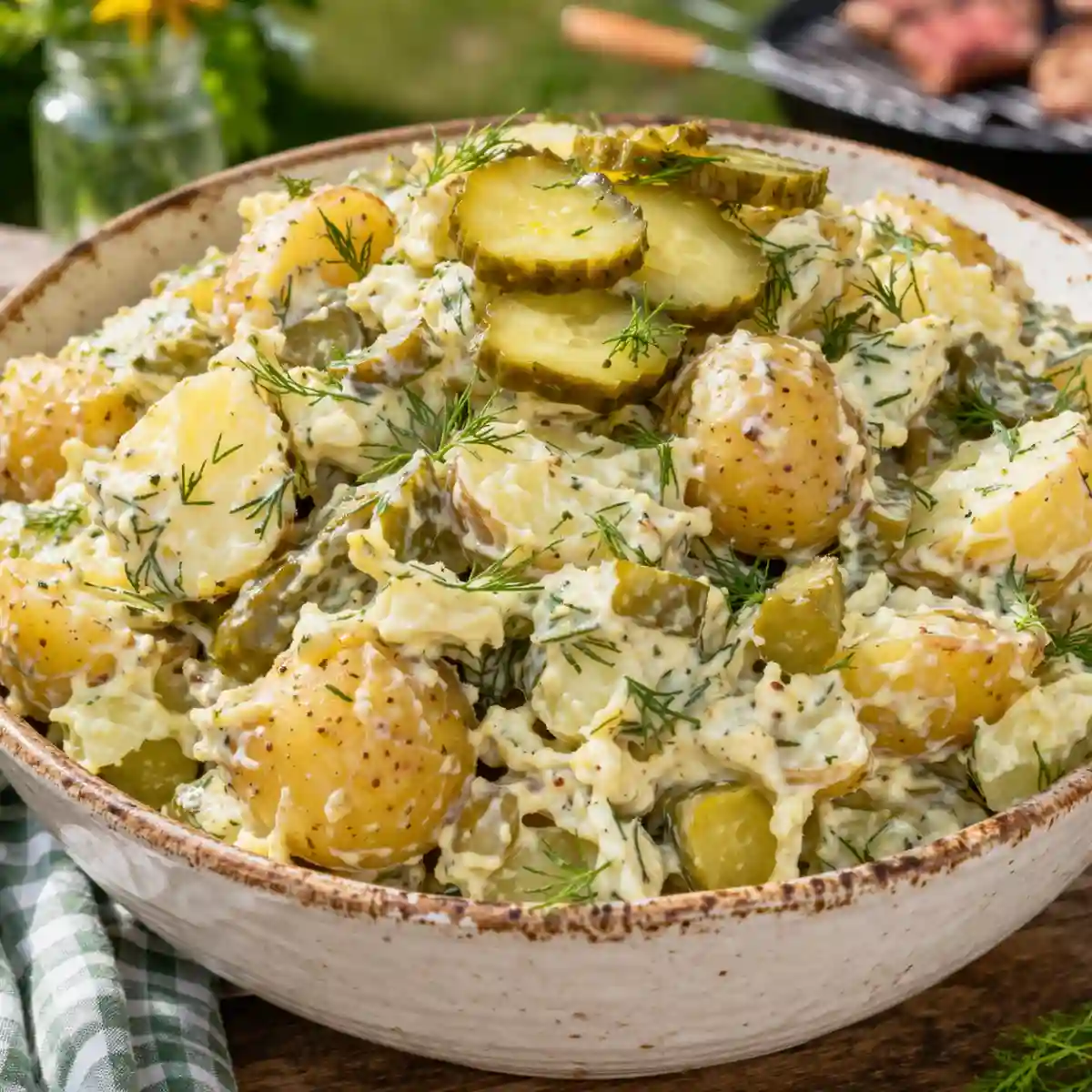

Dill Pickle Potato Salad
Ingredients
Method
- Wash and cut potatoes into bite-sized pieces.
- Boil in salted water for 12–15 minutes until fork-tender.
- Drain and let potatoes cool completely.
- Lightly mash a small portion of the potatoes.
- In a large bowl, mix mayonnaise, mustard, pickle juice, dill, onion, salt, and pepper.
- Add chopped pickles, celery, and optional eggs.
- Gently fold in the potatoes until evenly coated.
- Refrigerate for at least 2 hours before serving.
Notes
| Nutrient | Amount |
| Calories | 280–300 kcal |
| Carbohydrates | 18–22 g |
| Protein | 4–6 g |
| Fat | 18–21 g |
| Saturated Fat | 2–4 g |
| Cholesterol | 90–110 mg |
| Sodium | 350–450 mg |
| Potassium | 500–650 mg |
| Fiber | 2–3 g |
| Sugar | 2–3 g |
| Vitamin A | ~200–300 IU |
| Vitamin C | ~8–12 mg |
| Calcium | ~30–50 mg |
| Iron | ~1–2 mg |
- Best made ahead and chilled for improved flavor
- Add extra pickle juice if you prefer a stronger tang
- If salad thickens in the fridge, stir in a little mayo or pickle juice before serving
Taste Profile: What Makes Dill Pickle Potato Salad So Addictive
There’s a point where dill pickle potato salad stops being just another side dish and starts becoming something people crave. It’s not obvious at first. It’s more like… you take a bite, then another, and suddenly you’re not really thinking about anything else on your plate.
So what’s actually going on here?
It comes down to balance. Not perfect balance, but that slightly messy, real kind of balance where everything plays off each other in a way that feels natural. The creaminess, the tang, the crunch. None of it is overwhelming on its own, but together it creates something that feels complete without being heavy.
Creamy, But Not Heavy
The base of dill pickle potato salad is still that familiar creamy texture. That’s what makes it comforting. But unlike a typical mayonnaise potato salad that can feel thick after a few bites, this one stays lighter. The pickle juice cuts through the richness just enough to keep things from dragging.
It’s a small detail, but it changes the whole experience. Instead of feeling like you’ve had enough after a few bites, you kind of keep going without noticing.
Tangy Flavor That Actually Wakes It Up
This is where dill pickle potato salad really separates itself. The tang isn’t just there for contrast, it drives the flavor. The combination of pickle juice, mustard, and fresh dill creates that sharp, slightly briny edge that makes everything taste more alive.
And here’s the thing. Without that tangy layer, it would just be another creamy side. Good, maybe. Memorable, probably not.
That little kick is what makes people pause mid-bite and think, “Okay, this is different.”
Crunchy Pickles That Change the Texture
Texture is the part most people don’t think about until it’s wrong. A lot of potato salads end up too soft, almost flat. But here, the crunchy pickles and celery break that pattern.
You get soft potatoes, then a bit of crunch, then back to creamy again. It keeps each bite interesting. It also makes dill pickle potato salad feel less heavy, even though it’s still rich underneath.
And maybe this sounds like overthinking it, but once you notice it, you can’t really ignore it. That contrast is doing a lot more work than it seems.
Why It Feels Different From Other Potato Salads
It’s not just one element. It’s the way everything overlaps. The creamy base, the tangy lift, the crunch in between. Nothing feels random.
And maybe that’s why this version stands out. It doesn’t try to be fancy. It just leans into what works and lets those flavors do their thing.
By the time you’ve had a few bites, it kind of explains itself. No big reveal, no dramatic twist. Just a solid, well-balanced dill pickle potato salad that somehow feels better than expected.
The Secret to Creamy Dill Pickle Potato Salad (Never Watery)
If there’s one thing that can ruin dill pickle potato salad, it’s texture. Not the flavor. Not the ingredients. Just that one disappointing moment when it turns out watery, heavy, or oddly mushy. And the frustrating part is, it usually happens even when you follow the recipe “correctly.”
So what’s going wrong?
Most of the time, it’s not one big mistake. It’s a series of small ones that build up. And once you notice them, you start to realize why some versions of dill pickle potato salad feel rich and balanced, while others feel… off.
It Starts With the Potatoes
The biggest issue often begins before you even mix anything. Overcooked potatoes are the fastest way to lose control of texture. When they’re too soft, they break apart during mixing and release excess moisture.
That’s when dill pickle potato salad starts to feel watery instead of creamy.
What you want is fork-tender potatoes that still hold their shape. Soft enough to bite through easily, but firm enough to stay intact when mixed. It’s a small window, but it makes a big difference.
Cooling Changes Everything
This is the step people rush the most. And honestly, it’s understandable. You just want to finish the recipe.
But mixing warm potatoes with dressing is one of the main reasons dill pickle potato salad loses its structure. The heat causes the dressing to thin out and soak unevenly, which leads to that slightly runny consistency later.
Letting the potatoes cool completely helps the dressing sit on the surface instead of disappearing into them.
The Balance Between Creamy and Tangy
It’s tempting to fix dryness by adding more mayonnaise. Seems logical. But too much mayo doesn’t actually solve the problem, it just makes the salad heavier.
The real balance comes from combining mayonnaise with pickle juice and a bit of mustard. That combination keeps the texture smooth while adding a tangy lift that prevents it from feeling dense.
If anything, adding a small splash of pickle juice at the end can bring everything back to life without making it watery.
Small Fixes That Make a Big Difference
- Don’t skip the chilling time, it helps the dressing settle and thicken naturally
- Mix gently to avoid breaking the potatoes
- Add dressing gradually instead of all at once
- If it feels dry after chilling, adjust with a spoon of mayo or a bit of pickle juice
There’s something slightly counterintuitive about all this. You’d think making dill pickle potato salad creamy means adding more dressing. But most of the time, it’s about control, not quantity.
And once you get that balance right, the texture stops being something you worry about. It just works.
What Are the Best Potatoes for Potato Salad?
This is one of those questions people don’t always ask… until something goes wrong. You follow the recipe, everything looks fine, but the texture feels off. Too soft, too grainy, or just not what you expected. And more often than not, it comes down to one thing: the potatoes you chose.
Not all potatoes behave the same, especially in something like dill pickle potato salad where texture matters just as much as flavor.
Waxy vs Starchy Potatoes (What Actually Works)
There are two main types of potatoes you’ll come across:
- Waxy potatoes
- Starchy potatoes
For dill pickle potato salad, waxy potatoes are usually the better choice. These include baby potatoes and red skin potatoes. They hold their shape after boiling, which helps keep that clean, slightly firm bite instead of turning into mash.
Starchy potatoes like russets can work, but they break down more easily. That’s great for mashed potatoes, not always ideal here. If you’ve ever made a russet potatoes salad that felt a bit too soft or crumbly, that’s why.
Why Baby Potatoes Are a Safe Choice
Baby potatoes are probably the easiest option if you don’t want to overthink it. They cook evenly, have thin skins, and naturally give you that creamy texture without falling apart.
They also absorb just enough of the dressing without becoming soggy. That balance is exactly what you want in a chilled salad recipe like this.
And maybe it’s just preference, but leaving the skins on adds a bit more texture. It makes the salad feel less flat, a little more rustic, in a good way.
Can You Use Russet Potatoes?
You can, but you’ll need to be more careful. Russets tend to absorb more water and can break apart faster. If you go this route:
- Cut them into larger chunks
- Avoid overcooking
- Handle them gently when mixing
Otherwise, your dill pickle potato salad can shift from creamy to slightly mushy without much warning.
Quick Guide to Choosing the Right Potato
If you want something reliable and easy:
- Go with baby potatoes or red skin potatoes
If you want a softer, more blended texture:
- Russet potatoes can work, but require more attention
If you’re unsure:
- Start with waxy potatoes and adjust from there
There’s no single “perfect” potato, but there is a better fit depending on the texture you’re aiming for. And once you notice the difference, it’s hard to go back.
Common Mistakes That Ruin Potato Salad (And How to Fix Them)
Here’s the part most recipes skip. Not the ingredients, not the steps… but the mistakes. And the truth is, a lot of people don’t mess up dill pickle potato salad because they can’t cook. They mess it up because no one tells them what actually goes wrong.
You follow everything, it looks fine, and then somehow the texture is off, or the flavor feels flat. That’s usually not bad luck. It’s patterns.
Overcooking the Potatoes
This one happens quietly. You leave the potatoes boiling just a few minutes too long, and suddenly they’re too soft. Not completely ruined, but soft enough that when you mix everything, they start breaking apart.
That’s when dill pickle potato salad turns from creamy to slightly mushy.
Fix:
Check your potatoes early. As soon as a fork slides in easily, stop cooking. Don’t wait for them to fall apart.
Mixing While the Potatoes Are Still Warm
It feels efficient. You want to finish faster, so you mix everything while the potatoes are still warm.
But here’s the problem. Warm potatoes absorb dressing differently. The mayo loosens, the texture shifts, and later in the fridge, the salad can become watery.
Fix:
Let the potatoes cool completely. It’s not just a timing thing, it’s a texture decision.
Adding Too Much Mayonnaise
This is a common reaction. If the salad feels dry, the instinct is to add more mayo.
But too much mayo doesn’t fix dryness. It just makes the salad heavy. The flavor gets muted, and everything starts tasting the same.
Fix:
Balance it instead. Add a bit of pickle juice or mustard to bring back that tangy edge. That’s what keeps dill pickle potato salad from feeling dense.
Not Seasoning Enough
Potatoes absorb flavor, but they also dilute it. What tastes fine in the bowl before mixing can feel bland once everything comes together.
Fix:
Taste after mixing. Then taste again after chilling. Adjust salt, pepper, or even a small splash of pickle juice if needed.
Skipping the Chill Time
This one gets overlooked a lot. You make the salad, taste it right away, and serve it.
It works, but it’s not the same.
Dill pickle potato salad needs time in the fridge for the flavors to settle. Without that, it can feel slightly disconnected, like everything hasn’t fully come together yet.
Fix:
Give it at least 2 hours. Longer if you can. It’s one of those rare dishes that genuinely improves with time.
Trying to Fix Everything at Once
Sometimes the texture feels off, so you add more mayo, more seasoning, more everything… and suddenly it’s harder to control.
Fix:
Adjust one thing at a time. Small changes are easier to manage and usually more effective.
There’s something reassuring about this part. Most mistakes aren’t dramatic. They’re small, fixable, and once you notice them, you don’t really repeat them.
And after a while, making dill pickle potato salad stops feeling like following a recipe… and starts feeling like you just know what to do next.
Variations: Customize Your Dill Pickle Potato Salad
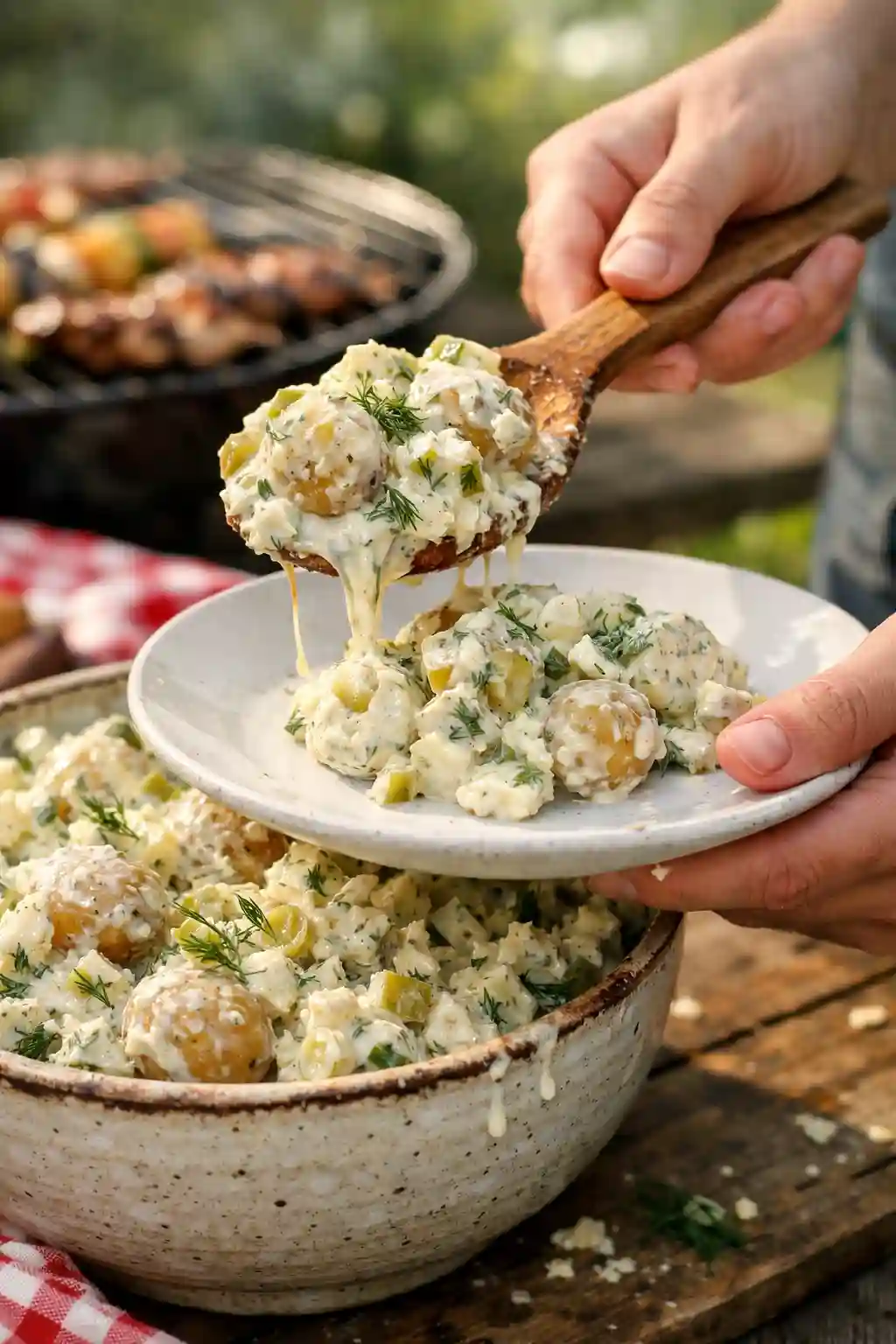
At some point, you’ll probably want to tweak things. Maybe not the first time, because the base version of dill pickle potato salad already works. But after making it once or twice, it’s almost automatic… you start thinking, “What if I change this just a little?”
And honestly, that’s where it gets interesting.
The good thing about dill pickle potato salad is that it’s flexible without falling apart. You can adjust it depending on what you like, what you have, or even the kind of crowd you’re serving.
Add Eggs for a Richer Texture
If you want something a bit more filling, adding hard boiled eggs changes the whole feel of the dish. It becomes closer to a potato egg salad, softer, slightly richer, and more satisfying overall.
It also tones down the sharpness of the pickles just a bit, which can be a good thing if you’re serving people who prefer a milder flavor.
Make It Without Eggs
Not everyone wants eggs in their salad, and that’s completely fine. Dill pickle potato salad still holds up really well without them.
In fact, skipping eggs makes the tangy flavor stand out more. It feels a bit lighter, a bit sharper, and maybe even more refreshing, especially as a summer side dish.
Try a Southern-Style Version
If you lean toward bolder flavors, a southern-style variation works really well here. Add a bit more mustard, maybe a touch of sweetness if you like that contrast, and slightly increase the seasoning.
It gives dill pickle potato salad a deeper, more pronounced flavor without changing its core identity.
Add Sour Cream for Extra Creaminess
If you’ve ever felt like potato salad can be a little too heavy with just mayo, this is an easy adjustment. Mixing in a bit of sour cream softens the texture and adds a subtle tang.
It doesn’t overpower anything, it just makes the whole thing feel smoother and more balanced.
Boost the Crunch and Flavor
If you like texture, you can push it a bit further:
- Add more chopped pickles for extra crunch
- Include celery seeds for a slightly deeper flavor
- Swap white onion for red onion for a sharper bite
Small changes, but they shift the experience more than you’d expect.
Make It Your Own Without Overthinking It
This is probably the most important part. You don’t need to reinvent dill pickle potato salad to make it better for you.
Sometimes it’s just:
- A little more pickle juice
- A bit less mayo
- A slightly different balance of ingredients
And suddenly it feels like your version, not just another recipe you followed.
There’s something satisfying about that. It stops being a fixed set of steps and starts feeling flexible, like you can adjust it without worrying about ruining it.
Make-Ahead Tips: Why This Potato Salad Is Even Better the Next Day
There’s something a little counterintuitive about dill pickle potato salad. You make it, taste it right away, and it’s good. Totally fine. But then… you leave it in the fridge for a few hours, come back to it later, and suddenly it’s better. Not slightly better. Noticeably better.
And at first, it almost feels like luck. But it’s not.
Why Dill Pickle Potato Salad Improves Over Time
When you first mix everything together, the ingredients are still kind of separate. The dressing sits on the surface, the potatoes haven’t fully absorbed anything yet, and the flavors feel a bit sharp or disconnected.
Give it time, and everything starts to settle.
The potatoes slowly absorb the pickle juice and seasoning. The mayo thickens slightly in the cold. The sharpness from the pickles softens just enough to blend into the creamy base.
That’s when dill pickle potato salad starts to feel balanced instead of just assembled.
How Far in Advance Can You Make It?
If you’re planning for a BBQ, picnic, or potluck, this is where dill pickle potato salad becomes really practical.
You can make it:
- 2 to 4 hours ahead for good flavor
- Overnight for the best result
And honestly, overnight is where it really shines. The texture settles, the flavors deepen, and it just tastes more complete.
How to Store It Properly
To keep everything fresh and consistent:
- Store it in an airtight container
- Keep it in the fridge at all times
- Stir gently before serving to redistribute the dressing
It’s one of those rare fridge-friendly dishes that actually benefits from sitting.
What to Do If It Changes Texture
Sometimes after chilling, dill pickle potato salad can feel slightly thicker or a bit dry. That’s normal. The potatoes continue to absorb moisture over time.
Easy fix:
- Add a small spoon of mayonnaise
- Or a splash of pickle juice
Mix gently, and it comes right back.
Why This Matters More Than People Think
A lot of make ahead potato salad recipes claim to hold up well. Some do. Some don’t.
But dill pickle potato salad genuinely improves with time. That makes it one of those low-stress bbq side dishes you can prepare in advance without worrying about last-minute fixes.
And maybe that’s the best part. You’re not rushing before guests arrive. You’re not adjusting seasoning at the last second.
You already know it’s going to work.
Storage, Shelf Life & Freezing Tips for Dill Pickle Potato Salad
This is the part people usually think about last… right after the BBQ, when there’s a big bowl of leftovers sitting on the counter and someone asks, “Is this still good?”
And the answer is, it depends. Not just on time, but on how you stored it and how long it’s been sitting out. Dill pickle potato salad is pretty forgiving, but it’s not something you want to guess with either.
How Long Does Dill Pickle Potato Salad Last in the Fridge?
If stored properly, dill pickle potato salad will last about 3 to 4 days in the fridge.
That’s the safe window. Sometimes it looks fine after that, but the texture and flavor usually start to change. The potatoes can become too soft, and the dressing may separate slightly.
To keep it at its best:
- Store it in an airtight container
- Keep it consistently refrigerated
- Avoid leaving it out for long periods
If it’s been sitting out at room temperature for more than 2 hours, it’s better not to keep it. That part is easy to overlook, especially during a summer party.
Can You Freeze Dill Pickle Potato Salad?
Technically, yes. Realistically… not recommended.
Freezing changes the texture. The mayonnaise can separate, the potatoes can become grainy, and the overall consistency just doesn’t hold up the way you’d expect.
After thawing, dill pickle potato salad often feels watery and uneven. Still edible, but definitely not the same experience.
If you’re thinking ahead, it’s much better to make it fresh or slightly in advance rather than freezing it.
How to Store It the Right Way
Storage isn’t complicated, but a few small habits make a difference:
- Always cover it tightly before placing it in the fridge
- Store it on a shelf, not the fridge door where temperature fluctuates
- Stir gently before serving again to bring back the texture
These small steps help maintain that creamy consistency instead of letting it dry out or separate.
How to Tell If It’s Gone Bad
Sometimes it’s obvious. Sometimes it’s not.
Here are a few signs to watch for:
- Sour or off smell that wasn’t there before
- Excess liquid pooling at the bottom
- Texture becoming overly slimy or grainy
If anything feels off, it’s better to skip it. Potato-based dishes don’t always give second chances.
A Quick Reality Check
Dill pickle potato salad is one of those dishes that feels low-risk, but it still needs a bit of attention when it comes to storage.
The good news is, if you’re making it for a BBQ or picnic, it usually doesn’t last long enough to become a problem. People tend to finish it before you even think about storing it.
And maybe that says everything you need to know.
When to Serve Dill Pickle Potato Salad (BBQ, Picnic & More)
There’s a reason this kind of dish keeps showing up at the same types of gatherings. Not because people lack creativity… but because it just works. Dill pickle potato salad fits into moments where food needs to be easy, reliable, and honestly, a little comforting.
You don’t really plan around it. It just becomes part of the table.
The Go-To BBQ Side Dish
At any BBQ, there’s always a mix of grilled food, sauces, and heavier dishes. That’s exactly where this comes in. It balances things out without trying too hard.
The creamy texture pairs naturally with grilled meats, while the tangy flavor cuts through everything else on the plate. It doesn’t compete, it complements. That’s probably why it ends up being one of those bbq side dishes people keep going back to without thinking.
And since it’s served cold, it also gives a bit of contrast to all the hot food coming off the grill.
Perfect for Picnics and Outdoor Meals
If you’ve ever packed food for a picnic, you already know the struggle. Some dishes don’t travel well, others lose their texture, and a few just don’t feel right once you’re outside.
This one holds up.
Dill pickle potato salad stays consistent, even after a bit of time in a cooler. It’s one of those reliable picnic food ideas that doesn’t need reheating, doesn’t fall apart, and actually tastes better after sitting for a while.
It also fits easily into most picnic recipes without needing adjustments.
A Safe Choice for Potlucks
Potlucks are unpredictable. You don’t know what others are bringing, and there’s always that quiet pressure to bring something people will actually enjoy.
This is where dill pickle potato salad feels like a safe decision. It’s familiar enough that people recognize it, but different enough that it stands out.
It works well alongside other potluck recipes, and more importantly, it doesn’t sit untouched. That alone makes it worth bringing.
Everyday Meals and Family Tables
It doesn’t have to be an event. Sometimes it’s just dinner at home, and you want something simple on the side that doesn’t require much effort.
This fits perfectly into that space too.
As part of your regular rotation of easy side dishes, it gives you something that feels homemade without taking extra time. It also holds well in the fridge, so it can stretch across a couple of meals without losing its appeal.
Why It Works in So Many Situations
There’s nothing complicated about it. That’s kind of the point.
It’s a summer side dish, a quick addition to casual meals, and one of those family side dishes that people don’t question. It shows up, it gets eaten, and it usually disappears faster than expected.
And maybe that’s the best way to describe it. Not impressive in a flashy way. Just consistently good in the moments where that matters most.
Nutrition Information for Dill Pickle Potato Salad
Nutritional values can vary depending on the exact ingredients you use, especially the type of mayonnaise, amount of pickles, and whether you include eggs. That said, here’s a realistic estimate based on a standard serving size.
Estimated Nutrition per Serving (about 1/2 cup)
| Nutrient | Amount |
| Calories | 280–300 kcal |
| Carbohydrates | 18–22 g |
| Protein | 4–6 g |
| Fat | 18–21 g |
| Saturated Fat | 2–4 g |
| Cholesterol | 90–110 mg |
| Sodium | 350–450 mg |
| Potassium | 500–650 mg |
| Fiber | 2–3 g |
| Sugar | 2–3 g |
| Vitamin A | ~200–300 IU |
| Vitamin C | ~8–12 mg |
| Calcium | ~30–50 mg |
| Iron | ~1–2 mg |
For a deeper understanding of balanced meals and nutrition, you can refer to the Healthy Eating Plate developed by Harvard experts.
What This Actually Means
This is still a creamy side dish, so it leans higher in fats due to the mayonnaise. But it also provides some balance from the potatoes and eggs, giving you a mix of carbs, a bit of protein, and micronutrients.
If you’re trying to adjust it:
- Use light mayo to reduce fat and calories
- Add more celery or pickles for extra crunch without increasing calories much
- Skip eggs if you want to slightly lower cholesterol
It’s not a “light” dish, but it’s not meant to be. It’s one of those comfort food recipes that you enjoy in the right setting, usually alongside a full meal.
Conclusion
At some point, it stops being just another recipe you tried once and forget about. Dill pickle potato salad kind of sticks. Not in an obvious way, but in that quiet, reliable way where you start bringing it to more things without even thinking.
It works because it doesn’t try too hard. The ingredients are simple, the steps are manageable, and yet the result feels like more than the sum of its parts. You get that creamy texture, the tangy kick, a bit of crunch, and somehow it all lands exactly where it should.
And maybe that’s what makes it a go-to. It fits into real life. Last-minute BBQs, planned picnics, random dinners where you just want something cold and satisfying on the side. It doesn’t need a special occasion, but it holds its place when there is one.
There’s also something reassuring about knowing you can make it ahead, leave it in the fridge, and come back to something that actually tastes better. Not many dishes give you that kind of flexibility without sacrificing quality.
If anything, this is one of those recipes you adjust over time. Maybe a bit more pickle, a little less mayo, a different balance depending on your taste. And without realizing it, it becomes yours.
So if you were just looking for a simple potato salad, you probably found that. But there’s a good chance you found something a bit more reliable than expected.
More Fresh & Flavorful Salad Recipes You’ll Love
- Dill Pickle Pasta Salad – Creamy, tangy, and perfect for picnics or meal prep.
- Dill Pickle Chicken Salad Recipe – A protein-packed twist with bold pickle flavor.
- Tomato and Cucumber Salad Creamy – Light, refreshing, and ideal for summer meals.
- Chicken Ranch Pasta Salad – Creamy, hearty, and always a crowd favorite.
FAQs About Dill Pickle Potato Salad
Some questions tend to come up again and again, especially after the first time you make it. Not complicated questions, just the kind of small doubts that can change how the final dish turns out.
1. Can you make dill pickle potato salad ahead of time?
Yes, and it’s actually recommended. Making dill pickle potato salad a few hours in advance, or even the day before, allows the flavors to blend properly. The potatoes absorb the dressing, and the overall texture becomes more balanced. It’s one of those rare dishes that genuinely improves after resting in the fridge.
2. How long does dill pickle potato salad last?
When stored in an airtight container in the fridge, it typically lasts about 3 to 4 days. After that, the texture starts to change and the flavor becomes less fresh. If it’s been left out at room temperature for more than a couple of hours, it’s safer not to keep it.
3. Can you freeze dill pickle potato salad?
Freezing is not ideal. While it’s technically possible, the texture doesn’t hold up well after thawing. The dressing can separate, and the potatoes often become grainy or watery. It’s much better to prepare it fresh or slightly ahead of time instead of freezing.
4. What potatoes work best for this recipe?
Waxy potatoes like baby potatoes or red skin potatoes are the best choice. They hold their shape after boiling and keep the salad from becoming too soft. Starchy potatoes like russets can work, but they require more attention to avoid a mushy texture.
5. How do you keep potato salad from becoming watery?
The key is controlling moisture from the start. Avoid overcooking the potatoes, let them cool completely before mixing, and don’t overload the dressing. If it becomes slightly dry after chilling, adding a small amount of mayonnaise or pickle juice helps restore the texture without making it watery.
6. Can you make it without eggs?
Yes, dill pickle potato salad works perfectly without eggs. Skipping them makes the flavor slightly sharper and the texture a bit lighter. It’s a simple adjustment that doesn’t affect the overall structure of the dish.