There is nothing more useful in a home baker’s recipe collection than a reliable bowl of American Buttercream Frosting. It is creamy, sweet, fluffy, and simple enough to make in one mixing bowl. This classic vanilla frosting is perfect for layer cakes, cupcakes, cookies, cake pops, and any dessert that needs a smooth, pipeable finish.
This homemade American Buttercream Frosting recipe uses softened butter, powdered sugar, vanilla, a little cream or milk, and a pinch of salt. The method is straightforward, but a few details make a big difference: whip the butter well, add the sugar gradually, and adjust the consistency slowly.
Why This American Buttercream Frosting Works
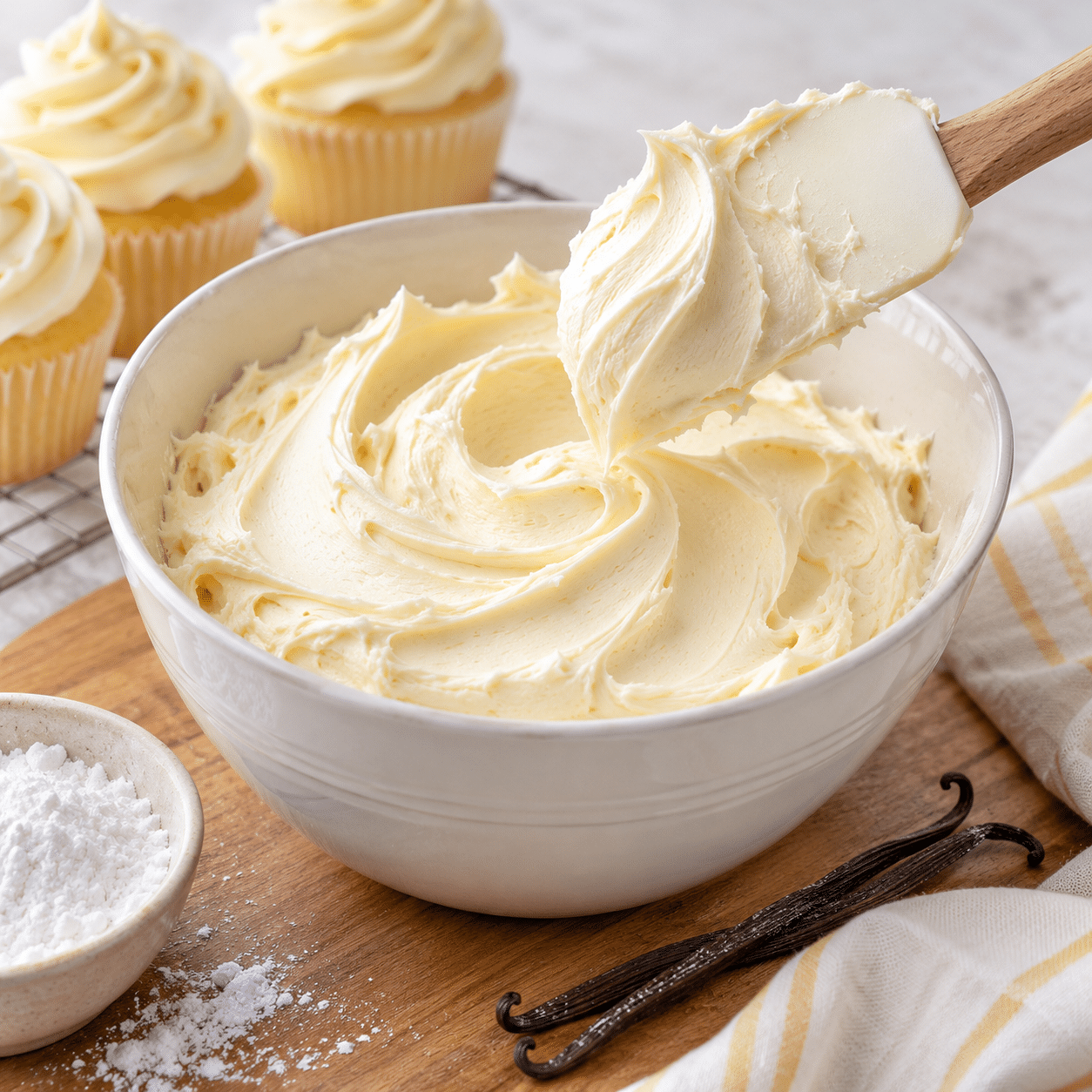
The best American Buttercream Frosting starts with properly softened butter. Butter that is cool but pliable blends smoothly, while melted butter can create a greasy, loose frosting. Once the butter is whipped until pale and airy, powdered sugar gives the mixture structure and sweetness.
Vanilla adds warmth, salt balances the sweetness, and a small amount of cream makes the texture silky. You can stop when the frosting is spreadable or continue mixing until it is light enough for decorative piping. This flexibility makes it a practical base for many cakes and cupcakes.
Unlike cooked buttercreams, this frosting does not require a saucepan, thermometer, or egg whites. That makes it especially friendly for beginners who want a dependable vanilla frosting with a familiar bakery-style flavor.
What Is American Buttercream?
American Buttercream Frosting is a classic butter-and-sugar frosting made by whipping butter with powdered sugar and flavoring. It is usually sweeter and denser than Swiss meringue or Italian meringue buttercream, but it is much faster to prepare.
The texture can range from thick and sturdy to soft and silky depending on the amount of liquid added and how long the buttercream is mixed. A thick batch works well for cake layers and cake pops. A slightly softer batch is ideal for piping rosettes and borders.
This style of frosting also forms a light crust as it sits, which can be helpful when decorating. The surface becomes easier to touch without losing the creamy center. The crust is subtle, so the frosting still tastes soft and buttery when served.
Ingredients for Vanilla Buttercream Frosting
The ingredient list for American Buttercream Frosting is short, so ingredient quality and temperature matter. Use unsalted butter when possible so you can control the salt. Powdered sugar should be fresh and free of hard lumps. Pure vanilla extract or vanilla bean paste gives the most rounded flavor.
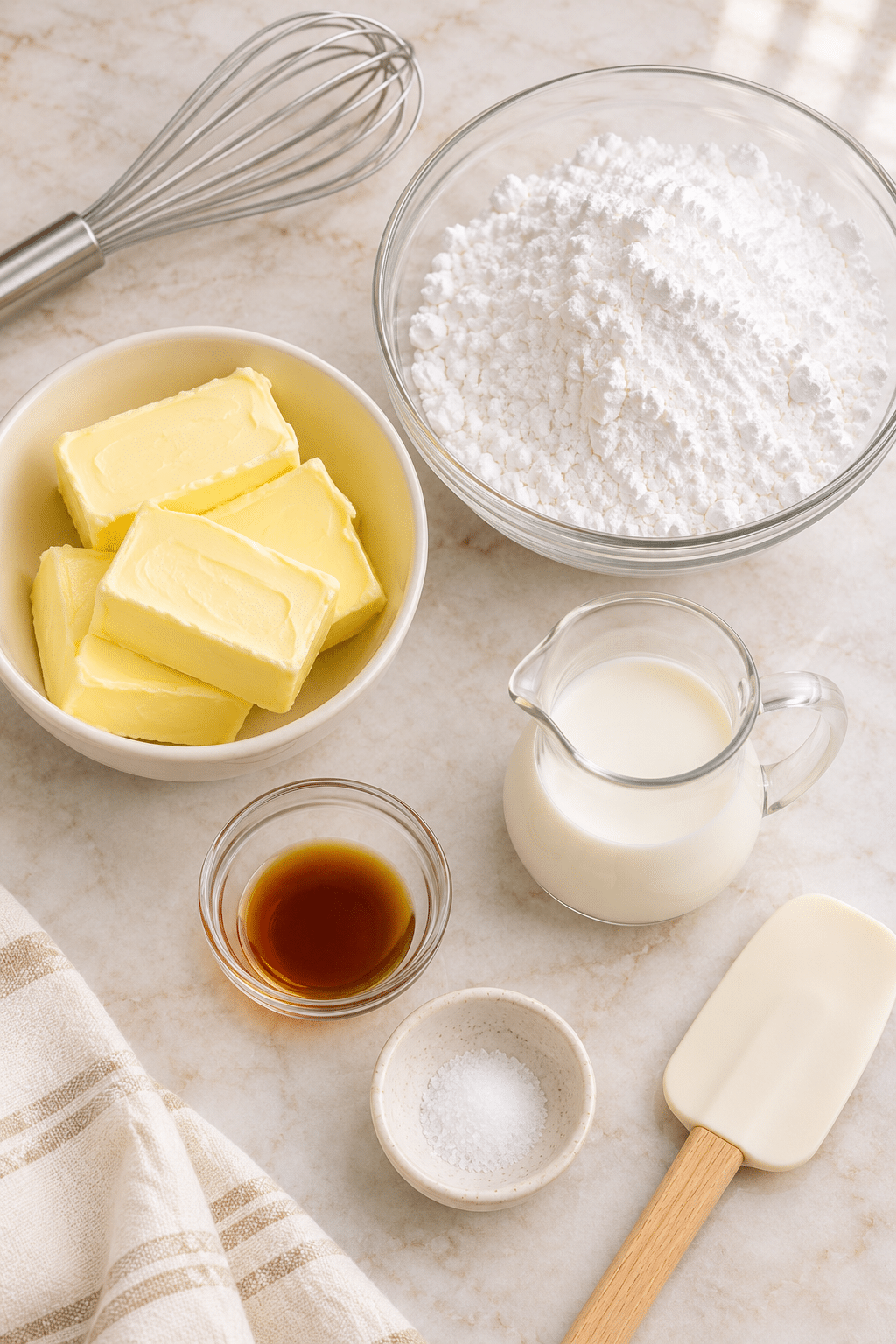
- Unsalted butter: Use room-temperature butter that bends easily but is not shiny or melted.
- Powdered sugar: Also called confectioners’ sugar, it provides sweetness and structure.
- Vanilla: Vanilla extract, vanilla bean paste, or the seeds from a vanilla bean all work well.
- Milk or heavy cream: Add only as needed to loosen the frosting.
- Salt: Optional when using unsalted butter, but useful for balancing the sweetness.
For a simple buttercream frosting vanilla cake, keep the flavor classic with vanilla and salt. For a richer result, use heavy cream. For a slightly lighter consistency, use whole milk. Both options work, so choose what you already have.
How to Soften Butter Correctly
The texture of American Buttercream Frosting depends heavily on the butter. Leave the butter at room temperature for about thirty to sixty minutes, depending on the temperature of your kitchen. It should be soft enough to press with a finger but still hold its shape.
Avoid melting the butter in the microwave. Even a small amount of melted butter can make the finished frosting loose and greasy. If you forgot to soften it, cut the butter into small cubes and let the pieces rest for a few minutes. This speeds the process without creating hot spots.
If your kitchen is warm, use butter that is slightly cooler than typical room temperature. The mixer will warm it as it runs. Butter that is too warm may make piping difficult, especially for tall rosettes or detailed borders.
How to Make American Buttercream Frosting
To make American Buttercream Frosting, place the softened butter in a large mixing bowl. Use a stand mixer fitted with a paddle attachment or a hand mixer. Beat the butter on medium-high speed for three to five minutes, scraping the sides once or twice.
The butter should become noticeably paler and fluffier. This step is more important than it looks because it adds air and helps reduce the heavy texture of the butter. Do not rush it if you want a light vanilla buttercream.
Turn the mixer to low and add the powdered sugar gradually. Add one cup at a time, allowing each addition to blend before adding more. Keep the mixer on low at first to prevent a cloud of sugar from covering the counter.
Add the vanilla and salt. Once the sugar is incorporated, increase the speed to medium-high and beat for another three to four minutes. The frosting may look crumbly at first, but it should come together as it mixes.
Check the consistency. If it is too thick, add milk or cream one-half tablespoon at a time. Mix after each addition. If it becomes too soft, add a little more powdered sugar and beat again.
Step-by-Step Frosting Instructions
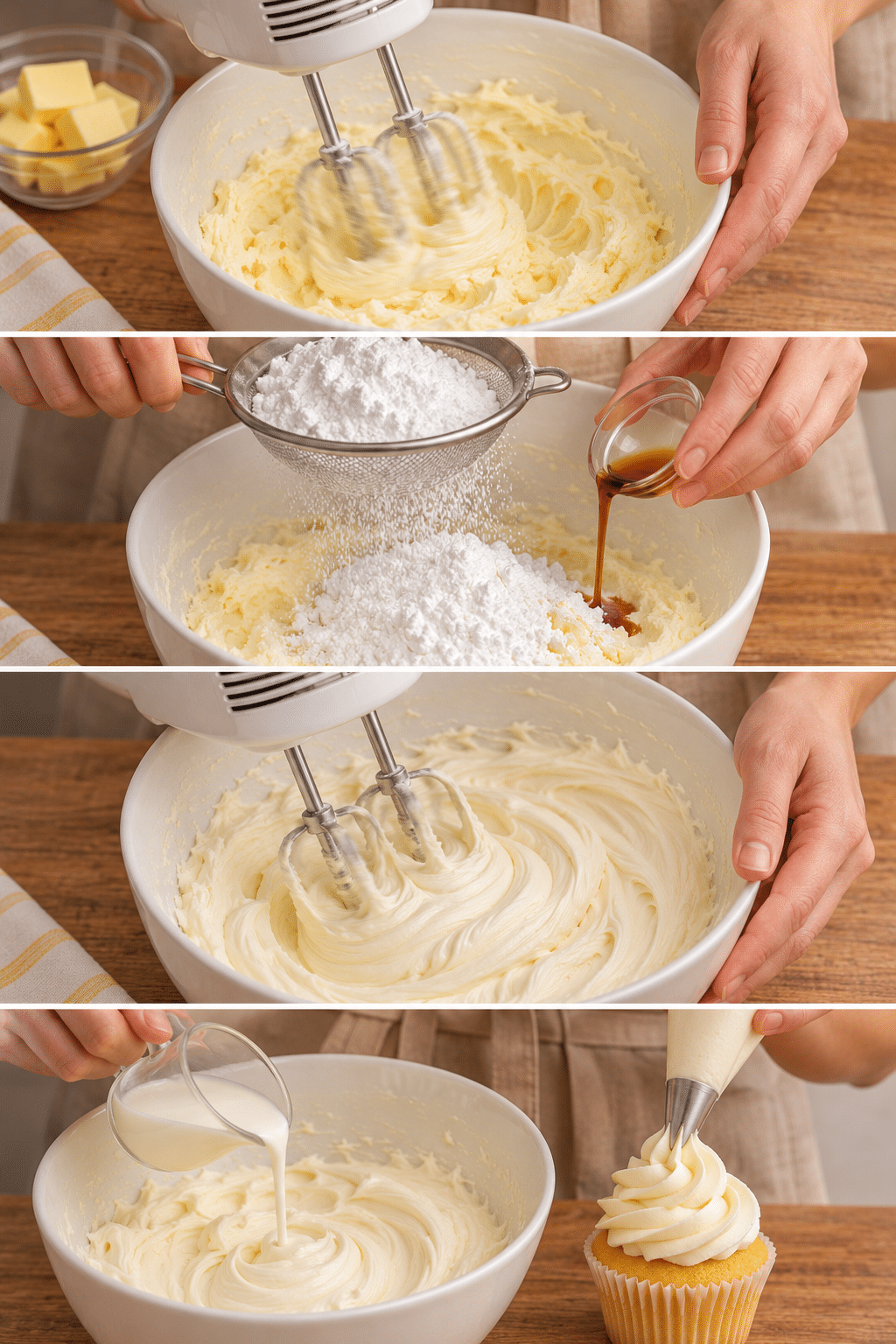
- Beat the butter: Whip softened butter until pale, smooth, and fluffy.
- Add sugar: Mix in powdered sugar gradually on low speed.
- Flavor: Add vanilla and a pinch of salt.
- Whip and adjust: Beat until airy, then add cream or milk a little at a time.
- Use: Spread the frosting on a cake or transfer it to a piping bag.
These steps make American Buttercream Frosting easy to repeat. The most important visual cue is texture: the buttercream should look smooth, hold a soft peak, and glide from a spatula without tearing the cake.
How Long Should You Whip Buttercream?
For the best American Buttercream Frosting, whip the butter alone for three to five minutes and then beat the completed frosting for another three to four minutes. Longer mixing incorporates more air and creates a lighter finish.
With a hand mixer, you may need a little extra time because the motor and beaters are less powerful than a stand mixer. Scrape the bowl frequently so the butter and sugar combine evenly.
Do not judge the frosting too early. It can look grainy or powdery during the first minute after adding the sugar. Continue mixing before adding extra liquid. In many cases, the texture becomes smooth simply because the powdered sugar has had time to hydrate and blend.
How to Get a Smooth, Fluffy Texture
If your American Buttercream Frosting feels grainy, sift the powdered sugar before using it and continue whipping. Very cold butter can also leave small lumps, so make sure the butter is evenly softened before you start.
For the fluffiest texture, scrape the bowl during mixing and use a paddle attachment if your mixer has one. A paddle can reduce large air pockets while still creating a light frosting. If you use a whisk attachment, the frosting may become especially airy but can contain more bubbles.
To remove excess air bubbles before decorating a cake, mix the finished frosting on low speed for one to two minutes. Press the frosting against the side of the bowl with a spatula, then fold it back together. This creates a smoother finish for spreading.
Buttercream Frosting for Cake Pops
American Buttercream Frosting is an excellent choice for cake pops because it binds crumbs without overpowering the cake. Start with a small amount of frosting and mix it into finely crumbled cake. Add more only if the mixture will not hold together.
The cake-pop mixture should feel like soft dough. If it looks wet or greasy, add more cake crumbs. If it crumbles when rolled, add another spoonful of frosting. Chill the shaped balls before dipping them in melted candy coating or chocolate.
Because this frosting is sweet, a lightly flavored cake such as vanilla, chocolate, or red velvet works well. Add a little salt to the buttercream if you want the cake pops to taste more balanced.
Vanilla Buttercream Frosting for Piping
For American Buttercream Frosting used for piping, aim for a consistency that holds a peak without feeling stiff. A star tip needs frosting firm enough to keep its ridges, while a round tip can work with a slightly softer texture.
Fill the piping bag no more than halfway. This gives you better control and prevents the warmth of your hands from softening the buttercream too quickly. If the frosting becomes soft, place the filled bag in the refrigerator for a few minutes, then knead it gently before piping.
To pipe clean rosettes, hold the tip vertically, squeeze steadily, and move in a small spiral. For smooth borders, use consistent pressure and keep the tip close to the cake surface. Practice on parchment, then scrape the frosting back into the bowl and reuse it.
Flavor Variations
The beauty of American Buttercream Frosting is that it can become a new flavor with one or two additions. Add lemon or orange zest for a fresh citrus version. Mix in a spoonful of melted and cooled chocolate for chocolate buttercream. Use almond, coconut, maple, or peppermint extract in small amounts.
For fruit flavors, add a reduced fruit puree or finely ground freeze-dried fruit. Make sure any puree is cool and thick before mixing it into the frosting. Too much liquid can make the buttercream loose.
Crushed cookies, finely chopped nuts, mini chocolate chips, or sprinkles can add texture. Use small pieces if you plan to pipe the frosting, because large pieces may block a narrow piping tip.
For a naturally colorful finish, use freeze-dried strawberry powder, cocoa powder, or matcha. Gel food coloring is usually better than liquid coloring because it provides stronger color without thinning the frosting.
How to Color Vanilla Buttercream
Coloring American Buttercream Frosting is easiest after the frosting is fully mixed. Add gel food coloring with a toothpick or the tip of a small spatula. Mix thoroughly, then wait a few minutes because many colors deepen as they rest.
For pastel colors, add a tiny amount of gel. For deep red, navy, or black, tint the frosting several hours ahead if possible. The color will develop over time, and you may need less gel than expected.
Divide the frosting into separate bowls when making a multicolored cake. Keep the bowls covered so the surface does not crust. Stir each color before transferring it to a piping bag.
Using Buttercream on Cakes and Cupcakes
A batch of American Buttercream Frosting can cover about twelve to sixteen cupcakes with generous piped swirls, twenty-four cupcakes with a thin spread, or a two-layer six- or eight-inch cake. The exact amount depends on the thickness of the frosting and the amount of decoration.
For a layer cake, place a small dot of frosting on the cake board to secure the first layer. Add a filling layer, spread it evenly, and place the second cake layer on top. Apply a thin crumb coat, chill briefly, and then add the final coat.
For cupcakes, pipe from the outside toward the center or from the center outward depending on the design. Add sprinkles while the frosting is still soft so they adhere. For a simple buttercream frosting vanilla cake, finish with a smooth coat and a few vanilla sugar pearls.
Storage and Make-Ahead Tips
Store American Buttercream Frosting in an airtight container in the refrigerator for up to two weeks. Press plastic wrap directly against the surface before closing the container to reduce air exposure and prevent the butter from absorbing fridge odors.
Buttercream can also be frozen for up to three months. Thaw it overnight in the refrigerator, then let it come to room temperature. Beat it again before using. If it looks separated, continue mixing; the texture usually comes back together.
When frosting a cake, the finished dessert may sit at room temperature in a cool room. Avoid leaving it in direct sun or a hot car, especially if the cake includes fillings that require refrigeration. Temperature affects the buttercream more than the clock.
Common Problems and Easy Fixes
If your American Buttercream Frosting is too thick, add milk or cream one-half tablespoon at a time. If it is too thin, add powdered sugar in small amounts and mix well. Do not add a large amount of sugar all at once because the frosting can become overly sweet.
If the frosting is yellow, the butter may be naturally deep in color or it may not have been whipped long enough. Continue beating to lighten the appearance. A tiny amount of violet gel food coloring can visually neutralize yellow tones, but add it carefully.
If the frosting is lumpy, check whether the butter was too cold or the powdered sugar had hard pieces. Let the bowl sit for a few minutes, then beat again. Pressing the frosting against the side of the bowl can help break up small lumps.
If the frosting is greasy, the butter was probably too warm. Chill the bowl for ten to fifteen minutes, then whip again. Work in a cool room when decorating elaborate cakes.
Frequently Asked Questions
What is the best vanilla buttercream recipe for beginners?
This American Buttercream Frosting is a strong beginner recipe because it uses simple ingredients and does not require cooked sugar or egg whites. Whip softened butter, add powdered sugar gradually, flavor with vanilla, and adjust the texture with cream.
Can I use salted butter?
Yes. If you use salted butter, skip the added salt until you taste the finished frosting. Different brands contain different amounts of salt, so adjusting at the end gives you better control.
Can I reduce the powdered sugar?
You can reduce it slightly, but the frosting will be less sweet, less voluminous, and softer. If you need a stable frosting for piping, keep enough powdered sugar to support the shape.
Can this frosting sit out?
Because it contains a high proportion of sugar, American Buttercream Frosting can sit at room temperature in a cool environment. Keep decorated desserts away from heat and refrigerate any fillings that are perishable.
How do I make it less sweet?
Add a pinch of salt, use a little more vanilla, or replace a small amount of the liquid with cream cheese for a tangier variation. Do not remove too much sugar if you need a firm piping consistency.
Helpful Baking Resources
If you enjoyed making American Buttercream Frosting, use it with vanilla cupcakes, chocolate cake, sugar cookies, or cake pops. You can also create a dessert table with several frosting colors and simple piping patterns.
For general guidance on building balanced meals and enjoying treats alongside nourishing foods, Harvard T.H. Chan School of Public Health shares practical information in its Healthy Eating Plate guide.
Final Thoughts
American Buttercream Frosting is one of those foundational recipes that rewards practice. Once you understand butter temperature, mixing time, and consistency, you can frost almost any cake with confidence.
Keep this American Buttercream Frosting recipe ready for birthdays, holidays, weekend baking, and last-minute cupcakes. It is simple, flexible, and easy to flavor, which is exactly why homemade vanilla buttercream remains a favorite in home kitchens.
Choosing the Right Buttercream Consistency
The ideal American Buttercream Frosting consistency depends on what you are decorating. For filling cake layers, keep the frosting thick enough to stay in place when spread with an offset spatula. For a crumb coat, a medium consistency is easier because it glides over crumbs without pulling at the cake.
For cupcake swirls, the frosting should be soft enough to squeeze through the piping tip but firm enough to keep its ridges. If the buttercream feels stiff inside the bag, let it rest at room temperature for a few minutes and knead the bag gently. If it feels too soft, chill it briefly.
For smooth cake sides, add just enough cream to make the frosting spreadable. Use a bench scraper while turning the cake slowly. If small air pockets appear, warm the scraper slightly and smooth again. The goal is not to press hard, but to move the frosting evenly around the cake.
One batch of American Buttercream Frosting usually makes about three cups. You may need one and a half batches for a tall cake, a double batch for generous piping, or a smaller half batch for a dozen lightly frosted cupcakes. It is better to make a little extra than to run out while decorating, especially when matching a color.
When making multiple batches, weigh the ingredients if you want perfectly consistent results. Keep the mixing times similar and use butter from the same package when possible. This helps each batch taste and look the same, which is important for wedding cakes, birthday cakes, and dessert tables.
Finally, remember that decoration does not need to be complicated. A smooth layer, a few piped stars, and a sprinkle of colored sugar can make a homemade cake look polished. The flavor of American Buttercream Frosting is already familiar and comforting, so simple finishes often look the most inviting.
Before serving, let a chilled cake sit briefly at room temperature so the buttercream softens slightly. This brings out the vanilla flavor and gives the frosting a creamy bite. A short rest also makes it easier to slice the cake cleanly without cracking the outer layer.
With these small adjustments, American Buttercream Frosting can move from a quick everyday icing to a dependable decorating tool for special occasions.
American Buttercream Frosting
Ingredients
Method
- Beat softened butter on medium-high speed for 3 to 5 minutes until pale and fluffy.
- Turn the mixer to low and add powdered sugar gradually until incorporated.
- Add vanilla and salt, then mix on medium-high for 3 to 4 minutes until smooth and airy.
- Add milk or cream one-half tablespoon at a time until the frosting reaches the desired consistency, then spread or pipe.