
Old Fashioned Peach Custard Pie Recipe is one of those desserts that instantly brings back memories of family gatherings, summer afternoons, and the sweet aroma of fresh peaches baking in the oven.
Have you ever pulled a peach custard pie out of the oven, waited impatiently for it to cool, sliced into it, and watched the filling spread across the plate?
I certainly have.
A few years ago, I was determined to recreate the peach custard pie my grandmother used to make. The flavor was exactly what I remembered. Sweet peaches, creamy custard, and a buttery crust. But there was one problem.
The filling was far too loose.
“Did I underbake it?” I asked myself.
After many test batches, I discovered that the issue wasn’t the recipe itself. The real challenge was managing the moisture from the peaches while giving the custard enough structure to set properly.
If you’ve faced the same frustration, you’re in the right place.
This old fashioned peach custard pie combines juicy peaches, a rich vanilla custard, and a flaky pastry shell into a dessert that tastes like summer in every bite. Better yet, this recipe focuses on the small details that many recipes skip. You’ll learn how to control excess moisture, protect your crust, and create clean, beautiful slices instead of a runny filling.
Whether you’re making a fresh peach custard pie during peak peach season or using frozen peaches when they’re out of season, these simple techniques can help you achieve reliable results every time.
Let’s start with the science behind a perfectly set custard pie and why some pies turn watery while others slice beautifully.
Table of Contents
Table of Contents
The Culinary Science: How to Avoid a Watery Custard Pie
Many bakers follow an Old Fashioned Peach Custard Pie Recipe and still end up with a filling that looks perfect in the oven but turns soft and watery after slicing. The reason usually comes down to moisture control and baking temperature.
Understanding a few simple baking principles can help you create a pie with a creamy texture and clean slices every time.
Why Custards Become Watery
Custard filling depends on eggs for structure. As the pie bakes, the egg proteins slowly firm up and create the smooth texture that makes custard pies so popular.
Problems start when the filling gets too hot.
When eggs overcook, they tighten too much and push out trapped moisture. Instead of a silky filling, you end up with liquid collecting inside the pie. This process is often called “weeping.”
That is why a gentle baking temperature is so important. Slow, steady heat allows the custard to set without releasing excess water.
A well-made Old Fashioned Peach Custard Pie Recipe relies on patience. Rushing the baking process often leads to disappointing results.
The Dual Thickener Secret
Fresh peaches contain a large amount of natural juice. Even perfectly ripe peaches can release moisture while baking.
Relying on eggs alone is often not enough.
A small amount of all-purpose flour combined with cornstarch creates extra support for the custard. Each ingredient serves a different purpose:
- Eggs create the traditional custard texture.
- Cornstarch absorbs excess fruit juices.
- Flour adds stability and helps the filling hold its shape.
Together, they create a filling that remains creamy while producing neat slices.
Why Macerating Peaches Makes a Difference
One of the biggest mistakes bakers make is placing fresh peaches directly into the pie crust.
Instead, toss the sliced peaches with sugar and fresh lemon juice. Let them sit for about 20 minutes before assembling the pie.
This process, known as macerating peaches, pulls excess moisture from the fruit before baking.
After the peaches rest, drain away the collected liquid. This simple step reduces the chance of a runny filling and helps your custard set properly.
The Science Behind Low and Slow Baking
Many traditional bakers prefer baking custard pies at a moderate temperature for a longer period.
There is a good reason for this.
Gentle heat allows the egg proteins to set gradually. Fast, intense heat causes the proteins to tighten too quickly, which can force moisture out of the filling.
The result is a smoother texture, better flavor, and cleaner slices.
This is one of the key reasons an Old Fashioned Peach Custard Pie Recipe can deliver a rich, velvety filling when baked correctly.
By controlling moisture, using a balanced thickening method, and baking with gentle heat, you create the foundation for a peach custard pie that looks beautiful and tastes even better.
Fresh vs. Frozen vs. Canned Peaches: The Structural Math
Choosing the right peaches can make a noticeable difference in your final pie. While many bakers prefer fresh fruit, frozen and canned peaches can also produce excellent results when handled properly.
The secret is understanding how much moisture each option brings to the filling. A successful Old Fashioned Peach Custard Pie Recipe depends on controlling that moisture before the pie goes into the oven.
Whether you use fresh, frozen, or canned peaches, the goal remains the same: create a rich custard filling that slices cleanly and holds its shape. That is exactly what this Old Fashioned Peach Custard Pie Recipe is designed to achieve.
Fresh Peaches: The Gold Standard
Fresh peaches are often considered the best choice because they provide natural flavor, pleasant texture, and balanced sweetness.
Look for peaches that have:
- A sweet aroma near the stem
- A golden yellow background color
- Slight softness when gently pressed
For the smoothest texture, many bakers remove the skins before baking.
A quick blanching method makes peeling easy:
- Cut a small X on the bottom of each peach.
- Place them in boiling water for 30 seconds.
- Transfer immediately to ice water.
- Peel away the loosened skin.
After peeling and slicing, measure exactly 3 cups of peaches. This amount helps maintain the proper fruit-to-custard ratio and prevents overflow during baking.
Frozen Peaches: The Best Off Season Choice
Frozen peaches offer convenience and availability throughout the year.
However, they contain more moisture than fresh peaches once thawed.
To prepare frozen peaches correctly:
- Thaw completely.
- Drain all excess liquid.
- Pat dry with paper towels.
- Measure after draining.
These extra steps help protect the texture of your filling. Many failed custard pies result from adding frozen fruit directly into the crust without removing excess moisture first.
When prepared properly, frozen peaches can still produce a delicious Old Fashioned Peach Custard Pie Recipe with a creamy filling and balanced peach flavor.
Canned Peaches: The Quickest Shortcut
Canned peaches work well when time is limited.
They are already peeled, sliced, and ready to use. Still, a few adjustments are necessary.
For best results:
- Drain thoroughly.
- Pat dry before measuring.
- Reduce the recipe sugar by 1/4 cup if packed in syrup.
This adjustment keeps the filling from becoming overly sweet and allows the peach flavor to remain the star of the dessert.
Which Peach Option Wins?
Each choice offers unique benefits.
| Peach Type | Main Advantage | Extra Preparation |
| Fresh Peaches | Best flavor and texture | Peeling and slicing |
| Frozen Peaches | Available year round | Thawing and draining |
| Canned Peaches | Fast and convenient | Draining and sugar adjustment |
No matter which option you choose, proper moisture control remains the most important factor.
The peaches should never flood the custard with excess liquid. Following this simple rule helps create the clean slices and creamy texture people expect from a classic Old Fashioned Peach Custard Pie Recipe.
By selecting the right peaches and preparing them correctly, you set the foundation for a pie that bakes evenly, tastes rich, and delivers beautiful slices every time.
3 Rules to Prevent a Soggy Bottom Crust
Nothing is more disappointing than pulling a beautiful pie from the oven only to discover a soft, damp crust underneath. Even if the filling tastes amazing, a soggy crust can ruin the overall texture.
One reason many bakers struggle with an Old Fashioned Peach Custard Pie Recipe is that the custard and peaches naturally release moisture during baking. Without a few protective steps, that moisture can soak directly into the pastry shell.
Fortunately, preventing a soggy crust is easier than most people think.
Rule 1: Docking the Dough
Docking simply means piercing the bottom of the pie crust with a fork before baking.
This small step allows steam to escape as the crust heats up. Without those tiny holes, air pockets can form beneath the pastry, creating uneven areas that weaken the crust.
To dock the dough:
- Roll the crust into the pie plate.
- Press it gently into place.
- Use a fork to poke holes across the bottom.
- Avoid piercing the sides of the crust.
Many experienced bakers consider this one of the easiest ways to improve the structure of an Old Fashioned Peach Custard Pie Recipe before the filling is even added.
Rule 2: Par Bake the Crust
Par baking, sometimes called pre baking, gives the crust a head start before it meets the wet filling.
When raw pastry and liquid custard enter the oven together, the filling often cooks faster than the crust. The result can be a pale and soft bottom layer.
A short pre bake helps solve this issue.
Follow these simple steps:
- Line the crust with parchment paper.
- Fill with pie weights or dried beans.
- Bake for 5 to 10 minutes.
- Remove the weights and parchment.
This process begins setting the pastry structure while reducing the amount of moisture it absorbs later.
For bakers seeking consistent results, par baking is one of the most valuable techniques used in a successful Old Fashioned Peach Custard Pie Recipe.
Rule 3: Create an Egg White Moisture Barrier
Professional bakers often use a simple trick that many home recipes overlook.
After par baking, brush a thin layer of egg white over the warm crust.
The residual heat helps the egg white cook almost instantly, creating a thin protective coating on the pastry surface.
This barrier helps reduce direct contact between the crust and the custard filling.
The process takes less than a minute but can make a noticeable difference in the final texture.
The Soggy Bottom Protection Checklist
Before adding your peaches and custard, confirm that you have completed all three steps:
✔ Docked the crust with a fork
✔ Par baked the pastry shell
✔ Brushed the crust with egg white
Together, these simple techniques create a strong foundation for your pie. Instead of a wet bottom crust, you’ll get a flaky shell that complements the creamy filling and juicy peaches beautifully.
When combined with proper moisture control and careful baking, these methods help transform an ordinary pie into an exceptional homemade dessert.
Ingredients for Old Fashioned Peach Custard Pie Recipe
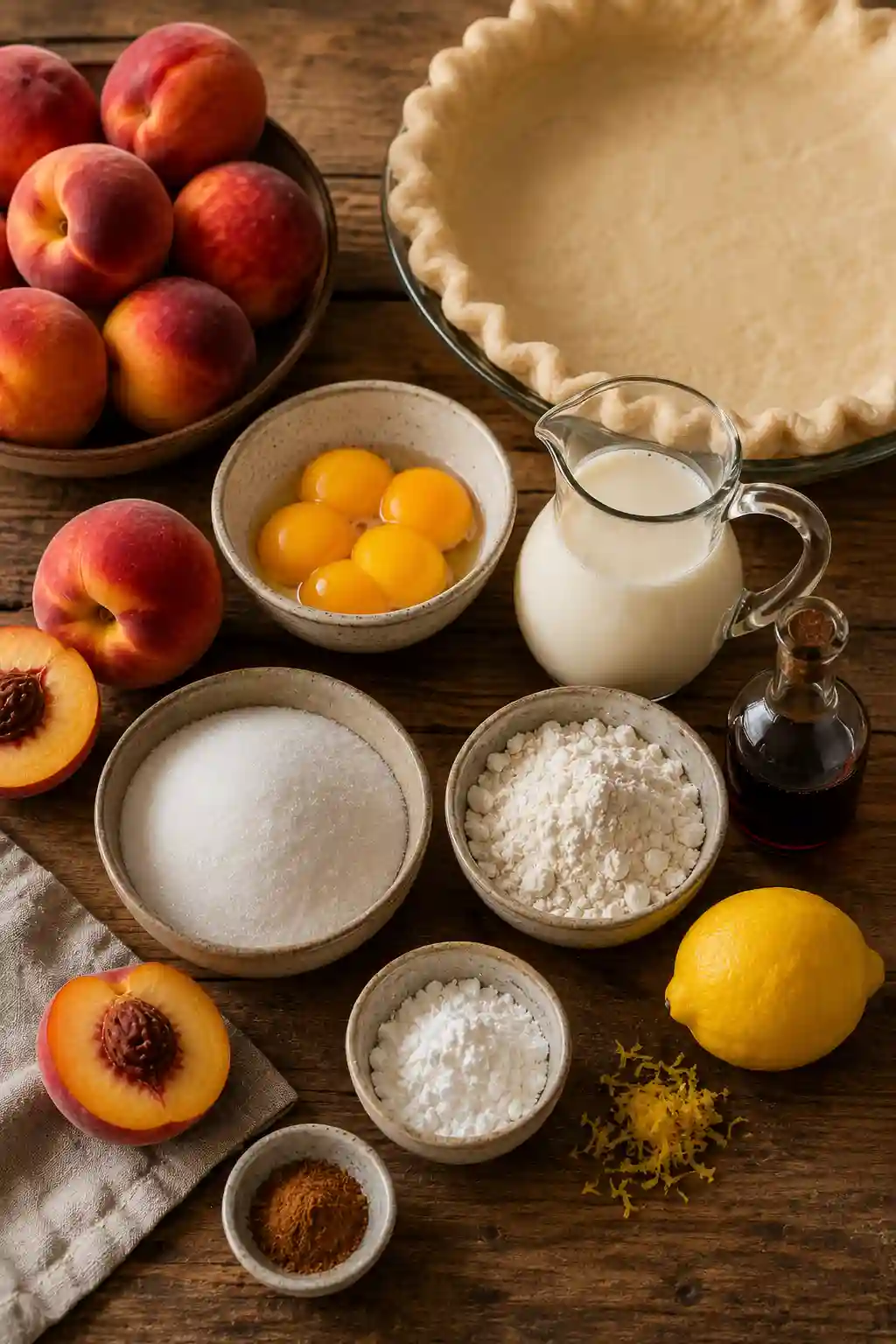
The beauty of this Old Fashioned Peach Custard Pie Recipe comes from its simple ingredients. Each component works together to create a creamy custard filling, sweet peach flavor, and flaky crust that make this dessert so memorable.
For the Pie Crust
- 1 unbaked 9 inch pie crust
- 1 egg white, lightly beaten (for the moisture barrier)
For the Peach Layer
- 3 cups fresh peaches, peeled and sliced
- 1 tablespoon fresh lemon juice
- 2 tablespoons granulated sugar
For the Custard Filling
- 3 large egg yolks
- 1 cup heavy whipping cream
- 1/2 cup granulated sugar
- 1 teaspoon pure vanilla extract
- 1 tablespoon cornstarch
- 1 tablespoon all purpose flour
- 1/4 teaspoon ground nutmeg
Optional Flavor Additions
Want to give your Old Fashioned Peach Custard Pie Recipe a unique twist? Try one of these additions:
- 1/4 teaspoon ground cinnamon
- 1/4 teaspoon almond extract
- 1 tablespoon bourbon
- 1 teaspoon orange juice
- Pinch of cardamom
Use only one or two additions so the peach flavor remains the star of the dessert.
Optional Brown Sugar Streusel Topping
For extra texture and sweetness, prepare a simple crumb topping using:
- 1/4 cup brown sugar
- 1/4 cup all purpose flour
- 2 tablespoons cold unsalted butter
Mix until coarse crumbs form, then sprinkle over the pie before baking.
Ingredient Notes
Choosing the Best Peaches
Fresh freestone peaches are ideal because the flesh separates easily from the pit and holds its shape during baking.
Look for peaches that are:
- Fragrant
- Firm but ripe
- Free from large bruises
Using Frozen Peaches
If fresh peaches are unavailable, thaw frozen peaches completely and drain away excess liquid before measuring.
Using Canned Peaches
Drain canned peaches thoroughly and reduce the sugar by 1/4 cup if the peaches are packed in syrup.
These small adjustments help maintain the proper balance of sweetness and texture in your Old Fashioned Peach Custard Pie Recipe.
Step by Step: How to Make Old Fashioned Peach Custard Pie
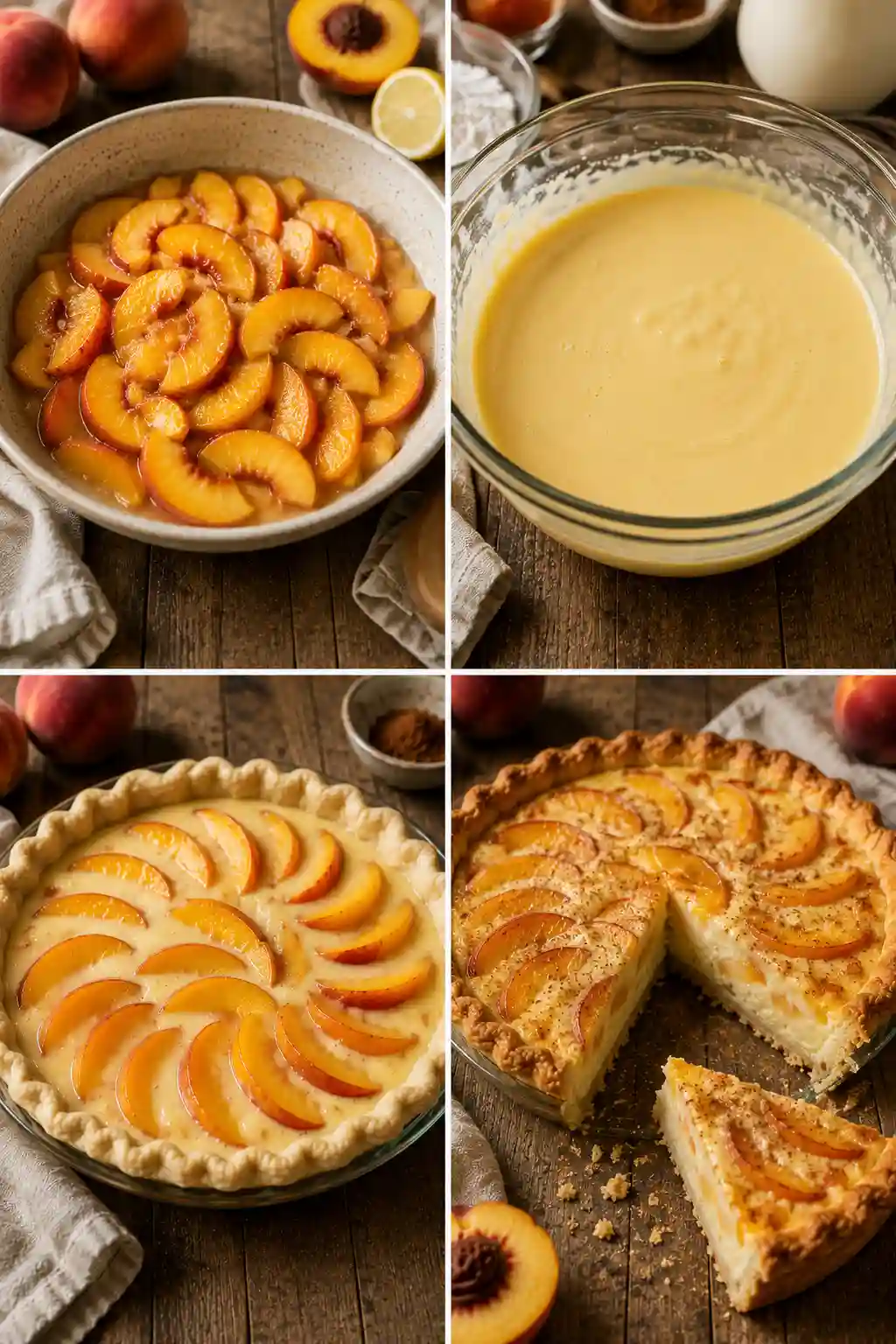
Now that you understand the science behind a stable custard and a crisp crust, it’s time to bring everything together. This step by step process is designed to help you create an Old Fashioned Peach Custard Pie Recipe with a creamy filling, juicy peaches, and clean slices.
Follow each stage carefully for the best results.
Step 1: Roll and Pre Bake Your Crust
Begin by preparing a 9 inch pie plate with your favorite homemade or store bought pastry dough.
Roll the dough into a circle slightly larger than the pie plate. Gently transfer it into the pan and press it into the bottom and sides without stretching it.
Trim any excess dough and crimp the edges as desired.
Next, dock the crust by piercing the bottom several times with a fork. This helps steam escape during baking.
Line the crust with parchment paper and fill it with pie weights or dried beans.
Bake for 5 to 10 minutes until the crust begins to set.
Remove the weights and parchment, then brush the warm crust with a thin layer of egg white. This creates a moisture barrier that helps protect the pastry from the custard filling.
Set the crust aside while preparing the peaches.
Step 2: Macerate and Measure the Peaches
Place your sliced peaches into a large mixing bowl.
Add a small amount of sugar and fresh lemon juice, then toss until evenly coated.
Allow the peaches to rest for about 20 minutes.
During this time, excess liquid will collect in the bowl. Drain away this liquid before assembling the pie.
This simple step helps prevent a watery filling and supports the texture expected from an Old Fashioned Peach Custard Pie Recipe.
After draining, measure exactly 3 cups of sliced peaches.
Using a precise amount of fruit helps prevent overflow and gives the custard enough room to expand during baking.
Step 3: Whisk the Velvety Custard Base
In a large bowl, whisk together:
- Egg yolks
- Heavy cream
- Granulated sugar
- Vanilla extract
- Ground nutmeg
- Cornstarch
- All purpose flour
Continue whisking until the mixture becomes smooth and uniform.
The flour and cornstarch work together to strengthen the custard structure, while the eggs provide richness and body.
A properly mixed custard base is one of the key factors that separates an average pie from an exceptional homemade dessert.
Step 4: Assemble the Layers
Arrange the drained peach slices inside the prepared crust.
Place them evenly across the bottom of the shell for consistent distribution throughout the pie.
Avoid overfilling.
Leave approximately 1/2 inch of space between the top of the fruit layer and the rim of the crust. This allows room for the custard to expand safely during baking.
Slowly pour the custard mixture over the peaches.
Gently tap the pie plate on the counter to release any trapped air bubbles.
Place the pie on a parchment lined baking sheet before transferring it to the oven. This extra precaution catches any potential drips and keeps the oven clean.
Step 5: Bake Low and Slow
Bake the pie according to the recipe temperature instructions until the edges appear set and lightly golden.
As baking progresses, monitor the crust edges closely.
If they begin browning too quickly, cover them with a pie shield or a loose foil tent.
Gentle baking allows the custard to cook evenly without forcing excess moisture from the eggs.
This slow baking approach is one of the reasons an Old Fashioned Peach Custard Pie Recipe develops a smooth, creamy texture instead of a grainy or separated filling.
Once baked, remove the pie from the oven and prepare for the most important final stage: determining when the custard is perfectly set.
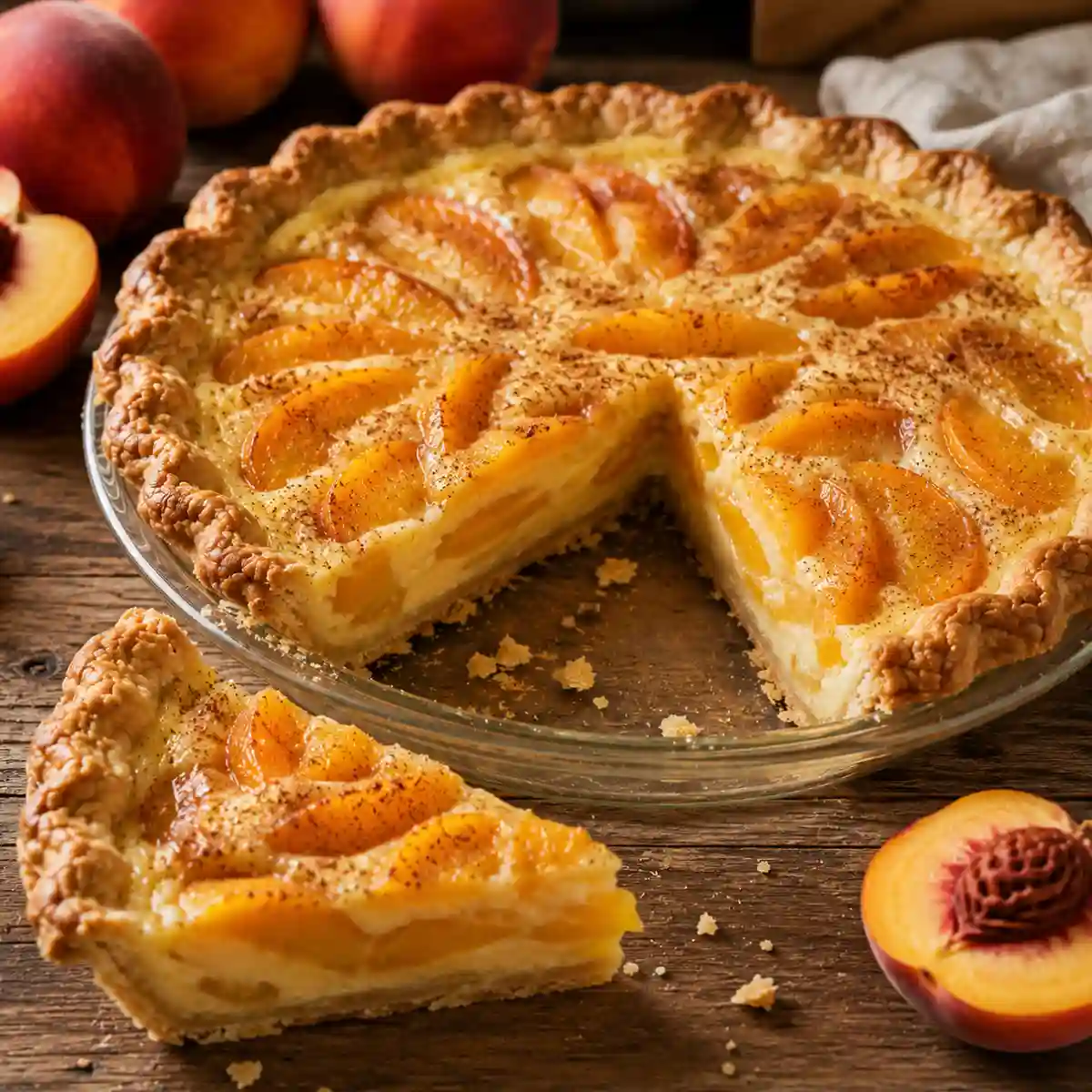

Old Fashioned Peach Custard Pie Recipe
Ingredients
Method
- Roll the pastry dough into a 9 inch pie plate.
- Dock the bottom with a fork.
- Line with parchment paper and pie weights.
- Bake for 5 to 10 minutes.
- Remove the weights and parchment.
- Brush the warm crust with egg white.
- Combine peaches, sugar, and lemon juice.
- Let stand for 20 minutes.
- Drain excess liquid.
- Measure exactly 3 cups of peaches.
- Whisk together egg yolks, cream, sugar, vanilla, nutmeg, cornstarch, and flour.
- Mix until smooth.
- Arrange peaches evenly inside the prepared crust.
- Leave about 1/2 inch of space at the top.
- Pour the custard over the peaches.
- Place the pie on a parchment lined baking sheet.
- Bake until the edges are set and lightly golden.
- Cover crust edges with foil if they brown too quickly.
- Remove when the center shows a gentle wobble.
- Cool on a wire rack for 1 hour.
- Refrigerate for at least 3 hours before slicing.
- Fresh freestone peaches provide the best texture.
- Frozen peaches should be fully thawed and drained.
- Canned peaches should be thoroughly drained and patted dry.
- Do not skip the chilling period.
- The center should wobble slightly when removed from the oven.
Notes
| Nutrient | Amount Per Serving |
| Calories | 320 |
| Total Fat | 20g |
| Saturated Fat | 11g |
| Cholesterol | 125mg |
| Sodium | 140mg |
| Total Carbohydrates | 31g |
| Dietary Fiber | 1g |
| Total Sugars | 21g |
| Protein | 5g |
| Vitamin A | 12% DV |
| Vitamin C | 8% DV |
| Calcium | 6% DV |
| Iron | 5% DV |
Topping Variations for Your Old Fashioned Peach Custard Pie Recipe
One of the best things about an Old Fashioned Peach Custard Pie Recipe is its versatility.
While the classic version is delicious on its own, adding a topping can create new textures and flavors without changing the creamy custard filling underneath.
Whether you prefer a traditional look or a sweet crumb topping, these options can help personalize your pie.
Classic Lattice Top
A lattice crust creates a timeless bakery style appearance.
Thin strips of dough are woven across the top of the pie, allowing portions of the peaches and custard to remain visible.
Benefits of a lattice top include:
- Attractive presentation
- Light texture
- Balanced crust to filling ratio
Brush the lattice with egg wash before baking to encourage a beautiful golden finish.
This traditional approach pairs wonderfully with an Old Fashioned Peach Custard Pie Recipe when serving guests during holidays or family gatherings.
Brown Sugar Streusel Topping
If you enjoy extra texture, a streusel topping is an excellent choice.
The crumb mixture creates a sweet, buttery layer that contrasts beautifully with the creamy custard.
Combine:
- Brown sugar
- All purpose flour
- Cold butter
Mix until coarse crumbs form.
Sprinkle evenly over the pie before baking.
As the pie cooks, the topping becomes lightly crisp while adding a rich caramel flavor.
Which Topping Is Best?
The answer depends entirely on personal preference.
Choose a lattice top if you enjoy traditional fruit pies and a decorative appearance.
Choose streusel if you prefer extra crunch and a slightly richer finish.
Either option works beautifully with an Old Fashioned Peach Custard Pie Recipe and can transform the dessert into something uniquely your own while keeping the classic peaches and cream flavor everyone loves.
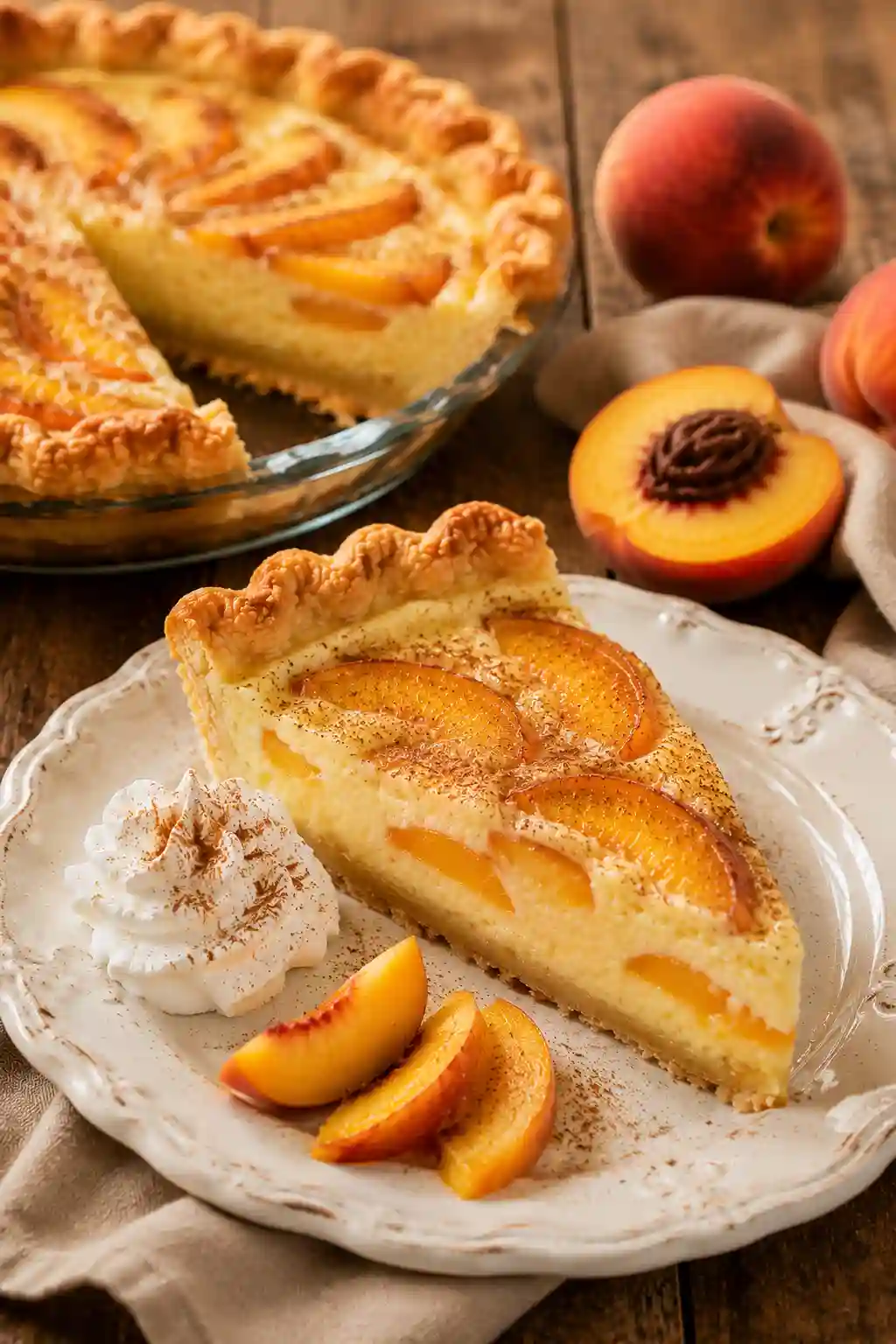
Storage and Make Ahead Tips for Old Fashioned Peach Custard Pie Recipe
A freshly baked pie always tastes wonderful, but proper storage is just as important as proper baking. Since custard contains eggs and dairy, it requires a little more care than a traditional fruit pie.
Following these storage tips will help your Old Fashioned Peach Custard Pie Recipe maintain its texture and flavor for days after baking.
How to Store Peach Custard Pie
Once the pie has completely cooled and finished chilling, cover it loosely with plastic wrap or place it in an airtight container.
Store the pie in the refrigerator.
Because of the custard filling, it should never be left at room temperature for extended periods.
For the best quality:
- Refrigerate promptly after serving.
- Keep the pie covered.
- Store away from strong food odors.
Properly stored, an Old Fashioned Peach Custard Pie Recipe will remain fresh for 3 to 4 days.
After that point, the crust may begin absorbing moisture from the filling and lose some of its flaky texture.
Can You Make It Ahead of Time?
Absolutely.
In fact, many bakers prefer making this pie one day in advance.
Preparing the pie ahead offers several benefits:
- The custard has extra time to set.
- The flavors become more balanced.
- Slices tend to hold their shape better.
If serving for a holiday meal, family gathering, or special occasion, baking the pie the day before can reduce stress and improve presentation.
Simply keep it refrigerated until ready to serve.
Can You Freeze Peach Custard Pie?
Freezing is generally not recommended for custard based desserts.
The dairy and egg components can change texture during freezing and thawing.
Common issues include:
- Watery filling
- Grainy texture
- Separation of ingredients
- Soft crust
For this reason, refrigeration remains the preferred storage method.
Many bakers find that a freshly chilled Old Fashioned Peach Custard Pie Recipe delivers much better texture than one that has been frozen and thawed.
Best Serving Tips After Storage
When ready to serve, remove the pie from the refrigerator about 15 to 20 minutes beforehand.
This short resting period allows the flavors to become more noticeable while keeping the custard properly set.
For an extra special presentation, serve with:
- Fresh peach slices
- Lightly whipped cream
- A sprinkle of cinnamon
- A pinch of freshly grated nutmeg
With proper storage and handling, every slice can taste nearly as delicious as the day the pie was baked.
Nutrition Information
The following nutrition values are estimates based on 1 slice of Old Fashioned Peach Custard Pie Recipe, assuming the pie is cut into 8 equal servings. Actual values may vary depending on the ingredients and crust used.
| Nutrient | Amount Per Serving |
| Calories | 320 |
| Total Fat | 20g |
| Saturated Fat | 11g |
| Cholesterol | 125mg |
| Sodium | 140mg |
| Total Carbohydrates | 31g |
| Dietary Fiber | 1g |
| Total Sugars | 21g |
| Protein | 5g |
| Vitamin A | 12% DV |
| Vitamin C | 8% DV |
| Calcium | 6% DV |
| Iron | 5% DV |
Peaches contain vitamins, antioxidants, and plant compounds that may support overall health when included as part of a balanced diet, according to Harvard T.H. Chan School of Public Health Nutrition Source
Nutrition Highlights
- Peaches provide natural sweetness along with vitamin C and dietary fiber.
- Egg yolks and heavy cream contribute to the rich, creamy texture of this Old Fashioned Peach Custard Pie Recipe.
- A moderate serving size allows you to enjoy the classic flavor of an Old Fashioned Peach Custard Pie Recipe while keeping portions balanced.
- The nutritional values may change if you add a streusel topping, lattice crust, or extra sweeteners to your Old Fashioned Peach Custard Pie Recipe.
Final Thoughts on This Old Fashioned Peach Custard Pie Recipe
There is something special about serving a homemade dessert that combines simple ingredients with classic flavor. This Old Fashioned Peach Custard Pie Recipe brings together sweet peaches, rich custard, and a flaky crust in a way that never goes out of style.
By following the techniques covered throughout this guide, you can avoid many of the common problems that frustrate home bakers. Careful moisture control, proper crust preparation, and patient cooling all contribute to better results.
What makes this Old Fashioned Peach Custard Pie Recipe different is its focus on texture as much as flavor. Every step is designed to help you create a pie that cuts into neat slices while maintaining a smooth, creamy filling.
Whether you choose fresh peaches at the height of summer, frozen peaches during the colder months, or canned peaches for convenience, the same principles apply. Measure carefully, avoid excess moisture, and trust the jiggle test when baking.
Once chilled and ready to serve, this Old Fashioned Peach Custard Pie Recipe delivers everything people love about a traditional peaches and cream dessert. It is rich without being heavy, sweet without being overpowering, and perfect for family dinners, holidays, or special occasions.
Now all that’s left is to grab a fork, cut a slice, and enjoy every bite.
More Classic Dessert Recipes You’ll Love
- Brown Sugar Peach Cake – Moist, sweet, and packed with fresh peach flavor.
- Lemon Blueberry Cake – Bright, fruity, and perfect for any occasion.
- Fresh Raspberry Tiramisu – A light and elegant dessert with fresh berry flavor.
- No Bake Strawberry Cheesecake – Creamy, refreshing, and incredibly easy to make.
FAQs About Old Fashioned Peach Custard Pie Recipe
1. What Is a Custard Pie?
A custard pie is a dessert made with a filling that primarily relies on eggs and dairy to create a smooth, creamy texture.
Unlike a traditional fruit pie that uses starch as the main thickener, a custard pie develops its structure through the gentle cooking of eggs. In an Old Fashioned Peach Custard Pie Recipe, the custard surrounds the peaches and creates a rich peaches and cream flavor that has been loved for generations.
2. How Do You Prevent a Custard Pie From Becoming Runny?
A runny filling is usually caused by excess moisture or improper baking.
To help prevent this issue:
Macerate the peaches before baking.
Drain away excess liquid.
Use the recommended flour and cornstarch.
Bake at the proper temperature.
Allow sufficient cooling and chilling time.
Following these steps can significantly improve the texture of an Old Fashioned Peach Custard Pie Recipe and help create clean slices.
3. Do You Need to Peel Fresh Peaches Before Baking?
Peeling peaches is optional.
Many bakers prefer peeled peaches because they create a smoother texture inside the custard filling.
However, leaving the skins on can add color and a rustic appearance.
If you choose to peel them, a quick blanching method makes the process much easier.
4. Can You Make This Pie With Frozen Peaches?
Yes.
Frozen peaches work very well when fresh peaches are unavailable.
The most important step is removing excess moisture after thawing.
Always:
Thaw completely.
Drain thoroughly.
Pat dry before measuring.
When prepared correctly, frozen fruit can produce excellent results in an Old Fashioned Peach Custard Pie Recipe.
5. Can You Use Canned Peaches Instead?
Yes.
Canned peaches provide a convenient alternative and can save preparation time.
For best results:
Drain well.
Pat dry.
Reduce added sugar if packed in syrup.
These adjustments help maintain the balance of flavors and prevent excessive sweetness.
6. How Can You Tell When the Pie Is Fully Baked?
The jiggle test remains the most reliable method.
The pie is ready when:
The edges are fully set.
The center shows a slight wobble.
The filling no longer appears liquid.
Avoid baking until the center becomes completely rigid, as this can lead to overbaking
7. Why Did My Custard Separate?
Custard separation usually occurs when the filling becomes too hot.
Overbaked eggs can release moisture, causing the custard to appear grainy or watery.
To reduce the risk:
Use moderate baking temperatures.
Avoid extending the baking time unnecessarily.
Remove the pie when the center still has a gentle wobble.
8. How Long Does Peach Custard Pie Last in the Refrigerator?
When stored properly in an airtight container or covered tightly, the pie typically stays fresh for 3 to 4 days.
After that period, the crust may begin absorbing moisture and lose some of its flaky texture.
9. Can You Freeze Peach Custard Pie?
Freezing is not the preferred storage method for custard pies.
The dairy and egg structure can break down during freezing and thawing, often leading to:
Watery filling
Texture changes
Separation of ingredients
For the best eating experience, refrigerate the pie and enjoy it within a few days of baking.